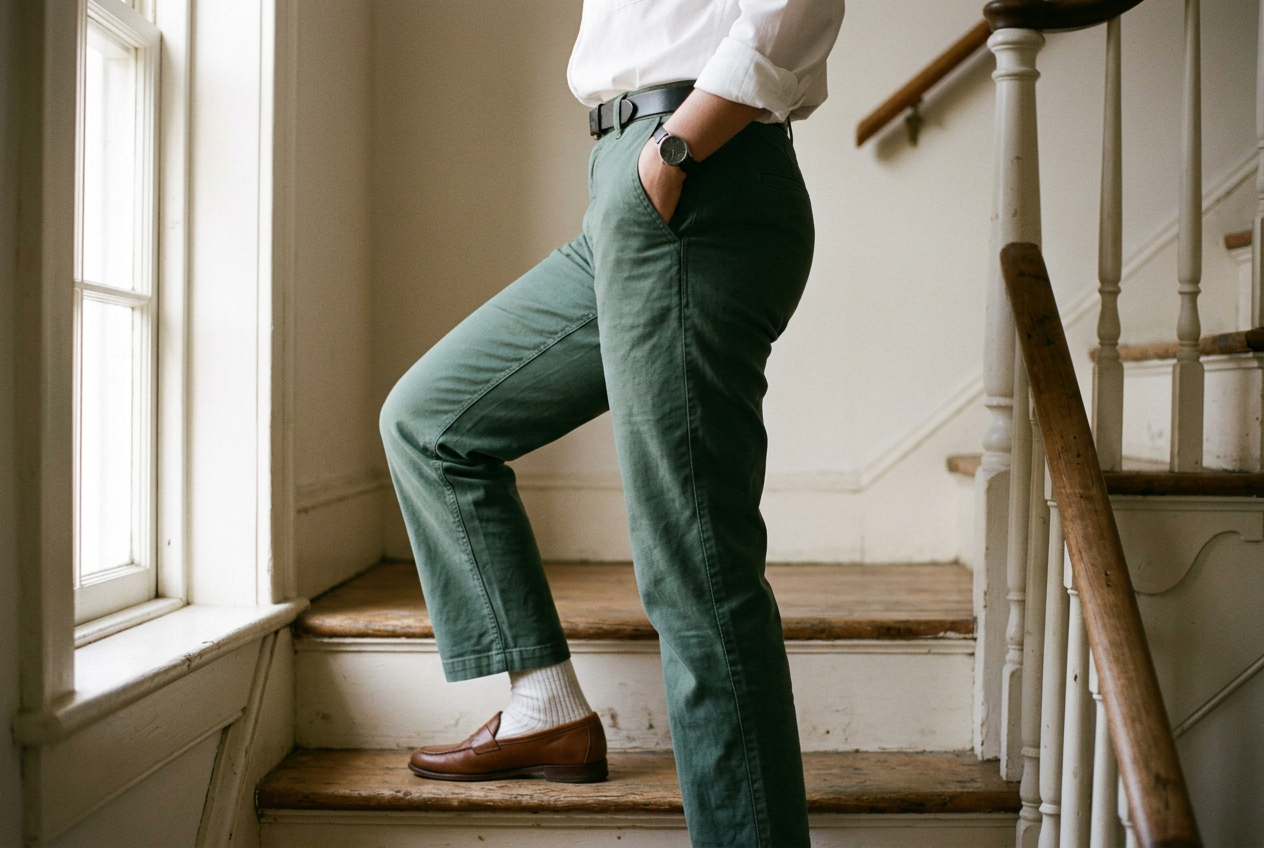
Your Pants Fit Standing Up. Walk Before You Hem Them.
A stationary fitting can hide the way wide hems swing off shoes and a restrictive rise pulls trousers lower. This walking test shows what to alter before cloth meets scissors.
September 6, 2026 · 8 min read
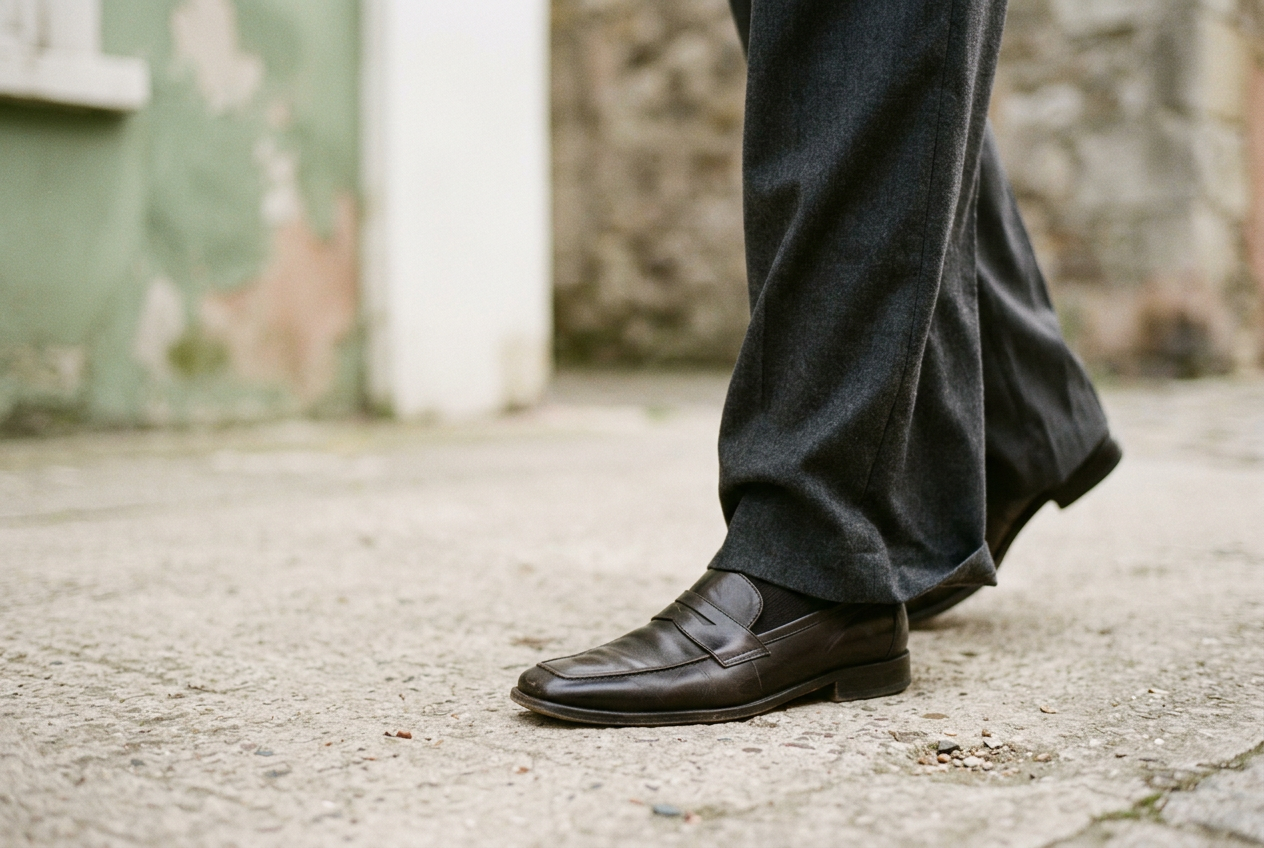
A pair of charcoal, wide-leg wool-blend trousers looked finished in front of the mirror. The waistband stayed at the natural waist, the front made one soft break, meaning a fold where the trouser meets the shoe, and the back hem cleared the floor over square-toe leather loafers.
After several normal steps, the left rear hem slipped beside the loafer and landed under the heel. A low-profile sneaker produced a different failure: its projecting rubber heel caught the cloth, then pulled the trouser down with each step. Standing still concealed both problems.
That pair is the case for this guide. The fabric was a midweight twill with enough drape to swing rather than hold a rigid tube shape, while the generous leg opening could sit neatly on a shoe or travel around it. This is unisex fit advice because the mechanics apply across wardrobes, though pattern blocks and sizing labels vary.
A standing fitting leaves out the stride
The inseam, the seam measurement from the crotch to the hem, does not change while you walk. Its usable length does. A stationary body lets the trousers hang from a stable waistband, and the shoe often supports the front hem at the same point for several minutes.
Walking rearranges that fabric. As one thigh moves forward, it puts tension through the crotch and rise, the distance from the crotch seam to the waistband. If the waist is loose or the crotch shape binds against the body, that tension can tug the trouser body lower before gravity keeps it there. Even a small shift matters when the hem began close to the floor.
The lower leg is moving too. A wide opening swings farther than a narrow one, so its rear edge can leave the top of the shoe, pass beside the heel and reach the ground. On the charcoal trousers, the standing break looked controlled because the loafer held the front of the leg in place; during a stride, the cloth rotated enough for the unsupported rear corner to drop.
This explains why shortening the inseam is not always the first answer. If the waistband has migrated down, removing length may fix the symptom while leaving the rise problem untouched. Pull the trousers back to their intended waist position and the newly shortened hem could look abrupt.
Read the drag before marking the hem
Start with the location of the contact. An inseam problem usually appears as persistent excess fabric: the hem sits low around much of the opening, the front break collapses into several folds, or both legs brush the floor even after the waistband has been reset. The trousers are carrying more vertical length than the shoe and stance can accommodate.
A rise problem leaves evidence higher up. Walk for a minute, stop without adjusting anything and compare the waistband with its starting position. A dropped waistband, a lower crotch and tension lines spreading from the upper thigh suggest that motion is shifting the garment. Check the waist fit as well.
A waistband that admits more room than intended may settle downward without any tightness in the rise.
The charcoal pair stayed at the waist, and its crotch position barely changed. Its left hem alone moved under the foot. That ruled against taking length evenly from both legs and pointed toward hem width, slight body asymmetry and shoe interaction.
Look at each side independently. Many people load one leg more heavily, take a longer step on one side or have a small leg-length difference, and a tailor may need to mark the trousers while they are worn rather than copy one finished measurement around both legs. The goal is an even visual line in motion, not identical folded fabric at every point.
Trouser width changes where clearance is needed
A tapered ankle opening remains relatively close to the leg, so it usually meets a limited area of the shoe. A wide leg has a larger hem sweep, meaning the circumference of the trouser opening, and more of that edge travels through space with every step.
Heavy fabric can resist that movement, although its weight makes any unsupported edge fall decisively. Fluid wool, viscose and some blends swing more readily. Linen may begin crisp and soften with wear, changing a tidy break into looser pooling. Washable cotton or denim should go through the care-label washing and drying routine before a permanent hem, since shrinkage can undo a precise alteration.
For the charcoal trousers, reducing the opening would have changed the intended wide silhouette and required more work than a standard hem. A slightly shorter rear edge was the cleaner alternative. An angled hem, which sits lower at the front and higher at the back, can preserve a front break while giving the heel room, provided the side line remains smooth rather than visibly slanted.
The shoe can support the hem or trap it
Test the exact shoe category you plan to wear. A square-toe loafer offers a broad front platform, yet its narrower heel may leave a wide rear hem unsupported. A pointed flat gives less support across the front. Chunky sneakers lift the entire trouser farther from the floor, but heel tabs, ridged rubber and flared soles can catch fabric that would slide over plain leather.
Sole height alone is therefore a weak guide. The shape of the upper and heel matters, as does surface friction. The wool-blend twill moved over the smooth loafer, then fell beside it; against the sneaker, the textured rubber held the cloth long enough for the next step to pull it underfoot.
If trousers must work with shoes of very different heights, one fixed hem will involve a compromise. Hem for the lowest regular shoe and accept a cleaner, shorter line with taller footwear, or reserve the trousers for a narrower shoe range. Continually changing the fold with temporary tape is possible, but repeated adhesive use can leave residue or press marks on some fabrics.
Run a walking test before the alteration
Put on the trousers with the underwear, belt and intended shoes that affect where the waistband rests. Let the garment hang for a few minutes, then set the waistband where you plan to wear it. Do not pull it unusually high just to create floor clearance.
Turn the excess hem inward and secure it from the inside with several safety pins placed parallel to the fold, keeping every sharp point enclosed. Avoid a thick rolled cuff, which adds weight and stiffness that the finished hem will not have. If the trousers already drag enough to create a fall risk, make a generous temporary fold before walking and lower it in smaller increments.
Walk at your ordinary pace across a hard floor where contact is easy to hear. Include a turn, a longer stride and a few steps on carpet if that surface is part of daily wear. Stop without touching the trousers. Check whether the waistband moved, where the cloth struck the floor and whether one shoe caught the opening.
Repeat the test after sitting briefly, since the rise can settle differently when you stand again. Photograph the front, side and back at rest, then record a short walking video at ankle height. A mirror shows the final pose; video catches the instant the wide hem leaves the shoe.
On the test pair, raising the entire temporary hem removed the drag but also erased the deliberate front break. Raising only the back gave the loafer clearance while keeping the front line intact. The sneaker still caught occasionally, which made the practical decision clear: wear those trousers with smooth-backed shoes rather than pay to narrow the leg and alter the design.
Take the pinned trousers and the tested shoes to the alteration appointment. Describe the point of failure rather than requesting a standard no-break or full-break length, because those labels do not capture a hem that behaves well in front and drops only behind one heel. A basic shortening is less involved than reshaping the rise or tapering a wide leg; if the trouble starts at the waistband, ask for an assessment before sacrificing length.
Questions people ask
Should both trouser legs be hemmed to exactly the same length?
They should look balanced on the body, which may require slightly different finished lengths. Mark each leg while standing naturally, then confirm the result while walking. Copying one measurement to both sides can preserve a drag caused by posture, stride or a small difference in leg length.
How much floor clearance do wide-leg pants need?
There is no useful universal clearance because fabric weight, opening width and shoe shape change the result. Pin the rear hem high enough that it stays off the floor through a full stride and turn, while checking that the front still has the break you want.
Can a tailor fix pants that drop lower while walking?
Yes, but the correct alteration may be at the waist or rise rather than the hem. If the waistband shifts during the walking test, have that fit assessed first. Shortening alone can leave the trousers too short once they are restored to their intended position.
Do
I need to test every shoe before hemming pants?
Test the lowest and least supportive shoes you expect to wear regularly, plus any sneaker with a projecting or textured heel. If one pair keeps trapping the fabric after the hem clears other shoes, restricting the trousers to smoother footwear may preserve the cut better than further alteration.
One update a day
Today's fashion update, in your inbox
One fashion update each morning — no hype, no filler, just pieces worth wearing.