A 12-Inch Rise Can Look Mid-Rise on the Model and High on You
The model’s styled fit is only one clue. Use the listed front rise, intended waistband position, and model measurements to predict where trousers will sit on you.
October 30, 2026 · 8 min read
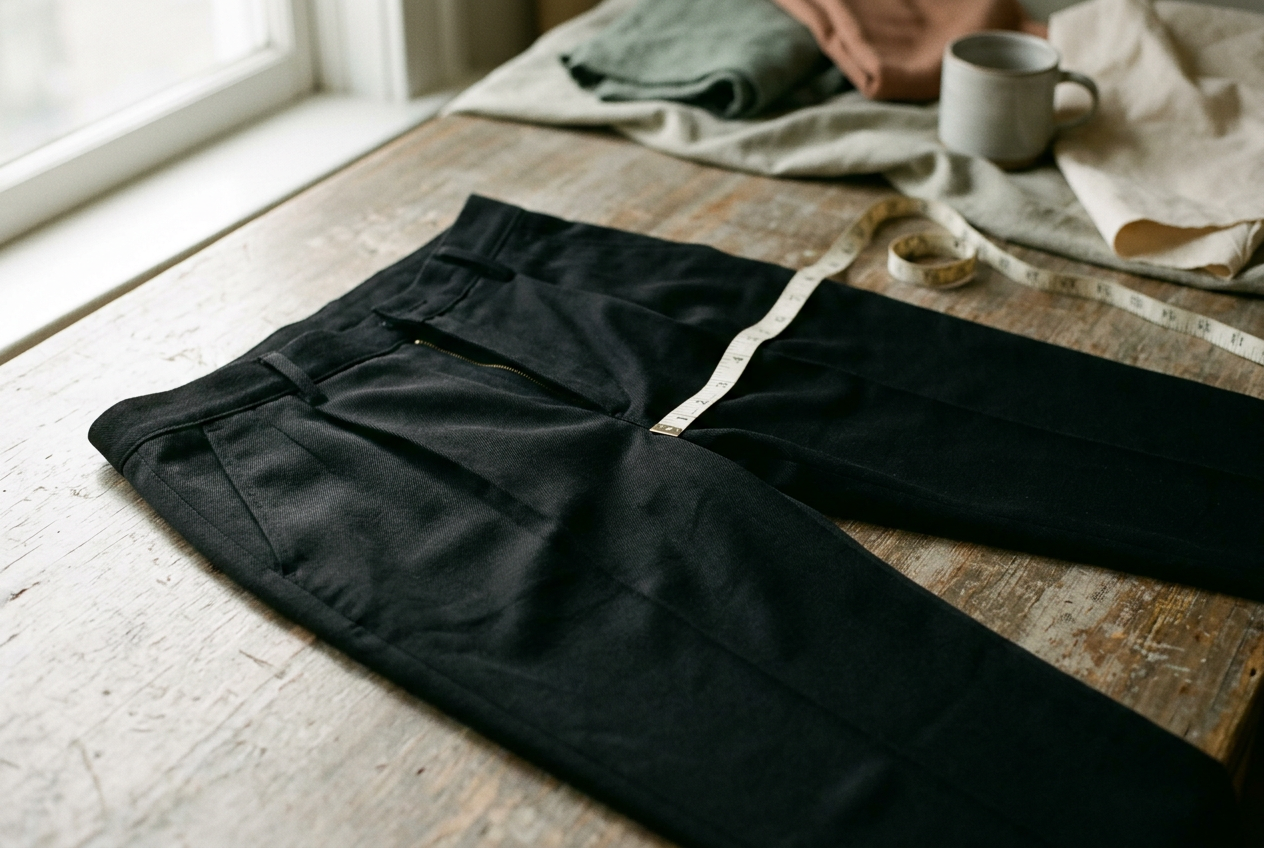
Keep one constructed shopping case in view: black pleated trousers in a medium-weight wool-blend twill, with a 12-inch front rise, shown loose and below the model’s navel. The page lists the model’s height, waist, and worn size, but the jacket covers part of the waistband in most photos.
That is enough information to investigate, though not enough to copy the look. A front rise is the seam measurement from the crotch intersection to the top of the front waistband, and it describes the garment rather than the body wearing it. The same 12-inch rise can reach the natural waist on one person, stop below it on another, or hang lower after someone sizes up.
This is unisex fit guidance. Trouser patterns and size labels vary across departments, but the method works anywhere a product page supplies measurements.
Start with trousers that already fit
Take out a pair whose waistband position you understand. Fasten it, lay it flat without stretching the fabric, and measure along the curved front seam from the point where the leg seams meet to the top edge of the waistband. Note where that pair sits on your body: at the navel, above it, or on the upper hip.
That garment is a better reference than a generic definition of high-rise or mid-rise. If your known pair has an 11-inch front rise and sits at your navel, the constructed 12-inch pair has one more inch of seam length, but it will not necessarily sit one inch higher. Waist ease, the shape of the seat, and the angle of the crotch seam can use some of that difference.
Compare the same points. Some brands publish a rise measured to the top of the waistband, while a diagram may stop at its lower seam. A wide waistband makes that distinction meaningful. If the brand’s measurement guide is unclear, ask where the measurement ends rather than treating a half-inch or inch discrepancy as harmless.
Do not substitute a measurement taken up your own body for the garment measurement. A body measurement follows a different path and includes no wearing ease, so it can make a workable rise look too short or an overly deep one look appropriate.
Treat waistband position as an instruction
Product copy often says that trousers are intended to sit at the natural waist, on the high hip, or lower on the hip. That wording tells you where the patternmaker expects the waistband to be supported. It matters even when the photograph suggests something else.
Return to the black pleated trousers. If their description says they sit at the natural waist, yet the model wears the waistband lower, the photo may show a larger size, a loosened closure, or a body with more distance between crotch and waist. The picture demonstrates one styling result. It does not convert the pattern into a lower-rise cut.
Waistband width also changes the impression. A 12-inch rise ending in a two-inch waistband covers more of the torso than a 12-inch rise with a narrow facing, even though the listed number can be identical. Look for the top edge, not just the seam where the waistband joins the trouser body.
If the stated position and the styling disagree, use your reference trousers first and the written fit description second. Give the photograph less authority until the model information explains the difference.
Use model measurements to find the styling choice
Model height is useful context, but it cannot tell you torso length. Two people of the same height may carry that length in different places, which is why scaling the rise according to height alone produces poor guesses.
The more useful comparison is between the model’s waist measurement, the brand’s size chart, and the size worn. A size chart usually lists body measurements, meaning the dimensions the size is designed to fit, while a garment chart lists the trousers themselves. Keep those categories separate.
In the constructed case, suppose the model’s listed waist corresponds to a smaller size on the body chart than the size named in the caption. That is evidence of sizing up. It helps explain the dropped waistband and loose pleats, particularly if the seat also looks relaxed. If the model wears the chart-recommended size, the low position is more likely to come from body proportions or the intended cut.
Do not calculate ease by subtracting the model’s waist from a body-size chart. You need an actual garment waist measurement for that. Without it, you can identify a likely size-up but cannot know how many inches of room the model has.
Notice when the photos hide crotch depth
Crotch depth is the vertical room between the waistband and the level where the body needs the crotch seam to sit. Front rise contributes to it, but cut and posture affect how that room appears in a photograph.
A long blazer over the waistband removes the clearest evidence. Hands pushed into pockets can pull the front down, while crossed legs and leaning poses redistribute fabric that would otherwise reveal sagging or strain. Dark cloth adds another problem: on black wool-blend twill, folds around the fly and upper thigh may disappear unless the lighting is plain.
For the 12-inch pair, look for at least one straight-on view with the full waistband visible and the model standing neutrally. A rear view helps too, because a waistband that dips sharply at the back or a seat that collapses under the body may signal that the slouch depends on excess size rather than the advertised rise.
Pleats need particular attention. A pleat that hangs closed suggests enough room through the upper hip; one that spreads immediately can indicate strain, although a pocketed hand can create the same effect. Photos should let you see the trousers without the styling intervention. If every image uses a jacket, bag, hand, or deep pose to cover the upper block, the page has withheld the area you most need to judge.
That uncertainty has a practical cost. Order only if returns are manageable, or choose a retailer that provides fuller garment measurements. Rise alterations require opening and reshaping a central part of the trousers, so correcting a bad forecast can cost far more than taking in a waistband.
Forecast the fit before choosing a size
Go back to the reference pair. Its 11-inch rise reaches your navel; the candidate measures 12 inches and claims a natural-waist fit. In your usual size, the sensible forecast is that the candidate will sit at least as high as the reference pair, even though the model wears it lower.
Next, account for material. A supple wool-blend twill can hang cleanly when there is extra room, which makes sizing up look deliberate in photographs. A crisp cotton twill tends to hold the added crotch space away from the body, and the same maneuver may produce a visible pouch rather than a fluid drop. Stretch can soften waist pressure, but it does not turn a deep rise into a shallow one.
Now decide whether you want the garment or the styling trick. If you want the black trousers to fit at the intended waist, start with the size chart and compare their 12-inch rise with your known pair. If you want the model’s lowered, slouchier line, sizing up may reproduce it, but the seat and thighs will grow too, and a belt can bunch the waistband rather than preserving a clean front.
Buying a larger size solely to lower the waistband is poor value when you dislike extra room elsewhere. Search for a genuinely lower front rise instead. A tailor can reduce the waist of an oversized pair, but the deeper crotch and roomier seat remain part of the silhouette; those features are the reason the model’s pair hangs as it does.
Make the product page prove its case
The strongest evidence is a rise measurement for the exact size you plan to buy, checked against trousers you own. Model measurements come next because they reveal whether the styling may depend on sizing up. The image is last: useful for drape and proportion, unreliable as a ruler.
Rise can change between sizes as a pattern is graded, meaning adjusted to create the other sizes in a range. If a page gives one measurement without naming its size, do not assume it applies across the chart. Ask customer service for the front rise in your intended size and whether that number includes the waistband.
For the constructed 12-inch trousers, the decision is clear only after those checks. Buy your chart size if you want the stated natural-waist fit and the measurement resembles a pair you already wear there. Copy the model’s larger size only if you also want the added seat room, longer-looking crotch, and looser pleats that create the photographed slouch.
Questions people ask
Does a higher front-rise number always mean higher-waisted trousers?
No. A higher number adds seam length, but waistband ease, seat shape, and the wearer’s proportions influence where that length goes. Compare it with a similarly cut pair you own, measured from the same crotch point to the same top edge.
Will sizing up turn high-rise trousers into mid-rise trousers?
It can let the waistband settle lower if the larger waist no longer anchors the trousers, but it also adds room through the seat and legs. If you want a fitted mid-rise silhouette rather than a slouchy one, buy a pattern designed with a shorter rise.
What can
I learn if the page lists only the model’s height?
Very little about rise. Height does not reveal torso length, waist placement, or whether the model sized up. Use the garment’s front-rise measurement and your own reference trousers; if neither measurement nor a clear waistband photo is available, treat the fit as uncertain.
Can a tailor fix trousers with too much crotch depth?
Sometimes, but changing the rise can require dismantling the waistband and reshaping the crotch seam, with limited room to preserve the pockets and balance. For ordinary ready-to-wear trousers, exchanging them is usually more sensible. Waist alterations are more routine, but they do not remove an intentionally roomy seat.
One update a day
Today's fashion update, in your inbox
One fashion update each morning — no hype, no filler, just pieces worth wearing.