Pleated Trousers Opening at the Hips Are Usually a Fit Problem
Pleats should relax while you stand. If they pull open across the hips, check the rise, hip room and pockets before buying a larger waist.
Women's · October 19, 2026 · 8 min read
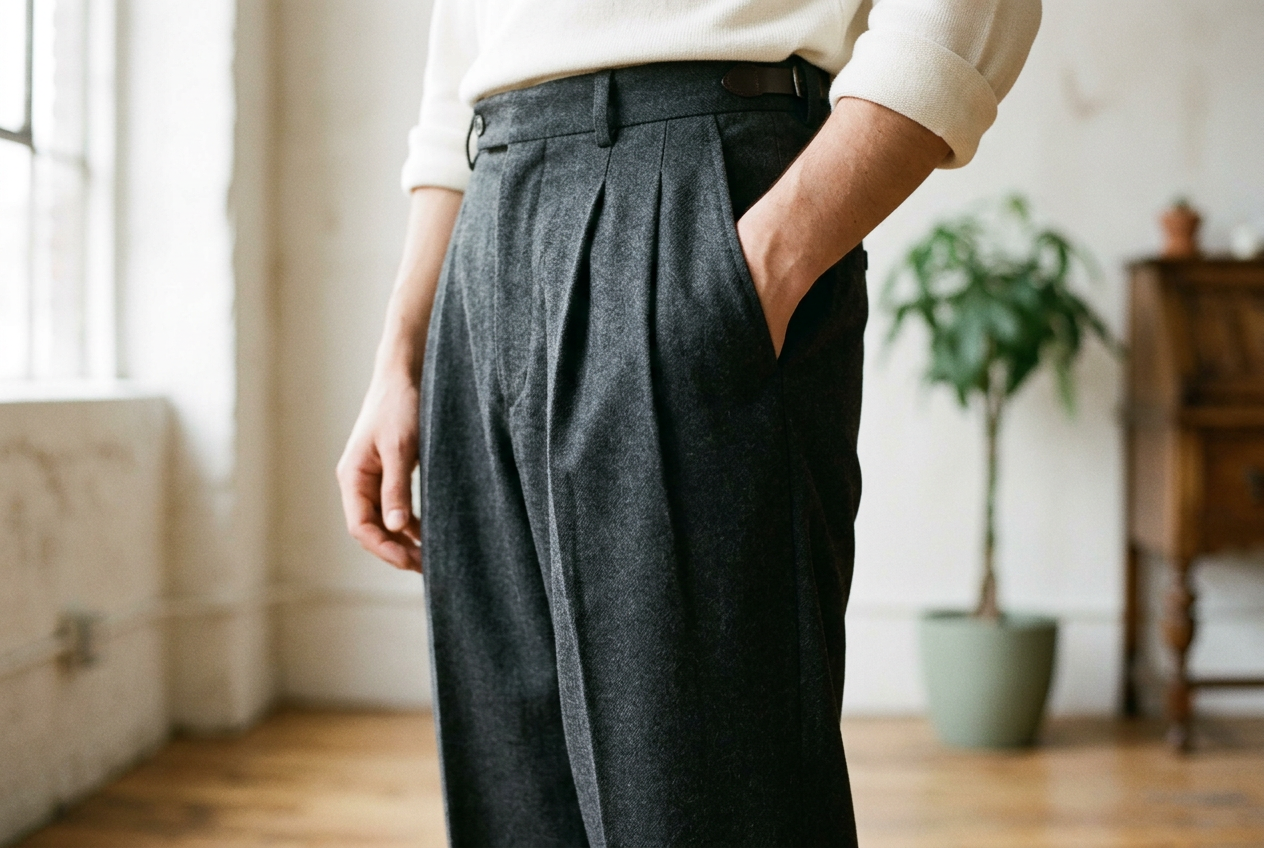
The test case is a pair of women’s charcoal wool-blend trousers with two forward pleats, slanted side pockets and a waistband that sits near the natural waist. On the hanger, both pleats fall in straight pressed lines. On the body, the outer folds spread into shallow wedges across the hips, while the pocket openings lift away from the side seams.
That combination matters. A pleat is meant to release as the body sits, walks or climbs stairs, then settle again when standing. If it remains open at rest, ironing it sharper will not remove the tension underneath.
This guide focuses on women’s trousers, whose waist-to-hip shaping often changes sharply between brands and even between cuts from the same label. The construction principles apply more widely, but the shopping decisions here account for the pronounced grading between the waist and hips common in women’s sizing.
Start with the standing position
Fit the trousers where the waistband is designed to sit, fasten them without pulling them higher, and stand with feet at a natural distance. Do not suck in, push the hips forward or smooth the pleats down with your hands. The useful view is the one the trousers return to on their own.
On the charcoal test pair, the waistband sat flat and accepted a tucked cotton shirt without pinching. That initially suggested the labeled size was right. The open pleats told a different story: the waist fit, but the pattern did not provide enough length and width below it for the wearer’s hip shape.
Look at the whole front rather than judging the folded edges alone. Tension lines traveling from the crotch toward the hip indicate that the upper trouser is being pulled sideways. A fly that bows, pockets that gape and side seams that drift forward support the same diagnosis. If the fabric is calm everywhere else and only the pleat edge lifts slightly, construction or pressing may be contributing more than size.
Pleats do not have to stay sealed. A soft crease in linen or a fluid wool can relax into a narrow opening without signaling poor fit, especially when the design has a fuller leg. The failure is a pleat forced apart by directional strain, which usually looks taut rather than easy.
The rise controls where the trousers meet the body
The rise, meaning the distance and shaping between the crotch seam and waistband, determines whether the trouser can reach its intended position without borrowing room from the front pleats. A rise that is too short may pull upward at the crotch and outward across the hips, even when the waistband closes comfortably.
That was the clearest issue in the charcoal pair. Allowing the waistband to sit slightly lower reduced the opening, but it also moved the shaped waistband away from the natural waist and introduced a small fold below the fly. The trousers were asking to sit lower than their cut allowed. Wearing them there would trade open pleats for a slipping waistband and a shortened-looking leg line.
A longer rise is not automatically better. Excess length can collapse below the waistband, create a low hanging crotch or let the pleats buckle rather than fall. The useful alternative is a cut with more rise through the back and enough front length to travel over the body, not a generic extra-high waistband.
During a fitting, sit down and then stand without adjusting the trousers. If they climb and remain caught high across the hips, the rise shape is likely wrong. If they return to place and the pleats close, the movement was normal.
Hip ease matters more than the waist label
Hip ease is the difference between the body measurement and the garment measurement at the fullest part of the hips. Pleated trousers need enough of it for the fabric to hang before the pleats are asked to expand.
This is where automatic sizing up can disappoint. A larger size usually adds some room through the hip, but it also enlarges the waistband and may lower the crotch or shift the pockets. If the current waist already fits, the next size can require a belt or alteration while still failing to match the wearer’s proportions.
On the test pair, gently pulling the side seams outward at hip level allowed both pleats to settle immediately. Pulling the waistband outward did not. That quick comparison isolated the shortage: room was needed below the waist, not around it.
A curvier cut is often the cleaner purchase. These patterns build a larger difference between waist and hip measurements, so the waistband can remain secure while the upper trouser hangs away from the body. A straighter cut may work better for someone whose pleats close but whose waistband feels loose, since extra hip volume would add fabric without solving the waist mismatch.
Read the garment measurements if a retailer provides them, and compare both waist and hip figures with a pair that already hangs well. Body-size charts only show which customer the brand hopes to fit. Finished garment measurements reveal how much room the trousers contain.
Pockets can exaggerate the opening
Slanted pockets interrupt the front of a trouser exactly where hip tension tends to travel. If the opening is cut at a steep angle, a small sideways pull becomes visible as gaping. A pocket bag that is short, stiff or twisted can tug on the front panel as well.
The charcoal pair had lightweight pocket bags attached at the waist but little internal support toward the fly. A pocket stay, meaning an internal strip or panel that anchors the pocket bag toward the front closure, can help distribute strain and keep the opening flatter. It cannot create missing hip room, though. Stronger anchoring on an undersized front may hold the pocket shut while shifting the distortion to the fly or pleats.
Empty every pocket during the first fit check. A phone changes the hang, and even a hand resting inside can make a workable pocket look faulty. Next, hold the pocket opening closed from inside without pulling the side seam. If the pleat still spreads, the pocket is not the main cause.
If the front settles, compare another cut with a straighter pocket opening, a firmer pocket stay or a pocket placed farther from the fullest part of the hip.
Sewing the pockets shut is a last resort, not a fit strategy. It removes function and may leave the strained front panel looking smooth only while the wearer stands still.
Pleat direction changes where fullness is released
Forward pleats fold toward the fly, placing their folded edges closer to the center front. Reverse pleats fold toward the side seams. Neither direction guarantees a closed line, but each sends released volume to a different part of the trouser front.
The forward pleats on the test pair concentrated a clean vertical line near the fly, then opened toward the hips when the outer front lacked room. On a body that needs more space at the sides, a deeper reverse pleat may release fullness closer to that area, although it can also make pocket gaping more noticeable if the pocket and pleat compete for the same fabric.
Pleat depth matters too. A deeper pleat contains more folded cloth, yet that cloth should remain stored until movement calls for it. If the body uses all of the depth while standing, the trouser may feel comfortable but look permanently expanded. That is still a cut mismatch rather than evidence that pleats do not suit the wearer.
Try both directions if the visual line matters to you. Forward pleats often produce a more centered, tailored front; reverse pleats can read broader and more relaxed. The better option is the one that remains calm over your hips, not the one described as more flattering in a product name.
Fabric and pressing cannot repair tension
The medium-weight wool blend in the charcoal trousers recovered well after sitting, which made the persistent opening easy to identify as a pattern issue. A springy cloth can soften minor distortion, while linen, cotton twill and some dry recycled blends hold every pulled crease more plainly. Thin fabric may collapse into the hollow of a pleat; heavy fabric can add bulk where several layers meet.
Steam can restore a pleat that has flattened during shipping or washing. It cannot supply rise length or hip ease. Repeatedly pressing an open pleat shut may leave a second crease beside the original fold, especially if the trousers keep pulling across the same point during wear.
Before spending money on alterations, compare another cut in the same fabric category. Letting out the hips is possible only when the seam allowances contain spare cloth, and changing the rise is more involved than taking in a waistband. Buying the larger size and having the waist reduced can work when the larger hip fits cleanly, but the cost and success depend on the waistband, pockets and back shaping.
For the charcoal pair, the practical alternative was not a larger waist. It was a trouser with a similar high-waisted appearance, more shaped room through the upper hip and a front rise that stayed in place after sitting. That cut preserved the reason for choosing pleats in the first place: controlled volume that appears during movement, then folds back into the trouser.
Questions people ask
Should pleated trousers stay completely closed while standing?
They should generally hang in a relaxed line, but a narrow, soft opening can be part of the design. Look for strain elsewhere. Taut diagonal lines, gaping pockets or a bowed fly suggest the pleats are being pulled open rather than falling naturally.
Will sizing up stop trouser pleats from opening?
It may add enough hip room, but it can also leave the waistband loose and alter the crotch position. Compare the larger size while standing and after sitting. If its hips hang cleanly, a waist alteration may be worthwhile; if the rise still pulls, choose another cut.
Can a tailor fix pleats that spread across the hips?
A tailor may release available seam allowance or reduce the waist on a larger size, but limited internal fabric restricts what can be changed. Major rise corrections affect the fly, pockets and crotch seam, so replacing the cut is often more practical than rebuilding the upper trouser.
Do forward pleats suit curvier hips better than reverse pleats?
Pleat direction alone does not determine fit. Forward pleats release volume nearer the center, while reverse pleats release it nearer the sides. For curvier hips, the decisive features are enough hip ease and a compatible rise; test the pleat direction only after those areas lie smoothly.
One update a day
Today's fashion update, in your inbox
One fashion update each morning — no hype, no filler, just pieces worth wearing.