Elastic-Waist Pants Bunch, and Sizing Up Can Make It Worse
Folds below an elastic waistband can come from the rise, a crowded casing, or a badly placed drawstring. The right fix may be tailoring, not more room.
October 8, 2026 · 8 min read
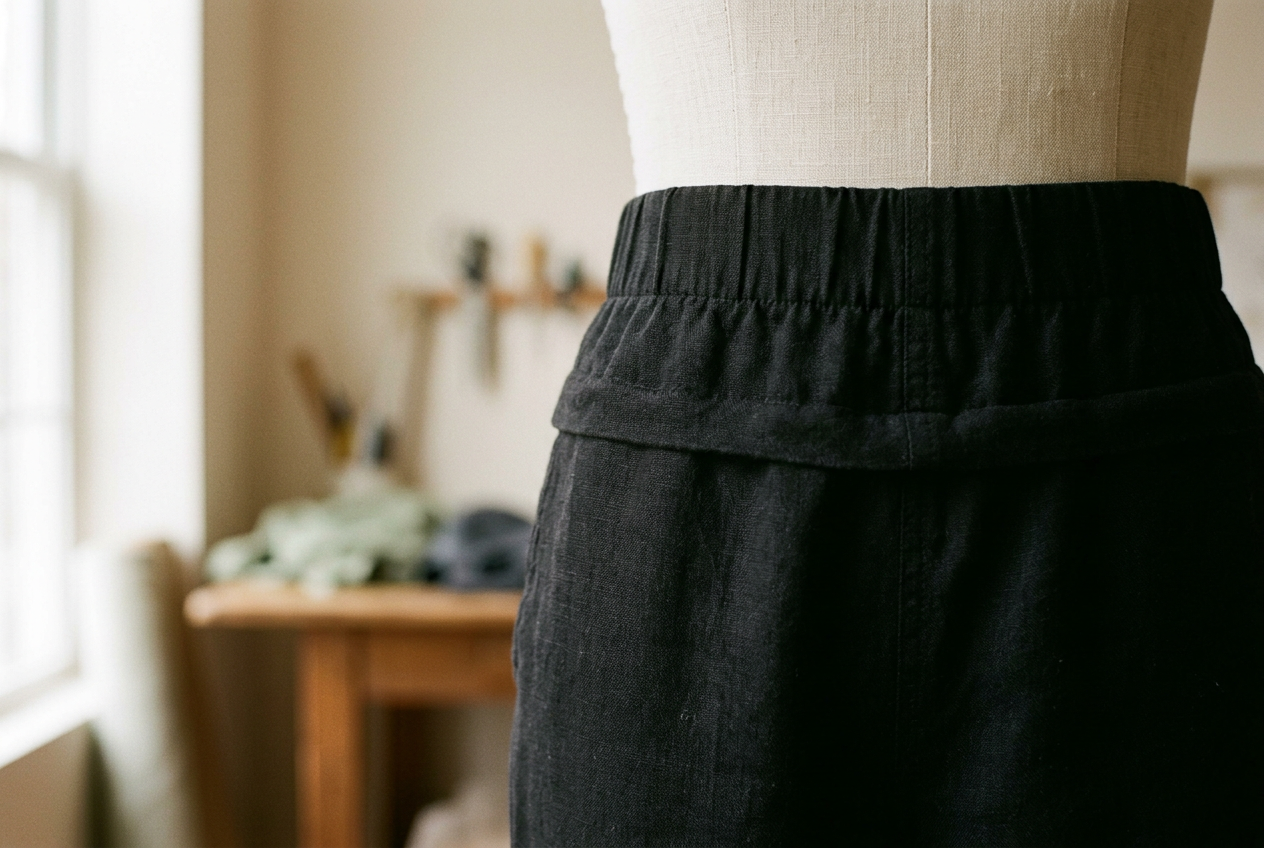
The working example is a pair of black pull-on trousers in a midweight woven cotton-rayon blend, with a broad elastic waistband, an interior drawstring and a straight leg. They look correct from the side and feel roomy through the hip, yet a shelf of fabric forms directly below the waistband after sitting. From the front, that fold reads like a too-small size even though the pants are not tight.
During a week of ordinary fit checks, the fold returned after walking, sitting at a desk and wearing the waistband at slightly different heights. Loosening the drawstring reduced the sharpest crease but did not remove the fullness. Pulling the pants higher improved the front and made the crotch uncomfortable. Wearing them lower softened the bunching, although it also changed the intended straight silhouette.
That pattern matters. A pant that is genuinely too small usually shows strain beyond the waistband: diagonal pull lines at the hip, pockets that gape, a crotch seam that presses or a seat that feels restricted when sitting. The black trousers showed none of those signs. Their extra fabric was concentrated in one zone, which points to construction and proportion rather than a need for a larger size.
This is unisex fit advice. The same mechanics apply across women’s and men’s wardrobes, though body shape, waistband position and the way a brand grades its patterns can change where the folds appear.
Start with the rise
The rise, meaning the vertical distance from the crotch seam to the top of the waistband, controls where the pant body hangs. If the rise is longer than the wearer needs, the fabric has to settle somewhere. It may drop at the crotch, fold below the waistband or do both.
Elastic makes a long rise harder to diagnose because the waistband can move. A fixed-waist trouser tends to declare its intended position, while a pull-on pair can be tugged higher until the crotch binds or pushed lower until the leg proportions look wrong. Neither adjustment changes the cut.
On the black trousers, lifting the waistband removed some front fullness because it used more of the available rise, but the improvement came at the cost of pressure through the crotch seam. That is a useful fitting test, not a styling solution. If pulling the band up smooths the fold and makes the crotch uncomfortable, the rise may be too long for the body or too long in the front specifically.
A tailor can sometimes shorten the rise from the waistband, but elastic-waist construction complicates the job. The waistband must come off, fabric must be removed evenly or selectively, and the band must be reattached without changing the pocket openings or drawstring path. This costs more in labor than a basic hem and may not be worthwhile on an inexpensive pant. A return is often the cleaner answer.
A low-risk alternative is another cut in the same general size, preferably one described as mid-rise rather than high-rise or one with a more shaped waistband. Compare the garment’s front-rise measurement when a retailer supplies it. A body measurement alone will not reveal how much vertical fabric sits between the crotch and the band.
Wide elastic can expose extra fabric
Elastic is usually smaller than the fabric edge it controls. That difference creates negative ease, meaning the band must stretch to reach the body’s circumference. The pant fabric is then gathered into the elastic, and the amount of gathering depends on how much wider the garment is than the relaxed band.
A broad elastic band spreads pressure over more skin and can feel comfortable, but it also creates a firm horizontal edge. If the pant body below it is generous, that edge makes the excess visible. The fabric cannot glide upward through the casing, so it balloons or folds immediately underneath.
The black trousers have enough room through the seat for sitting, which is useful, but the broad waistband holds that volume at a fixed point. The cotton-rayon cloth is fluid enough to drop through the leg yet substantial enough to retain a crease after the wearer bends. A lighter rayon challis might collapse into softer gathers; a crisp cotton poplin could stand farther away from the body. Material changes the appearance, though it does not remove the underlying volume.
Narrow elastic is not an automatic improvement. It can roll, twist or dig in, especially when supporting a heavier fabric. The better construction is often elastic whose width suits the cloth, paired with a pant body that does not force too much fullness into the casing.
The casing may be crowded
The casing is the fabric channel that holds the elastic. It needs enough depth for the elastic to lie flat, plus a little clearance for movement and stitching. When the channel is too shallow, the elastic can curl or press against the seam, creating a hard ridge that pushes fabric outward.
Too much clearance causes another problem. The elastic may shift inside the casing while the outer fabric slides independently, which allows gathers to collect at the front or back rather than staying evenly distributed. After sitting, the wearer stands up with the pant body displaced but the elastic still anchored around the waist.
Run two fingers around the waistband before blaming the size. Feel for twisted elastic, abrupt changes in thickness and gathers packed near a side seam. Then stretch the band gently and release it while spreading the outer fabric around the circumference. If the bunching improves until the next time you sit, the casing is allowing the fullness to migrate.
A repair shop can secure free-floating elastic at the side seams or add evenly spaced vertical stitches through the casing. This keeps the elastic from turning and limits migration, but it does not reduce the amount of pant fabric. On the black trousers, redistributing the gathers made the front neater for a short period; the shelf returned because the deeper issue was the volume directly below the band.
Drawstring placement changes the pressure point
An interior drawstring often sits through the middle of the waistband. When tightened, it creates a narrow line of pressure inside a much wider elastic band. The upper or lower edge can then tip away from the body, and fabric below that edge buckles.
Placement matters as much as tightness. A drawstring routed near the bottom of the casing pulls at the exact point where the pant body begins, which can create a pronounced ledge below the waist. One positioned nearer the center usually distributes the pull more evenly, provided the casing and elastic remain flat.
Try the pants with the drawstring completely loose, then tied only tightly enough to stop the waistband from slipping. If the fold becomes much sharper as the cord tightens, the cord is contributing to the problem. Sizing up will give that drawstring more circumference to gather, making the effect stronger unless the larger size also changes the rise or waistband construction in a helpful way.
Moving a drawstring channel is rarely a sensible alteration. It requires opening the waistband and creating new exit points, and the original openings may remain visible. Replacing a thick cord with a flatter tape can reduce the lump at the knot, but it will not correct a low pressure line around the full waistband.
Read the folds before changing size
Size up when the bunching comes with clear horizontal tension, pocket distortion or restricted movement through the hip and seat. The next size may release those areas, even if the waist then needs adjustment. Check the larger pair while seated; standing-room alone is not enough.
Stay in the same size, or try a different cut, when the waistband already stretches comfortably and the folds are loose enough to pinch between two fingers. That fabric is surplus. A larger size generally adds more of it through the body, and an elastic band will gather the added circumference back toward the waist.
The direction of the folds helps. Diagonal lines traveling from the crotch toward the hip usually indicate tension or insufficient shaping. Soft vertical folds below the band suggest extra circumference. A horizontal shelf, like the one on the black trousers, often points to excess rise, a firm waistband edge or drawstring pressure.
Photograph the front and side after five minutes of sitting, without pulling the pants into place first. The unadjusted view is more useful than the fitting-room pose because it shows where the garment naturally settles. If a second size is available, repeat the same test rather than judging it only by how easily it slides on.
Alter only the part that is wrong
Securing twisted elastic is a modest repair. Reducing fullness across the upper pant is possible, but side-seam alterations can interfere with pockets and may change the line of the leg. Shortening the rise from the waistband is the most direct correction for excess vertical length, though it is also the most involved.
Before paying for that work, inspect the garment inside out. If the waistband is stitched directly to the pant body and the pockets begin close to the top edge, there may be little room to alter without rebuilding several connected areas. A separate casing with accessible seams gives a tailor more options.
For the black trousers, replacing the cord or securing the elastic would treat minor symptoms. The waistband fit is comfortable, the hips are already roomy and the fold worsens when the pants are pulled to their intended high position. A shorter-rise version is the better buy. Going up a size would preserve the same pressure point while feeding more cotton-rayon fabric into it.
Questions people ask
Can washing make elastic-waist pants start bunching?
Yes. Heat can shrink the pant fabric while the elastic changes less, or it can damage elastic so the band twists inside its casing. Compare the waistband before and after washing, check the care label, and feel for a rolled section. Steam may relax fabric creases, but it cannot restore degraded elastic.
Should the waistband sit at the natural waist?
Only if the pattern was cut for that position. The natural waist is usually the narrowest part of the torso, but many pull-on pants are designed to sit lower. Place the waistband where the crotch and leg hang cleanly; forcing it higher to erase a fold can trade visible bunching for discomfort.
Can a tailor remove the fabric below the waistband?
Often, but the construction decides whether the alteration makes sense. A tailor may shorten the rise from the top or reduce upper-body fullness through existing seams. Pockets, drawstring openings and a stitched-on waistband add labor, so ask for an assessment before assuming this will be comparable to hemming.
Will sizing down smooth the folds?
It can reduce loose fullness, but only if the smaller size still allows comfortable sitting and does not pull across the hip or crotch. Test the waistband without tightening the drawstring. If the smaller pair creates diagonal strain lines, return to the original size and look for a shorter rise or less gathered cut.
One update a day
Today's fashion update, in your inbox
One fashion update each morning — no hype, no filler, just pieces worth wearing.