Your Bust Measurement Fits. The Shirt Buttons Still Gape.
A matching bust measurement does not guarantee a flat button placket. This movement-led fitting check shows whether to alter the shirt or choose another cut.
Women's · November 22, 2026 · 8 min read

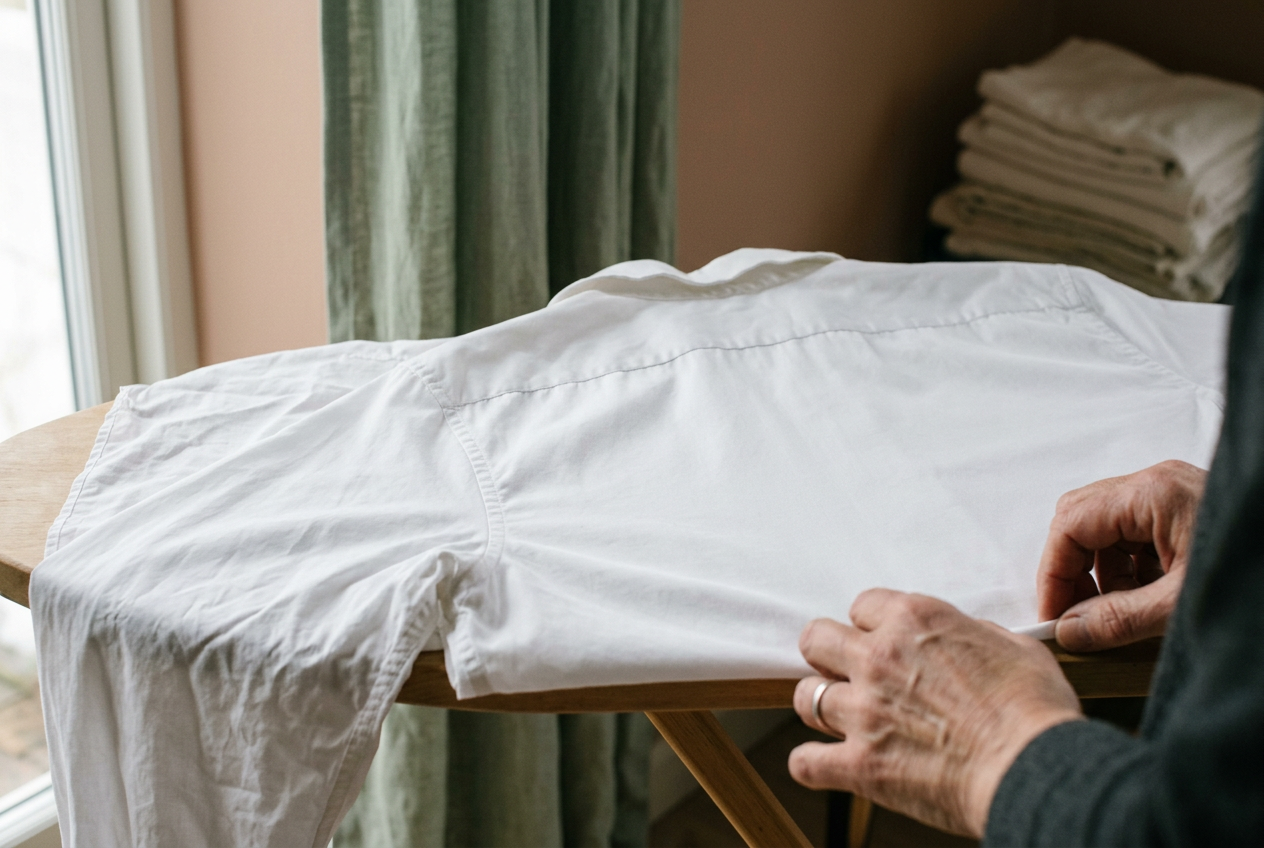
This walkthrough is for women’s button-front shirts, where a size chart can look plausible while the front still opens at the fullest part of the bust. The concrete case is a white, straight-cut cotton-poplin shirt with no stretch, a doubled front placket and enough listed bust room on paper. It lies flat while the wearer stands still, then opens between two buttons when she sits at a desk and reaches toward a keyboard.
That specific failure tells us more than the size label does.
Start with what the chart measured
Some size charts give body measurements. Others list the finished garment measurement, which is the circumference of the shirt itself. Those numbers are not interchangeable.
If the chart lists a body bust that matches yours, the shirt still needs garment ease, meaning extra room added beyond the body measurement so you can breathe and move. A fitted woven shirt needs some ease because cotton poplin does not stretch across the chest. How much feels right depends on the cut, but a shirt that merely equals the body at its fullest point is unlikely to stay closed through normal movement.
A finished garment measurement is more useful, though it does not settle the matter. Total circumference can be distributed toward the back, underarms or waist rather than where the bust projects forward, and two shirts with the same measured bust can behave differently once their seams and darts put that room in different places.
That is the first problem with the white poplin shirt. Its stated circumference may clear the wearer’s bust, yet the straight cut asks the front panels to travel over a curved area without shaping. The back can hold unused room while the front placket remains under tension.
Check the product page or contact the retailer if it is unclear whether a chart shows body or garment measurements. At home, button the shirt and pinch a little fabric at each side seam near bust level. Plenty of loose fabric at the sides, combined with a gap at only one button interval, points away from a simple too-small verdict. No available fabric, several strained buttons and horizontal pull lines point back toward size or cut.
Use movement to locate the failure
Fit the shirt over the bra and base layer you plan to wear with it. A molded cup, an unlined bra and a camisole can each change how the shirt crosses the bust, so testing over a different foundation garment creates a result that may not hold later.
Begin with your arms relaxed. Button the shirt from the bottom upward without pulling one front panel across the other, then look for horizontal lines running from the placket toward the side seams. If those lines appear at rest, or the side seams are being dragged toward the front, the shirt lacks usable room even if the chart looked generous.
Next, sit in an ordinary chair. Keep your torso upright, then bring your forearms forward as if typing. This is where the white poplin case fails: the plackets separate between the third and fourth visible buttons, while the buttons themselves remain centered and the shirt still feels comfortable through the back.
Place two fingers over that opening and press the plackets flat without pulling them sideways. If they meet easily and the surrounding fabric stays smooth, the shirt probably has enough circumference; the unsupported distance between buttons is allowing the opening. If closing the gap makes the side seams swing forward, flattens the bust or creates stronger drag lines, more front room is needed.
Then reach both arms forward at chest height. A woven shirt will tighten somewhat because the back and sleeves are moving, but it should not expose the body during the kind of reach your day requires. Ignore an extreme overhead stretch unless that motion matters to how you will wear the shirt. A work shirt needs to survive a keyboard and a coat sleeve.
It does not necessarily need to behave like activewear.
Button spacing can defeat a correct measurement
The placket is the reinforced strip that holds the buttons and buttonholes. On the white shirt, one button sits above the fullest point of the bust and the next sits below it, leaving the most projected area in the middle of a relatively long unsupported span.
As the front panels curve over the body, that span tries to take a straighter path between its two fixed points. A small opening can appear even though neither button is pulling hard. Wider button spacing increases the chance of this effect, particularly on crisp fabric that resists molding around the body.
Product photos can help before purchase. Look for where a button lands relative to the model’s bust and whether the next button falls well below it. The comparison will not predict your exact fit, but a long blank section of placket across the chest deserves a movement check as soon as the shirt arrives.
Placket stiffness matters too. Interfacing, a hidden stabilizing layer inside part of a garment, can make a placket firm enough to bridge over the bust rather than follow it. A very soft placket has the opposite problem: it may twist, curl or collapse between buttons. The useful middle ground is stable enough to hold the closure but flexible enough to lie against the body.
Tightly woven cotton poplin often begins crisp and may relax after washing, yet laundering is not a reliable fitting strategy. The body of the shirt may shrink, the placket may remain comparatively firm, and a returnable shirt is no longer returnable once washed. Judge the unworn construction first.
Separate missing room from misplaced room
A shirt can also have adequate total ease and the wrong shape. Straight-cut fronts tend to work best when the difference between bust and waist is modest. A fuller bust may need shaping from darts or panel seams so the garment gains depth at the chest without becoming oversized everywhere else.
On the white poplin shirt, loose fabric at the back waist does not help the front closure. Sizing up may stop the gap, but it can also drop the shoulder seam, enlarge the collar and add sleeve volume that costs more to correct than the shirt is worth. If the next size creates those problems, a different cut is usually the better purchase.
Look for a shirt with bust darts, more front width or a small amount of stretch in the weave. Stretch can improve movement, although it cannot correct badly placed buttons, and a highly fitted stretch shirt may show more tension than a slightly roomier woven one. The alternative should solve the front distribution problem rather than merely add fabric everywhere.
Existing darts also offer a clue. If a bust dart points well above or below the fullest part of the bust, the shirt’s shaping is in the wrong vertical position for your body. Moving a dart is no longer a tiny repair because it can affect the side seam, hem and pressing marks. That shirt should earn its alteration cost through fabric quality or frequent wear.
Keep alterations proportional to the problem
When the shirt has enough room and only one interval opens, a hidden snap is the smallest dependable fix. Sew it inside the placket midway between the two existing buttons, checking placement while seated before committing. The cost is at the level of a basic sewing notion, and the tradeoff is a slightly firmer point that may show as a dimple if the snap is too large or sewn under tension.
A small internal button with a thread loop can do the same job with less bulk, though the loop requires more precise hand sewing. Fashion tape works for one wear, but heat, sweat and repeated movement can loosen it; adhesive may also mark delicate fabric. It is a temporary styling tool, not a construction correction.
Stitching the plackets together along the problem interval is neat if the shirt can still pass over your head and you never intend to wear it open. Adding a visible button and matching buttonhole is possible, but recreating the original spacing, thread and buttonhole finish often turns a small annoyance into a conspicuous alteration.
Do not move an existing button sideways to create more room. Shifting it toward the placket edge reduces overlap and can expose the buttonhole; shifting it inward makes the shirt tighter. Releasing part of an existing dart can add some front room when there is enough fabric in the dart intake, but it changes the waist and bust shaping, so it belongs with an alteration specialist rather than a quick home fix.
For the white cotton-poplin shirt, the decision comes down to the press test. If the plackets meet easily during the desk movement and the rest of the front stays smooth, keep it only if a hidden closure feels acceptable. If bringing them together requires force, return it and look for a more bust-shaped cut. A snap should support a fitting shirt, not hold a too-small one shut.
Questions people ask
Does sizing up always stop shirt buttons from gaping?
A larger size usually adds circumference, but it may place that extra room in the back, sleeves or shoulders rather than over the bust. Size up when several buttons strain or movement creates strong pull lines. If only one interval opens and the plackets meet without force, button spacing or stiffness is the likelier cause.
Can a tailor fix a gaping button-front shirt?
Yes, when the problem is limited. An alteration specialist can add a hidden closure, release part of an existing dart or let out a seam if there is enough seam allowance, meaning fabric left beyond the stitched seam. Major changes to shoulders, armholes and bust shaping can cost more effort than choosing another cut.
Will a stretch shirt prevent bust gaping?
A little stretch can help the fabric follow the body during sitting and reaching, but it cannot compensate for a long unsupported gap between buttons. Check whether the placket itself stretches, too, because interfacing may keep it rigid even when the surrounding fabric gives. Stretch also looks strained when the shirt is cut too close.
Why does my shirt gape only when I sit down?
Sitting changes torso position and often brings the arms forward, which asks the shirt to cover more distance across the back and chest. If one gap appears during that normal motion, press the plackets together. Easy overlap suggests a closure problem; force, drag lines or restricted breathing suggest insufficient usable ease.
One update a day
Today's fashion update, in your inbox
One fashion update each morning — no hype, no filler, just pieces worth wearing.