Between Sizes? Check These Four Things Before Ordering Two
A second size is useful only when the garment is rigid, closely fitted or poorly measured online. This decision tree shows when one size is enough.
Women's · November 3, 2026 · 8 min read
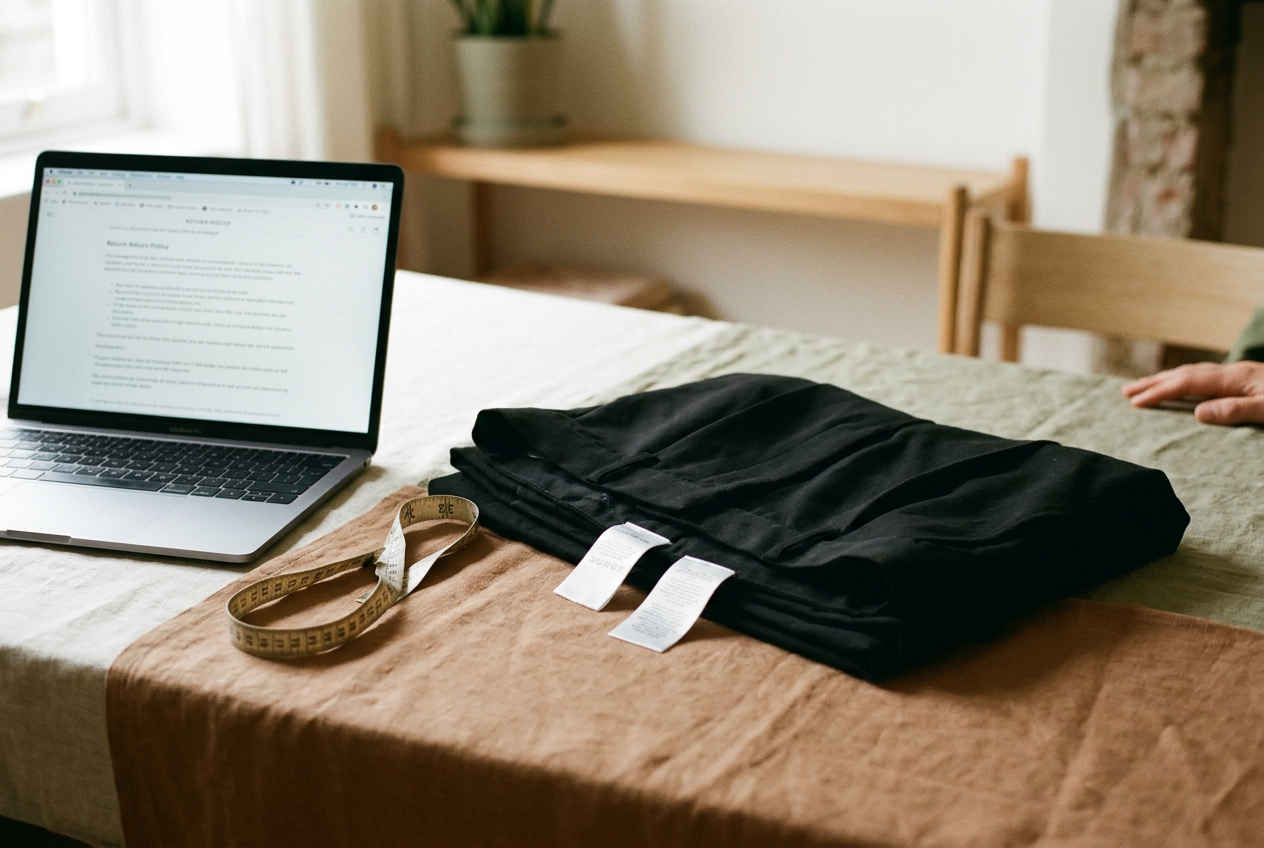
Take a pair of black, high-rise, straight-leg trousers: fixed waistband, zipper fly, front pleats, slant pockets, woven wool-blend shell and lining through the upper leg. This is our working garment because every part of it raises a useful sizing question. The waistband cannot stretch like ribbed knitwear, the pleats need room to hang closed, and the pockets will expose a tight hip even when the zipper fastens.
This is women’s sizing coverage, where waist-to-hip proportions often make adjacent sizes feel like different garments rather than small steps up or down. The method still begins with the product page, not with the size printed inside trousers you already own.
Gate one: read the return policy before the size chart
A two-size order is only a fitting strategy when both pieces can be returned without turning the exercise into an expensive loan to the retailer. Check the current policy on the retailer’s own site, including whether the return window starts at purchase, shipment or delivery; whether return shipping comes out of the refund; and whether discounted items, marketplace sellers or international orders follow different rules.
Look for conditions on tags, packaging and signs of wear. A store may accept online returns but exclude final-sale merchandise, charge a restocking fee or require mail returns even when it has physical locations. Those details change the calculation. Paying outbound shipping twice may still cost less than keeping poorly fitted trousers, but paying return postage on two boxes weakens the case for an automatic duplicate order.
If the policy is restrictive, order one only after completing the next three gates. If the garment is final sale and the size information is weak, skip it unless you can try the same cut elsewhere. A low price does not make an unwearable waistband economical.
Gate two: identify which measurements the chart gives
Many size charts show body measurements, meaning the dimensions the brand associates with each size, rather than the finished dimensions of the garment. Garment measurements tell you how large the clothing itself is. The distinction matters because a trouser must be larger than the body in some places to allow sitting and movement.
That extra room is ease, the difference between the body measurement and the finished garment measurement. The right amount changes with the cut. A fitted waistband may have little ease, while a pleated hip needs enough room for the pleats to stay vertical instead of spreading open.
For the black trousers, start with a similar pair that already fits. Lay them flat without pulling the fabric. Measure straight across the inside of the waistband and double that number, then compare the hip at the widest point, the thigh just below the crotch, the inseam and the front rise, which runs from the crotch seam to the top of the front waistband.
Use the brand’s measuring diagram if it supplies one. Two retailers may measure the hip at different distances below the waistband, so apparently conflicting numbers can describe different points on the same garment. If the page provides only a general body chart shared by dresses, skirts and trousers, treat that information as weaker than a product-specific chart.
Order one size when the finished waist and hip measurements are available, your well-fitting trousers provide a reliable comparison, and both point to the same size. Choose based on the most restrictive part of this design. With our pleated trousers, that is usually the hip and upper thigh rather than the hem; a tailor can shorten the leg, but cannot create missing room across a pocket opening.
Order two when your waist aligns with one size and your hip aligns with the next, especially if no finished garment measurements are listed. That is a real comparison-fitting case, not indecision.
Gate three: read the fabric and construction together
Fiber content alone does not tell you how far a garment will give. A woven fabric made with a small amount of elastane may flex across the hip, yet the fixed waistband, pocket stays and lining can remain firm. Recovery means the fabric’s ability to return to its original shape after stretching; good recovery helps knees and seats resist bagging, but it does not guarantee an extra size worth of room.
Product descriptions often say “stretch,” “comfort stretch” or “non-stretch.” Use those claims as clues, then inspect the photographs for structure. A close twill weave, pressed crease and tailored lining point toward less forgiveness than a pull-on trouser cut from jersey, even when both care labels mention elastane.
The black trousers deserve two sizes if their wool-blend cloth is described as non-stretch, the lining reaches across the hip, and your measurements fall at the border. Order one if the shell has clear stretch, the waistband is partly elasticized and a comparable garment measurement supports your choice.
Bias-cut skirts need a different caution. Bias cut means the fabric is cut diagonally across the weave, which lets it drape and lengthen around curves without behaving like elastic. Do not size down merely because a bias-cut piece appears fluid in photographs; too little room can make the side seams twist and the hem rise.
Gate four: price the alteration before sizing up
Alteration feasibility can settle a split decision. A slightly loose waist may be fixable, while tight hips, a short rise or strained pockets usually require a different size or cut.
Look inside the garment photographs when available. Seam allowance is the fabric between a seam line and its raw edge, and extra allowance may let a tailor release a garment slightly. Online images rarely prove there is enough, so never buy a tight size on the assumption that it can be let out.
Taking in the waist of tailored trousers may require opening the waistband, adjusting the center-back seam and matching belt loops or topstitching. Pleats and slant pockets complicate larger changes because removing too much fabric can pull those details out of position. Hemming a plain straight leg is the easier alteration; a cuff, vent or shaped hem takes more work.
For the black trousers, the larger size makes sense when the hip hangs cleanly and only the waistband gaps. That trade is strongest for an investment pair whose fabric and construction justify tailoring. On budget trousers, a substantial waistband alteration can erase the saving, and a different cut with a smaller waist-to-hip ratio may be the better purchase.
The decision tree in practice
Order one size when all four signals are strong: the return terms are acceptable, product-specific garment measurements agree with a pair you own, the fabric has enough give for the cut, and any likely adjustment is straightforward. This is where duplicate ordering adds shipping, refund waiting time and stock handling without teaching you much.
Order two adjacent sizes when the policy permits a full practical return and at least one fit variable cannot be resolved online: a rigid close-fitting fabric, a fixed waistband paired with a fuller hip, conflicting body and garment charts, or tailoring that would be costly enough to make the wrong size a poor starting point.
Skip the garment when the information is weak and the return is punitive. That outcome belongs in the tree. The black trousers are not worth gambling on if they are final sale, lack finished measurements and use a lined non-stretch cloth, no matter how useful they look in the product photos.
Make comparison fitting earn the extra order
Try both sizes in the same session, with the underwear and shoes you expect to wear. Sit, walk, use stairs and place a phone in the pocket. Keep the tags protected and stay indoors on a clean floor.
On the smaller black trousers, watch whether the pleats open, the pockets flare, the zipper area pulls or the waistband presses when seated. On the larger pair, check whether the crotch drops, the back thigh collapses into folds or the waistband gap changes the position of the pleats. Do not choose the smaller size merely because it closes while standing.
Photograph the front, side and back at the same distance. Return the rejected pair promptly, using the retailer’s required packaging and tracking method, and keep the receipt until the refund appears. Comparison fitting is useful when it produces a clear answer, not when both sizes reveal that the cut is wrong.
Questions people ask
Should
I order two sizes if the retailer offers free returns?
Not automatically. Free returns remove one cost, but you still tie up money while waiting for a refund and may need to repackage two garments. Order one when finished measurements and fabric information are strong. Use two when a rigid, fitted area falls between sizes or the chart cannot resolve competing waist and hip needs.
Should trousers fit my waist or my hips first?
Fit the area that is hardest to alter and most important to the cut. For fixed-waist tailored trousers, clean room through the hip, rise and upper thigh usually matters more than a small waistband gap. A tailor may take in the waist, but strained pockets and a short rise rarely become comfortable through a minor adjustment.
Does elastane mean I can choose the smaller size?
No. Elastane can add movement and recovery, but the waistband, lining, pockets or seams may still restrict the garment. Check whether the retailer describes the finished piece as stretch or non-stretch, then compare its measurements with clothing you own. Fabric composition is supporting evidence, not permission to size down.
What should I do if both trouser sizes fit badly?
Return both rather than paying to alter the wrong cut. If the smaller pair strains across the hip while the larger pair drops at the crotch or overwhelms the thigh, the grade between sizes does not match your proportions. Look for a curvy fit, an alternate rise or a trouser with a partially elasticized waistband.
One update a day
Today's fashion update, in your inbox
One fashion update each morning — no hype, no filler, just pieces worth wearing.