Sizing Up a Slip Dress Can Move the Fit Out of Place
A larger slip dress adds room, but it can also lower the armholes, misplace the bust darts and disturb the drape. Check the dress’s geometry before keeping the bigger size.
Women's · November 1, 2026 · 8 min read
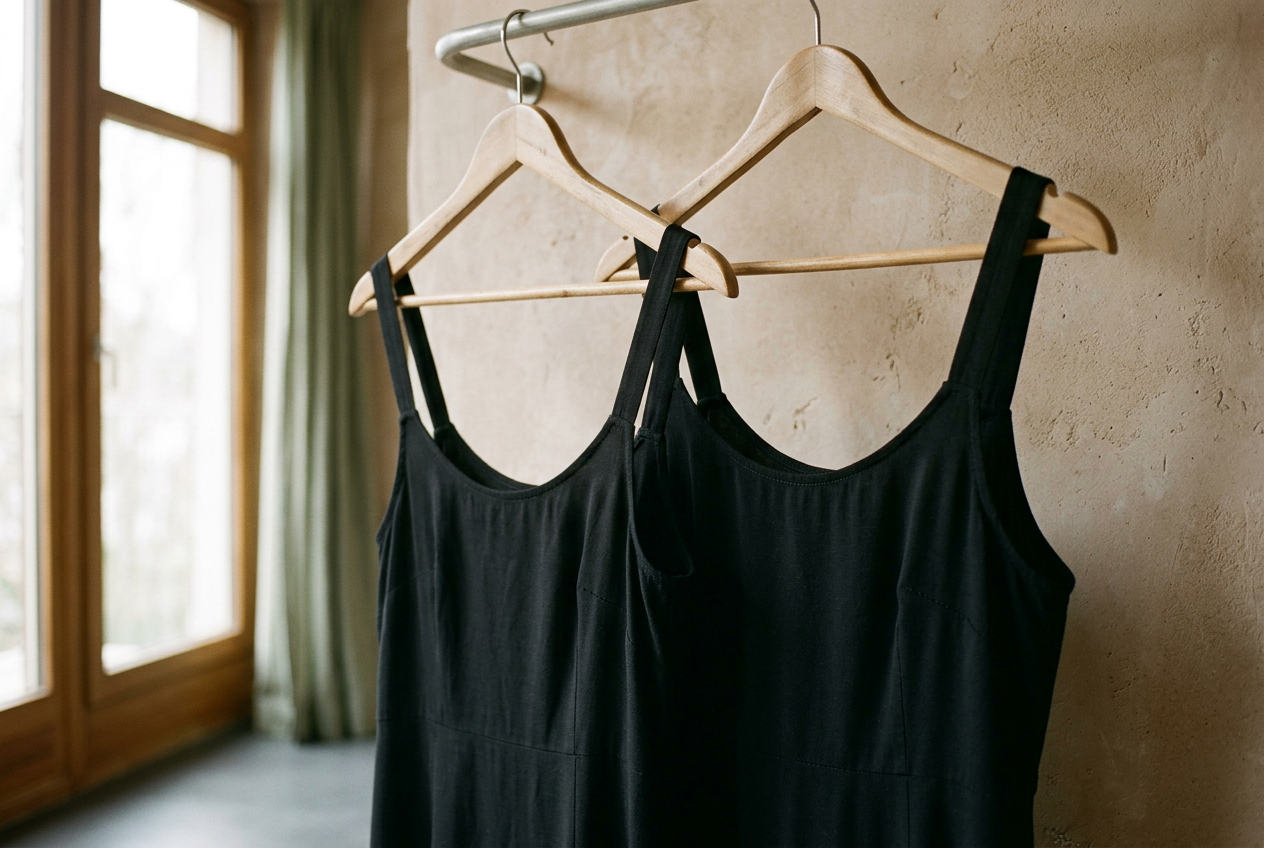
The test case was a black mid-calf slip dress in woven viscose satin, with fixed narrow straps, a side zipper and shaped bust darts. I tried the same dress in adjacent sizes over the same underwear, then sat, walked, reached and wore each long enough for the fabric to warm and settle.
The smaller size skimmed the torso but pulled faintly across the bust. The next size released that tension. It also opened a gap at the front armhole, put the dart tips below the fullest part of the bust and shifted the straps toward the outer edge of the shoulders. From the front, the larger dress looked relaxed.
In motion, its structure had moved.
This is women’s fit coverage, using a dress designed around bust shaping and conventional women’s sizing. The underlying lesson applies broadly: a size is a set of linked dimensions, so choosing extra room in one area may relocate several others.
A larger size changes the pattern, not one measurement
Ready-to-wear garments are graded, meaning a base pattern is enlarged or reduced in planned increments to create neighboring sizes. A larger slip dress may gain circumference at the bust, waist and hip, but it can also become longer through the bodice, broader across the upper chest and deeper around the armhole.
That distinction matters when the original problem is local. If a dress catches only at the bust, sizing up asks the shoulders, upper chest, waist and skirt to accept changes they may not need. On the black viscose dress, the extra bust room solved the visible pull line, yet the added bodice length lowered the neckline and moved the dress’s shaped areas away from the body they were meant to follow.
Sizing up can work when the whole garment feels uniformly close and its important landmarks remain aligned. It is less convincing when the larger size looks loose above the bust but still catches at the hip, or when the dress hangs well only after the straps are pinched shorter by hand.
The armhole can become lower and wider
A slip dress armhole has little material to hide a mismatch. There is usually no sleeve, substantial facing or tailored upper layer to stabilize the edge, so a small change in depth can expose a bra, flare away from the chest or rub at a lower point under the arm.
In the larger black dress, the front armhole stood away from the body when my arms rested at my sides. Reaching forward made the gap more obvious because the fixed strap did not hold the upper edge close enough to the chest. The smaller size had less room through the bust, but its armhole edge followed the body more cleanly.
Check this area from the side, not only in a front-facing mirror. Let your shoulders rest naturally and look for an armhole that lies flat without cutting in. Then reach for something at shoulder height. A brief opening during movement is normal; an edge that remains folded outward or displays the side of the bra usually indicates a shape mismatch rather than desirable ease.
Bust darts do not stay put
A bust dart is a stitched wedge that gives flat fabric three-dimensional shape. Its pointed end, called the dart apex, should aim toward the fullest area of the bust without ending directly on it.
When the larger dress added length and width through the bodice, the dart apex sat lower and farther toward the side seam. The result was not dramatic enough to look defective on a hanger. On the body, though, the dart created fullness below the place that needed it, while a diagonal crease remained near the upper bust.
A misplaced dart can resemble a general sizing problem because the fabric may look hollow in one spot and strained in another. Pulling the dress downward will not correct it, and tightening the straps may lift the apex without fixing its sideways position. If the dart points clearly below, above or outside the fullest part of the bust, another size may not be the right answer. A different bust shape in the pattern is often more useful.
Strap placement affects more than neckline height
The fixed straps on the test dress moved outward in the larger size because the upper bodice was wider. They did not immediately fall off, but they sat close enough to the shoulder edge that a bag strap displaced them during walking. The lower armhole and neckline were consequences of the same shift.
Adjustable straps are valuable here, though they have limits. Shortening them can raise a low neckline, bring an armhole closer to the body and return a slightly low dart to a better height. It cannot narrow a bodice, move straps inward or correct a dart that sits too far toward the side seam. Over-shortening also pulls the entire skirt upward, which may create ripples under the bust or make a side seam swing forward.
For a fixed-strap dress, pinch each strap at the shoulder by the amount you would want removed and secure it temporarily with a safety pin on the inside. Move around before paying for an alteration. If the armholes settle and the waist or hip line remains level, shortening may be enough. If new diagonal wrinkles appear, the problem runs deeper than strap length.
Extra fabric changes a bias drape
The skirt of the black dress was cut on the bias, meaning the pattern pieces were placed diagonally across the woven fabric so the material could stretch and fall more fluidly. Viscose satin makes that effect especially visible because it is smooth, weighty and prone to showing tension lines.
Bias-cut fabric does not behave like a rigid shell. Body warmth and gravity encourage it to lengthen and narrow, while added circumference can settle into folds rather than hanging as neutral ease. In the larger size, the skirt looked fuller at first, then dropped closer to the body after wear. The side seams also began to twist slightly because the bodice was no longer holding the dress at its intended points.
This is why a larger bias-cut slip may still trace the stomach or hip while looking baggy around the upper chest. More fabric does not guarantee more visual distance from the body. It can create a longer, less controlled drape, particularly in viscose or silk with a fluid satin weave.
Let a bias dress hang before judging the hem, and wear it for more than a quick fitting-room turn. Sit for several minutes, walk, then reassess the side seams and neckline. A dress that changes character after warming against the body needs to fit in its settled state.
Use landmarks to choose the size
Start with the hardest part to alter. On this dress, that was the relationship among the bust darts, armholes and strap placement. The skirt had enough flexibility to accommodate a small difference at the hip, while rebuilding the upper bodice would have required more work than the dress justified.
Wear the underwear intended for the dress because bra cup shape and strap position can change the reading. First, check whether the dart points toward the fullest part of the bust. Next, inspect the armholes from the side and note whether shortening the straps improves them without pulling the waist upward. Finish by checking that the side seams fall vertically after the fabric has settled.
Keep the larger size when the added room is needed across most of the body and those landmarks remain close to their intended positions. Return it when the neckline, armholes and darts all require separate corrections. Multiple small failures usually indicate the wrong cut, even if the zipper closes comfortably.
Better options than going up a size
Look first for the same general silhouette with adjustable straps and either gentler bust shaping or no fixed dart. A softly shaped cowl neckline can accommodate some variation in bust volume, although its folded front may offer less bra coverage. A slip with princess seams, which are long curved seams that shape the bodice, may fit a fuller bust more precisely than one relying on short side darts.
Fabric choice changes the calculation too. A stretch-woven slip can offer targeted give without making the upper bodice broader, while a straight-cut woven dress may hold its dimensions more predictably than bias-cut viscose. Neither is automatically better. The useful choice depends on whether the reader wants body-skimming movement, stable coverage or room that remains consistent through a full day.
Alteration makes sense when the dress is right in the difficult areas. Shortening fixed straps is usually a contained job, provided the strap attachment and neckline finish are accessible. Taking in a small amount at the upper side seam may also help a gaping armhole, though a tailor must preserve enough room to move and avoid distorting the dart.
Moving bust darts or reshaping an armhole is more involved. On a lined dress, the lining must often be opened and corrected as well; on delicate satin, old stitch marks can remain visible. If the larger size needs the straps shortened, the bodice narrowed and the darts moved, finding another cut is likely the better use of time and alteration money.
For the black viscose dress, the larger size was not the keeper. The smaller size had the right upper-body geometry, but its bust tension meant that size was not quite right either. The practical answer was to skip that pattern and look for adjustable straps with a fuller bust shape, rather than choosing between pulling and gaping.
Questions people ask
Should a slip dress fit tightly at the bust?
It should follow the bust without horizontal pulling, flattened dart shaping or a neckline that shifts when you breathe. A close fit can be intentional, but tension lines mean the pattern lacks room or has the wrong shape. Check the dress after sitting and moving, since bias fabric often settles closer to the body with wear.
Can adjustable straps fix a slip dress that is too big?
They can raise a low neckline, reduce some armhole gaping and improve a dart that sits slightly low. They cannot narrow the upper bodice or move a dart inward. If shortening the straps makes the waist rise, the skirt ripple or the side seams tilt, the dress needs a different alteration or cut.
Is it better to alter a slip dress or buy another size?
Alter the dress when the bust darts and armholes already align and the remaining issue is contained, such as excess strap length. Try another cut when several areas move out of place together. Delicate satin, lining and bias construction can make extensive alterations more labor-intensive and may leave visible stitch marks.
How long should
I wear a bias-cut dress before judging the fit?
Give it more than a fitting-room minute. Let the dress hang first, then wear it long enough to sit, walk and warm the fabric against the body. Recheck the hem, side seams, neckline and hip after that trial, because a fluid bias-cut dress may lengthen and narrow as it settles.
One update a day
Today's fashion update, in your inbox
One fashion update each morning — no hype, no filler, just pieces worth wearing.