Your Dress Fits Standing Up. Here’s Why It Rides Up Walking
A standing-room fit check misses what happens in motion. Four short tests show whether your dress needs less friction, a different hem, or more room through the hips.
Women's · October 24, 2026 · 8 min read

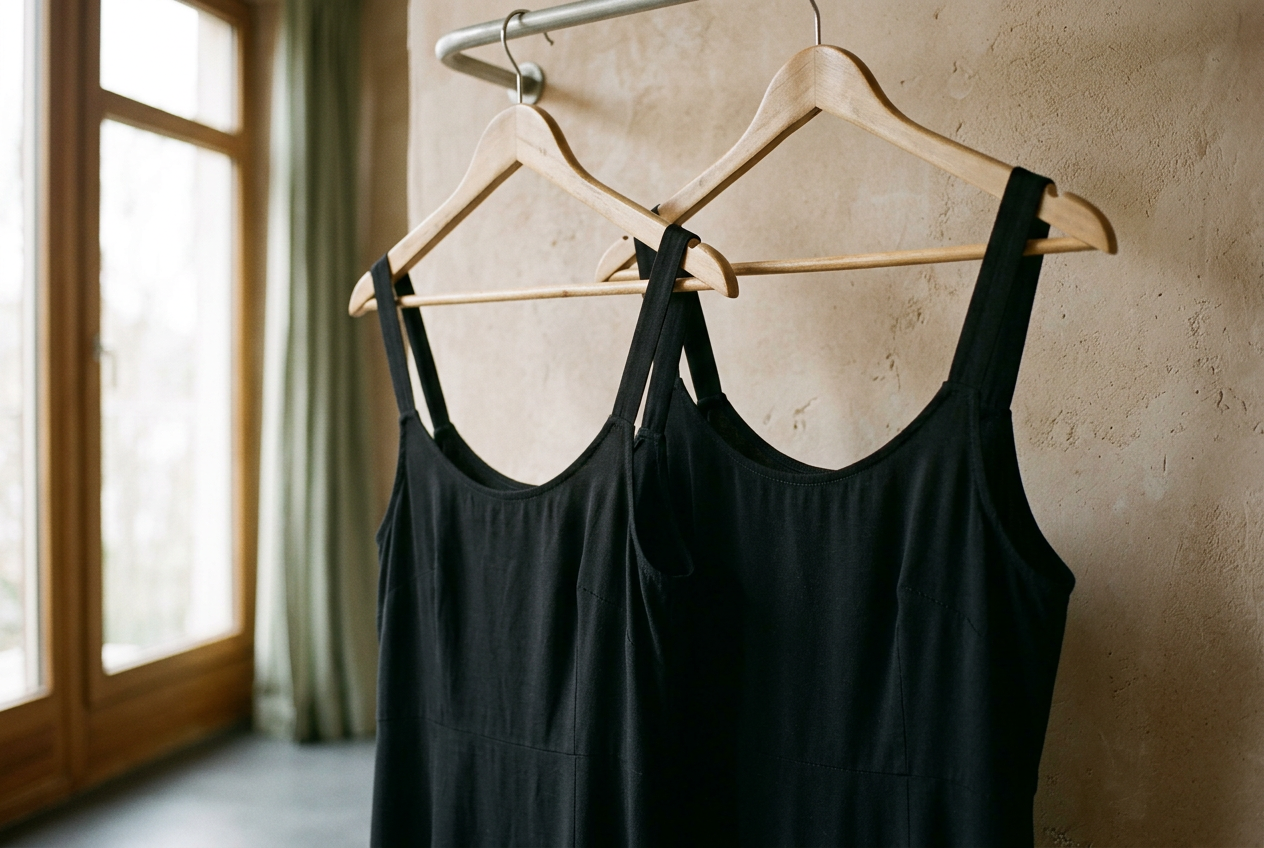
The test case was a black polyester satin midi dress with narrow shoulder straps, no lining, and a straight skirt. It skimmed the waist and hips neatly in front of a mirror, but after a short walk the hem moved from below the knee toward the kneecap, while faint horizontal wrinkles formed across the upper thigh. Pulling it down fixed the photograph, not the fit.
That distinction matters. A dress can match your body measurements and still lack wearing ease, meaning the extra room needed to sit, bend, and walk. It can also have enough room but climb because the inner surface grips tights, shapewear, or skin. One problem calls for a roomier cut.
The other may yield to a slip, a lining, or antistatic treatment.
This is women’s fit coverage, particularly for straight and slip-style dresses sold in women’s sizing, though the movement tests also work for skirts in other wardrobes. Set aside ten minutes, keep the tags attached if the garment is returnable, and wear the underwear and hosiery you expect to use with it.
Start with a controlled walking test
Stand naturally before walking. Do not smooth the skirt down or shift it into its most flattering position. Note where the side seams sit, where the hem lands, and whether the fabric rests flat over the fullest part of the hips.
Walk across a room and back at your normal pace, then climb a flight of stairs or imitate the height of that step on a stable surface. Sit in a chair, stand again, and take another pass. The test dress began to rise within the first crossing, before static had much time to build, and the side seams angled slightly toward the front. Those details pointed toward restricted movement rather than an unruly hem alone.
Repeat the walk with shorter steps. If the dress stays down only when you reduce your stride, the garment is controlling how you move. A fitted occasion dress may impose some restriction by design, but an everyday midi should not require a careful shuffle to remain in place.
Check hip ease before blaming static
Pinch the fabric at one side of the fullest part of your hips while standing. You should be able to lift a small fold without pulling the opposite seam toward it. The exact amount varies with fabric and silhouette, but cloth that cannot move independently of the body has no reserve for walking.
Now sit. Horizontal drag lines across the front or back, pocket openings that pull apart, and side seams that swing off center all indicate that the skirt is borrowing fabric from below. Each step pushes the dress upward to find the width missing at hip or upper-thigh level. Once the cloth reaches a narrower part of the body, it may stay there.
The black test dress showed this clearly. Its satin surface suggested fluidity, yet the woven polyester had little mechanical give, meaning it flexed only slightly without added stretch fiber. The skirt looked loose because the fabric hung away from the thighs while standing, but the circumference was too close through the hips for a full stride.
Try the next size if it gives more room through the lower body without making the neckline, armholes, or waist unworkable. A tailor may be able to release generous seam allowances, the fabric folded inside a seam for adjustment, but many mass-market dresses leave little extra cloth. Adding room where none exists is a reconstruction, not a quick alteration, and it may cost more than choosing a better cut.
An A-line skirt, which widens gradually from the waist or hip, is the straightforward alternative. A bias-cut dress, meaning its pattern pieces are cut diagonally across the fabric, can also move well, although bias does not guarantee ease; a narrow bias dress still climbs when stretched tight across the hips.
Separate cling from a cut that is too small
Friction usually leaves different evidence. The dress may have comfortable room when you pinch it, its seams remain vertical, and the hem rises unevenly where the fabric touches tights or shapewear. It may behave well over bare legs but bunch over brushed leggings, or work in humid air and cling in a dry heated room.
Run the same walking test with a smooth slip underneath. Choose one that ends above the dress hem and is long enough to cover the contact area at the thighs. A woven or slick knit slip reduces friction by creating a low-drag layer, while a tight cotton slip can make the problem worse because both surfaces may grip.
The slip improved the surface behavior of the test dress: the satin stopped catching in small patches, and the hem fell more readily after sitting. It did not stop the overall upward movement. That result matters because a partial improvement can tempt you to keep treating the fabric when the cut remains the main fault.
For static cling, follow the garment’s care label and test any antistatic spray on a hidden area first. A light treatment can help when fabric snaps, sticks in isolated patches, or attracts the slip beneath it. It cannot add circumference. If the skirt still develops firm horizontal lines during a long step, more spray is unlikely to earn its place in the laundry cupboard.
A permanent lining can help an otherwise successful dress, but assess the cost and weight. Acetate, cupro, and smooth polyester linings slide more readily than coarse cotton, though each changes breathability and drape. A separate slip is cheaper to test, transferable between dresses, and easier to remove in warm weather.
Read the hem and lower skirt
Some dresses have room at the hips but narrow sharply near the knee. That hem shape limits the distance between your feet, so the skirt rides upward when your stride asks for more width than the lower opening provides.
Lay the dress flat and compare the width at the hip with the width near the hem. A pencil skirt is expected to taper, but it needs a vent, meaning an opening at the back or side that lets the legs separate. Check whether the vent is long enough for your stride and whether temporary packing stitches are still holding it closed. Those loose stitches should be removed after purchase without cutting the garment seam.
A curved or high-low hem can appear to migrate even when the dress body stays put. Use the side seams as your reference rather than judging only the shortest point. If the seams remain straight and the waist stays level, the changing view may come from the hem design rather than upward travel.
The black midi had no vent and only modest width at the lower skirt. That compounded its tightness higher up: the hips started the climb, then the narrow hem prevented the fabric from settling after each step.
Let your stride expose the tradeoff
Take one exaggerated but controlled step in front of a mirror. Watch the fabric over the leading thigh. If a diagonal pull runs from that thigh toward the opposite hip, the dress needs more usable width through the body. If the upper skirt remains calm while tension appears only around the knees, the lower opening is the stronger suspect.
Next, walk in the shoes you plan to wear. Heels can shorten or alter a stride, while flat shoes may encourage a longer step, so a dress that behaves during a barefoot fitting may change with the finished outfit. This is also why walking only inside a fitting room gives limited information; a few pivots reveal less than a corridor-length pass.
Do not accept a smaller stride as the default fix unless the restriction suits the garment’s purpose. A narrow cocktail dress may prioritize a close line for a few hours. A work dress, travel dress, or warm-weather day dress should survive stairs and an ordinary walk without constant adjustment.
Decide what is worth fixing
Keep the dress if it has adequate hip ease, stable seams, and a hem opening that suits your stride, but catches only on a known layer. A slip or compatible antistatic product is a proportionate fix. Replacing rough tights with a smoother pair may solve the outfit without changing the garment.
Consider alteration when the dress is otherwise exceptional and the construction offers a clear route: usable seam allowance at the hips, a center-back seam that can be released, or enough lower-skirt fabric to add a vent. Ask the tailor to assess the inside before committing. Satin can retain old stitch marks, and moving a seam may leave visible evidence.
Return or skip the dress when the side seams distort, horizontal drag lines appear during an ordinary step, and the hem stays down only with a shortened stride. Sizing up is worth testing, but if the larger size collapses at the bodice, choose a silhouette cut with more lower-body room instead. The test dress fell into this group. A slip made it smoother, not functional.
Questions people ask
Why does my dress ride up even though it does not feel tight?
A dress can feel comfortable while standing yet lack enough circumference for a moving thigh. Look for seams shifting forward or backward, horizontal lines over the hips, and improvement when you take shorter steps. Those signs indicate missing ease even without a pinching waistband.
Will wearing a slip stop a dress from riding up?
A smooth slip can stop migration caused by friction against tights, shapewear, or skin. It will not correct a narrow hip, thigh, or hem measurement. Test the dress with and without the slip; if seams still tilt or the skirt rises as one piece, the cut needs more room.
Can a tailor make a tight dress easier to walk in?
Possibly, if the seams contain enough extra fabric or the lower skirt can take a longer vent. A tailor cannot release cloth that the manufacturer did not leave inside, and satin may show previous needle holes, so the garment needs an inside inspection before the alteration is worth paying for.
Should I size up when a dress rides up?
Try the next size when drag lines cross the hips or the side seams move during walking. Keep it only if the bodice still sits securely and the waist remains in place. If sizing up spoils the upper fit, an A-line or roomier straight cut is the cleaner answer.
One update a day
Today's fashion update, in your inbox
One fashion update each morning — no hype, no filler, just pieces worth wearing.