The Wrong Slip Makes a Sheer Summer Dress Cling
A slip can fix transparency while creating static, bunching and heat. The useful match depends on both the dress fabric and the cut of the layer beneath it.
Women's · October 12, 2026 · 7 min read

The working case is an unlined white cotton voile midi dress with a gathered skirt, narrow straps and enough transparency to reveal underwear in direct window light. Voile, a lightweight plain-weave fabric, feels airy because its fine yarns are woven with small spaces between them. Those spaces are also why pale voile often needs coverage.
This is a women’s dressing problem in practical terms, since full slips and half slips are usually sized around women’s bust, waist and hip measurements. The textile behavior applies more widely, but the fit advice here assumes a dress and a conventional slip cut.
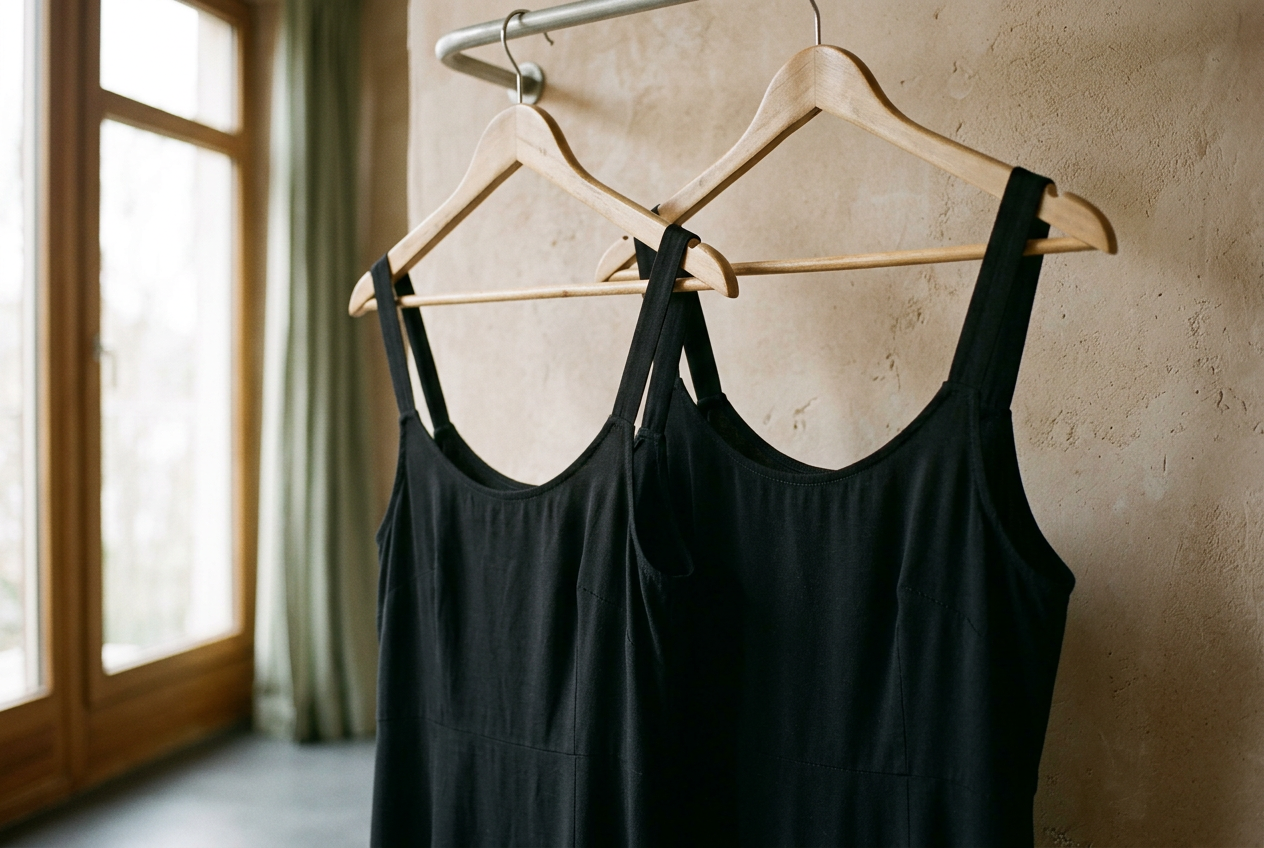
The obvious fix for the white voile dress is a full-length lining layer. Yet a close polyester slip turns the light dress into a warmer, less cooperative outfit: the two skirts can charge against each other, the slip catches around the thighs, and its neckline risks appearing above the dress. The dress is still wearable. The first slip is not.
Start with the problem the dress has
Transparency and cling call for different corrections. A dress that becomes sheer only when backlit needs opacity through the skirt, while one that shows every underwear edge needs a smoother surface underneath. A dress that sticks to the legs has a friction or static problem already, so adding another synthetic layer may intensify it.
Check the garment in daylight from the front, side and back, then sit and take a long step. A gathered skirt can look opaque while hanging straight but spread thin across the seat; a linen-blend dress may conceal skin yet expose the hard outline of briefs. Phone flash is a poor final judge because it can exaggerate contrast, though it is useful for finding obvious weak spots.
The white voile midi needs opacity from the high hip to below the fullest part of the skirt. It does not need extra fabric over the entire torso. That distinction makes a half slip cooler and easier to fit than a full slip.
Cotton voile works best with a quiet, breathable layer
Cotton voile tends to grip cotton underwear and other dry, matte surfaces, but it produces less persistent static than polyester. Under the test dress, a smooth woven cotton lawn half slip gives reliable coverage and absorbs some perspiration without the plastic feeling of a dense synthetic lining. Lawn is a fine, closely woven cotton fabric, so it can be opaque without being heavy.
The tradeoff is friction. A very full cotton slip can catch inside a gathered voile skirt, especially after washing has roughened either surface. Choose a cut with less volume than the dress but enough room to stride, and avoid bulky side seams. A lightweight viscose or cupro half slip glides more readily if the cotton-on-cotton combination bunches.
Cupro is a regenerated cellulose fiber made from cotton-derived material; it has a smooth hand and takes up more moisture than standard polyester.
For the white midi, the useful answer is a pale skin-tone half slip ending a few inches above the dress hem. White looks conspicuous under white fabric because it reflects light, while a color closer to the wearer’s skin usually recedes.
Linen blends need movement, not compression
Linen-blend dresses often look less sheer than voile because the yarns have visible texture, yet that texture can catch against a rough slip. The blend matters. Linen mixed with cotton usually tolerates a cotton lawn layer, while linen mixed with viscose tends to drape better over a smooth woven viscose or cupro slip.
Do not size the slip tightly to prevent wrinkles. A fitted underlayer stretches across the hips, creates a new visible line and limits the airflow that made the linen dress appealing. A gently flared half slip is better, provided its hem is narrower than the dress and includes a side slit for walking.
A short slip can also migrate upward under a loose linen dress. The hem should finish below the point where the thighs touch, since repeated friction there encourages rolling and bunching. For a knee-length dress, that may leave only a narrow gap above the outer hem, so check it while seated as well as standing.
Viscose can cling even without much static
Viscose dresses are soft and fluid, and they often become more revealing when damp from humidity or perspiration. The issue is not always electrical static. Two drapey layers can settle into the same folds, then pull across the legs together.
A bias-cut slip, meaning its pattern pieces are cut diagonally across the cloth for stretch and drape, sounds like the natural partner for a fluid viscose dress. It works when the dress hangs fairly straight and the slip has enough ease. If both pieces are narrow and bias cut, however, they can twist around each other or creep toward the waist.
Choose a woven slip with a slightly firmer body than the dress, then leave room at the hips. Cupro and lightweight woven viscose are useful; silk can work, but it sits in the highest price tier, needs more delicate care and can still build static in dry conditions. Silk is not an automatic upgrade.
A half slip also beats a full slip when a viscose dress has a low back, shaped neckline or adjustable straps. Fewer alignment points mean fewer edges to hide.
Synthetic dresses need a different fiber underneath
Polyester over polyester is the combination most likely to turn a transparency fix into a cling problem, particularly in dry, air-conditioned rooms. Friction transfers electrical charge between the surfaces, and neither layer absorbs much atmospheric moisture to help that charge disperse. Nylon tricot, a smooth knitted fabric commonly used for slips, glides well but can produce the same issue beneath a polyester dress.
A lightweight viscose or cupro slip is the better first attempt because it manages moisture differently and creates less dry synthetic-on-synthetic contact. Cotton reduces static too, though a matte cotton knit may grab a flowing polyester skirt. Look for a smooth woven surface rather than ribbing or jersey.
There is no perfect low-cost answer here. Basic polyester slips usually sit in the least expensive tier and are easy to wash, while well-cut cupro or viscose versions tend to cost more and may require gentler drying. If the dress itself is inexpensive and rarely worn, an anti-static spray may be a more sensible purchase than a premium slip, but test the spray on an inside seam because finishes can mark fabric.
Cut prevents as many failures as fiber
A slip should follow the body without acting like shapewear. Compression shorts and tight smoothing slips reduce visible underwear lines, but they also hold heat against the torso and can make a loose summer dress hang from the underlayer instead of moving independently.
For the white cotton voile midi, the full polyester slip fails at three points: its top competes with the narrow neckline, its fitted skirt catches at the thighs, and the second torso layer adds warmth where no opacity is needed. The half slip removes all three conflicts. Its waistband should sit without digging, because a tight elastic edge can show through fine fabric even when the slip itself does not.
Hem shape matters too. A straight slip under an A-line dress needs a walking slit; a lightly flared slip may move without one. Lace trim often creates a ridge, catches on textured linen and announces itself through pale voile, so a plain turned hem is more useful than a decorative finish.
The slip should remain at least a couple of inches above the dress hem, with a little more clearance for a high-low or side-slit dress. Walk up stairs before leaving home. A slip that stays hidden while standing can appear as soon as the outer skirt lifts.
Make the decision before removing the tags
Try the dress with the underwear and shoes you plan to wear, since heel height and posture change where fabric pulls. Then test one borrowed or returnable underlayer before buying several colors. Ten minutes of walking, sitting and climbing stairs will expose most bunching, twisting and waistband problems.
For the voile midi, the decision sequence is clear: skin-tone underwear first, then a smooth half slip only if daylight still reveals too much. The cotton lawn version wins on airflow and opacity when it moves freely. If it catches at the thighs, woven viscose or cupro is the alternative, not a tighter cotton size.
Wash slips according to their own care labels rather than treating them as underwear by default. Cotton may shrink, viscose can distort while wet, and heat can damage elastic. Fabric softener may reduce static temporarily, but it leaves a coating that can affect absorbency; a clean slip, air-dried and fully smooth before storage, is the more predictable base layer.
Questions people ask
How can I tell if a summer dress needs a slip?
Check it in indirect daylight and stronger backlight while standing, sitting and taking a long step. Add a slip when skin, underwear color or seam lines remain visible in normal movement. If only the underwear edge shows, smoother briefs may solve the problem with less heat.
What is the coolest type of slip for summer?
A half slip is usually cooler than a full slip because it leaves the torso uncovered. Lightweight cotton lawn suits airy cotton dresses, while woven viscose or cupro gives fluid dresses more glide. The coolest option is still the shortest layer that covers the transparent area without appearing below the hem.
Why does a polyester slip make my dress cling?
Polyester rubbing against polyester or nylon can build static, especially in dry indoor air, and both layers retain that charge more readily than moisture-absorbing fibers. Replace one layer with smooth cotton, viscose or cupro, and make sure the slip is loose enough to move separately from the dress.
Can bike shorts replace a slip under a sheer dress?
Bike shorts cover the upper thighs and prevent chafing, but their leg openings can show through a fine skirt and they leave the lower section transparent. They work under full, textured dresses; under pale voile or fluid viscose, a plain half slip usually creates a cleaner line.
One update a day
Today's fashion update, in your inbox
One fashion update each morning — no hype, no filler, just pieces worth wearing.