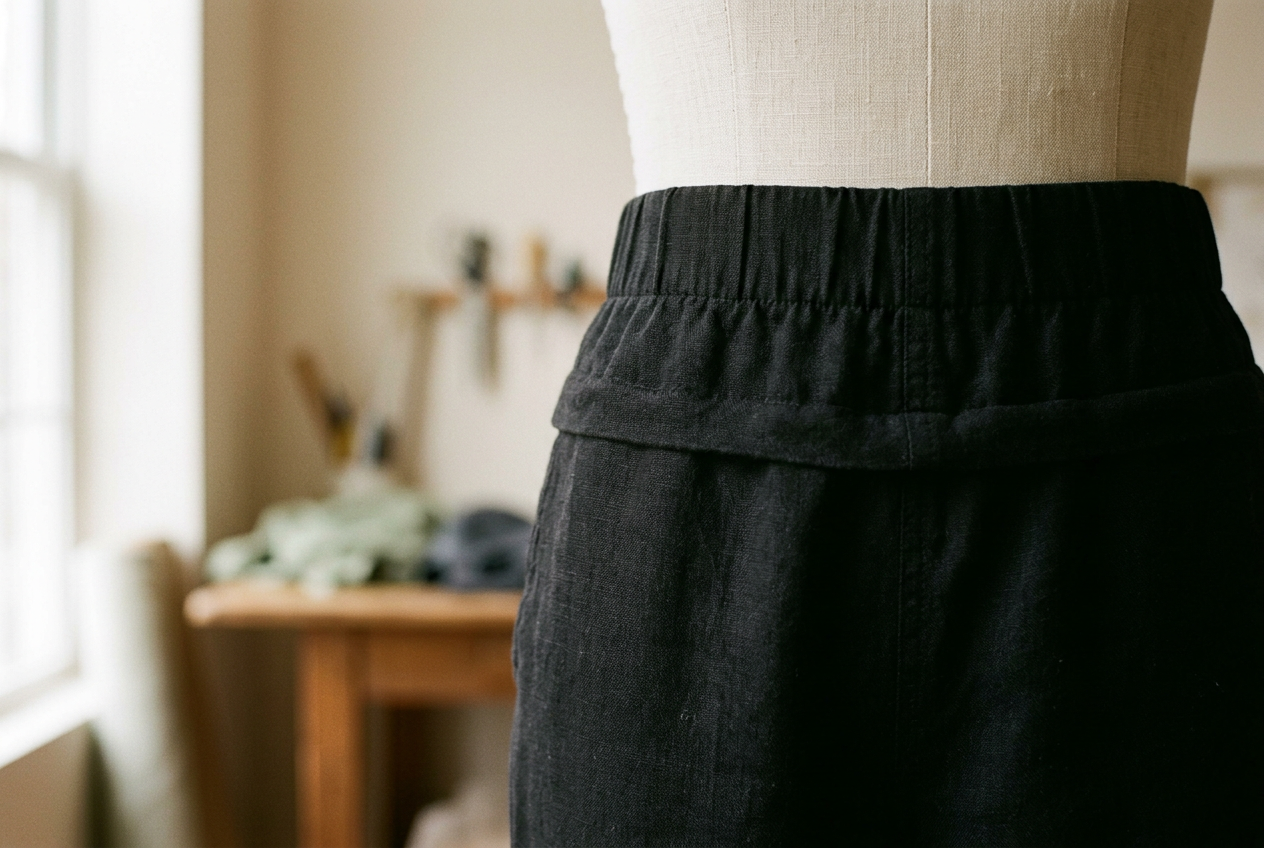
Why Viscose Dresses Shrink and Side Seams Twist
Viscose can lose its shape when wet, especially if a dress hangs while drying. Read the label first, dry it flat, and check the seams while you can still return it.
Women's · October 2, 2026 · 8 min read
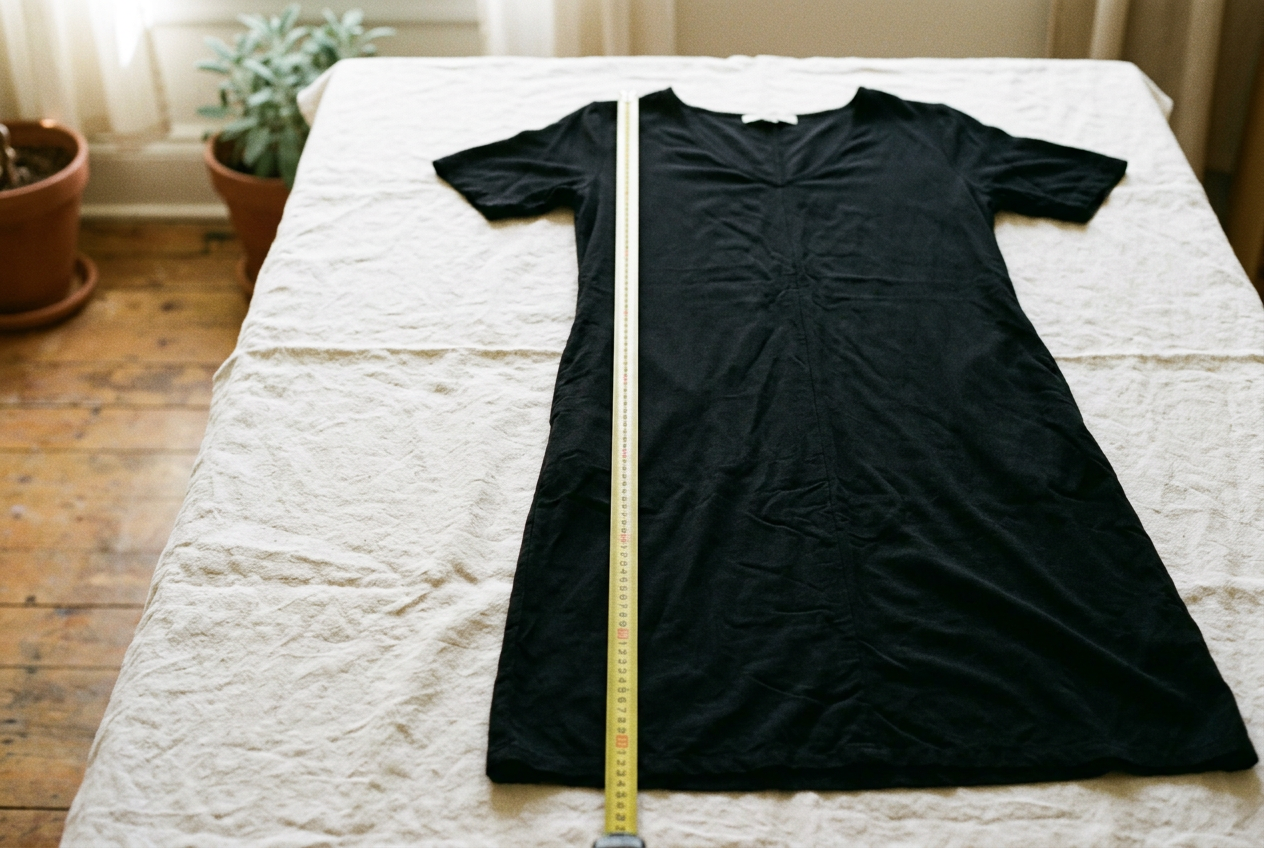
Use one garment as the working case: a black, 100% viscose woven midi dress with a waist seam, side zipper, and straight side seams. It looks uncomplicated on the hanger, but its length and seam position depend on how the fabric was cut, stabilized, washed, and dried.
This guidance focuses on women’s dresses, though the fabric mechanics apply to viscose garments across wardrobes. The useful distinction is construction. A light woven dress can contract as the cloth relaxes, while a heavy viscose jersey dress may lengthen under its own weight, particularly if it is hung wet.
Why viscose changes shape in water
Viscose is a type of rayon made from regenerated cellulose, meaning plant-derived pulp is dissolved and remade into fiber. It can feel fluid, cool, and soft, which is why it works well for dresses that need movement without the stiffness of crisp cotton.
The tradeoff appears during washing. Conventional viscose has lower wet strength, the ability of a fiber to resist stress while saturated, than it has when dry. Water makes the fibers swell, and the yarns and fabric can move while they are in that more vulnerable state. Agitation, heat, spinning, and the pull of gravity can then alter the garment’s dimensions.
That movement does not always look like straightforward shrinkage. The black midi might come out shorter because the fabric has relaxed inward, or its skirt might grow if the wet weight pulls downward from the waist seam. A dress can also become narrower, develop a rippled zipper, or show a hem that no longer hangs evenly.
Construction matters alongside fiber content. If the cloth was cut slightly off grain, meaning the woven threads were not aligned squarely with the pattern pieces, washing may reveal the problem by allowing the fabric to settle into its preferred position. The side seam then starts moving toward the front or back.
This rotation is called seam torque, meaning a seam spirals away from the position where it was intended to hang. Washing can expose torque, but it does not necessarily create the original fault. Skewed fabric, inaccurate cutting, uneven feeding during sewing, and unstable fabric can all be involved.
Start with the label, not the fiber name
“100% viscose” does not tell you whether the finished dress is washable. Dyes, interfacing, lining, thread, trim, and the way a garment was pressed at the factory may require different care, so two viscose dresses can carry different instructions without either label being wrong.
Read the sewn-in label before buying if care cost affects the decision. A dry-clean-only viscose dress asks for continuing professional cleaning, which may be reasonable for an occasional dress and annoying for something intended for weekly wear. Hand washing is not a safe substitute when the label excludes washing, and a delicate machine cycle is not gentler than an instructed hand wash merely because the drum moves slowly.
For the black midi, check the label before removing tags. If it permits machine washing, note the temperature and cycle. If it specifies hand washing, plan for the weight of a saturated skirt and make sure there is enough flat drying space. If it requires dry cleaning, decide whether the dress is worth that recurring cost before the return window closes.
Care wording also matters more than general brand advice. A retailer’s website may publish broad tips for viscose, but the label attached to the individual style accounts for that garment’s construction. Photograph it. The image is useful when the dress is at the cleaner, when the print fades, or when an online product page disappears.
A washing routine that protects the shape
Before the first permitted wash, lay the black midi flat on a clean surface and close the side zipper without forcing it. Smooth the dress from the shoulders downward, using your palms rather than pulling the hem, then measure from a fixed shoulder point to the center-front hem. Record where each side seam meets the hem as well. These are reference points, not a promise that the dress will never move.
Fasten closures and turn the dress inside out if the label allows washing. Place it in a mesh laundry bag for a machine cycle, particularly if the drum will also contain garments with zippers or hooks. Wash with a mild detergent at the instructed temperature; extra heat and a hard spin add stress without improving ordinary maintenance.
For hand washing, support the whole dress as it becomes wet. Press water through the cloth instead of rubbing sections against each other, and do not lift the garment by its straps or shoulders while it is saturated, because the skirt’s weight will concentrate at those narrow points. Rinse at a similar temperature to reduce abrupt changes in the fabric.
Do not wring it. Gather the dress from underneath, transfer it to a clean towel, and roll the towel to remove excess water without twisting the garment. Unroll promptly.
Lay the dress flat in its natural outline on a dry towel or mesh drying surface. Return the waist seam to a straight position, place the side seams where they belong, and ease the skirt back toward the recorded length with broad hand movements. Reshaping means guiding damp fabric into position; it does not mean stretching one edge until the measurement matches.
Leave space around the dress for air to circulate and turn it over only if you can support the full garment during the move. Keep it away from direct heat unless the label gives a drying method that uses it. Hanging the black midi from its shoulders while wet is the avoidable mistake here: the heavy skirt can pull on the waist, zipper, and upper body before the fibers regain their dry strength.
Once dry, measure it in the same flat position used before washing. A hanger measurement is not comparable because the dress is then carrying its own weight. Store a heavy viscose dress folded, or use a hanger that supports more of the garment rather than narrow points at the shoulders.
Check for seam torque before the return window closes
Do not wash a new dress merely to test it. Washing can affect return eligibility, and it may turn a visible construction problem into your responsibility under the retailer’s policy. Inspect first, with tags attached and no deodorant, fragrance, or makeup transferred to the garment.
Lay the black midi flat with its center front facing upward. Smooth it lightly from the waist seam toward the hem and look at where the side seams travel. They should follow the intended sides of the skirt rather than drifting steadily onto the front panel. Compare both sides, since a strong difference between them can expose a cutting or sewing issue that is hard to notice in a mirror.
Then try it on over the underwear or slip you would normally wear. The zipper should stay at the side, and each side seam should descend from the underarm or waist without rotating around the thigh. Walk, sit, and stand again. Fabric can catch on tights or shapewear, so repeat the check over bare legs or a smooth slip before deciding that the dress itself is twisting.
Look at the hem last. A deliberately asymmetric or bias-cut dress, where fabric is cut diagonally across the woven threads for extra drape, may not behave like the straight-cut black midi. On a dress intended to hang evenly, however, a side seam that pulls forward while the opposite section hikes upward is useful evidence of distortion.
Take front, side, and back photographs while standing naturally. A mirror encourages small posture corrections, while photographs make a rotating seam easier to compare. If torque is present before washing, exchange or return the dress rather than assuming laundering will settle it. Washing often makes an underlying grain problem clearer, not better.
What can be corrected after washing
A small length change may improve after the next label-compliant wash if the dress is reshaped flat while damp. Gentle steaming can also relax minor creases when the care label permits it, but steam will not reliably straighten fabric that was cut off grain.
A twisted side seam is harder. An alterations specialist may be able to release and resew a seam if there is enough allowance and the panels themselves are sound, though recutting a distorted skirt can change its width or length. Hemming only the lowest edge may make the hem look level while leaving the zipper and side seam rotation untouched.
If the dress repeatedly changes length despite correct care, the practical alternative is a more stable construction rather than a higher-priced version of the same idea. Look for a washable dress with firmer woven fabric, a lighter skirt, or a fiber blend whose label matches the maintenance you will provide. Polyester usually resists dimensional change better, although it gives up some of viscose’s cool, fluid feel.
The black midi earns its place only if its care fits its intended use. An occasional dress can justify flat drying space or professional cleaning. A weekday dress that needs frequent washing should survive the routine printed on its own label without asking you to correct the seams after every wear.
Questions people ask
Can a viscose dress shrink even in cold water?
Yes. Cold water reduces heat-related risk, but the fibers still absorb water and the fabric can relax, swell, or shift. Use the cycle named on the label, limit agitation, and reshape the dress flat while damp rather than relying on cold water alone.
Should I hang a viscose dress to dry?
Not unless the care label directs you to do so. Wet viscose can be vulnerable to stretching, and a long skirt puts substantial weight on the shoulders and waist seam. Support the dress during transfer, remove water with a towel, and dry it flat in its natural outline.
Can a twisted side seam be fixed with ironing?
Pressing may make a mildly distorted seam look straighter until the next wash, but it cannot correct panels that were cut off grain. If the seam rotated before washing, return the dress. If it appeared afterward, reshape it damp and consult an alterations specialist before cutting the hem.
Does a viscose blend need the same care as 100% viscose?
The other fiber may improve stability, but the blend percentage alone does not establish a safe washing method. Follow the garment label because linings, finishes, and construction also matter. Check the side seams before washing just as you would on the 100% viscose black midi.
One update a day
Today's fashion update, in your inbox
One fashion update each morning — no hype, no filler, just pieces worth wearing.