Why Your Viscose Dress Gets Longer by Dinner
Humidity can make a viscose dress relax under its own weight, particularly when it is cut on the bias. Stabilize the fabric before deciding where the hem belongs.
Women's · September 20, 2026 · 8 min read
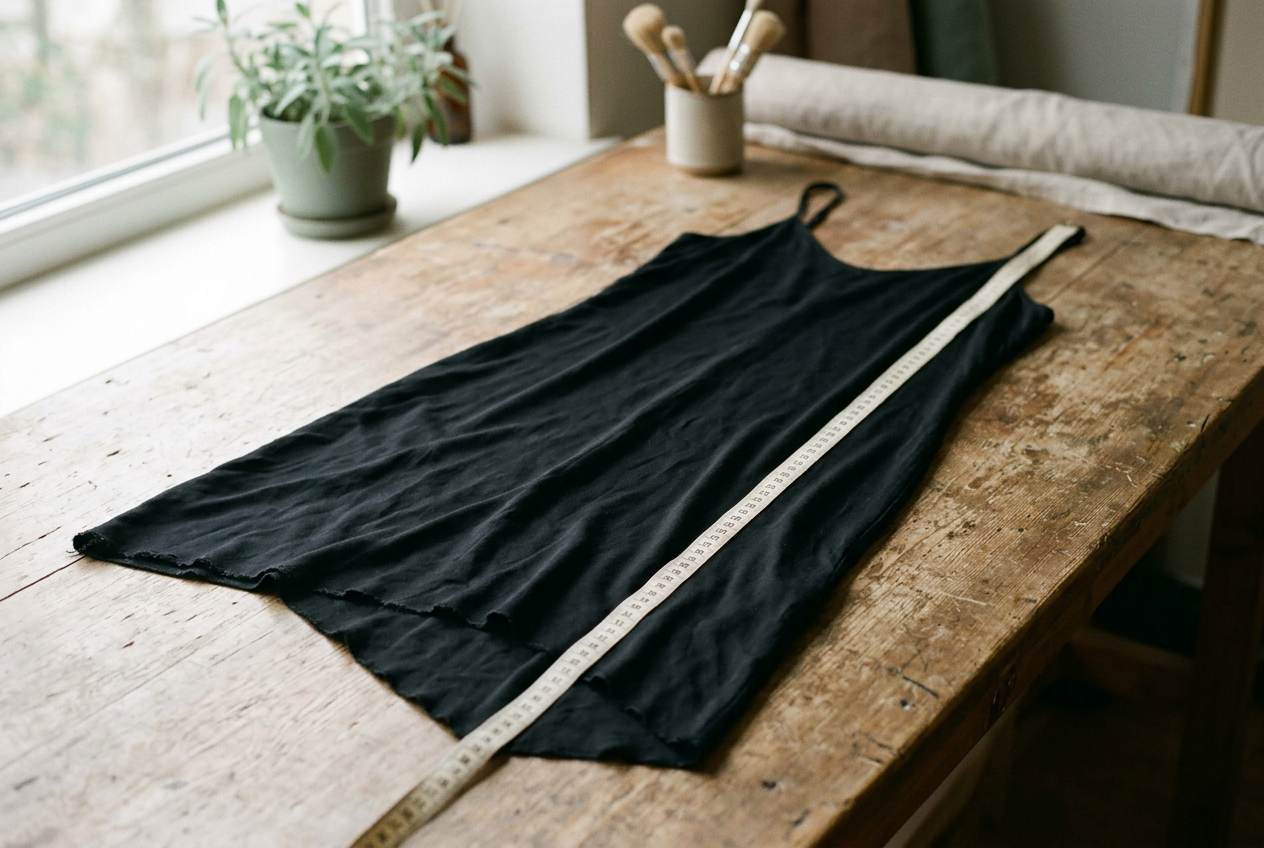
Use a calf-length, bias-cut black slip dress labeled 100% viscose as the working case. In the morning, its hem clears the ankle and hangs evenly with flat sandals. Several humid hours later, the back sits lower, the sides look less level, and the dress feels narrower and longer without the body inside it having changed.
That shift is plausible fabric behavior, not necessarily a sizing mistake. Viscose, a regenerated-cellulose fiber made by dissolving and reforming plant-derived pulp, readily takes up moisture from the air and the body. Once damp, some viscose fabrics become less resistant to pulling forces. The weight of a long skirt then supplies the pull for hours at a time.
This is women's coverage because the clearest examples are dresses and skirts, although the same mechanics can affect loose viscose shirts and wide-leg pants. Construction matters more than the gender label: length, weight, cut direction, lining, seams and finishing all influence whether a garment moves.
Why the bias makes a bigger difference
Our black slip dress is cut on the bias, meaning the pattern pieces sit at roughly a diagonal to the fabric's straight grain, the direction in which its yarns run. A bias cut gives woven cloth fluidity and enough give to follow the body without stretch fiber. It also gives those yarns more room to rotate and shift under load.
On a straight-cut dress, much of the skirt's weight pulls along relatively stable yarns. On a bias dress, gravity can draw the diagonal structure narrower and longer, particularly where there is little support between the waist and hem. Humidity does not create that geometry, but absorbed moisture can make the cloth more yielding, so a movement that was minor in an air-conditioned fitting room becomes visible after an outdoor lunch and a commute.
Textile specialists call gradual extension under a sustained force creep. In a dress, the sustained force is often the garment's own weight, increased locally by details such as a lined skirt, a deep flounce or a heavy trim. A long, dense viscose satin will usually place more load on itself than a short, light woven shell, even when both labels say 100% viscose.
Fiber content alone cannot predict the result. Yarn twist, weave density, finishing and blends alter performance, while rayon may appear on a US label as the broader fiber category that includes viscose. Two dresses with the same percentage can behave differently, and a lining may hold one in place while making another heavier.
Check whether the dress is stretching or shrinking elsewhere
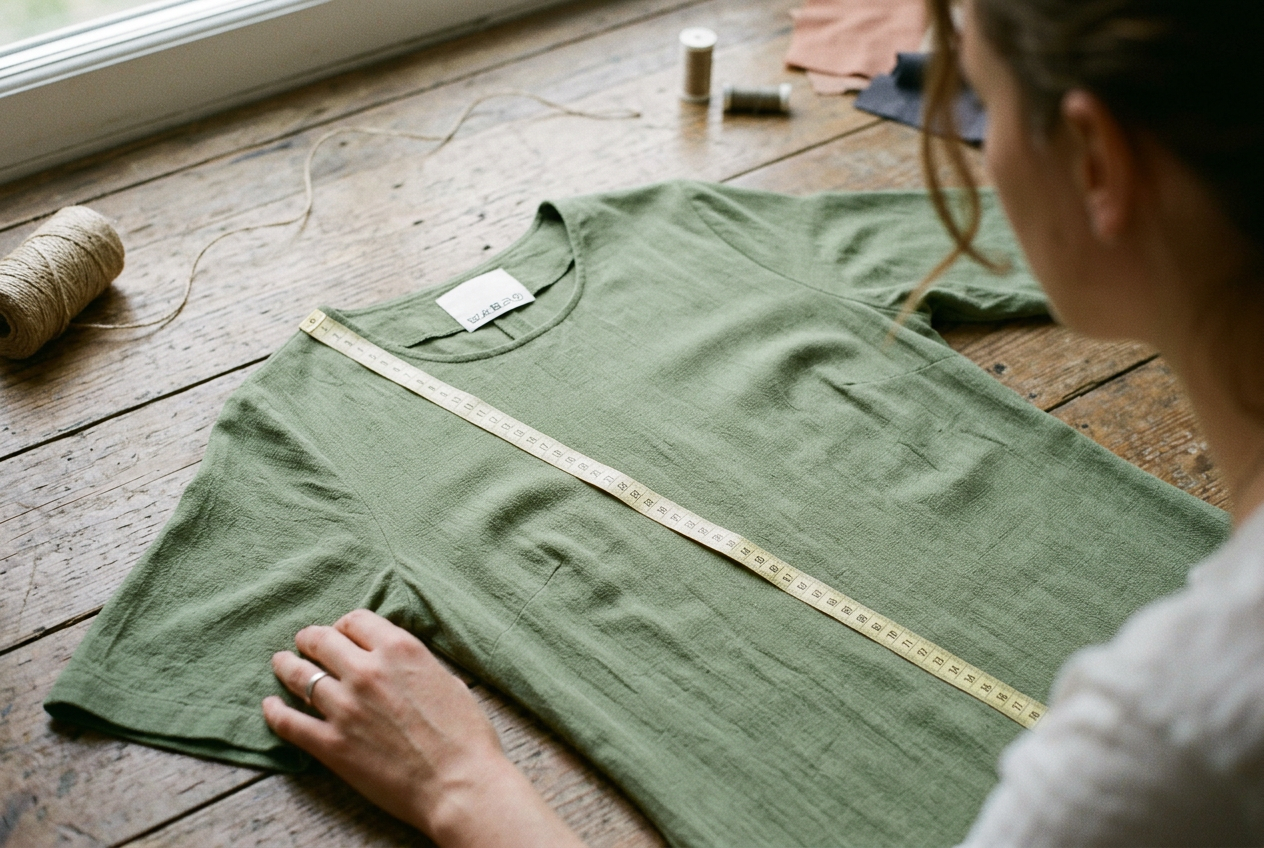
Before paying for an alteration, establish what moved. Place the black slip dress flat on a clean surface after it has rested overnight, smooth it without pulling, and measure from the top of the shoulder to the lowest point of the hem. Record the center front, center back and both side seams rather than relying on one overall length.
Repeat the measurements after a normal wear in the conditions that cause the problem. If the shoulder-to-hem measurement grows while the width contracts slightly, the bias structure is probably elongating. If the whole garment becomes shorter after washing, that points toward shrinkage or relaxation from laundering instead. A twisted side seam or one low panel may indicate uneven cutting, sewing or grain alignment rather than a uniform response to humidity.
Check the lining separately. A stable polyester lining can stay at its original length while the viscose shell drops around it, which may expose the lining unevenly or make the outer layer catch. The reverse can happen if the lining was cut or pretreated differently. A tailor needs to see both layers in their settled state before leveling either one.
Fit also changes the load. If the dress is tight across the bust, hips or upper back, body tension can hold part of it up while worn; when the cloth warms and relaxes, that tension redistributes, allowing another section to fall. Sizing up may reduce distortion, but it will not correct a poorly stabilized bias hem.
Hanging can help the test and hurt the garment
Dressmakers often let a new bias-cut garment hang before marking its final hem so the cloth can settle under gravity. That controlled step is different from storing a long viscose dress on a narrow hanger for months or hanging it up while saturated with wash water.
For the black slip dress, wash it exactly as the care label directs, then support its full weight while moving it out of the washer or basin. Do not lift it by one strap or shoulder seam. Water adds substantial temporary weight, and viscose generally has lower strength when wet than when dry, so a strap, neckline or seam can distort before the dress reaches the drying rack.
If the label permits home washing, reshape the garment without stretching it and dry it flat on a ventilated surface. A mesh rack is useful because air can reach both sides. Rolling the dress in a clean towel first can remove excess water without wringing, although a dark or printed garment should be kept away from towels that could transfer lint.
Once fully dry, let the dress rest flat before measuring it. For a controlled pre-hemming test, it can then hang on a broad, supportive hanger for a day or two, with straps positioned as they are during wear. This is observation, not permanent storage. A heavy dress that repeatedly lengthens on the hanger belongs folded on a shelf, with loose folds rather than a hard crease.
Steam deserves caution. It can release wrinkles, but it also supplies heat and moisture while the garment hangs, which may encourage a susceptible bias skirt to drop. Steam lightly, support the fabric, and let the dress cool and dry before judging the length. Marking a hem while the cloth is still warm and damp defeats the test.
Dry cleaning is not an automatic cure. Follow the label if it specifies professional cleaning, and tell the cleaner that the bias hem changes length so the garment is not pressed into a false shape. If home care is allowed, repeated switching between washing methods makes it harder to learn which length is stable.
Hem only after the dress has lived its normal day
A tailor can make the hem even, but cannot guarantee that an unstable fabric will stop moving. The useful sequence is care, rest, wear, rest again, then alteration. Wear the black slip dress with the bra, shapewear and shoes that affect its position, in weather close to the conditions that reveal the problem. Let it rest afterward before comparing measurements.
Do not pin the hem by measuring the same distance down from the waist all around. A bias garment responds to the body's curves and may need a visually level hem with unequal panel measurements. The most reliable fitting has the wearer standing naturally while another person marks a consistent distance from the floor. For a dress that drops mostly at the back, this prevents an alteration that looks even on the table and uneven on the body.
If the length still changes after the wash-and-wear test, choose a hem with tolerance. A midi length that can move a little without dragging is easier to manage than a floor-skimming cut whose back edge reaches the ground by evening. A narrow machine hem may be suitable for some lightweight viscose fabrics, while a tailor may recommend a hand-finished or baby hem, a very narrow turned edge, when bulk would interrupt the drape.
Alter the lining only after checking where it lands against the settled outer layer. It should remain hidden during walking and sitting without being so short that the shell clings around its edge. If the dress has a deep facing, flounce or weighted trim, ask whether removing or changing that detail would alter the hang before cutting fabric away.
A badly shifting inexpensive dress is rarely worth repeated rounds of alteration. If the hem keeps dropping, seams torque and the straps distort after label-compliant care, returning it is the practical decision while the return window remains open. A hem can correct length. It cannot rebuild unstable cutting or construction.
What to look for before buying
In the fitting room, inspect the side seams and hem before focusing on the size number. Bias side seams should fall without corkscrewing around the leg, and the hem should not already dip sharply at one panel. Let the dress hang for a while as you try other pieces, then check it again.
For fewer surprises, choose a shorter viscose dress, a lighter construction or a design with a waist seam that interrupts the full vertical load. A viscose blend may be steadier, but the percentage does not promise performance. Polyester crepe generally resists humidity-driven length change better, at the cost of less moisture absorption; linen handles heat well but brings visible wrinkling. The tradeoff is material behavior, not a hierarchy of quality.
The black slip dress remains a reasonable purchase if its fluid line matters enough to justify flat drying, folded storage and one informed hem adjustment. If the appeal depends on an exact ankle-skimming length every hour of the day, choose the more dimensionally stable fabric.
Questions people ask
Does every viscose dress stretch in humid weather?
No. Fiber content is only one factor, and short, light or straight-cut viscose dresses may show little movement. Dense fabric, a long unsupported skirt and bias construction raise the chance of elongation, while weave, finishing, lining and seam placement can either limit or amplify it.
Will a viscose dress return to its original length overnight?
It may recover partly after it dries and rests flat, especially when the change came from temporary moisture and load. Some movement can remain if the yarns settled into a new position, so compare flat measurements across several care and wear cycles before deciding that recovery is complete.
Should
I size down if viscose relaxes while I wear it?
Usually not. Lengthening does not mean the dress will become proportionally larger everywhere; a bias dress can grow longer while becoming narrower. Choose the size that fits without pulling through the bust, waist and hips, then assess whether the cut and care demands suit you.
Can a tailor permanently fix a dropping bias hem?
A tailor can level the hem after the fabric has been washed, rested and worn under realistic conditions, but cannot stop every future shift. Ask for the dress to be marked on your body, with its usual shoes and undergarments, and retain enough ground clearance for small changes.
One update a day
Today's fashion update, in your inbox
One fashion update each morning — no hype, no filler, just pieces worth wearing.