Your Viscose Dress Shrunk. The Care Label Warned About Water.
A dry-clean-only label on a viscose dress often points to wet shrinkage and distortion, not fussiness. Here is how to judge the risk before washing or buying.
Women's · September 17, 2026 · 8 min read
The useful object here is a 100 percent viscose, bias-cut midi dress with a label that says “dry clean only.” The dress hangs close through the waist, releases over the hips and reaches mid-calf before washing. After a gentle cycle that seemed safer than ordinary laundry, it can emerge shorter, tighter across the body and slightly twisted at the side seams.
That result feels unreasonable if the water was cool and the spin was low. It is still consistent with how viscose behaves. This guide is for women’s dresses, particularly soft woven styles whose drape and length matter as much as whether the garment remains technically wearable.
Why cool water can still shrink viscose
Viscose is a regenerated cellulose fiber, meaning plant-derived cellulose is chemically processed and formed into a new fiber. In the US, it sits within the broader rayon family. It can produce a fluid, matte fabric that takes color well and hangs beautifully, which explains its frequent use in printed dresses, slips and soft tailoring.
Standard viscose loses strength when wet. Water enters the fiber structure and encourages swelling, while the yarns and fabric release tension left from spinning, weaving, dyeing and garment production. That relaxation can reduce length or width even without hot water. Agitation adds another problem: a heavy wet dress can stretch in one area, contract in another and pull a bias-cut panel off grain.
Bias cut means the pattern pieces are placed diagonally across the fabric rather than parallel to its woven edges. That diagonal placement creates the close, fluid fall of the midi dress in this example, but it also gives the fabric more room to move. Once wet, the skirt may lengthen under its own weight while hanging, then dry shorter or unevenly after the yarns settle.
Heat can make shrinkage worse, particularly in a dryer, but removing heat does not remove the underlying water risk. “Cold wash” and “no tumble dry” are not guarantees. Fabric construction, finishing, seams, lining and the way the garment was stabilized all affect the outcome.
What the care label is signaling
A care label applies to the finished dress. It does not describe viscose in the abstract.
In the US, a manufacturer’s care instructions generally identify a method that can be used safely for regular care. The label is not required to list every method a determined owner might try. A dry-clean-only instruction therefore tells you that controlled washing has not been presented as a safe route for that garment, whether the vulnerable part is the shell, lining, dye, interfacing or construction.
Return to the bias-cut midi. Its 100 percent viscose shell may be the obvious concern, but a shaped waistband can contain fusible interfacing, a heat-bonded internal layer that adds structure. Water may cause the shell to relax while the stabilized waistband holds its dimensions, leaving puckering where the two meet. A dark print may also release dye, and decorative trims can react differently from the main fabric.
The word “only” deserves attention. “Dry clean” allows more interpretive room than “dry clean only,” although neither statement promises that every cleaner or solvent will produce a perfect result. If the dress was expensive, tailored closely or purchased for repeated event wear, home washing is a test with the entire garment at stake.
How to wash when the label permits it
Follow the printed method first. If the label allows hand washing or a delicate machine cycle, close zippers, undo tight ties and inspect the dress for loose seams before water adds weight. Wash it alone or with similarly light garments so rough hardware cannot abrade the surface.
Use cool water and a small amount of mild detergent. Keep the wet phase brief, because soaking gives the fabric more time to swell and dyes more time to migrate. For hand washing, lower the dress into water, move it gently and support its full weight when lifting. Do not scrub, twist or wring it.
A machine-washable viscose dress still benefits from a mesh laundry bag and the shortest delicate cycle that cleans it. The bag reduces tangling, though it cannot prevent fiber swelling or relaxation shrinkage. Skip a forceful final spin if the machine allows that choice, then press water out between clean towels rather than pulling the dress into shape while it is saturated.
Dry it flat on a rack or towel with the shoulders, waist and hem arranged to the garment’s original measurements. Hanging a wet viscose dress from its shoulder straps can lengthen the upper body and strain seams. A tumble dryer is a poor shortcut unless the label specifically permits one.
Home washing a dry-clean-only dress is different. If replacement would be painful, the fit is precise or the dress combines viscose with a structured waist, lining or trim, do not treat a low-temperature cycle as a harmless experiment. The possible saving is one cleaning bill; the possible loss is the dress.
Reshaping a dress that has already shrunk
Act while the dress is damp, not dripping. Lay it flat, smooth the seams with your palms and compare the body length, skirt length and width with measurements taken before washing. Ease the fabric outward in small sections rather than pulling hard from the hem, which can distort the grain and produce a wavy edge.
A cool iron or low steam may help relax wrinkles and minor contraction if the label permits ironing. Test from the inside through a pressing cloth, meaning a clean layer of fabric placed between the iron and garment. Do not assume steam can restore the original size. It cannot reverse severe fiber damage, dye movement or panels that have shifted differently.
The bias-cut midi may regain some length after careful damp reshaping, yet remain tighter through the hips because width and length do not always recover together. Stop if seams begin to pucker or the surface turns shiny. At that point, a cleaner experienced with delicate garments is safer than repeated wetting.
Check these details before buying
Read the care label before reaching the register or removing online-purchase tags. A low-priced viscose dress marked dry clean only carries an ongoing cost that can overtake the original bargain after regular wear. If it is an occasional dress, that tradeoff may be reasonable. For a weekly work dress, it often is not.
Look beyond the fiber percentage. A lined, fitted or bias-cut dress has less tolerance for dimensional change than a loose pull-on shape. Check whether the side seams hang straight, whether the hem is already uneven and whether the waistband feels stiffer than the skirt. Existing twisting or puckering can become more visible after cleaning.
For an everyday option, compare the dress with one labeled machine washable and made from a more wet-stable viscose variant, such as lyocell or modal, or with a blend designed for easier care. Those names do not guarantee zero shrinkage, so the finished garment’s instructions still win. A washable polyester crepe may be less breathable and less fluid, but it can be the more practical purchase when laundry simplicity matters.
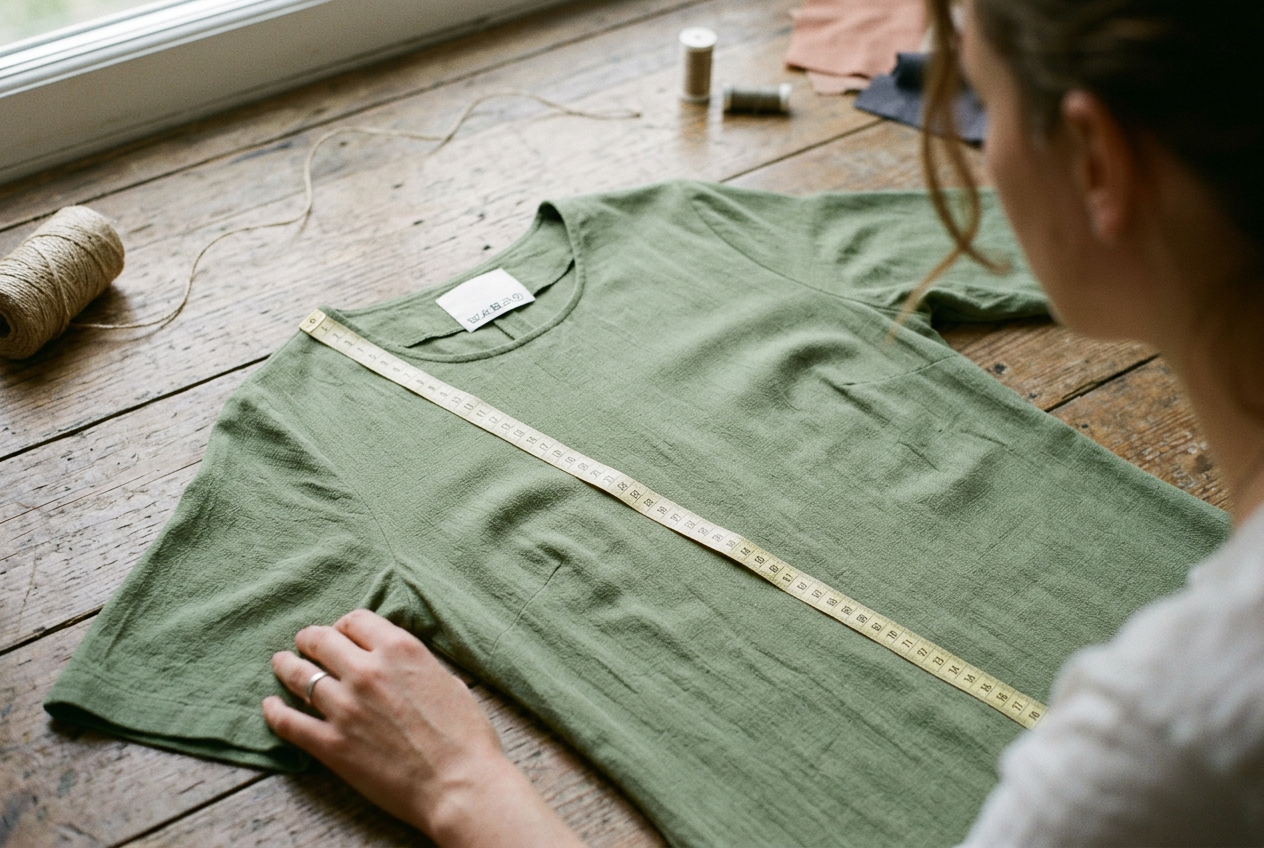
Measure before the first wash. Record shoulder-to-hem length and the width at the bust, waist and hips while the dress lies flat. Those numbers give you a target for damp reshaping and evidence of whether the change came from cleaning rather than memory of the fit.
When dry cleaning is the safer cost
Dry cleaning uses a solvent-based cleaning system rather than a water bath, which reduces the swelling that makes ordinary viscose vulnerable. It still subjects a garment to movement, pressing and stain treatment, so point out loose trims, fragile buttons and existing marks when you drop it off. Keep the care label attached.
Paying for cleaning makes the most sense when the dress depends on exact drape, contains internal structure or would cost much more to replace than several cleanings. It makes less sense for an inexpensive casual dress that needs attention after every wear. In that case, the label has supplied a purchase decision: leave it, or accept that its low entry price comes with high-maintenance care.
Questions people ask
Can a viscose dress shrink in cold water?
Yes. Cold water avoids the added stress of heat, but viscose can still swell, weaken and release manufacturing tension when wet. The amount of change depends on the fabric construction and garment finishing, which is why two dresses with the same fiber label may behave differently.
Can
I stretch a shrunken viscose dress back to size?
Minor contraction may ease while the dress is damp. Support it flat, smooth the seams and work toward the original measurements without pulling from one point. Severe shrinkage, twisted panels or a distorted waistband may not recover, and repeated soaking can create more damage.
Is dry cleaning always necessary for 100 percent viscose?
No. Some 100 percent viscose garments are designed and labeled for hand or machine washing. Follow the finished garment’s label rather than making the decision from fiber content alone, because construction, dyes, trims and stabilizers can set the care requirement.
Should
I avoid buying dry-clean-only viscose dresses?
Avoid them for frequent wear if regular cleaning would feel disproportionate to the dress’s price. For a well-constructed occasion dress whose fit depends on a bias cut or structured waist, dry cleaning can be the sensible maintenance cost. Check the label before purchase and budget for the method it names.
One update a day
Today's fashion update, in your inbox
One fashion update each morning — no hype, no filler, just pieces worth wearing.