Your Jacket May Fit but Still Have the Wrong Sleeve Pitch
A twisting sleeve can make a correctly sized jacket feel tight. Check how the sleeve hangs against your natural arm position before sizing up or paying for alterations.
October 31, 2026 · 6 min read
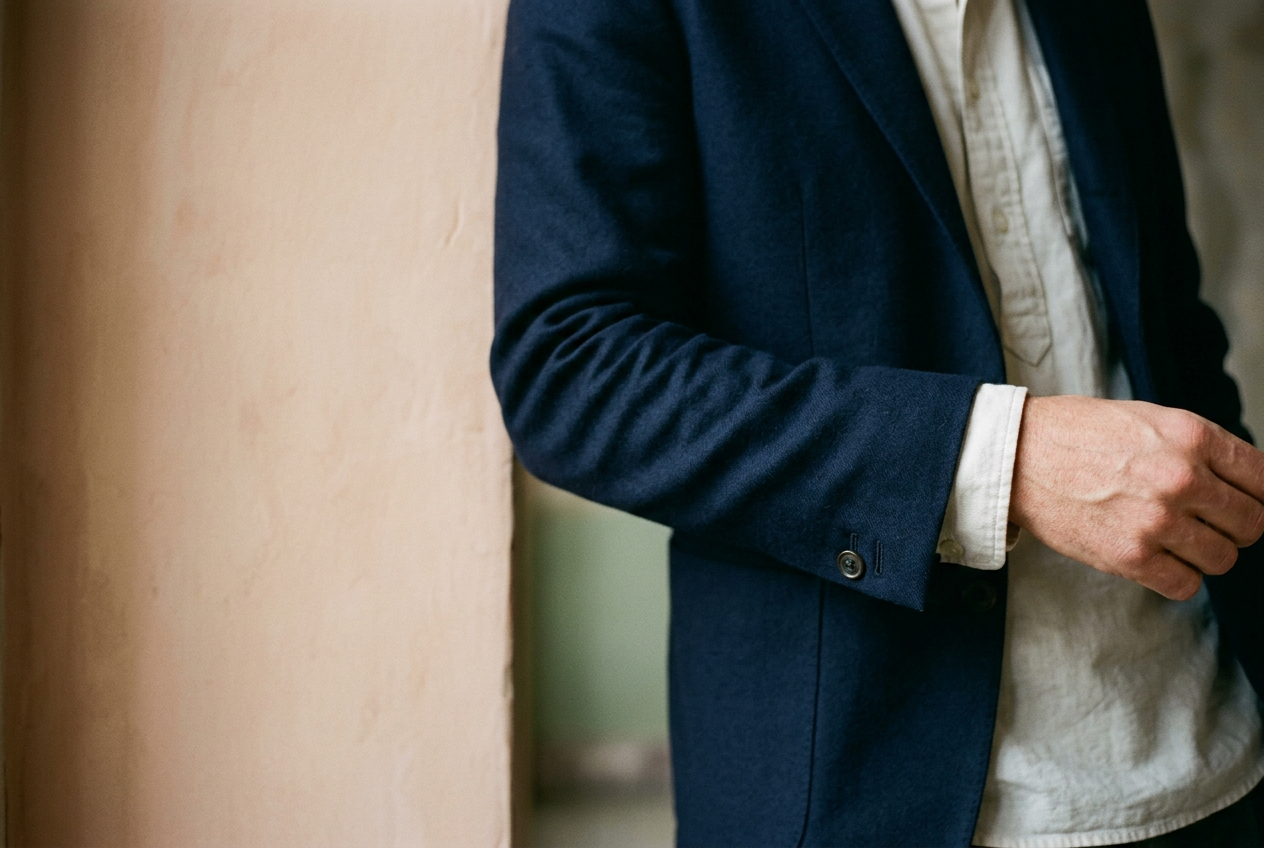
The jacket at the center of this guide is a single-breasted navy wool blazer worn over a cotton poplin shirt. Its chest closed without strain, the shoulder seam ended in the right place, and there was enough room to pinch a little fabric at the upper arm. Still, the sleeves looked too small.
From the front, diagonal wrinkles ran down from each shoulder. The cuffs rotated toward the thumbs, while the sleeve vents sat slightly off-center at the back of the wrists. Reaching forward felt restrictive, even though the biceps were not closely fitted. Going up one size added room through the body and pushed the shoulder line outward, but the twisting remained.
The problem was sleeve pitch, meaning the angle at which a sleeve hangs from the shoulder. The jacket expected the arms to rest farther back than they naturally did. Once that mismatch was visible, a larger size stopped looking like the answer.
This is unisex fit advice. Women's and men's tailoring may use different proportions and shaping, but sleeve pitch works the same way across tailored jackets, blazers and structured coats.
Sleeve pitch is built into the pattern
A tailored sleeve does not hang as a straight tube from a circular opening. Its curved upper section, called the sleeve cap, is shaped and positioned so the sleeve falls at a planned angle when the wearer stands at rest. Some patterns assume a relatively upright stance with arms close to the side seam. Others allow the arm to sit farther forward.
Bodies vary. Rounded shoulders, developed upper-back muscles, a prominent chest or a habitual forward arm position can change where the arm hangs without changing its circumference. That posture is not a fault to correct. It is information about which jacket pattern will sit quietly on the body.
The navy blazer made the mismatch easy to see because its hopsack, a basket-weave wool, had enough body to hold a crease rather than collapsing around it. A softer jersey jacket might disguise the same conflict. A rigid canvas or dense wool coating can make it feel stronger.
When pitch and posture disagree, the arm pushes against the sleeve in one direction and leaves excess cloth in another. The result is drag lines, the diagonal wrinkles created when fabric is pulled away from where the pattern intended it to sit. The sleeve may spiral around the arm, bunch beneath the shoulder or rotate the cuff. That tension can feel like undersizing even when the chest and upper-arm measurements are adequate.
Let the sleeve reveal the posture mismatch
Start with the jacket open over the layer you expect to wear most often. For the navy blazer, that meant a lightweight poplin shirt rather than a thick sweater, which would have added a separate source of pressure. Smooth the collar into place, then stop arranging your body for the mirror. Let your shoulders settle and allow your arms to hang where they normally fall.
Take front, side and back photos with the camera near chest height. A side view matters because an arm that hangs ahead of the torso can look neutral from the front. Keep your hands empty and avoid flattening your shoulder blades, a fitting-room habit that can make a sleeve appear cleaner for the few seconds you hold the pose.
Now move both elbows slowly backward without lifting the shoulders. If the sleeve twist releases, the jacket was likely drafted for arms that sit farther back than yours. Return to neutral, then move the elbows a little forward. A sleeve that becomes smoother in that position may have been pitched too far forward.
This is a comparison, not an exercise in finding a perfect pose. The useful observation is whether a small change in arm angle removes wrinkles while the shoulder and chest stay in place. On the navy blazer, drawing the elbows back made the diagonal lines beneath the sleeve heads relax and brought the cuff vents closer to center. The jacket looked properly fitted only in a posture that did not feel natural.
Check one side at a time as well. Many people carry a bag on one shoulder, use one arm more heavily or stand with a slight rotation through the torso. One sleeve may be quiet while the other twists. Buying a larger jacket to accommodate the more difficult side usually makes the good side and the body fit worse.
Size problems leave different evidence
A jacket that is too small through the chest usually shows strain beyond the sleeves. With the front button fastened, the lapels may pull away from the chest, the button area may form horizontal creases, or the front edges may spread below the fastening. Opening the jacket can reduce that tension. It will not correct a sleeve-pitch mismatch, because the sleeve still meets the shoulder at the same angle.
Upper-arm tightness also behaves differently. If the sleeve circumference is too narrow, pressure tends to remain around the biceps when the arm hangs naturally, and a thicker shirt makes it steadily worse. Pitch tension often feels more directional: the sleeve catches when the arm moves forward, the cuff rotates, or one section presses while another has visible excess fabric.
The shoulder line offers another check. A larger size may be justified if the seam finishes inside the shoulder point or the upper sleeve looks compressed from every angle. If the existing shoulder sits cleanly but the next size extends beyond it, sizing up is trading an angle problem for an oversized frame.
That was the decisive result with the navy blazer. The larger version loosened the waist and dropped the armholes, while the same spiral remained in each sleeve. More fabric had not changed the underlying geometry.
Do not rely on the reach test alone. Many tailored jackets resist when both arms are extended straight ahead because the body contains woven cloth, lining and internal structure rather than stretch fabric. Judge whether the jacket allows ordinary movement such as driving, typing or lifting a cup, then look for persistent strain when the arms return to rest.
An alteration is possible, but it is not minor
A tailor can sometimes reset a sleeve, meaning remove it and sew it back into the armhole at a different angle. This is more involved than shortening a cuff. The lining must be opened, the sleeve detached, its position adjusted and the fabric eased back into the opening without puckering.
The available correction depends on the jacket. Stripes and checks must still align convincingly. A heavily padded shoulder can limit how naturally the sleeve settles after rotation, while a very close armhole may leave little tolerance for change. If the shoulder itself is too wide, too narrow or collapsing, rotating the sleeve will not repair the whole structure.
Ask an alterations tailor to pin or baste one sleeve before committing to both. Wear the same type of shirt used during the original fitting, let the arm hang naturally and compare the adjusted side with the untouched one. The trial costs time and may involve a fitting appointment, but it is more informative than approving a full alteration from a verbal description.
For an expensive jacket that otherwise fits exceptionally well, resetting the sleeves may be worthwhile. For ordinary ready-to-wear, trying another cut is often the cleaner choice because sleeve work is skilled labor and can cost enough to change the value of the purchase. Returning the navy blazer made more sense than rebuilding it around a posture its pattern did not anticipate.
Shop the pattern before the size
When the same twist appears across two sizes of one jacket, move to another model rather than continuing up the chart. Brands often use more than one block, the underlying pattern that sets a garment's proportions, so two jackets carrying the same chest size can place their sleeves differently.
Bring a familiar shirt and take the side-view photo early. Check the cuff orientation before rolling or shortening the sleeves, since styling can hide the evidence needed for a return decision. If the shoulder, chest and length work while the sleeve becomes clean only after you alter your posture, the jacket is asking for an adjustment you should not have to perform all day.
Questions people ask
Can a wrong sleeve pitch make the biceps feel tight?
Yes. A pitch mismatch can pull the sleeve diagonally across the upper arm, creating localized pressure even when its circumference is adequate. If the pressure changes when you move your elbows slightly forward or backward, while the sleeve visibly untwists, angle is a more likely cause than size.
Will going up one jacket size fix twisted sleeves?
Usually not if the twist appears in the same place across both sizes. A larger jacket adds room, but it generally preserves the model's intended sleeve angle. Size up when the chest, shoulder or upper-arm circumference is also tight; otherwise, compare a different cut before accepting a looser body.
Can a tailor change sleeve pitch on any jacket?
A tailor can assess most tailored jackets, but a clean result is not guaranteed. Patterned cloth, limited fabric, strong shoulder padding or a poorly fitting armhole can restrict the correction. Ask for one sleeve to be pinned or basted first so you can judge the change in your normal posture.
Do soft, unstructured jackets have sleeve-pitch problems?
They can, although flexible cloth may hide the drag lines and feel less restrictive. Watch the cuff: if it rotates persistently, or the sleeve spirals back after smoothing, compare how it hangs with your elbows slightly forward and back. A soft jacket should still settle when your arms return to rest.
One update a day
Today's fashion update, in your inbox
One fashion update each morning — no hype, no filler, just pieces worth wearing.