Your Poplin Shirt Balloons at the Back. Test the Cut First.
A wide shoulder, generous back pleat, curved hem, or crisp cloth can all cause the same puff. A few fit checks can show whether styling or a different cut will fix it.
October 25, 2026 · 7 min read
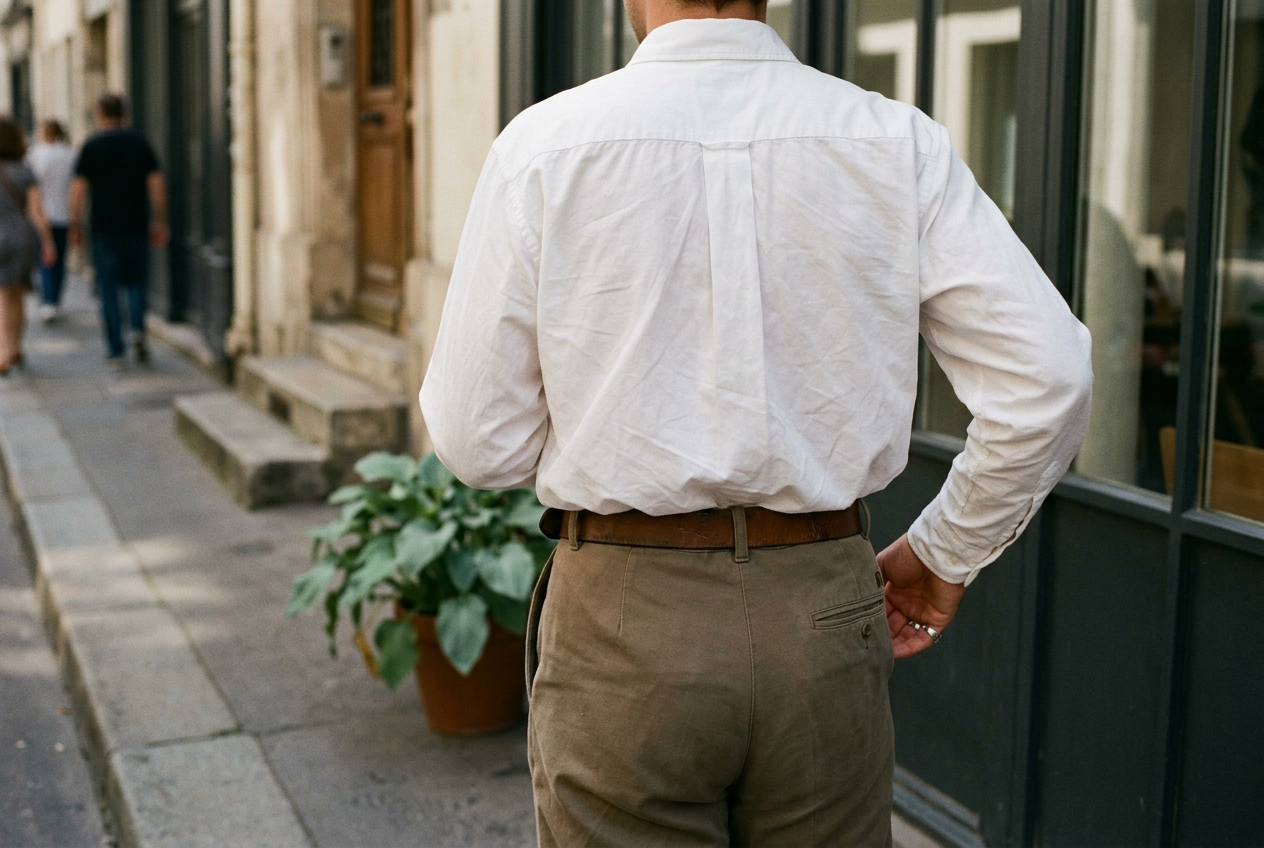
The case here is a white 100% cotton poplin button-up with shoulder seams extending beyond the shoulder bone, a center box pleat, and a curved shirttail hem. Cotton poplin is a tightly woven plain-weave cloth with a smooth surface, and this shirt’s fresh, firm finish made every extra inch visible rather than letting it collapse against the body.
Worn loose, the test shirt pushed away from the lower back. Tucked fully, it formed a shelf above the waistband. Neither result automatically meant the shirt was too large. The volume came from several construction choices working together, which is why sizing down without checking the cut can replace one problem with tightness somewhere more important.
This is unisex fit advice. Bodies and brand sizing differ, but the underlying checks apply across women’s and men’s wardrobes because they follow the garment’s seams, folds, and fabric behavior rather than the size printed on its label.
Start with the shoulder seam
The shoulder is the first place to look because it controls how the shirt hangs through the upper back. On a conventionally fitted shirt, the seam should sit close to the point where the shoulder drops into the arm. A dropped shoulder deliberately places that seam farther down the arm, adding ease through the back and changing the sleeve line.
On the test shirt, each shoulder seam sat beyond the shoulder point. That extra width did not stay at the top. It traveled downward, leaving more cloth between the side seams and allowing the center back to lift away from the body, especially when the arms returned to a resting position after reaching forward.
Stand naturally and view the shirt from the side. If the back begins to project outward directly below the shoulder blades, pinch a small amount at both shoulder seams without pulling the collar tight. A cleaner fall through the back indicates that shoulder width is contributing to the balloon. This is a diagnostic pinch, not a proposed alteration; rebuilding a shirt at the shoulders is extensive work and can cost a substantial fraction of a mid-priced replacement.
Try another cut before another size. A shirt described as regular, tailored, straight, or classic may have a more contained shoulder while leaving enough room through the upper body. Size down only if the collar, armholes, and sleeve movement remain comfortable. If crossing your arms pulls the back yoke, meaning the horizontal panel across the upper back, the smaller size has removed useful ease.
Check what the back pleat releases
The test shirt’s box pleat, a fold made from two creases facing away from each other, opened below the back yoke. It supplied room for reaching and gave the shirt its easy shape, but stiff poplin held that released fabric in a rounded form instead of letting it fall into soft folds.
Smooth the pleat flat with your hand while the shirt is on, then hold it closed lightly at mid-back. If most of the puff disappears while the side seams stay vertical, the pleat is the main source. That does not make the construction faulty. It means the shirt was drafted for mobility or an oversized silhouette that may not suit the way you want to wear it.
A different back treatment is usually the cleanest fix. Look for a shirt with small side pleats, which distribute movement nearer the shoulder blades, or a plain back with shaping seams. A center pleat is useful under a jacket and for reaching across a desk, so removing it has a tradeoff: the back looks quieter, but the shirt may pull when you move.
Do not pin the pleat shut for a full day as a substitute for sewing. A safety pin can strain the poplin at one small point, and the temporary closure does not account for the movement a tailor would preserve. Use a clip during a brief mirror test, then remove it.
The hem and fabric can exaggerate the same problem
A shirttail hem, meaning a hem that curves lower at the front and back than at the sides, encourages the back panel to gather when it meets a waistband. On the test shirt, the long back curve slid farther into the pants than the sides, so a full tuck trapped more material at the center back. Pulling the shirt upward for ease then concentrated the released cloth above the waistband.
Test the hem untucked first. If the balloon appears mainly where the hem curves downward, compare the shirt with a straight or shallower hem intended for wearing out. Cropped and camp-collar cuts often avoid the long central tail, though they create a different proportion and may expose skin when you reach up.
Fabric finish matters just as much. New poplin can be crisp because the yarns are densely woven and the finishing treatment gives the surface body. After washing according to the care label, some shirts relax and become easier to tuck, but laundering will not correct an overwide shoulder or remove the volume released by a pleat. Do not keep a poor fit on the assumption that washing will transform its cut, particularly once washing ends the return option.
A finer, softer poplin will usually fold into smaller ridges. Oxford cloth is thicker but can become more yielding with wear, while cotton voile is lighter and less likely to stand away from the body. Those alternatives change opacity, polish, and durability, so the goal is not merely to find the softest cotton. It is to match the fabric’s body to the amount of ease in the pattern.
Run three styling tests before booking an alteration
First, change the buttoning. On the test shirt, fastening through the natural waist while leaving the lowest button open allowed the two fronts to separate slightly over the hips, which reduced the backward pull that had been feeding fabric toward the center back. The adjustment works best with a high-rise waistband or a layer underneath; on a shorter shirt, it may expose more than intended.
Next, try a partial front tuck. Place only a hand-width of the front hem behind the waistband, slightly off center, and leave the back free. The untucked back can then hang from the shoulders instead of bunching above the waistband. Keep the tucked section narrow.
Pushing the entire front into the pants while leaving the back out creates tension at the side seams and can make the rear volume look more pronounced.
Then test a shallow all-around tuck. Tuck the shirt fully, raise both arms once, and lower them before smoothing only the side seams. This releases enough cloth for movement without deliberately pulling a large blouse of fabric above the waistband. If the center back still forms a rigid ledge, the excess belongs to the shirt’s cut rather than the tucking method.
The final comparison requires another shirt, ideally one with similar body width but narrower shoulders or no center pleat. Put both over the same pants and undergarments. Keeping the rest of the outfit constant makes the useful difference visible: if the comparison shirt falls cleanly, shop by cut; if both catch above the waistband, the rise, belt tension, or friction between fabrics may be part of the problem.
These tests take a few minutes and preserve the return option. They also separate styling volume, which can be redirected, from pattern volume, which remains built into the garment.
When tailoring is worth it
Tailoring makes sense when the collar, shoulder line, sleeve length, and upper-body ease already work, but a contained section of the back remains too full. A tailor may be able to reduce a center pleat, add back darts, or shorten a long curved hem. Darts are sewn folds that remove width and taper to a point, giving the back more shape without taking the entire shirt apart.
Bring the pants you expect to wear with the shirt. The tailor needs to see where the waistband catches the hem and how much reach you require. Ask to preserve enough room for sitting and moving your arms forward, particularly if the shirt will be worn for work.
Skip alteration when the shoulder is plainly too wide and the sleeve head also hangs low, unless the garment has unusual material or sentimental value. Shoulder reconstruction affects the armhole and sleeve, making it a larger job than taming one pleat. For the white test shirt, the cleaner alternative was a narrower-shouldered cut with less fabric released at center back, not an attempt to tailor an intentionally relaxed pattern into a fitted one.
Questions people ask
Should
I size down when a poplin shirt balloons at the back?
Only if the smaller size keeps comfortable movement through the upper body and leaves the collar and armholes sitting correctly. If sizing down stops the puff but creates pulling across the back yoke or restricts the sleeves, keep your size and choose a narrower shoulder or a back without a center box pleat.
Will washing make a stiff poplin shirt drape better?
It may soften after washing according to the care label, especially if its crispness comes partly from a finishing treatment. Washing cannot change shoulder width, hem length, or the amount of cloth released by a pleat, so do not launder a returnable shirt merely to test whether a structural fit problem disappears.
Can a tailor remove the back ballooning without changing the shoulders?
A tailor can sometimes reduce a pleat or add back darts when the shoulders already fit. The shirt still needs enough ease for reaching and sitting, and printed fabric may complicate pattern alignment. Bring the usual pants so the excess can be assessed where the shirt meets the waistband.
What is the easiest no-sew fix for excess back volume?
Try a narrow partial front tuck while leaving the back hem loose, or leave the lowest button open so the fronts can move over the hips. If the poplin still stands away directly below the shoulder blades, styling will not fully solve it; compare a narrower-shouldered cut before paying for alterations.
One update a day
Today's fashion update, in your inbox
One fashion update each morning — no hype, no filler, just pieces worth wearing.