That Crisp Cotton Poplin Skirt May Still Trap Heat
A cotton label and papery hand do not guarantee summer comfort. Weigh the weave, lining, gathers, and waistband before buying a poplin skirt for hot days.
Women's · October 16, 2026 · 8 min read
The useful test for a summer skirt is not whether the fabric feels crisp between two fingers. It is whether warm air can leave once the skirt is on your body.
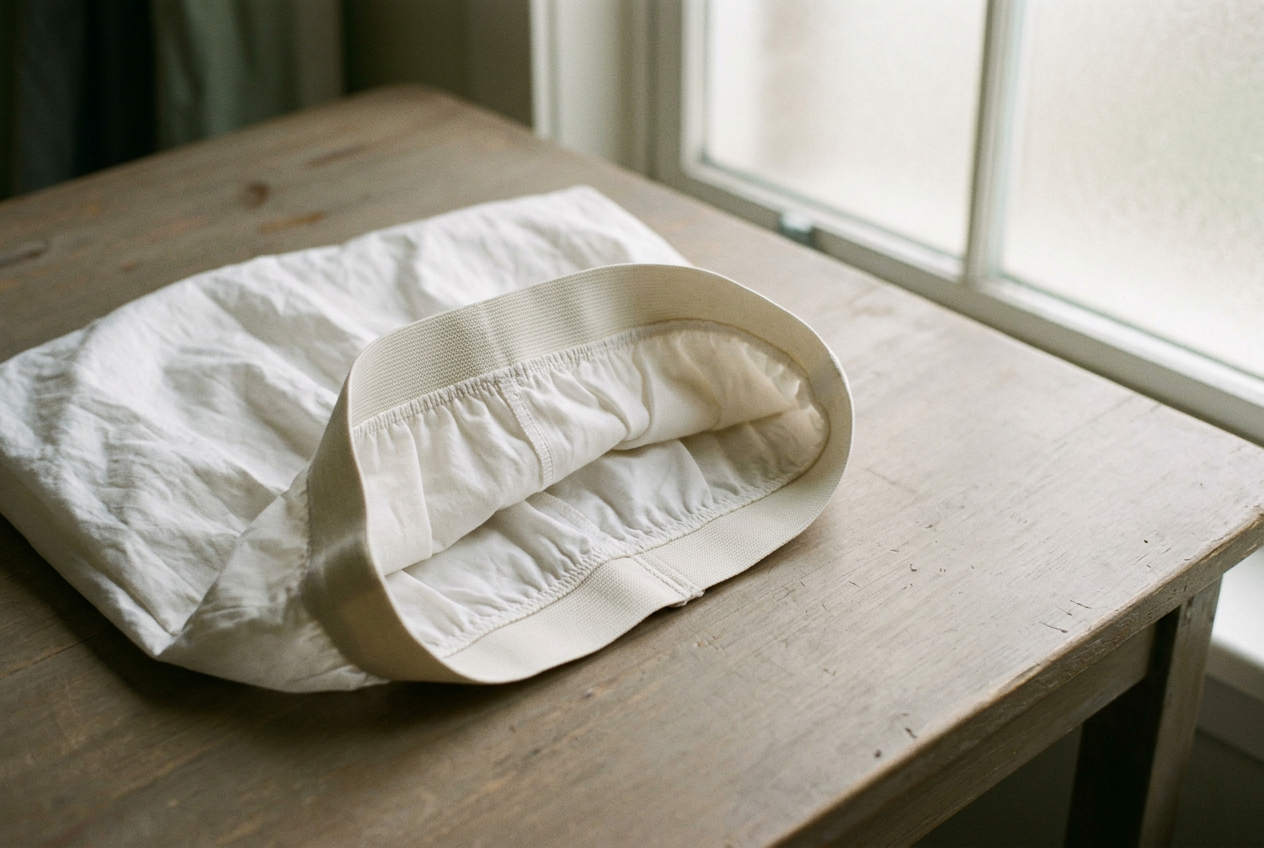
Consider a white gathered cotton-poplin midi with a full lining and a wide elasticized waistband, the concrete case at the center of this guide. On a hanger, it has the qualities shoppers often associate with heat-friendly dressing: natural fiber, pale color, low apparent weight, and enough volume to sit away from the legs. Inside, the construction tells a different story. The shell is tightly woven, the lining reaches most of the way down, the gathers compress a large amount of fabric at the waist, and the elastic holds both layers close to the warmest part of the torso.
This is women’s coverage because the fit discussion centers on skirts sold in women’s departments, though the fabric principles apply to any poplin garment.
Crispness comes from structure
Poplin is a plain-weave fabric, meaning each crosswise yarn passes alternately over and under each lengthwise yarn. Its smooth surface and clean folds make it useful for shirts, dresses, and skirts that need to look pressed without feeling formal.
Cotton poplin can be airy. It can also be packed so densely that little air moves through it. Fiber content does not settle that difference. Two labels may both read 100% cotton while one fabric lets light and air through and the other behaves more like a thin barrier.
Yarn density is the practical issue: it describes how closely the threads sit together. A dense poplin usually holds a sharper pleat, makes a more pronounced rustle, and resists showing what is underneath. Those qualities are helpful in a white skirt, where opacity matters, but they reduce the small spaces through which heat and moisture can escape.
The white gathered midi shows the tradeoff clearly. Its opaque shell looks polished in direct sun and does not collapse around the knees, yet that same compact surface limits ventilation even before the lining enters the calculation. The fabric is lightweight by mass, but lightweight and breathable are separate properties.
A quick store check helps. Hold one layer toward a bright fitting-room light without stretching it. A faint glow suggests some open space between yarns; total blackout usually points to a tighter construction, although dark color and surface finishes can affect the result. Then place the fabric over your mouth and breathe outward gently.
This is not a laboratory test, but obvious resistance gives useful comparative information when two skirts have similar cuts.
A lining can cancel the breeze
Lining often solves a real problem. Pale poplin may turn translucent in sunlight, and an extra layer keeps pockets, underwear, and tucked tops from showing. It can also stop the shell from clinging after perspiration.
The cost is another fabric between the body and outside air. A full lining that repeats the skirt’s length and fullness creates a double-layer garment, while a short lining ending above the knee protects coverage without enclosing the lower legs. Loose cotton voile, a light fabric woven with fine yarns, generally feels different from slick synthetic lining, but its fiber content still does not reveal how densely it was woven.
Read product descriptions for phrases such as “fully lined,” “partially lined,” or “lined through the upper skirt.” If a brand shows only exterior images, zoom in at the hem or look for an inside-out product view. In a store, lift the shell rather than judging both layers together. The white midi’s lining is easy to miss from the outside because it matches the shell, yet it removes much of the airflow that the wide silhouette appears to promise.
An unlined skirt is not automatically the better purchase. If it requires a separate slip every time, the result may be just as warm, and a synthetic slip can cling more than a purpose-built lining. For intense heat, a partially lined poplin skirt or an unlined darker color often offers the cleaner compromise.
Gathers add insulation at the waist
A gathered skirt contains more fabric than the waistband can hold flat, so the excess is drawn into small folds along the seam. That fullness gives the hem room to move and can improve airflow around the legs. At the waist, however, several layers crowd together: gathered shell, gathered lining, seam allowances, and the waistband itself.
This is why a very full poplin skirt may feel breezy below the knee but damp around the stomach and lower back. The white midi is not failing because it has volume. The problem is where that volume is concentrated, especially when the lining is gathered into the same seam and the waistband presses the bundle against the body.
Pleats and panels distribute fullness differently. A paneled skirt gains width through shaped sections, which can preserve a broad hem without packing as much material into the waist seam. Stitched-down pleats may also lie flatter through the upper hip before opening lower on the skirt. Neither construction guarantees coolness, but both are worth comparing with dense all-around gathers.
Look at the side seam in a product image. If the upper skirt balloons out immediately below a thick waistband, expect substantial bulk there. If the line stays relatively flat through the high hip and opens farther down, the garment is less likely to insulate the torso.
The waistband is a small climate zone
Wide waistbands look neat because they stabilize the skirt and prevent gathers from rolling. They can also cover several inches of skin with shell fabric, interfacing, seam allowances, and elastic.
Interfacing, meaning an extra layer added inside a garment to give it shape, often makes a fixed waistband feel firmer and look cleaner. In hot weather, a heavily interfaced band can become the least forgiving part of the skirt, particularly after a meal or during a long seated commute. A back zipper may ventilate no better, but a correctly fitted fixed waist can avoid the constant pressure of strong elastic.
Elastic varies. A narrow channel can dig in while a broad band spreads pressure, yet the broad option also covers more skin and may contain dense elastic from edge to edge. Shirring, rows of elastic stitching that draw fabric into small ripples, places still more material against the torso.
For the white gathered midi, the wide elastic waistband completes the heat trap. Sizing up would ease the pressure but could shift the waist lower and disturb the intended proportion; it would not remove the lining or reduce the gathered fabric caught in the seam. The better alternative is the same general silhouette with a partially elasticized back, a flatter front, and less fullness across the upper hip.
Sit down during a fitting. The waistband should allow a full breath without folding or biting, and the gathered seam should not become a rigid ridge. If the skirt is comfortable only while standing, heat will make that fit problem more noticeable.
A practical buying order
Start with the inside. Fiber content belongs later in the decision because “100% cotton” says nothing about the number of layers, the density of the weave, or the amount of fabric compressed at the waist.
First, identify the lining and where it ends. Next, separate the shell from the lining and test each layer against light. Run a hand around the waistband to feel for thick elastic, stiff interfacing, and a bulky gathered seam. Finally, walk and sit in the skirt long enough for the layers to settle rather than relying on the first cool touch of fabric.
Online shoppers have less evidence, so product photography matters. Back views reveal elastic panels; close-ups show whether gathers are fine and crowded or broadly spaced; hem images sometimes expose a second layer. A missing lining description is a reason to ask the retailer before ordering, especially with white or pastel poplin.
In the budget-to-midrange bracket, crisp opaque poplin and full synthetic lining are common ways to make a skirt look substantial on the rack. Paying more may buy finer yarns or better pattern cutting, but price does not guarantee airflow. A costly skirt with a dense shell and full lining can still wear hotter than a modestly priced, dark, unlined version with a flatter waist.
The white gathered midi still has a place. It works for air-conditioned offices, dinners, and mild days when its opacity and shape matter more than maximum ventilation. For a humid commute or an outdoor afternoon, its crispness asks for too much comfort in return.
Care without adding stiffness
Dense poplin can soften after washing, although the care label takes priority because linings, trims, and color treatments may impose different limits. Air drying reduces dryer heat and can help preserve the waistband elastic, but a skirt dried in hard folds may need steaming or ironing to recover its intended shape.
Avoid adding starch if hot-weather comfort is the goal. Starch can increase the crisp surface that makes poplin appealing, while making the fabric feel less yielding against the body. Press the shell as needed, using the labeled temperature, and let the waistband dry completely before wearing; thick gathered seams retain moisture longer than the broad panels below.
Questions people ask
Is cotton poplin breathable enough for summer?
It can be, provided the weave is not extremely dense and the garment does not add a full lining or bulky waist construction. Test the individual layers rather than trusting the cotton label. A darker, unlined poplin skirt may feel cooler than a white version that needs two layers for opacity.
Are gathered skirts hotter than straight skirts?
Not across the whole garment. Gathers can hold the skirt away from the legs and create movement at the hem, but they also concentrate fabric around the waist. A gathered skirt with a flat front or lighter partial lining will usually feel less enclosed than the fully lined white midi examined here.
Should
I size up in a poplin skirt for hot weather?
Size up only if the waistband is the main problem and the larger size still sits securely. Extra room cannot make a dense shell or full lining more breathable, and it may place the gathered seam at the wrong point. Compare the next size while seated before deciding.
How can I make a lined poplin skirt feel cooler?
Wear it with a light, untucked top so the waistband has less fabric trapped beneath it, and reserve it for lower-humidity days or indoor plans. Altering a full lining to a shorter length may help, but that changes opacity and should be assessed before any fabric is cut.
One update a day
Today's fashion update, in your inbox
One fashion update each morning — no hype, no filler, just pieces worth wearing.