A Polyester Lining Can Make a Summer Dress Feel Much Hotter
Cupro, acetate and polyester linings may look alike on a hanger, but they handle sweat, static and cleaning differently. Sometimes the better summer choice is less lining.
Women's · September 4, 2026 · 8 min read
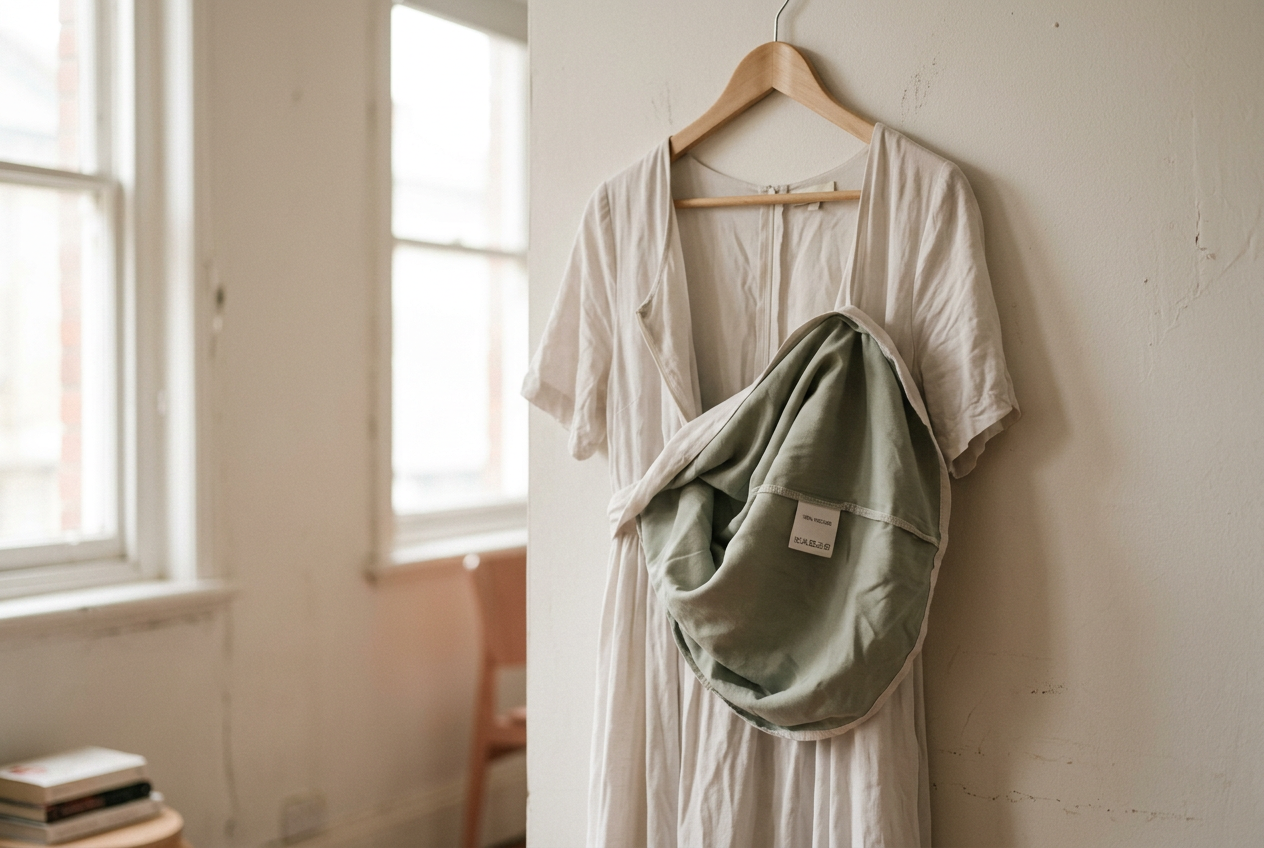
Use a pale viscose midi dress as the test case: the outer fabric looks light enough for a humid commute, the skirt is cut on the bias, meaning diagonally across the fabric so it follows the body, and the care label says “100% viscose shell, 100% polyester lining.” That second line can decide whether the dress feels easy or oppressive by lunchtime.
This is women’s coverage, with a focus on dresses worn over regular underwear rather than formal foundation garments. The same fiber behavior applies elsewhere, but placement matters. A lining trapped close to the torso behaves differently from one hanging loosely under a wide skirt.
A lining has several jobs. It blocks show-through, keeps the outer fabric from catching on underwear and protects seams from friction. It can also help a dress keep its intended shape. Yet every lining adds another layer, and no fiber name can compensate for a lining that is tight through the hips or sewn into a narrow, closed shape with little room for moving air.
Cupro earns its place in a close-fitting dress
Cupro is a regenerated cellulose fiber, meaning plant-derived cellulose is dissolved and remade as a smooth filament. Asahi Kasei markets a widely used version under the Bemberg name, and its technical documentation emphasizes moisture management, smoothness and reduced static compared with many synthetic linings.
In practical terms, cupro tends to slide over skin and underwear rather than gripping them. That makes it particularly useful under the pale bias-cut midi, where a rougher lining could catch at the thighs and distort the outer skirt. Cupro also takes up more moisture than polyester, so a small amount of perspiration is less likely to sit between skin and lining as a slick film.
It is still fabric, not ventilation. A fitted cupro-lined bodice with closed armholes can feel hotter than an unlined loose bodice, and a tightly woven cupro lining may offer less airflow than its soft hand suggests. Dark sweat patches can also appear on some colors until the fabric dries.
Care is the catch. Cupro garments may be labeled for hand washing, gentle machine washing or dry cleaning depending on the dye, finish, seams and outer fabric. The dress label controls the decision, not the generic properties of cupro. It can wrinkle, and aggressive spinning may leave a delicate lining twisted inside a heavier shell.
Cupro usually makes the strongest investment case when the dress is fitted, pale or made from a shell that needs help falling cleanly. Paying more for it under a loose black tent dress is harder to justify because that silhouette already reduces cling and show-through.
Acetate feels polished but needs more care around heat
Acetate is another cellulose-based manufactured fiber, though its chemistry and performance differ from cupro. It has the smooth surface and fluid drape associated with traditional dress linings, which helps a skirt pass over tights or shapewear without bunching.
For summer, acetate sits in the middle. It generally absorbs less moisture than cupro but more than standard polyester, while the exact result depends on fabric weight and construction. Eastman’s documentation for Naia, its branded cellulosic acetate yarn, describes moisture management and quick drying, but those claims apply to fabrics made to its specifications rather than every acetate lining on a resale rail.
Acetate can develop static, though it is often less persistently clingy than polyester in dry conditions. The pale midi would probably hang more cleanly over an acetate lining than over a coarse polyester one, but a narrow acetate skirt could still stick after leaving an air-conditioned room for humid outdoor heat.
Read the cleaning line closely. Acetate is sensitive to high iron temperatures, and acetone, found in some nail polish removers, can damage it. Many acetate-lined dresses are marked dry clean only because of the full garment’s construction. That recurring care cost makes less sense for a casual summer dress likely to meet sunscreen, perspiration and frequent wear.
Polyester is practical until it sits too close
Polyester absorbs little moisture, resists wrinkles and can be durable through repeated cleaning. Those are useful qualities in a lining, especially when a washable dress needs to return to shape without much ironing.
The trouble starts when polyester is cut as a close tube under a lighter, airier shell. Perspiration stays nearer the skin, and the lining may cling to the backs of the legs or ride upward as the wearer walks. Polyester also holds an electrical charge readily, so static can pull the lining toward underwear while the outer skirt twists in another direction.
Weave and cut can change the result. A lightweight polyester lining with enough circumference to move independently may be perfectly workable under a loose printed dress, particularly when opacity matters more than a barely perceptible increase in warmth. A dense polyester lining fitted through the waist and hips is the weaker option, even if the outer dress is linen or gauze.
Return to the pale viscose midi. Its polyester lining is not automatically a reason to reject it. Pinch the lining away from the shell and check whether there is spare width through the thighs, then hold both layers toward a strong fitting-room light. If the lining solves a real transparency problem and does not pull when taking a long step, the tradeoff may be reasonable.
Cleaning can favor polyester, but only when the whole dress is washable. A machine-washable lining does not overrule a viscose shell marked for dry cleaning, nor does it protect delicate trims. Polyester can also retain oily odor, so a dress that needs washing after every hot-weather wear loses some of its low-maintenance advantage.
No lining gives air a chance to move
An unlined dress is often the coolest choice because air does not have to pass through a second fabric. Seams may feel rougher, pale colors can become transparent in daylight, and a lightweight skirt may catch between the legs or reveal the outline of pockets.
The best unlined candidates are loose dresses in opaque prints, dark colors or textured fabrics. A substantial cotton poplin shirtdress usually gains little from a full lining, while a white linen dress may need coverage even if the linen itself feels breezy. In the latter case, lining only the skirt can preserve airflow around the torso.
An unlined bias-cut dress needs closer inspection. Without a slippery inner layer, the pale midi could catch on underwear and appear tighter than it is. Seam allowances may also show through the outer fabric. Those are construction problems a lining can solve, not reasons to treat every lining as desirable.
Partial lining and a separate slip solve different problems
A partial lining covers only the area that needs opacity or structure. In a summer dress, that might mean a skirt lining ending above the knee, leaving the lower skirt free to move, or an opaque front bodice paired with an unlined back.
Length matters. A short lining under a sheer midi can create a visible horizontal line across the thighs, while one ending at the fullest part of the hip may catch as the wearer sits. Look for a hem that lands in a visually intentional place and enough width to climb stairs without pulling the outer dress.
Partial lining works best when coverage is always needed in the same area. It stays aligned with the dress and cannot peek above the neckline. The disadvantage is permanent extra fabric: if the lined bodice is the hottest part, it cannot be removed on a humid day.
A separate slip is more adaptable. One washable slip can serve several dresses, and the wearer can choose a shorter length, a fuller cut or no slip at all depending on the light and setting. It also separates perspiration from a dry-clean-only dress, which may extend the time between cleanings.
The slip must match the dress. A straight slip under a bias-cut skirt can form its own tight band, and adjustable straps may show beside a wide neckline. Silk feels light and manages moisture well but usually costs more and asks for gentler care. Nylon or polyester slips are easier to find and maintain, though they can recreate the static and heat problem that the removable layer was meant to avoid.
A thin cotton slip breathes but may grip the shell instead of sliding under it.
For the pale midi, a separate cupro or silk-blend slip would offer the most flexibility if the dress were sold unlined. That choice adds a purchase and another set of straps to manage, but it also makes the dress wearable with or without full coverage. A permanently attached polyester lining is tidier; the slip is more adjustable.
Use the fitting room before trusting the fiber label
Start with the care label, then test the cut. Sit, take a long step and raise one knee as if climbing stairs. If the lining pulls before the shell does, it is too narrow and will restrict airflow as well as movement. Check whether it returns to place or remains caught above the hips.
Next, rub the lining lightly against the underwear or tights you plan to wear. Static that appears immediately in a cool fitting room is unlikely to improve outdoors. Hold the skirt toward daylight or a bright lamp, because store mirrors and dark fitting rooms conceal transparency.
Finally, decide what problem the lining is solving. Cupro is worth seeking when smooth drape and reduced cling protect the shape of a fitted dress. Polyester is defensible in a roomy, washable style. Acetate suits a polished dress when its care requirements fit the wearer’s routine.
If the outer fabric is already opaque and the seams are finished neatly, no lining may be the feature worth paying for.
Questions people ask
Is cupro always cooler than polyester lining?
Usually, but not automatically. Cupro takes up more moisture and tends to generate less static, while polyester can feel slick when perspiration stays on the skin. A loose polyester lining may still feel cooler than tightly fitted cupro because the space between body and fabric allows more air to move.
Does an unlined dress look cheaper?
Not if the fabric is opaque enough and the inside is finished well. Neatly bound or enclosed seams can make an unlined dress feel deliberate, while exposed, scratchy seam allowances may signal cost cutting. Judge whether the dress hangs cleanly and remains wearable in daylight rather than treating lining as proof of quality.
What slip fabric works best in hot weather?
Cupro and lightweight silk are smooth, absorb some moisture and reduce friction under a dress, though both may require gentler washing. A lightweight synthetic slip can work under a roomy skirt. Avoid any slip that fits tightly through the thighs, since its cut can matter more than its fiber content.
Can a tailor remove a polyester lining from a dress?
Sometimes, but the lining may support the zipper, conceal interior construction or stabilize the bodice. Ask whether it can be replaced with a partial lining rather than removed outright. On an inexpensive dress, alteration may cost enough that returning it and buying an unlined style is the more practical choice.
One update a day
Today's fashion update, in your inbox
One fashion update each morning — no hype, no filler, just pieces worth wearing.