The Fitting-Room Test That Exposes a Sheer White T-Shirt
Front-facing mirrors can make white jersey look more opaque than it is. A pocket-size contrast card and a turn toward side lighting reveal the fabric before you buy.
August 21, 2026 · 8 min read
A white T-shirt can look covered in the fitting-room mirror and turn translucent beside a window. The mirror is not lying, but its frontal lighting may flatten the shadows and contrasts that make a bra edge, undershirt, tattoo or skin tone visible through jersey.
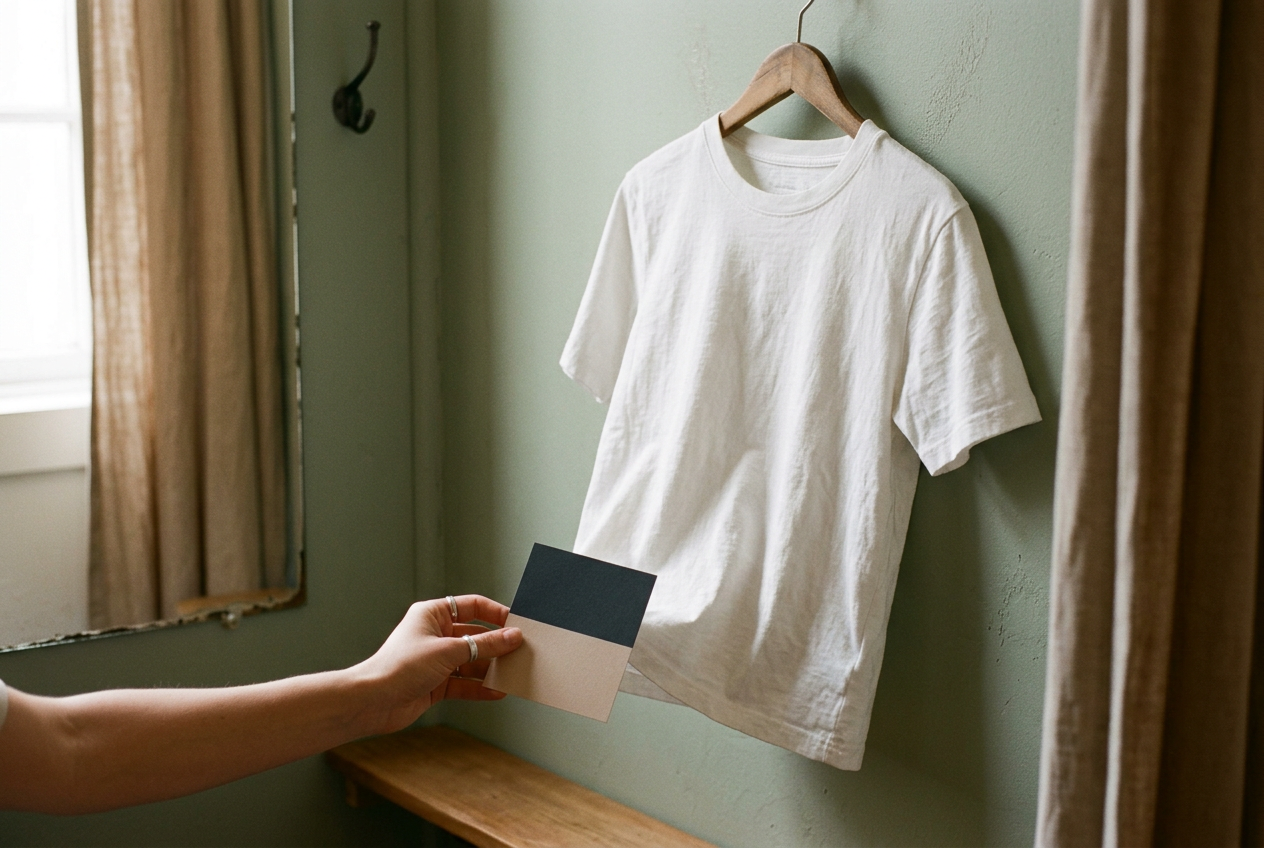
The test I use centers on one ordinary garment: a white, 100 percent cotton jersey crewneck with a regular fit, tried first in the usual size and then one size up. Jersey means a knit fabric with a smooth face and looped reverse. The useful tool is a pocket-size card with one matte-black half and one beige half, which makes changes in coverage easier to see without asking the fitting room to reproduce daylight.
This is unisex advice. The underlayer may be a bra, binder, tank, undershirt or nothing at all, but the mechanics are the same: light passes through openings in the knit, and stretching those openings makes contrast beneath the shirt easier to see.
Make a contrast card before shopping
Cut a piece of plain card small enough to fit in a wallet or phone pocket. Color half of one side matte black and leave the other half beige, tan or uncoated cardboard; avoid shiny ink, because glare can look like transparency even when the cloth is covering it.
The card does not tell you whether a shirt is acceptably opaque. That decision depends on how you plan to wear it. It gives you a repeatable contrast, so you can compare two sizes or two shirts under the same poor lighting rather than relying on a mirror impression that changes from store to store.
For the cotton crewneck, I placed the card beneath a single layer of fabric at the lower front, where there was no bra, pocket or doubled neckline to interfere. The black half remained the harder test. The beige half was closer to many skin and undergarment colors, so it showed whether the shirt would behave differently in ordinary wear than it did over the highest contrast.
Put the card against the inside of the shirt rather than several inches behind it. A gap introduces shadows, while direct contact shows how much color and edge definition the fabric allows through. If you can read the boundary between black and beige clearly, the shirt is sheer in that position. A softened boundary signals partial coverage, which may be enough for layering but unreliable as a standalone tee.
Leave the brightest part of the mirror
Stand normally in front of the mirror first. Check the center chest, lower front and upper back, but treat that view as a baseline rather than a verdict.
Next, turn about a quarter turn so the main fitting-room light falls across the shirt from one side. If there is a brighter doorway, use that light without stepping into a public area. Side lighting gives small ridges and layers a shadow, which can expose an undergarment edge or a patch of stretched fabric that flat, front-facing light has washed out.
Return to the cotton crewneck and look at the card again from the front and from a slight angle. The fabric may pass over the relaxed lower torso while becoming more revealing across the chest or shoulder blades, where the same knit is pulled wider. That difference matters more than a general label such as “lightweight,” since a shirt rarely hangs under equal tension everywhere.
Do not press the shirt against your body to force a failure. The point is to reproduce normal wear. Let your arms rest, turn sideways, then face away from the brightest light and check the back in the mirror. A white tee that works only while you stand square to a ceiling fixture will be unpredictable outdoors, in an office or near a restaurant window.
Stretch the shirt where clothing really stretches
Raise both arms as if reaching for a shelf, then lower them. Sit if the fitting room has a bench, or bend slightly at the waist without pulling on the hem. Finally, place one hand forward as though holding a bag strap. These movements spread jersey across the upper back, stomach and chest in ways that a static fitting-room pose does not.
Opacity, meaning the fabric’s ability to block what is beneath it, can change sharply under tension. During the reach test, watch whether the contrast card becomes more defined and whether your underlayer suddenly gains a visible outline. Also check whether the shirt returns to shape when your arms come down. A fabric that stays rippled or strained may keep revealing those areas during a full day of wear.
The regular-size cotton crewneck is the useful comparison point here. If its card boundary appears only while the fabric pulls across the body, try the next size and repeat the same movements. More ease may solve the problem, provided the larger shirt still sits correctly at the shoulders and does not drop so low at the armhole that it exposes the underlayer from the side.
If both sizes show the card while hanging loose, sizing up is unlikely to help. The openness belongs to the fabric.
Compare knit density before fabric weight
Fabric weight describes how much material is present, while knit density describes how closely the loops sit together. They often move in the same direction, but not reliably enough to judge a white T-shirt by hand feel alone. A substantial, soft jersey can have relatively open loops, especially once stretched, while a lighter fabric with compact loops may blur the contrast card more effectively.
Hold two candidate shirts over the card without stretching them. Move each shirt slightly and look at the edge between the dark and light halves. The better-covered option will soften that edge more evenly rather than hiding it only where the cloth bunches.
Then look closely at the fabric near the lower front. You do not need to count loops. Compare whether the tiny spaces between them look open and irregular or tight and consistent, and repeat the check at a side seam, where sewing can distort the knit. A dense fabric should not become an entirely different cloth near the seam.
Weight still affects wear. A heavier cotton tee may hang away from the body and resist cling, but it can also feel warmer or slower to dry. A light, dense jersey can be a better hot-weather choice if it passes the card test, though it may show surface lines from a textured bra or undershirt because thinness and transparency are separate issues.
Color matters too. Bright optical white creates strong contrast against many skin tones and dark underlayers, so a cream or ecru version of the same construction may look less revealing. That does not make cream more opaque. Repeat the card test rather than judging by the softer color.
Decide whether another size is the right alternative
Sizing up works when tension caused the sheerness. It does not improve a loose knit, and it introduces its own fit quirks: a wider neckline may reveal straps, extra length may bunch at the waistband, and a shifted shoulder seam can make a polished crewneck look borrowed rather than relaxed.
For the test shirt, the correct choice comes from comparing the regular size and the larger size with the card in the same position. If the larger shirt blurs the card while standing and reaching, and its shoulder seam still lands close to the shoulder edge, the extra ease has done useful work. If the card remains visible, move to a denser knit instead of buying excess fabric around the body.
The reverse applies to an intentionally fitted tee. A close fit may be the point, so sizing up would remove the silhouette you wanted. Look for compact jersey, a doubled front panel or a blended fabric that recovers well after stretching, then test it over the underlayer you expect to wear. A double layer improves coverage but adds warmth, and synthetic fibers may change the feel without guaranteeing opacity.
Spend for the result, not the label
At the budget end, white tees are often easy to replace and useful for layering, but variation between units can matter. Test the exact shirt you will buy rather than assuming every tee in a multipack or stack behaves identically.
Midrange and premium prices may buy smoother yarn, more consistent knitting, reinforced seams or a cut developed to hang cleanly. None of those features guarantees coverage. The contrast card remains more informative than the price tag, particularly when a brand describes fabric as heavyweight without explaining how closely it is knitted.
An investment tee earns its place when the neckline lies flat, the body keeps its intended shape under movement and the fabric provides the coverage you need without an unwanted second layer. A costly shirt that requires a camisole to become wearable has added expense and warmth, which is a poor trade if the goal was a simple standalone white crewneck.
There is one limit to the fitting-room test: washing can change cotton. Some jersey tightens after laundering, while finishes that create a smooth store feel may diminish. Check the care label and return policy before buying, follow the stated wash instructions, and avoid treating a possible change as a promised improvement. The card can assess the shirt in your hand.
It cannot certify its condition after repeated laundry cycles.
Questions people ask
What can I use if I do not have a contrast card?
Use a matte black card, a dark wallet lining or a piece of uncoated cardboard, then compare it with your hand beneath the same area. Avoid a lit phone screen because its brightness changes the test. Keep the substitute in direct contact with the fabric so shadows do not exaggerate sheerness.
Does a nude bra stop a white T-shirt from looking sheer?
A bra close to your skin tone reduces color contrast, but its seams and edges may remain visible under thin jersey. Test the shirt while turning toward side lighting and raising your arms. If outlines matter to you, a smooth underlayer helps, though a denser knit may avoid the extra layer and its warmth.
Is a heavyweight white T-shirt always more opaque?
No. Weight can help a shirt hang away from the body, but open loops may still reveal the card when the fabric stretches. Compare knit density and repeat the movement test. A lighter, tightly knitted tee may provide better coverage and feel less warm, though thin fabric can still show texture underneath.
Should
I size up if a white T-shirt is transparent?
Size up when the card becomes visible only across stretched areas and the larger shirt still fits at the shoulder, neckline and armhole. If the dark half shows through while the fabric hangs loose, choose another knit. Extra width will not close spaces already built into the cloth.
One update a day
Today's fashion update, in your inbox
One fashion update each morning — no hype, no filler, just pieces worth wearing.