Puckered Poplin Shirt Seams May Be a Construction Problem
A smooth cotton shirt can develop rippled seams after washing. One careful wash and press can reveal whether the cause is your routine or the shirt’s construction.
November 21, 2026 · 7 min read
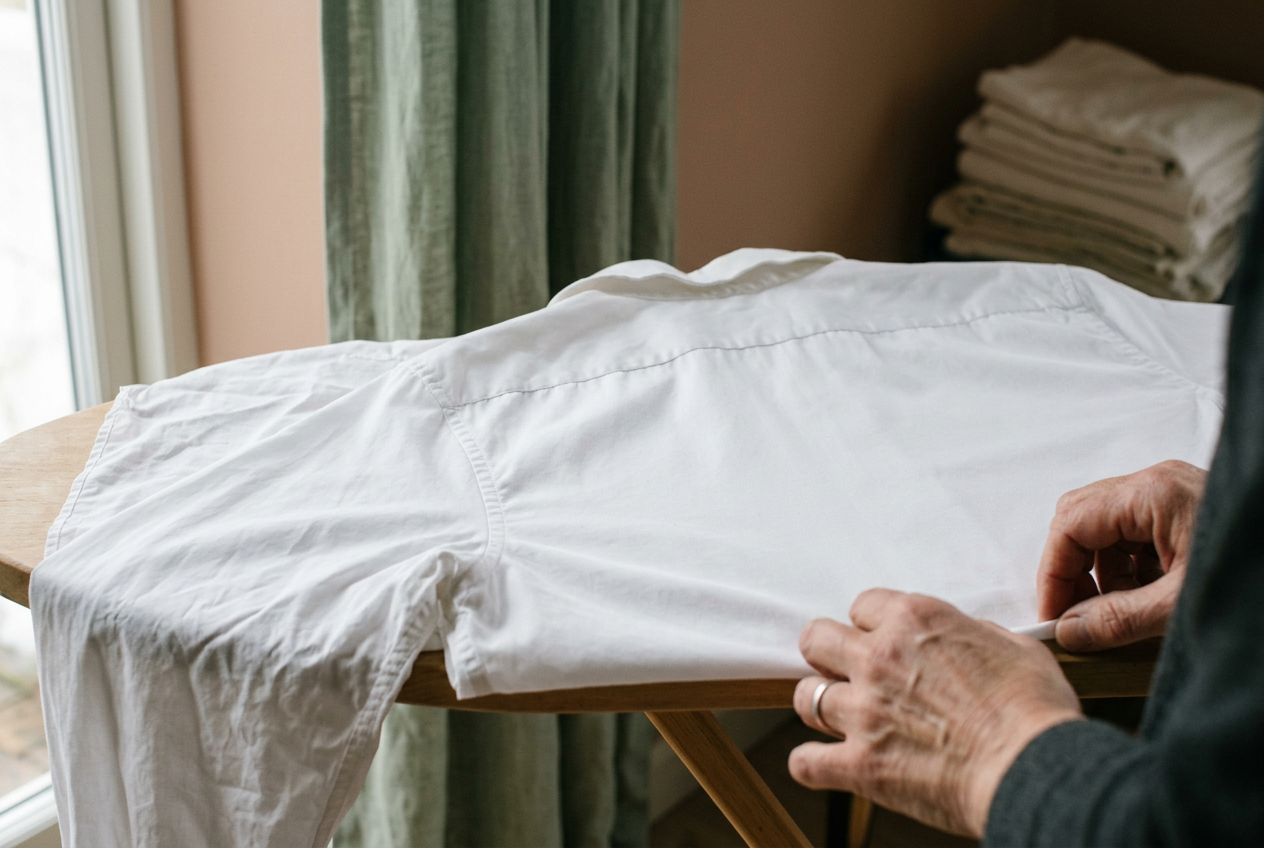
The case here is a white, 100% cotton poplin button-front used for hands-on washing and pressing. Poplin is a tightly woven plain-weave fabric with a faint horizontal rib, which gives a shirt its smooth face and crisp outline but also makes small construction faults easy to see. After repeated care-label-compliant washes, the test shirt remained flat across its back and front panels. Ripples appeared along one side seam, the sleeve plackets and the edge of the fused collar.
That location matters. General wrinkling can come from an overloaded washer, a hard spin or drying the shirt until it is hot and rigid. A narrow ridge that follows a line of stitching has a different explanation. This advice is unisex because the mechanics are the same across women’s, men’s and unisex shirting, although fitted shirts provide more seams and darts where puckering can show.
Why a smooth shirt puckers at the seams
Seam pucker, meaning small folds or waves beside a stitched line, develops when the materials caught in that line no longer sit at the same length. The shirt body may have been stabilized before cutting, while the sewing thread, a narrow seam allowance or one of the joined panels changes more during laundering. Even a slight mismatch gets concentrated along the stitches, so the broad fabric panel looks calm while its edge draws up.
Thread shrinkage is one route. Cotton sewing thread can contract after wetting and heat, while some polyester or cotton-wrapped threads behave differently from the cotton fabric around them. The important point is not that one fiber always shrinks more; it is that the thread and cloth need compatible dimensional stability. If the thread shortens along a long side seam, it acts like a drawstring too subtle to gather the shirt fully but strong enough to create a repeated ripple.
Stitch tension can produce a similar result without much thread shrinkage. Tension is the amount of pull placed on the upper and lower threads as a sewing machine forms each stitch. When it is set too tight, or when too many stitches are packed into a short distance, the seam is held under strain before the shirt reaches the washer. Water lets the cotton relax, exposing diagonal lines or a corded ridge that may have been less visible on the store hanger.
The collar on the white test shirt showed another pattern: shallow waves spread inward from the edge rather than sitting only beside the needle holes. Its collar contains fusible interfacing, a supporting layer bonded to the outer fabric with heat-activated adhesive. If the interfacing shrinks at a different rate, was applied unevenly or begins to release, the two bonded layers cannot settle together. Pressing may improve the edge, but it cannot reliably rebond a failing internal layer.
Intentional texture does not map the stitching
Washed or crinkled cotton can be designed to look rumpled, and that finish should not be pressed out automatically. Intentional texture usually continues across the main panels, changes softly when the fabric is handled and appears in product descriptions or care instructions. It does not normally begin at every needle hole, form evenly spaced diagonal marks beside a seam or stop when the stitching stops.
Use the broad back panel as the control. On the test shirt, that panel dried nearly smooth when it was shaken out and hung, while the side seam formed a regular ladder of waves. A deliberate crinkle treatment would not be expected to spare the whole body and target one construction line. Likewise, texture confined to a collar point, button strip or cuff is more likely to involve an internal layer than an aesthetic finish.
The button strip is the placket, meaning the doubled section that carries the buttons or buttonholes. It often contains extra fabric or interfacing, so it can ripple even when the adjacent front panel behaves well. Some softness there is normal after washing. A placket that twists, bubbles or pulls the shirt fronts to different lengths has moved beyond casual texture.
Give the shirt one controlled wash
Before judging the construction, follow the care label and reduce the stresses that exaggerate puckering. Wash the shirt unbuttoned so the placket is not held against a load of wet fabric, use cool water if the label permits it and choose a moderate cycle rather than the most forceful spin. Leave enough room in the drum for the shirt to move. A tightly packed load can set random creases, which makes diagnosis harder.
Remove the shirt while it is damp instead of letting it sit compressed in the machine. Hold it at the shoulder seams, give it a firm shake and align the placket, collar and cuffs with your hands. Smooth each troublesome seam between your fingers without pulling it longer. Hang the shirt on a hanger broad enough to support the shoulders, or lay it flat if hanging would distort a very wet garment.
High dryer heat can deepen the mismatch between cotton fabric, thread and fused sections. If the label allows tumble drying, stop while the shirt retains a little moisture; otherwise, air-dry and press before it becomes bone dry. This takes more attention than moving a load directly from washer to dryer, but it is a useful one-time test. It should not become a permanent rescue routine for a supposedly easy-care shirt.
Press the seam, then see what returns
Set the iron according to the care label, not merely the fiber name, because coatings and internal layers can limit heat. Work from the inside first. Place the side seam flat, add moisture with the iron’s steam function or a light mist, then lower and lift the iron rather than dragging it along the stitching. Dragging can stretch the warm cotton and introduce a new wave.
For the placket, align its edges before pressing from the wrong side, then finish briefly from the front. Use a press cloth, a clean piece of plain cotton placed between the iron and garment, if the surface becomes shiny. Let each section cool while flat because warm cotton can shift before it sets. The whole correction adds several minutes to ordinary ironing, not an afternoon of garment work.
Treat fused areas more cautiously. Short applications of steam can relax a collar or cuff, but prolonged heat and moisture may weaken adhesive that is already unstable. Do not keep increasing the temperature because a bubble refuses to flatten. On the white test shirt, pressing improved the collar edge but did not remove the inward waves; that partial response was a sign that the problem sat between layers.
A seam that presses flat and stays flat through later cool washes may have needed better handling. A ripple that returns in the same place after every wash indicates incompatible shrinkage or built-in tension. If the line never lies flat, even while damp and properly pressed, laundering is unlikely to be the main cause.
Decide whether the shirt is worth keeping
Inspect a poplin shirt under side light before removing the tags. Look along the side seams and sleeve plackets rather than only at the front. Tiny diagonal creases radiating from stitches, a raised seam that feels corded or bubbles around the collar edge can precede more visible puckering. A newly made shirt should not require forceful ironing to make its stitching lie level.
Price does not settle the issue. Mass-market shirts may use stable thread and well-matched interfacing, while an expensive shirt can still leave the factory with excessive tension. At a higher price, though, it is reasonable to expect straight plackets, smooth fused areas and seams that survive the labeled care routine. Returning a shirt that changes after its first compliant wash is more sensible than accepting ongoing specialist pressing.
Poplin itself remains useful when a clean surface and light structure are the point. If easy laundering matters more than that sharp finish, a cotton Oxford cloth is more forgiving because its coarser basket weave disguises minor seam movement. A soft twill shirt also shows fewer tiny ripples, although it drapes differently and will not deliver the same crisp outline.
Questions people ask
Can I fix puckered shirt seams with an iron?
Damp pressing can flatten a mild ripple caused by drying or temporary fabric relaxation. Press from the inside, lift rather than drag the iron and let the seam cool flat. If the same wave returns after each labeled wash, the iron is managing a construction mismatch rather than fixing it.
Does seam puckering mean a cotton shirt has shrunk?
Not necessarily. The body can keep its original dimensions while thread, seam allowances or fused layers change by a smaller amount. Check overall fit at the shoulders, chest and sleeves. If those remain consistent but a stitched line draws up, the movement is localized to the construction.
Should cotton poplin be tumble-dried?
Follow the care label. When tumble drying is allowed, lower heat and removal while slightly damp give poplin a better chance of drying evenly. A shirt that requires repeated high heat to look smooth is unlikely to improve, while excessive heat can make differential shrinkage and fused-area bubbling more visible.
Is a more expensive poplin shirt less likely to pucker?
A higher price can buy better cutting, sewing control and interfacing, but it does not guarantee them. Inspect the seams before purchase and keep the return terms in mind for the first wash. The useful investment is a shirt whose placket and collar remain level under its stated care, not one that demands corrective pressing each week.
One update a day
Today's fashion update, in your inbox
One fashion update each morning — no hype, no filler, just pieces worth wearing.