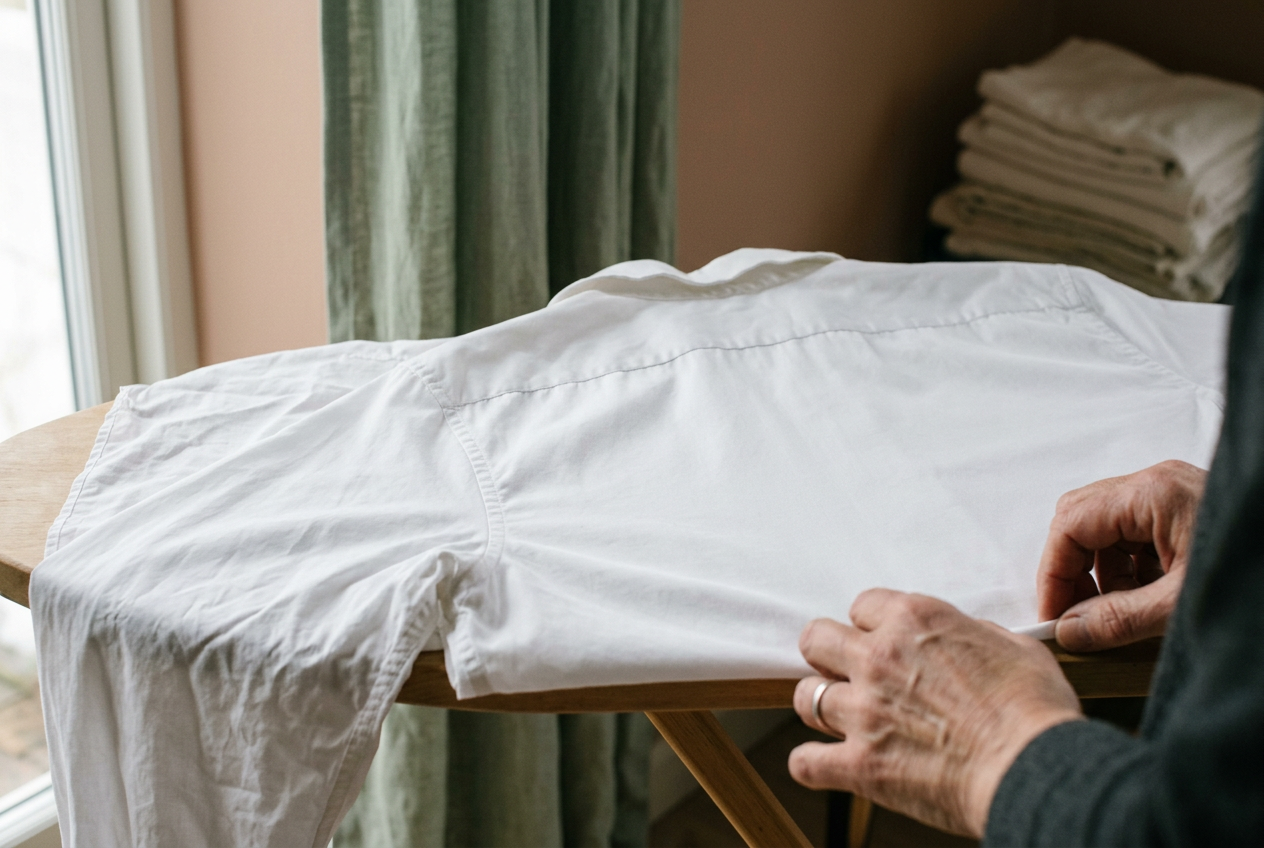
A 100% Linen Label Can Hide the Worse Summer Shirt
A higher linen percentage says little about how a garment will crease, soften, or hold its shape. A dense cotton-linen blend may be the better buy.
November 14, 2026 · 8 min read
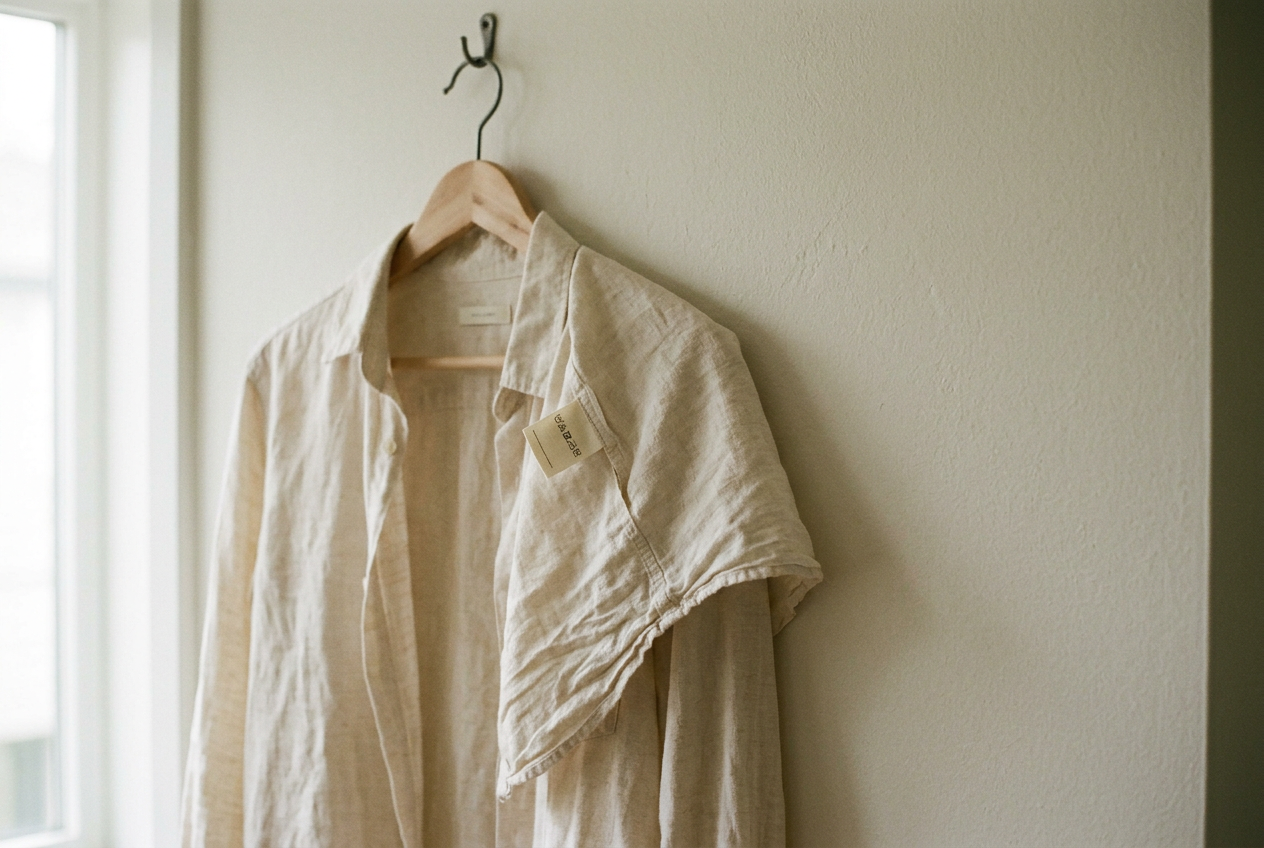
The shirt that makes the case is a straight-cut button-front labeled 55 percent linen and 45 percent cotton. I wore it on three days over one week, first tucked into trousers and later open over a tank, then washed it cold and let it air-dry. Its medium-dense fabric felt less airy than a loose 100 percent linen shirt on the rail, but it stayed more presentable through sitting, carrying a shoulder bag, and rolling the sleeves.
That care label is the anchor for this comparison. Fifty-five percent linen sounds like a compromise if the neighboring shirt promises 100 percent, yet the blend developed broad, soft creases rather than deep folds across the lap. The collar stayed close to its original shape. After washing, the shirt needed a quick press at the placket and cuffs, not a full negotiation with the iron.
This is unisex fabric advice. Shirt cuts, bust shaping, and button placement vary across departments, but linen percentage does not behave differently according to the label on the hanger.
Percentage is a recipe, not a grade
Fiber content tells you what is in a garment. It does not tell you the quality of the yarn, how tightly the fabric was woven, whether the finishing treatment will wash away, or how carefully the seams were made. A coarse 100 percent linen fabric can feel scratchy and remain unstable, while a well-woven linen-cotton blend can soften without losing its outline.
Pure linen has real advantages. It releases heat well, absorbs moisture, and often becomes more supple through washing and wear. It also has low natural elasticity, which means bent areas tend to stay bent until moisture, steam, or pressing rearranges the fibers. That behavior produces linen's familiar rumpling, but the result can look relaxed or exhausted depending on the fabric.
The 55/45 shirt showed why percentages need context. Cotton reduced some of linen's dry crispness and gave the cloth a fuller feel, while the linen kept it from behaving like a standard cotton poplin. It was not the coolest possible option during still, humid weather. It was the more useful office shirt.
Start with weave density
Weave density, meaning how closely the yarns are packed together, changes a garment more immediately than a modest difference in fiber percentage. Hold the fabric up to a window or bright store light. A loose weave will show more space between yarns and usually pass air more freely; a dense weave blocks more light, feels more substantial, and may resist pulling out of shape.
Neither is automatically better. A loosely woven 100 percent linen shirt can be excellent over a swimsuit or tank, where transparency and movement are acceptable, but it may sag at the elbows and strain around buttonholes after repeated wear. A very dense pure linen can create the opposite problem: the label promises summer fiber, while the fabric feels rigid and traps more warmth than expected.
The 55/45 shirt let some light through without turning gauzy. Its placket sat flat after the wash, and the fabric around the upper buttons did not ripple when worn open. That matters because a blend cannot rescue poor construction, but a stable weave can keep normal stress from becoming visible distortion.
Rub the fabric lightly between two fingers, then look for fuzz or shifting yarns. If the surface becomes hairy in the store, or if a fingernail can move individual threads with little pressure, a high linen number is not enough reason to pay an investment-level premium.
Read the wrinkles before judging them
Wrinkle character matters more than wrinkle quantity. Linen will crease. The useful distinction is whether it forms rounded rumples that relax during hanging or sharp folds that stay etched across the stomach, inner elbows, and back of the knees.
Recovery is the fabric's ability to move toward its original shape after bending or compression. Test it by gripping a section of the hem in your closed hand for about ten seconds, then releasing it. The cloth does not need to become smooth. Look for whether the hardest creases begin to open and whether the surface still hangs straight rather than corkscrewing around the crushed area.
On the 55/45 shirt, the hand test left visible lines, but they softened while the shirt hung. The 100 percent linen alternative I handled remained more sharply crushed and felt thinner at the folds. That does not make the pure linen bad. It makes it better suited to someone who likes a pronounced rumpled finish and does not expect one shirt to move from a long seated stretch into a more polished setting.
Pay attention to where the creases collect during a fitting. Sit down, bend both arms, then stand and let the garment settle. Deep horizontal folds across a tight upper back indicate a fit problem, not charming linen behavior. More linen will not correct missing ease.
What each blending fiber contributes
Cotton usually makes linen feel less dry and can give a shirt more body. It may also make the fabric easier to press and less inclined to develop hard, shiny folds at pressure points. The tradeoff is reduced airflow when the weave is dense, plus the possibility of shrinkage if the garment meets heat in washing or drying.
That makes cotton-linen useful for trousers, overshirts, and button-fronts expected to hold a recognizable shape. It is less compelling when a brand has created a heavy fabric, added little linen, and priced the garment mainly on the word “linen.” The 55/45 shirt earned its blend through wear. A mostly cotton shirt with a token linen share needs to prove the same case without help from the label.
Viscose, a cellulose fiber made by chemically processing plant material, adds drape and a smoother touch. In a linen blend it can stop a dress or wide-leg pant from standing away from the body, and it often creates wrinkles that look fluid rather than brittle. It can also weaken when wet, stretch under the weight of water, or lose its intended shape if hung carelessly.
A linen-viscose garment is a practical buy when softness and movement matter more than crisp tailoring. Check whether the care instructions demand hand washing, dry cleaning, or reshaping while damp. A low purchase price becomes less persuasive if every wash costs attention the buyer does not want to give.
Polyester or nylon can improve recovery and reduce drying time. In a modest share, synthetic fiber may help a travel shirt survive hours of sitting or let a fitted garment keep its knees and elbows. Too much can mute linen's cooling advantage, hold odor, or give the surface a slight shine that makes the fabric read flatter and less natural.
Synthetic content mainly lowers performance when it appears to solve a manufacturing problem rather than a wearing problem. If a thin linen-polyester fabric already feels slick, builds static, or shows early pilling under gentle rubbing, the easier care label is not much compensation.
Use a fitting-room test instead of the percentage
First, hold the garment to the light and compare the main fabric with stress points such as the seat, elbows, and buttonholes. The material should be appropriate for its job. Airy cloth works in a loose shirt; trousers need enough density to withstand sitting without becoming transparent or bagging immediately.
Next, crush the hem and watch the recovery. Run a palm across the released fabric rather than pulling it taut. A garment that settles with body heat and movement will be easier to wear than one that needs steam after every seated hour.
Then check softness without confusing it with quality. Some pure linen starts firm and improves over years, while heavily softened fabric can feel luxurious in the store because finishing agents have temporarily coated or relaxed it. Brand documentation may mention garment washing or enzyme washing, but the care label still matters: if the surface changes after laundering, the return window may already be gone.
Finally, read the care instructions before deciding that the more expensive shirt is the investment. Cold washing and air-drying take time and space. Dry cleaning adds continuing cost. A garment that tolerates the routine already used at home can deliver more wears than a finer fabric left waiting in the laundry basket.
The 55/45 shirt passed that practical test. It was not as breezy or as texturally distinctive as the pure linen option, yet it recovered better from a seated day, dried overnight on a hanger, and returned to shape with limited pressing. Paying more for 100 percent linen would have bought a different experience, not a higher score.
Questions people ask
Is 100 percent linen always cooler than a linen blend?
No. Fiber content matters, but a tightly woven pure linen can feel warmer than a loosely woven blend because less air passes through it. Hold both fabrics toward a light and compare their density, then consider the garment's cut. A loose shape usually ventilates better than a close one.
Is linen and cotton a good blend for shirts?
Yes, especially when the shirt must hold a collar, survive sitting, and look presentable without extensive pressing. Cotton can add softness and shape retention, while linen preserves texture and moisture absorption. Check for a dense, stiff weave, which can cancel some of the blend's warm-weather appeal.
Does viscose make linen lower quality?
Not by itself. Viscose can give linen dresses and pants a softer fall, which may improve comfort and reduce brittle-looking creases. The weakness is care: some linen-viscose fabrics stretch when wet or distort while hanging, so follow the label and dry the garment with its weight supported.
How can
I tell whether a linen blend is worth the price?
Ignore the percentage long enough to crush the hem, inspect the weave against light, and sit in the garment. The fabric should recover enough for its intended setting, while seams and buttonholes remain flat. If the label demands care you will avoid, choose the easier blend and spend the difference elsewhere.
One update a day
Today's fashion update, in your inbox
One fashion update each morning — no hype, no filler, just pieces worth wearing.