Line Drying Won’t Stop a Viscose Dress From Shrinking
Viscose can weaken and shift while it is wet, before it reaches the drying rack. Read the whole care label before buying a dress or pants for regular wear.
Women's · October 26, 2026 · 8 min read
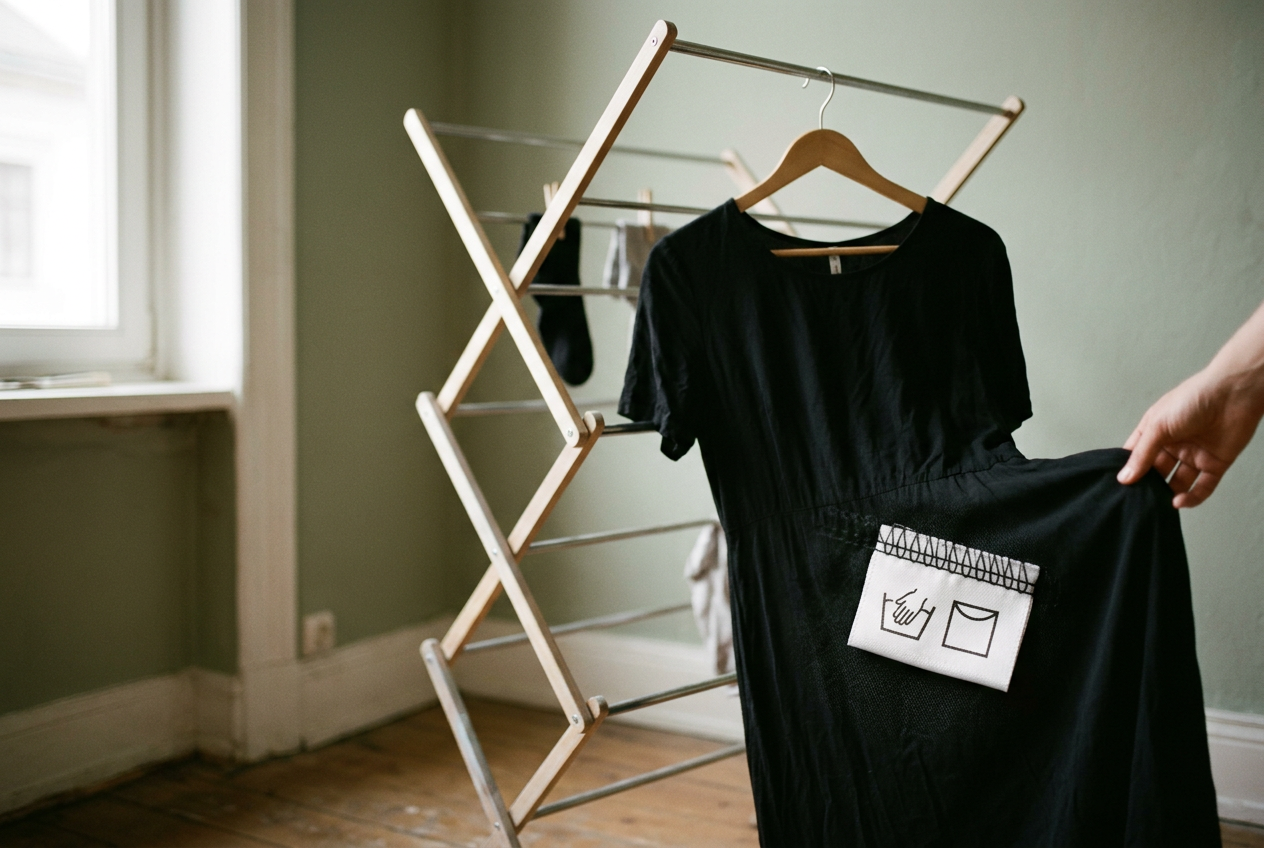
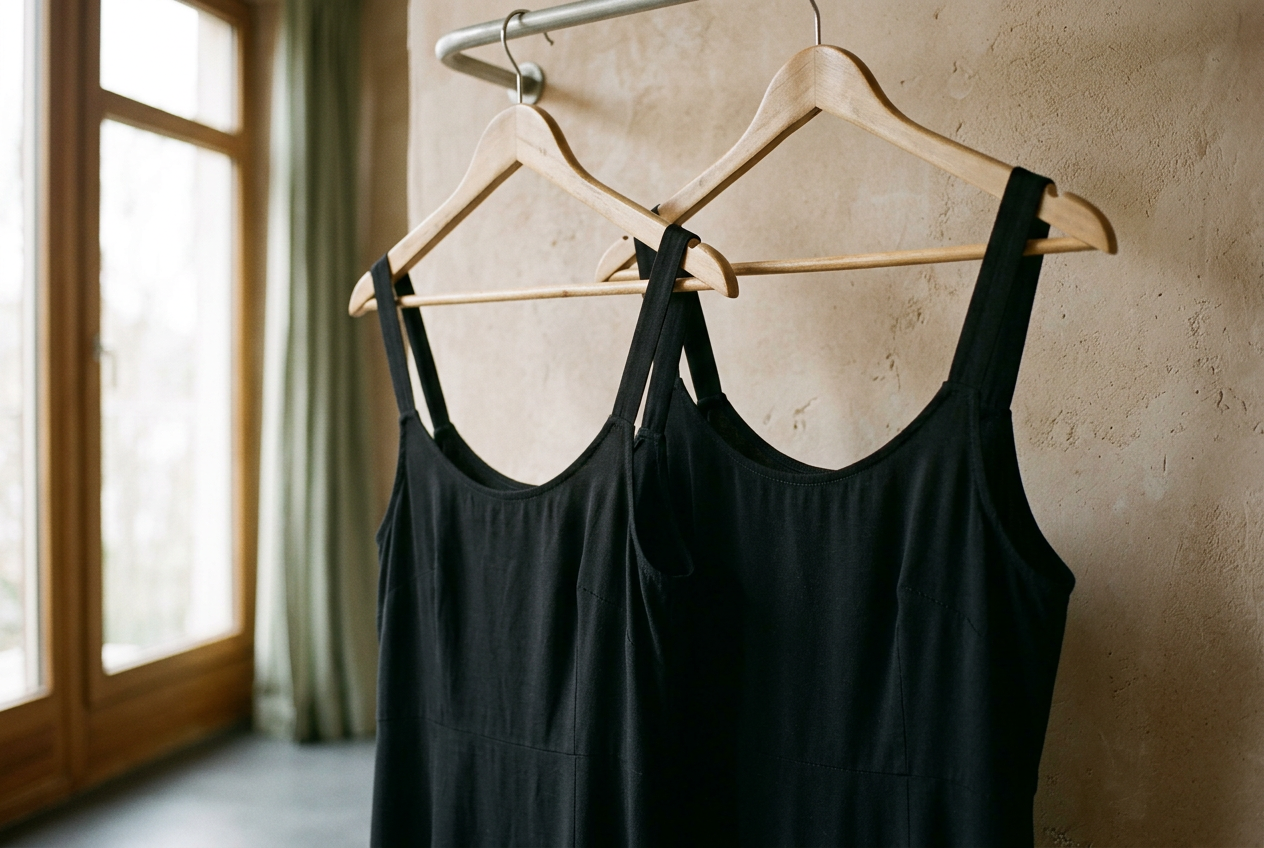
Start with a black 100% viscose midi dress: fitted at the waist, fluid through the calf, useful for work with loafers and easy to dress up with a low heel. Its label says “hand wash cold” and “line dry.” That sounds manageable. It also leaves enough room for an expensive misunderstanding.
The drying line tells you what to do after washing. It does not promise that washing is low-risk, and it says nothing about how long the dress can soak, whether it may be rubbed, or how much weight the skirt carries while saturated. By the time that black dress reaches a hanger, its waist seam, hem and side seams may already have shifted.
This is women’s coverage because dresses and women’s pants often combine viscose with fitted waistbands, bias-cut panels and long hanging sections, all of which make a small dimensional change more noticeable. The fiber behavior applies across wardrobes, but the pre-purchase fit checks here are built around those garments.
Why viscose changes when it gets wet
Viscose is a regenerated cellulose fiber, meaning plant-derived material is dissolved and remade into fine filaments. It is popular because woven viscose can feel smooth, take color well and fall close to the body without the stiffness of many cotton fabrics.
Its weak point is wet handling. Standard viscose loses strength when saturated, so pulling, twisting and prolonged agitation can distort the yarns or seams more easily than the same treatment would when the garment is dry. Water also lets the fabric relax from tensions introduced during spinning, weaving and garment production. That relaxation can alter length or width even without dryer heat.
Shrinkage is the familiar result, but it is not the only one. A dress may keep its overall length while becoming tighter through the chest. Pants may shorten slightly, twist at the side seam or develop a rippled waistband where the viscose shell meets a firmer interfacing. Dimensional stability, the fabric’s ability to retain its original measurements, depends on the yarn, weave, factory finishing and garment construction as well as the fiber name.
This is why two labels that both say “100% viscose” can demand different care. One fabric may have been washed or stabilized during production. Another may use a loose weave chosen for drape, which gives it less resistance to shifting. The fiber percentage cannot override the sewn-in instructions.
Our black midi dress makes the problem visible. A fitted waist leaves little tolerance for width loss, while the long wet skirt adds downward weight. Hanging it straight from a basin could stretch the length even as another part contracts. Line drying avoids tumbling and high heat, but it cannot return the garment to the moment before water entered the yarns.
Hand washing is controlled, not harmless
A label-directed hand wash gives you control over temperature, agitation and time. Use cool water and a small amount of suitable detergent, keep the wash brief, and support the garment when lifting it. Press water out without wringing. If the label allows flat drying, a towel can support the weight; if it specifically says line dry, reshape the seams first and distribute the garment so one narrow point does not carry the entire load.
The time cost is real. The black viscose dress needs enough basin space to move without being scrubbed against itself, then a supported transfer to the drying area and time to dry away from direct heat. A deep dress pocket or gathered skirt can hold more water than expected. Grabbing one shoulder and pulling the dress free is precisely the kind of concentrated strain that weak wet viscose handles poorly.
Hand washing also depends on restraint. A long soak may feel gentler than movement, yet extended saturation gives the fabric more time to relax. Rubbing a makeup mark or twisting the waist to remove water can create local distortion. “Hand wash” describes a method, not permission to improvise every part of it.
Public care guidance from fiber producer Lenzing emphasizes low temperatures and gentle handling for cellulosic garments, while retailer care information from H&M and COS directs customers back to the individual garment label. That distinction matters: broad fiber advice can reduce risk, but the maker’s label accounts for the fabric, dyes, trims and construction it chose.
A machine cycle adds convenience and uncertainty
If the label permits machine washing, use the named cycle rather than treating “cold wash” as the complete instruction. A delicate cycle reduces mechanical action and usually spins more gently than a standard cycle. A mesh laundry bag can limit tangling, especially for a dress with ties, although it cannot stop the fiber from absorbing water.
Load size matters too. A crowded drum presses garments against one another; a nearly empty drum can let a long dress travel and knot. Fast spinning removes water efficiently but may set creases or strain seams on a garment that is weaker while wet. The correct balance is the one contemplated by the label, not the strongest cycle the garment appears able to survive.
Do not machine-wash the black midi dress merely because another viscose blouse tolerated it. The dress has a fitted waist and much more wet fabric hanging below that point. If its label says hand wash, a machine’s “hand wash” setting remains a deviation unless the manufacturer explicitly equates the two.
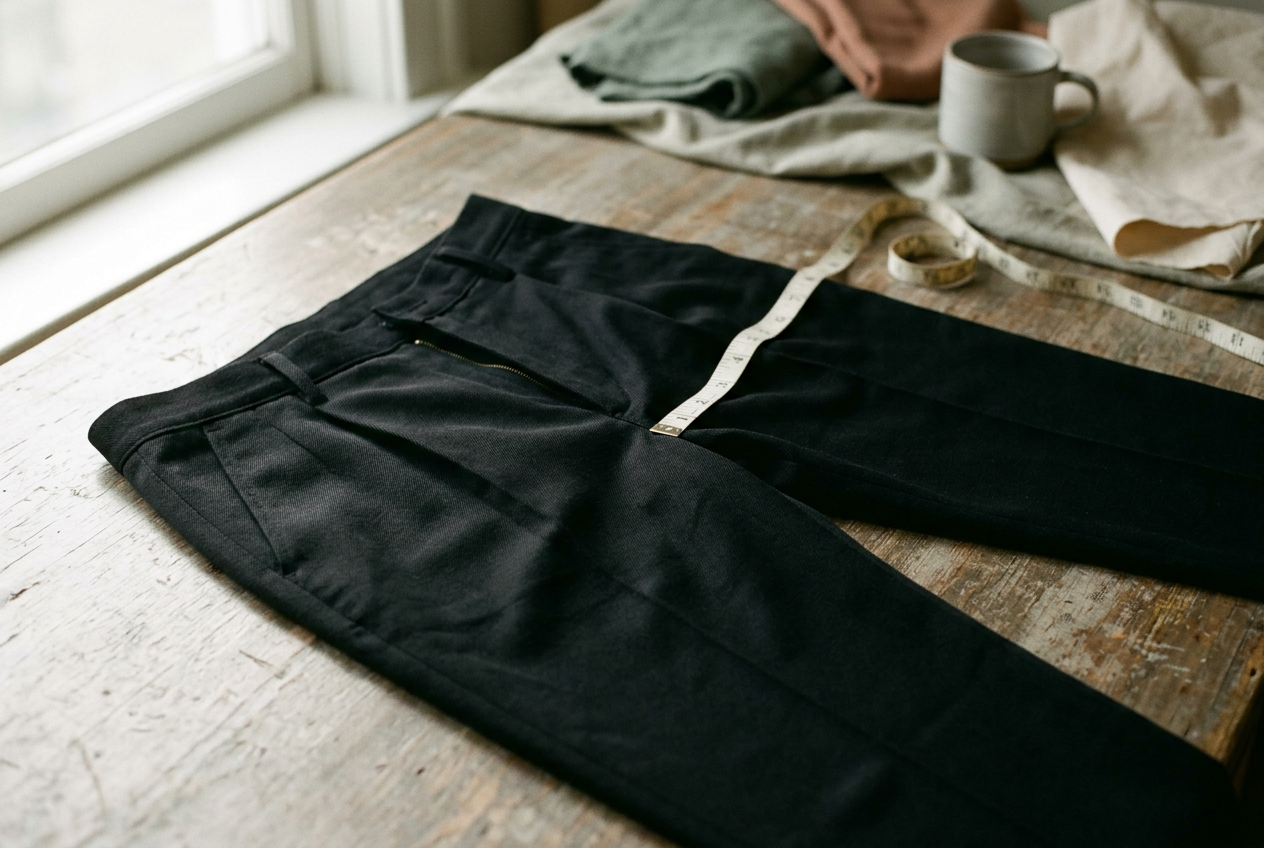
Machine washing makes more sense for frequently worn viscose pants when the label allows it, the fabric feels substantial rather than gauzy, and the waistband and seams lie flat before purchase. Even then, measure the inseam while deciding whether to keep them. Pants bought with no spare length can become unwearable after a modest change that would barely register in a loose top.
Dry cleaning moves the tradeoff
Dry cleaning uses a solvent-based system with little or no water in the main cleaning stage, reducing the water swelling that makes viscose vulnerable. For a structured dress, tailored viscose pants or a garment combining viscose with lining and interfacing, that can protect the intended shape better than washing at home.
It does not make the garment carefree. Cleaning costs recur, turnaround takes planning, and stain removal still depends on the stain and the construction. Pressing can also affect a delicate surface, so point out embellishment, pleats or a finish that concerns you. Most important, do not assume dry cleaning is safer when the label says not to dry clean; dyes, coatings or trims may be the limiting part.
A dry-clean-only viscose dress can still be a sound occasional purchase. It is harder to justify as a weekly work dress unless professional care already fits your routine and budget. The lower ticket price of the garment does not cancel repeated cleaning costs, while a more expensive washable alternative may cost less effort over a season.
For the black midi dress, “hand wash cold, line dry” is a workable compromise only if there is room to wash and support it. In a small apartment with no basin, no drying rack and a shared machine, the care label describes a recurring logistical problem. That dress is not a bargain for that household.
The pre-purchase care check
Read every care symbol and line before evaluating price. “Line dry” should prompt you to look backward on the label for the permitted wash method. A hand-wash instruction means sink time and wet lifting; machine washable means checking the specified cycle and temperature; dry clean only means assigning a recurring service cost to the garment.
Then examine where a dimensional change would matter. A loose viscose shirt dress has some tolerance through the body. A close waist, shaped bust or exact trouser inseam has less. Bias cut, meaning the fabric is cut diagonally across the weave for more fluid drape, deserves extra attention because hanging and moisture can change how that drape settles.
Check construction while the garment is dry. Side seams should hang straight, the hem should look even, and a waistband should not ripple where it joins the body. Existing twisting will not become more acceptable after washing. For pants, sit down and note whether the waistband already feels exact; for a dress, raise your arms and check whether the bodice returns to place without pulling.
Finally, match care to frequency. A special-event dress can wait for careful washing or professional cleaning. Pants intended for two workdays most weeks need a label you can follow without postponing laundry, plus enough ease and hem allowance that a small shift does not ruin the fit. If the only workable plan is to ignore the label, leave the garment in the store.
That is the decision the black viscose midi dress forces. The line-dry instruction is not reassuring by itself. The useful information sits one line earlier: how the dress may be washed while its fiber is at its weakest.
Questions people ask
Does all viscose shrink in the wash?
No. Shrinkage depends on the fabric’s weave, factory finishing, construction and wash treatment, so two 100% viscose garments may behave differently. Treat any promised shrink resistance as garment-specific, follow the sewn-in label, and avoid using one successful wash as proof that every viscose piece can take the same cycle.
Can
I hang viscose clothing while it is soaking wet?
Only when the care label permits line or hang drying, and even then reshape it and support its weight. A long soaked dress can stretch at the shoulders or waist while other areas contract. If the label calls for flat drying, laying the garment on a supported surface is the safer instruction.
Can steaming restore a viscose dress that shrank?
Steam may relax wrinkles and help a slightly distorted garment settle, but it cannot be relied on to restore the original dimensions. Avoid forcefully stretching wet or steamed viscose, which can shift seams or weaken stressed areas. For an important garment, stop before experimenting and consult a cleaner familiar with the care label.
Is dry-clean-only viscose worth buying for frequent wear?
It can be, but only if recurring cleaning already fits your budget and schedule. For weekly workwear, machine-washable or genuinely manageable hand-wash viscose is usually more practical. Compare the label, fit tolerance and expected wear before paying more for a dress whose upkeep will keep it out of rotation.
One update a day
Today's fashion update, in your inbox
One fashion update each morning — no hype, no filler, just pieces worth wearing.