Why Viscose Dresses Shrink and Ripple After One Wash
Viscose can lose strength and change size when wet. The lining, seams and drying method determine whether a dress recovers or keeps its first-wash damage.
Women's · October 20, 2026 · 8 min read

Picture a black, bias-cut midi dress, meaning the fabric is cut diagonally across the weave so it drapes closely, with a 100 percent viscose shell and a polyester lining. It is worn under a blazer, washed once according to a cold machine-wash label, then hung from its shoulder straps. By the next morning, the hem has lifted, the side seam looks wavy and the lining hangs slightly below the shell.
That common construction is the test case for this guide. The problem is not that viscose is automatically poor quality. It is that viscose changes noticeably in water, while the polyester lining, sewing thread, zipper tape and other stable parts may barely move. A dress can survive the wash yet lose the proportions that made it worth buying.
This is women’s coverage, although the fabric-care mechanics apply to any viscose garment.
What water does to viscose
Viscose, also called rayon in many US labels, is a regenerated cellulose fiber, meaning plant-derived cellulose is dissolved and formed into new filaments. It can make a dress feel cool, fluid and less expensive than silk, but conventional viscose generally loses strength when wet and its fibers swell as they absorb water.
Swelling does not guarantee permanent shrinkage. A damp viscose dress can look shorter, narrower or distorted, then recover some of its original dimensions through gentle reshaping and ironing. Trouble starts when agitation, heat or the weight of the wet garment moves the yarns before they settle, especially in a loose weave or a bias-cut panel.
The black midi illustrates both directions of movement. Its wet shell may contract across the body while stretching downward under its own weight. If it hangs from narrow straps, those straps and the upper bodice carry the water-heavy skirt, so the dress can lengthen unevenly even as sections of the fabric draw up.
Seam rippling is usually a compatibility problem. The viscose fabric changes dimension, but the polyester thread changes very little; if the original stitch tension was tight, the thread holds the seam line while the surrounding cloth contracts and forms small waves. A polyester lining creates a larger version of the same disagreement.
Read the whole label, not just the wash symbol
Start with the fiber content for every layer. “100% viscose” may describe only the shell, while a second line identifies a polyester lining. A separate slip might be polyester too. Those combinations can be comfortable and durable in wear, but they do not necessarily shrink, stretch or dry at the same rate.
Next, read the care instruction as a complete sentence. Machine washable on cold does not mean the dress will tolerate a regular mixed load, a fast spin and a warm dryer. It identifies an allowed method. The gentler settings still matter, and brand care pages commonly direct owners to reshape viscose while damp rather than letting the machine determine its final dimensions.
“Dry clean only” is a firm stopping point for home washing. “Dry clean” without “only” can indicate a safe care method rather than the sole possible one, but experimenting still transfers the risk to you, which makes little sense for a lined dress with fitted seams or a tailored bodice. Follow the most restrictive instruction that applies to the full garment.
Look for finishing instructions too. A low-iron symbol can be useful because controlled pressing often helps a washable viscose dress return toward its intended shape. A crossed-out tumble-dryer symbol matters more: dryer heat and tumbling can set shrinkage and deepen puckering before there is time to reshape the fabric.
Check the construction before the first wash
The black midi is more vulnerable than an unlined, loose-cut day dress. Its bias panels can shift, the polyester lining resists the shell’s movement, and the long wet skirt places weight on narrow straps. A fitted waist seam adds another fixed point where a shortened bodice or skirt has nowhere to go.
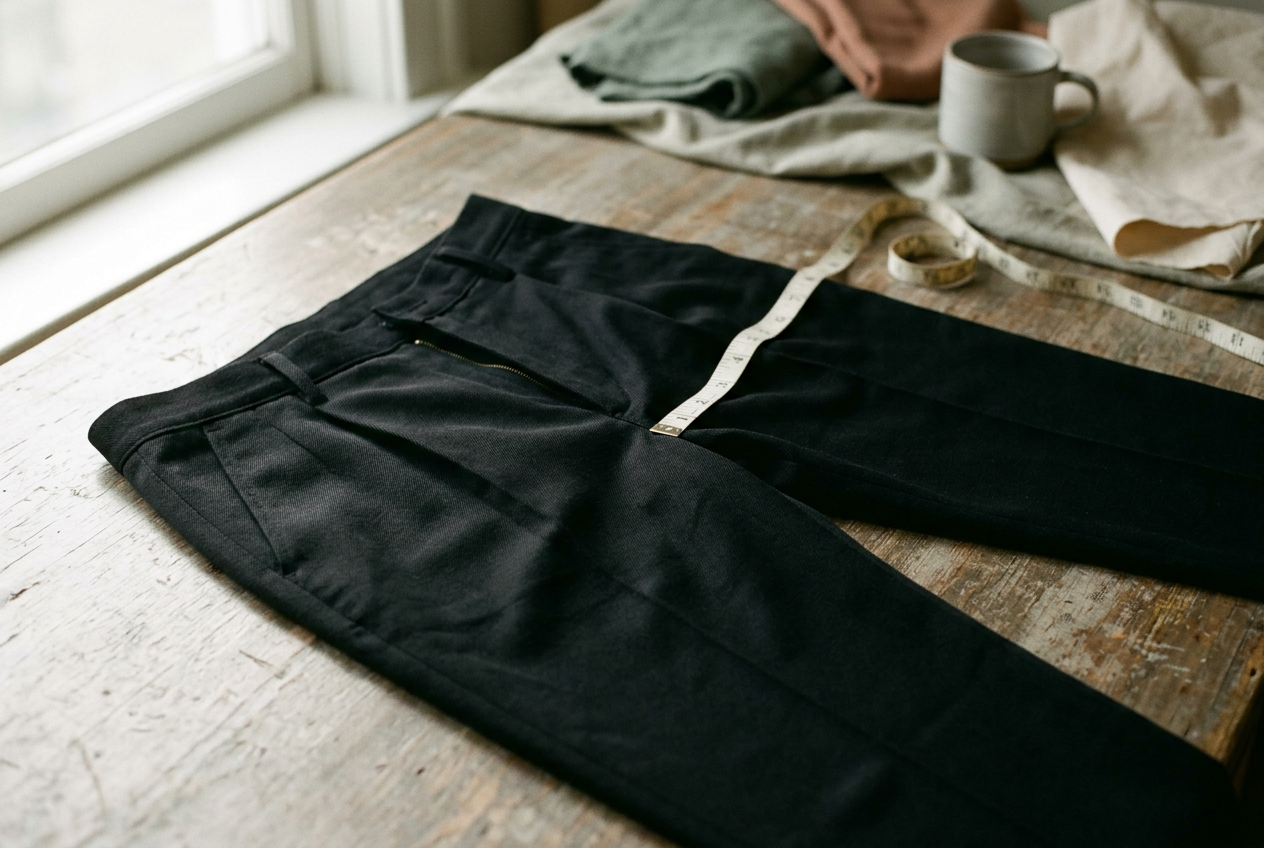
Before washing a new dress, measure the center-back length and one stable width, such as the waist laid flat. A phone photo with the tape measure visible takes less than a minute and gives you a reference when the damp dress seems alarmingly small. Measure again only after it has dried and been pressed according to the label; wet measurements do not show the final result.
Inspect the hem and side seams. If they already ripple on the hanger, laundering is unlikely to correct the sewing tension. If the lining pulls across the hips or hangs very close to the shell hem before washing, even modest movement in the viscose may expose it.
Construction can make a new dress a poor practical buy regardless of price. Be wary of a dry-clean-only viscose dress intended for frequent summer wear, or a washable design in which a nonstretch lining is cut tighter than the shell. An unlined viscose dress with generous seams may cost less yet prove easier to wash, press and keep in rotation.
Wash with less movement
For a machine-washable dress, close the zipper and release any removable belt that could pull against the fabric. Turn the dress inside out, place it in a large mesh laundry bag and wash it alone or with very light garments. A delicate cycle with cold water reduces mechanical stress, though it cannot compensate for a label that prohibits washing.
Use a modest amount of mild detergent. Extra detergent does not protect the fiber and may require more rinsing, which means more movement while the viscose is weak. Skip a long soak unless the brand specifically permits it. Do not wring the dress or twist the skirt to remove water.
Hand washing is not automatically safer. Lifting a saturated midi dress by its shoulders, rubbing a mark or squeezing it into a small basin can distort the fabric more than a short delicate cycle. If hand washing is the approved method, support the whole garment as you move it and press out water without twisting.
The black lined midi deserves more caution. Even with a machine-wash label, the shell and lining need room to move without tangling, and a high-speed spin can pull one layer against the other. If the dress has a structured bodice, shoulder pads or extensive trim, home care is a poor gamble unless the label clearly addresses it.
Dry it in the shape you want to keep
Remove the dress promptly and support its weight with both hands. Lay it on a clean towel, smooth the side seams straight and align the lining inside the shell. Do not tug one section to reach the old measurement; distribute small adjustments along the full length and width.
A flat drying rack is the safest starting point for the black midi because the wet skirt cannot drag from the straps. If space is limited, let the dress dry flat until it is no longer heavy, then transfer it to a wide padded hanger if the care label allows hanging. Keep it away from a radiator and direct sun.
Check the lining while both layers are damp. Smooth any folds trapped at the waist seam, and make sure the lining hem sits where it originally did. Once the viscose shell dries around a twisted lining, the side seams can appear crooked even if neither layer has suffered permanent damage.
When the dress is nearly dry, use a low iron from the reverse side if the label permits it. Light steam can relax minor puckering, but do not pull the fabric while pressing, since softened viscose can stretch beyond the original cut. A pressing cloth protects the surface from shine.
If the seam stays wavy after drying and pressing, repeated washing is unlikely to fix it. A tailor may be able to release and resew a simple side seam with more suitable tension, but altering a lined bias-cut dress takes more labor because both layers must hang correctly. At that point, the original bargain can stop being economical.
The buying decision is in the inside layer
For an everyday viscose dress, the most practical version is usually one whose care method matches how often it will be worn. An unlined, relaxed silhouette marked for gentle washing asks for drying space and occasional pressing, but it does not require a cleaner after every few wears.
A lined viscose dress can justify more care when the lining improves opacity, prevents clinging and supports the cut. Check that it hangs freely rather than pulling at the zipper or hip seams, and favor a shell with enough ease to tolerate a small dimensional change. The label should permit a routine you will follow.
Return to the black midi. If its appeal depends on an exact ankle-length hem, a close waist and a lining that ends just above the shell, first-wash movement threatens every important feature at once. Unless the construction is excellent and professional cleaning suits the budget, it is not an investment piece. It is a maintenance commitment.
Questions people ask
Can a viscose dress return to size after shrinking?
Sometimes. Washable viscose may recover part of its original dimensions when it is gently reshaped while damp and pressed on the label-approved setting. Heat-set shrinkage, distorted bias panels and a shell constrained by a stable lining are less likely to recover evenly, so avoid aggressive stretching.
Should I hang a viscose dress to dry?
Not while it is saturated. Wet viscose is weaker, and the weight of a midi or maxi skirt can stretch the shoulders, straps or bias-cut panels. Dry it flat until most of the water has left, then use a wide padded hanger only if the label permits it.
Why does the lining hang below the dress after washing?
The viscose shell may have shortened while a polyester lining kept nearly the same length. Let the dress dry fully, reshape it and press the shell according to the label before judging the hem. If the lining still shows, shortening the lining is usually safer than trying to stretch the shell.
Is a dry-clean-only viscose dress a bad buy?
It can be a poor practical buy if it is meant for frequent hot-weather wear, when cleaning time and cost may keep it out of rotation. For an occasional lined dress with a fitted or bias-cut shape, professional care may be a reasonable tradeoff because it protects construction that is difficult to manage wet.
One update a day
Today's fashion update, in your inbox
One fashion update each morning — no hype, no filler, just pieces worth wearing.