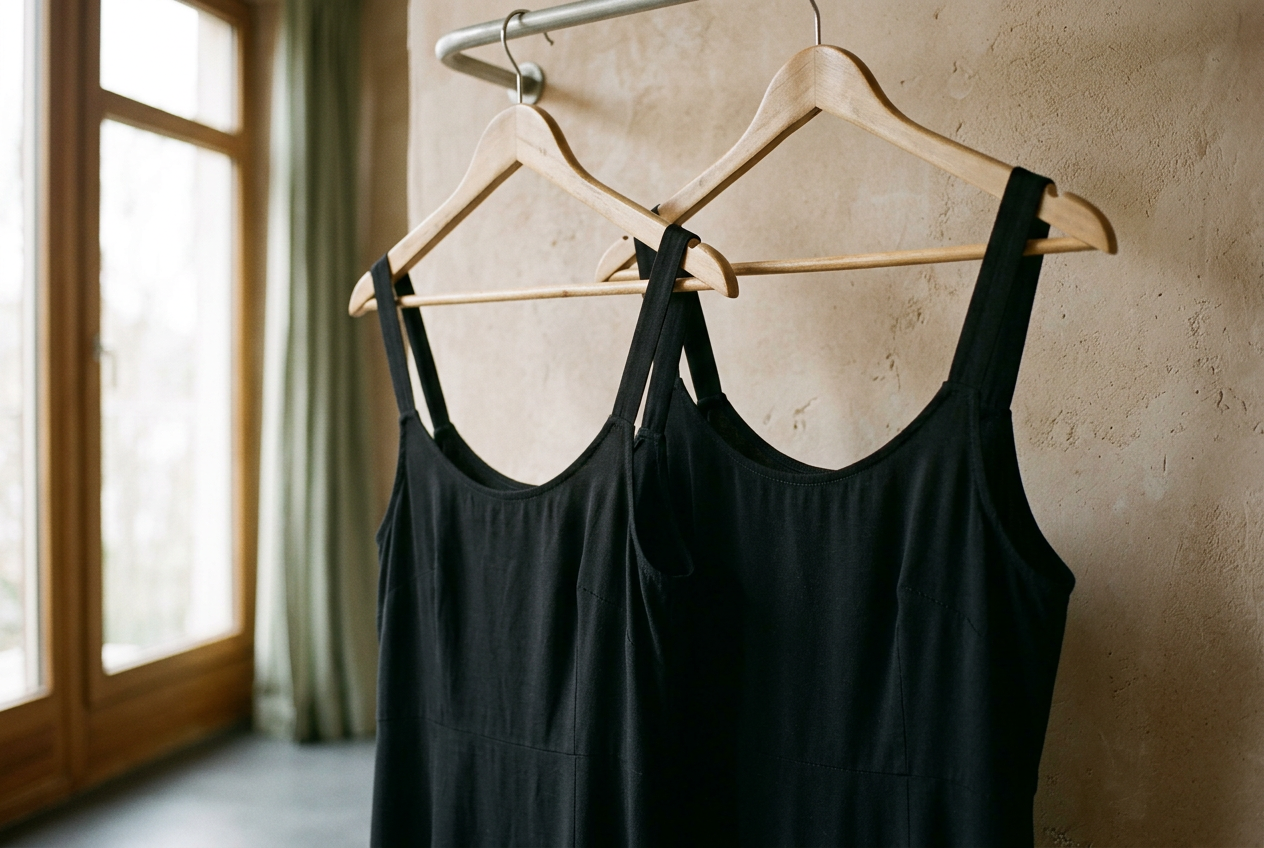
A Rayon Dress Can Shrink in the Wash. Don't Dry It Yet.
Viscose rayon often contracts while wet, but some of that lost length can return. Reshape the dress before heat makes recovery harder, then inspect its seams and lining.
Women's · October 23, 2026 · 8 min read
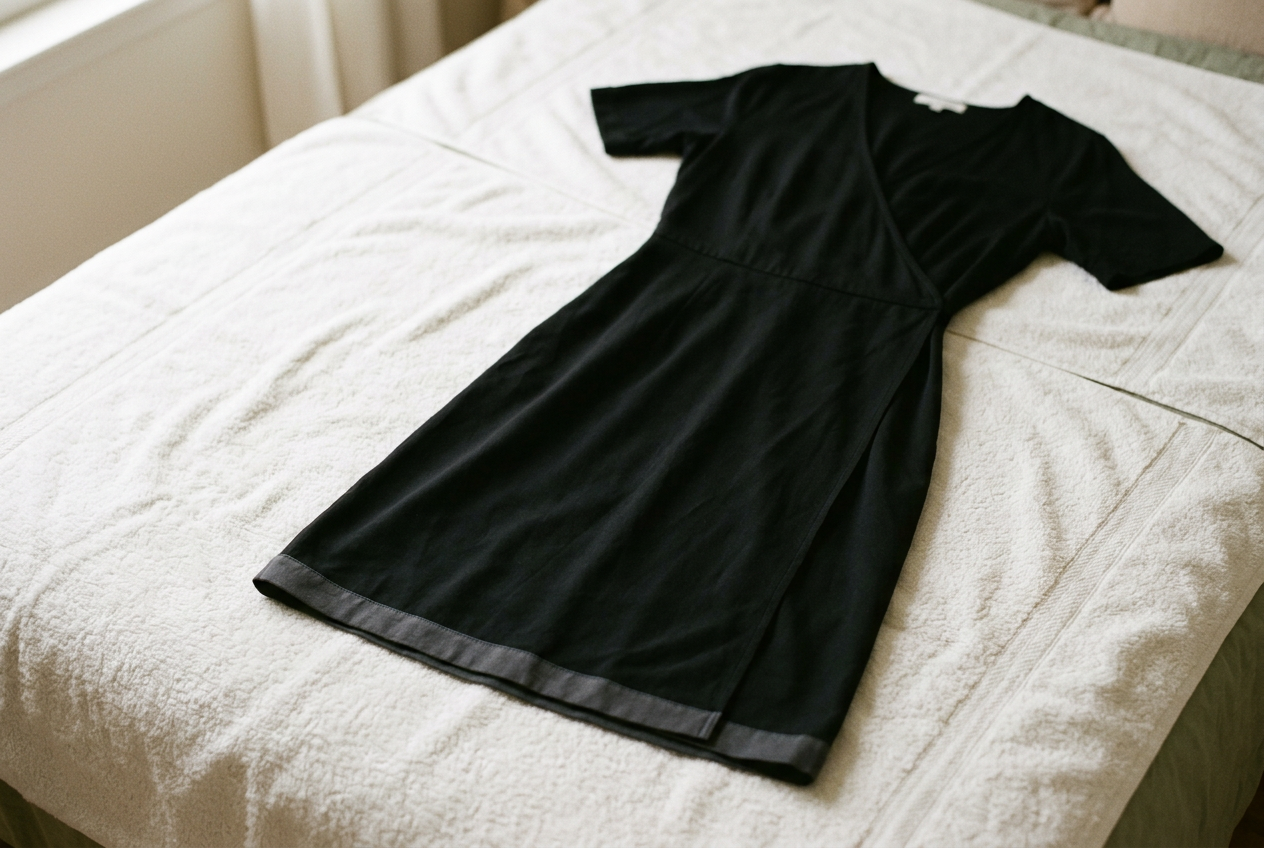
Use one common closet case as the test: a black wrap midi with a 100% viscose shell, a polyester lining and a sewn-in waist seam. It went into a cold wash fitting at the natural waist and ending at lower calf; it came out with a raised waist, a shorter skirt and lining showing below the hem.
That wet dress is not ready for a verdict. This is women's coverage, centered on the fit of a wrap midi, although the same fabric-care mechanics apply to viscose shirts, skirts and pants across wardrobes.
Why a wet rayon dress can look much smaller
Viscose rayon, meaning a regenerated cellulose fiber made from plant-derived material, absorbs plenty of water. The fibers swell, the yarns shift and tensions introduced during spinning, weaving and garment production can relax. The fabric may contract in length, width or both.
Viscose also loses strength when wet. A saturated dress is less able to withstand pulling, twisting and the concentrated weight of its own skirt, which is why aggressive stretching can distort a neckline or drag one section longer without restoring the garment evenly.
The black wrap midi adds a construction problem. Its viscose shell absorbs water and changes dimension differently from its polyester lining, while the zipper, waist seam, interfacing and sewing thread may each resist or respond in another way. If the shell temporarily contracts but the lining does not, the lining can appear below the hem even though neither piece has been cut or resewn.
Cold water reduces the risk of further shrinkage, but it does not guarantee dimensional stability. Agitation matters too. A hard spin can compress the dress and set creases while the fabric is vulnerable; hot tumble drying then adds heat and movement, encouraging more contraction and making an even recovery less likely.
Read the care label before pulling anything
Fiber content tells you how the cloth may behave. The care instruction tells you what treatment the maker considers appropriate for that finished garment, including its dye, lining and internal structure.
If the label permits hand or machine washing, a cool-water reshaping attempt is reasonable. If it says dry clean only and the dress has already been washed, stop before adding heat. Lay it flat on a clean towel, support the whole garment when moving it and consider taking it to a cleaner while it is still untreated. Restoration is not guaranteed, but a dryer removes options.
Do not wring the dress. Do not suspend it by one shoulder or the waist tie, either, because wet viscose can lengthen where the weight hangs even while the bodice remains contracted.
Reshape the dress while it is damp
Start by pressing out water between towels. Roll the dress inside a dry towel and apply light pressure with your hands; replace the towel if it becomes soaked. The goal is a garment that is evenly damp rather than dripping, since damp cloth is easier to control and places less strain on the seams.
Lay the black wrap midi flat on another towel or a mesh drying rack. Close its zipper or buttons without forcing them, align the shoulders and set the wrap fronts where they normally overlap. Smooth the side seams so they run straight from underarm to hem.
Work from fixed construction points. On this dress, that means the shoulder seams, waist seam, side seams and hem, rather than an isolated patch in the middle of the skirt. Hold the fabric with open palms and ease it outward in small increments, alternating sides so the center front and back stay centered.
For lost length, support the bodice with one hand while smoothing from the waist toward the hem with the other. Repeat across the skirt instead of pulling the bottom edge in one hard motion. A firm tug can overstretch the hem, strain stitches or turn a straight skirt panel into a wavy one.
Use the lining as a reference, not as a handle. If it now hangs below the shell, arrange both layers flat and ease the viscose skirt toward its previous length without stretching the lining. The shell may not cover it immediately. Give the rayon time to relax as it dries, then reassess.
Fit provides useful evidence when no prewash measurements exist. The wrap ties should meet at the natural waist without hauling the shoulder seams forward, and the armholes should sit without biting. Restoring hem length while leaving the bodice tight is not a successful recovery; it means the skirt moved while the upper dress did not.
Dry slowly, then use controlled pressing
Leave the reshaped dress flat until it can support its own weight. Turn it over or replace the towel if the underside stays wet, but lift the garment as a whole rather than grabbing an edge. Avoid a radiator, direct high heat and the tumble dryer.
Once the dress is nearly dry, check the care label for ironing permission. A low-temperature iron used on the wrong side, with a pressing cloth between the iron and the fabric, can help smooth the yarns while you guide the dress back toward its intended dimensions. Press and lift. Repeatedly dragging the iron can stretch a wet section off grain, meaning out of alignment with the woven threads.
Steam can help a stubborn area relax, but a hanging steamer is a poor first tool for the whole black midi. The wet, warm skirt may lengthen under its own weight while the waist seam stays fixed. Flat pressing gives you more control over where the fabric moves.
Let the dress cool and dry before trying it on. Warm, damp rayon can change shape under the tension of shoulders, hips and a tied waist, so an immediate fitting can undo the even work done on the table.
Separate recoverable contraction from permanent change
Recoverable contraction tends to look broad and fairly even. The dress is shorter or narrower overall, the seams remain straight, and the fabric responds gradually to damp smoothing and low heat. After treatment, the wrap closes normally and the shell again approaches the lining at the hem.
Permanent change usually announces itself through construction. A side seam that stays puckered, a zipper that bows, a waist seam that no longer meets at the same level or a lining that remains longer after the shell has been reshaped suggests that different components changed by different amounts. More pulling will not make them behave as one fabric.
Heat damage is another dividing line. If the dress went through a hot dryer and repeated dampening plus label-approved pressing does not restore the fit, the reduced dimensions may be fixed. Scorching, shine or a hardened patch is damage rather than temporary shrinkage and should not receive more heat.
The black wrap midi may also recover in length but not in circumference. That matters at the waist: if the ties now meet only under tension and the side seams swing forward, the bodice remains too small even when the hem looks right. A tailor might be able to release available seam allowance or shorten a protruding lining, but alteration cannot recreate fabric that contracted beyond recovery.
Stop after one controlled second attempt. Rewetting the dress in cool water, repeating the flat reshape and pressing within the label's limits is defensible; cycling through stronger heat, harder stretching and repeated washing raises the chance of distortion without establishing that more recovery is available.
Make the next wash less of a fit test
Before washing again, record the shoulder-to-hem length, waist width and distance from the shell hem to the lining. Those reference points turn a vague sense that the dress looks wrong into a comparison you can act on while it is damp.
Use a mesh laundry bag if machine washing is allowed, choose a gentle cycle with cool water and remove the dress promptly. Dry it flat in the shape you want it to keep. A garment that requires this much space and attention is a higher-maintenance purchase, even if its price is modest.
When shopping, do not assume every rayon-family fabric behaves identically. Modal and lyocell are also regenerated cellulose fibers, but fabric construction, finishing and garment design still determine care. Read the full label, especially on lined dresses or styles with a fixed waist seam, rather than treating the fiber name as a promise of washability.
Questions people ask
Can a 100% rayon dress return to its original size?
It may recover much of its size if the change is wet contraction and the dress has not met high heat. Dampen it evenly, reshape it flat and use only label-approved low-heat pressing. Recovery is less likely when seams remain puckered or the garment was tumble-dried hot.
Should
I stretch a rayon dress while it is soaking wet?
No. Saturated viscose is weaker than dry viscose, and hard pulling can distort the neckline, hem or side seams. Press out excess water with towels, lay the dress flat and ease it outward in small, balanced movements while it is damp.
Can
I put a rayon dress in the dryer on no heat?
Only if the care label allows tumble drying. Even without heat, tumbling adds movement and friction while viscose is weak, and a lined dress can twist as its shell and lining respond differently. Flat drying takes more room but gives better control over the final dimensions.
Why is the lining hanging below my rayon dress after washing?
The viscose shell may have contracted while a polyester lining stayed close to its original length. Reshape and dry the shell before altering anything. If the lining still protrudes after the shell has cooled and stabilized, the layers changed differently and may need a tailor's adjustment.
One update a day
Today's fashion update, in your inbox
One fashion update each morning — no hype, no filler, just pieces worth wearing.