Some Ponte Pants Bag at the Knees. Test Recovery First
The word ponte does not guarantee structure. Check the fiber blend, knit density and recovery in the dressing room before committing to another pair with sagging knees.
Women's · November 8, 2026 · 7 min read
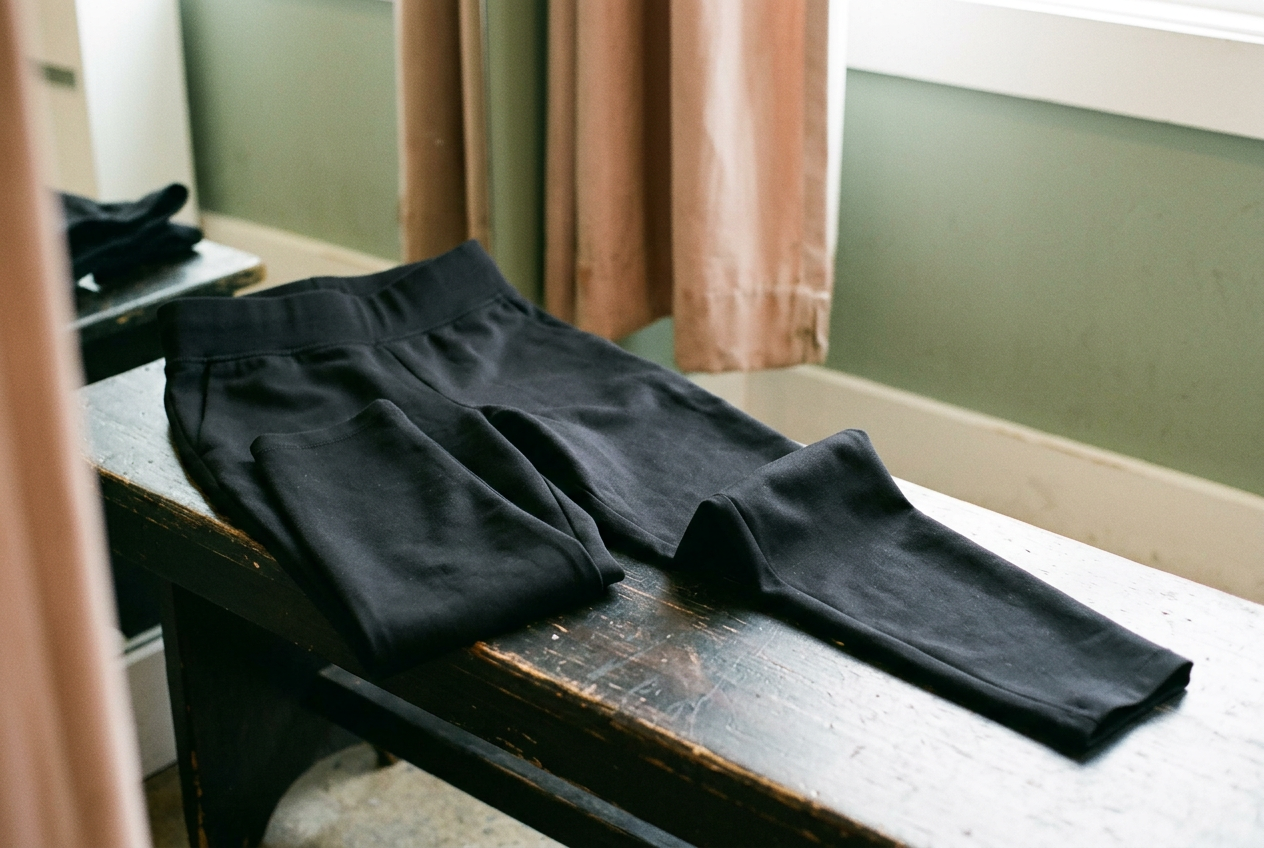
For this women’s fit walkthrough, use one ordinary garment as the control: a black, pull-on, slim-leg ponte pant with a wide elastic waistband, intended for a full office day rather than an hour at dinner. The useful question is whether that pair will still look like trousers after several hours of bent knees and repeated trips out of a chair.
Ponte is a double knit, meaning two sets of needles form a fabric with knit faces on both sides. That construction can produce the firm, smooth material associated with good ponte pants, yet the name alone says little about weight, fiber quality or how tightly the loops were knitted. A thin double knit can still carry a ponte description while behaving more like heavy leggings.
Recovery is the fabric’s ability to return to its original dimensions after stretching. Poor recovery leaves a bubble at the knee, a rippled waistband or a seat that feels looser by late afternoon. Strong recovery does not mean the pants must feel rigid. It means the fabric releases cleanly instead of keeping a record of every movement.
Read the fiber label, then verify it
The black pull-on pair should have some elastane or spandex, two names for the same stretch fiber, if it is expected to fit close and spring back. The percentage can help you compare two garments, but it cannot settle the decision. A small amount of well-integrated elastane in a dense knit may recover better than a higher amount in loose, lightweight cloth.
Rayon and viscose, names used for related regenerated cellulose fibers, often give ponte a smooth surface and comfortable drape. They can also relax with wear, especially when the knit is thin. Nylon tends to add strength and resilience, while polyester generally holds shape well and dries quickly. Cotton can make the fabric feel familiar and breathable, though a cotton-rich version may retain knee shapes unless the knit and stretch yarn are doing enough work.
Treat the fiber list as a clue. A rayon-nylon-elastane blend is common in structured ponte, but that recipe ranges from substantial trouser fabric to cloth that turns shiny over the thigh when stretched. A polyester-rayon-spandex blend may perform well too. The dressing-room tests matter because percentages do not reveal knit density or how evenly the stretch yarn runs through the fabric.
Density separates trousers from heavy leggings
Knit density describes how closely the loops sit together. On the black control pair, pinch one layer at the calf and rub it lightly between finger and thumb. A structured ponte usually feels compact and smooth, with enough body that the layer does not collapse into a tiny, slippery fold. Thin double knit feels flatter and easier to crush.
Next, hold a single layer toward the fitting-room light without pulling it. A little light transmission is normal, particularly in pale colors, but obvious pinpoints or an uneven glow suggest a looser construction. Repeat the check while stretching the fabric gently across the width. If it becomes markedly sheer, shiny or pebbled, the pants are likely to look strained at the seat and upper thigh even when the tagged size technically goes on.
Thickness alone can mislead. A brushed or lofty surface may feel substantial while hiding an open knit underneath, and a compact fabric can be relatively slim without being weak. What matters is the combination of opacity, resistance and a prompt return after pressure.
Check which way the fabric stretches
Most close-fitting ponte pants need useful crosswise stretch, running from side seam to side seam, so the garment can move over the hips and bend at the knees. Lengthwise stretch, running from waistband to hem, may be limited in a traditional firm ponte. Four-way stretch allows movement in both directions, which can feel easier, though a soft four-way fabric needs strong recovery to avoid growing longer through the rise and knees.
Hold a palm-width section at the lower leg, well away from a seam. Extend it gently across the width, release it, then run a flat hand over the area. The edges should return to their earlier position without waviness. Try the same motion vertically.
The goal is not maximum stretch. You are checking whether the fabric returns quickly after a modest pull that resembles normal wear.
Do not yank the waistband or force the cloth beyond what you would do while dressing. A useful test respects the garment and still reveals whether the knit rebounds.
Sit long enough to test the knees
Put on the black pair in the size that lets the side seams hang straight. Sit with both knees bent for about two minutes, then stand without smoothing the fabric. Look at the knees from the side first. A structured ponte may show a faint crease, but the rounded area should begin flattening almost at once and look close to its starting shape within the time it takes to check the waistband and hem.
A persistent pouch is different. Pinch that bubble lightly and release it. Cloth that remains tented has already shown its likely afternoon behavior, and sizing down will usually add tension without improving the material’s recovery.
Repeat the test with a squat or a high step only if the fitting room allows enough space. Watch the front rise and upper thigh as well as the knee. Pale stress marks, surface shine or horizontal drag lines point to a fit problem, even when the knit itself springs back. Try the next size before rejecting the fabric.
If that size sags at the waist while the original strains at the thigh, the cut is wrong for your proportions.
The two-minute test does not recreate a week of wear. It does expose a pair that starts failing almost immediately, which is enough reason to leave thin double knit behind when the job is polished, repeat-wear trousers.
Make the waistband prove itself
Before trying on the control pair, note whether the waistband lies flat. After pulling the pants over the hips and completing the sitting test, take them off and place the waistband against that original shape. A good elasticized band should settle without a stretched section at the back or small waves along the top edge.
Also check how the elastic is secured. A wide band that is stitched through or anchored at the seams is less likely to twist than loose elastic floating inside a casing. If the waistband rolls during one fitting-room sit, it will be irritating during an eight-hour day even if the knees perform well.
Recovery cannot correct poor sizing. A waistband that digs in is carrying too much tension, while one that slides down may have too little support or the wrong rise shape. The best pair returns to place after sitting without requiring a tug at the waist or a pull at the thighs.
Care affects the result you tested
Heat is hard on elastane. Follow the care label, and favor cool washing with gentle drying when the instructions permit; repeated high dryer heat can weaken stretch fibers, so the pair that passed in the store may recover less cleanly later. Turning dark ponte inside out also reduces surface friction and helps limit a dulled or fuzzy finish.
Rayon-rich pants may feel heavier or temporarily changed in shape while wet. Reshape them rather than pulling at the waistband, then dry as directed on the label. Hanging a wet, weighty pair from the waistband can encourage lengthening, especially in a softer four-way knit.
The black pull-on pair is worth buying when its knees flatten, its waistband returns and the surface stays opaque in the correct size. Higher price does not guarantee any of those outcomes. If a pair fails the two-minute sit before purchase, it is not worth paying trouser money for a garment that will need constant smoothing.
Questions people ask
How much spandex should ponte pants contain?
There is no dependable percentage that guarantees recovery. Check that the label includes elastane or spandex in a close-fitting pair, then test the actual fabric. Knit density, yarn quality and how the stretch fiber is incorporated can make a lower-percentage fabric rebound better than a thin knit with more spandex.
Should ponte pants stretch in both directions?
They do not have to. Crosswise stretch is usually the important direction for fitting over the hips and moving at the knees. Four-way stretch can improve comfort, but soft fabric that stretches lengthwise also needs good recovery or it may grow through the rise, seat and legs during wear.
Can sizing down prevent knee bagging?
Usually no. A smaller size can create more tension, shine and horizontal drag lines without changing the fabric’s recovery. Test the correct size first, with straight side seams and no strain across the thigh. If that pair develops a persistent knee pouch after sitting, the material is the problem.
Can bagged-out ponte pants recover after washing?
Some temporary relaxation may improve after laundering, but washing cannot repair weakened elastane or a loose knit. Follow the label and avoid unnecessary high heat. Buying a pair that already fails the dressing-room sit test means relying on care to correct a construction problem, which is a poor bet.
One update a day
Today's fashion update, in your inbox
One fashion update each morning — no hype, no filler, just pieces worth wearing.