Your Waist Fits. Here’s Why the Side Pockets Still Flare
A pocket opening can gape even when the waistband sits correctly. The real cause may be hip tension, a dragging pocket bag or an angle that fights the body.
Women's · November 5, 2026 · 7 min read
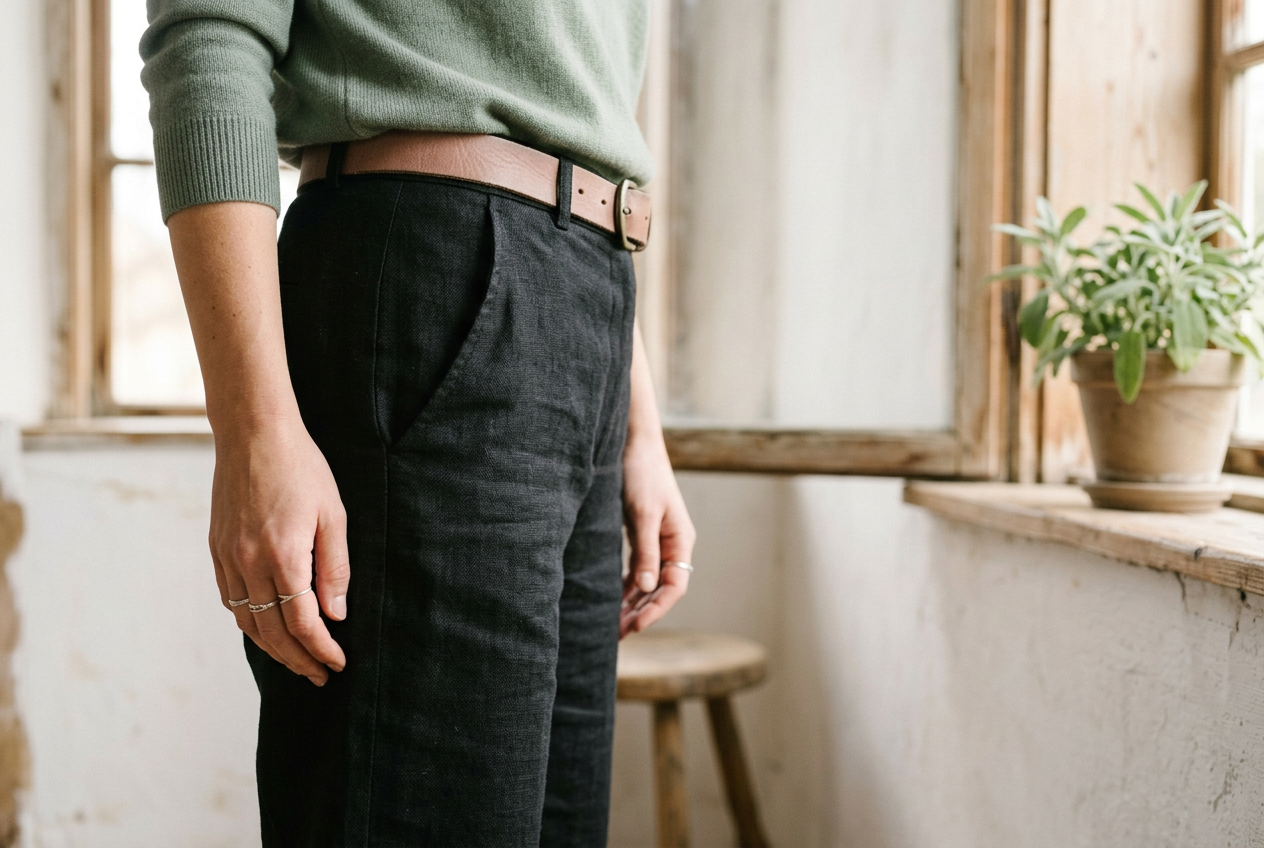
The test case is a pair of black mid-rise trousers in a firm woven twill, with a fixed waistband, straight legs and diagonal pockets running from the waist area toward the side seam. The waistband closes without strain. The front lies flat. Yet both pocket openings lift away from the hips, turning two narrow slits into visible wedges.
That combination often gets read as a waist-sizing problem. It is not. A waistband can fit while the garment below it lacks enough room, and a pocket can distort even when the trouser body has adequate ease, meaning the extra room in a garment beyond the body measurement. On this pair, the openings became flatter when the empty pocket bags were lifted by hand toward the waistband, then flared again when released.
That pointed to construction as well as fit.
This is women’s fit coverage because these pocket shapes commonly appear in women’s skirts and trousers, where the difference between waist and high-hip measurements can be pronounced. The same mechanics can occur in other wardrobes, but the alteration choices here assume a shaped waistband and a garment cut over the hips.
The waist and hip are separate fit points
A fixed waistband only tells you what is happening at one horizontal line. A trouser or skirt may fit there while pulling across the high hip, usually the area several inches below the waist where many pocket openings sit. If the cloth is under tension at that level, it looks for somewhere to release. A cut edge such as a pocket mouth is an easy place to move.
Look for evidence beyond the open pocket. Fine horizontal lines traveling from the opening toward the zipper or center front suggest the garment is tight across the hip. A side seam that swings forward can signal the same issue, particularly when the front pattern piece is being pulled around the body. On a skirt, the side seam may bend rather than falling cleanly toward the floor.
The black test trousers showed a faint line from each lower pocket corner toward the center front after walking and sitting. The pockets were not carrying a phone, keys or even a hand. Empty pockets can gape from tension alone.
Stretch does not automatically solve this. A woven fabric containing a small amount of elastane may feel comfortable while still pulling visibly, especially if the pattern relies on that stretch instead of allowing enough room through the upper hip. Soft fabric tends to collapse around the body. Firm twill holds the pocket opening in a more obvious lifted shape.
A deep pocket bag can drag on the opening
The pocket bag is the fabric pouch hidden inside the garment. Depth is useful, but the bag has to be supported. When it hangs mainly from the pocket opening, its own fabric can pull down on the lower corner and roll the opening outward, even before anything is placed inside.
On the test trousers, the lightweight pocketing extended well below the hand. Lifting the bag toward the waistband reduced the flare at once, while folding some of its depth upward also helped. Neither test proved that depth was the only cause, because the faint hip lines remained, but it showed why moving to a larger size would not fully correct this pair.
A well-supported bag may be caught into the waistband seam or secured near the center front, which spreads its weight beyond the pocket mouth. An unsupported bag hangs more freely. Extra depth also gives the fabric room to twist after laundering or bunch when the trousers are pulled on, so smoothing the bag flat should be the first check before judging the fit.
Contents magnify the problem. A large phone placed low in a deep bag creates downward and outward pull, and its rectangular edge may show through the trouser front. If an empty opening already stands away from the hip, a loaded pocket will rarely become neater. The useful pocket and the invisible pocket are sometimes competing designs.
The seam angle changes how the opening behaves
A traditional in-seam pocket sits within a seam, often the vertical side seam of a skirt. Many trousers instead use a diagonal opening that starts near the waist and meets the side seam lower down. Both are casually called side pockets, but their angles respond differently to the body.
A near-vertical skirt opening can spread when the side seam is pulled around a full hip. A strongly diagonal trouser pocket crosses an area that changes shape between standing and sitting, so the upper edge needs enough stability to resist stretching. If that edge lengthens during wear, the pocket mouth can bow even when the garment is not especially tight.
The angle on the black trousers also made the lower corner important. It landed close to the fullest part of the upper hip, where fabric tension was highest. A slightly more upright opening might have avoided some of that force, but changing the angle after construction would mean rebuilding part of the trouser front. That is rarely the first alteration worth paying for on an ordinary ready-to-wear pair.
Construction can compound the issue. A narrow strip of nonstretch material sewn inside a pocket edge, often called stay tape, helps prevent the opening from lengthening. Topstitching can add some control too, though it changes the visible finish. Neither measure creates missing hip room.
Stabilizing an opening that is being forced apart may make the surrounding drag lines sharper.
Use the mirror to separate fit from construction
Start with empty pockets and smooth each bag flat from inside the garment. Stand naturally rather than pulling the waistband upward or holding the stomach in. If the opening is flat at first but begins to lift after walking, the edge may be stretching or the bag may be shifting.
Next, support the bottom of the pocket bag through the garment and raise it slightly. A visible improvement suggests that shortening or anchoring the bag could help. If the opening stays wide while the bag is supported, focus on hip room and pocket angle instead.
Then pinch a small amount of fabric at the side waist without moving the trousers higher. This imitates the looser waistband that comes with sizing up, but it does not add hip room, so it is not a complete fitting test. The useful comparison happens in the fitting room: try the next size, settle the garment at its intended rise, and see whether the pocket opening closes without the crotch dropping or the waistband standing away.
On the test pair, lifting the pocket bags improved the upper half of each opening, while gentle extra room over the high hip softened the line at the lower corners. The evidence pointed to a combined fault. A single quick fix would have produced only a partial result.
The alterations that can flatten the pocket
If the garment fits through the hip and the bag is dragging, a tailor can shorten the bag while preserving enough depth for a hand. Another option is to secure its upper edge into the waistband or an existing internal seam, provided that doing so does not pull the garment front out of shape. These are contained changes because they leave the visible pocket angle alone.
A stretched pocket mouth can be reinforced from inside with stay tape. The opening may need to be eased back to its intended length first, which means removing some stitching and resetting the edge rather than sewing tape onto the distorted shape. Visible topstitching is a sturdier alternative when it suits the garment.
Hip tension calls for room, not stronger tape. A tailor may be able to release the side seam if there is enough seam allowance, the fabric folded inside for construction. Pockets placed directly at that seam make the work less straightforward, and many mass-market garments leave little spare cloth. Sizing up and taking in the waist is often cleaner when the larger size fits the rise and seat.
Closing the pocket partly or fully is the blunt option. It works well when the garment matters more than storage, and it can be less costly than reconstructing a poorly angled opening. The tradeoff is permanent: the sleek line comes from giving up some or all of the pocket.
For the black trousers, the proportionate alteration would be to shorten and support the bags, then reassess the remaining hip line. Recutting both openings would ask too much of an otherwise ordinary pair. If the hip tension remained obvious, returning them for a different cut would make more sense than rebuilding the front.
Sizing up can exchange one problem for another
A larger size is useful when it removes drag lines through the high hip and lets the side seam fall straight. The waist can sometimes be reduced afterward, although a major change may affect darts, belt loops and pocket placement. On trousers, extra size can also lengthen the rise, leaving the crotch lower than intended and moving the pocket opening to a wider part of the body.
That is why a gaping pocket alone is weak evidence for sizing up. If the larger pair produces a loose waistband while the same opening still bows, construction is probably doing more of the damage. Deep, unsupported bags remain deep and unsupported in the next size.
Shop by the hardest area to alter. Hip room usually deserves priority over an easily reduced waist, but an unstable pocket design should not be treated as a body-measurement problem. Before keeping the garment, put a phone in the pocket and walk. A pair that looks acceptable only while empty and motionless has already shown where it will fail.
Questions people ask
Can a tailor fix side pockets that stick out?
Often, but the right repair depends on the cause. A tailor may shorten or anchor a dragging pocket bag, stabilize a stretched opening, release available fabric at the hip or sew the pocket closed. Recutting the opening angle is more invasive and may not be worth the cost on standard ready-to-wear trousers.
Should I size up if the waist already fits?
Size up when the current garment shows hip drag lines and the larger size lets the side seam hang correctly. Expect to assess the waistband and rise afterward. If the larger size only loosens the waist while the pockets still bow, pocket depth or construction is the likelier problem.
Why do my pockets look fine until I put my phone in them?
The phone adds weight low in the pocket bag, pulling on the opening and lower corner. A deep bag that is not supported at the waistband makes this more visible. Shortening or anchoring the bag can help, but some lightweight or close-fitting garments cannot carry a phone without changing their line.
One update a day
Today's fashion update, in your inbox
One fashion update each morning — no hype, no filler, just pieces worth wearing.