Build the Wedding Guest Outfit From the Grass-Safe Shoes Up
The shoe that survives the lawn has to work at dinner too. These four formulas match stable summer footwear with the right hem length and level of formality.
Women's · November 6, 2026 · 8 min read
The useful measurement for an outdoor wedding shoe is not heel height. It is the amount of heel that meets the ground.
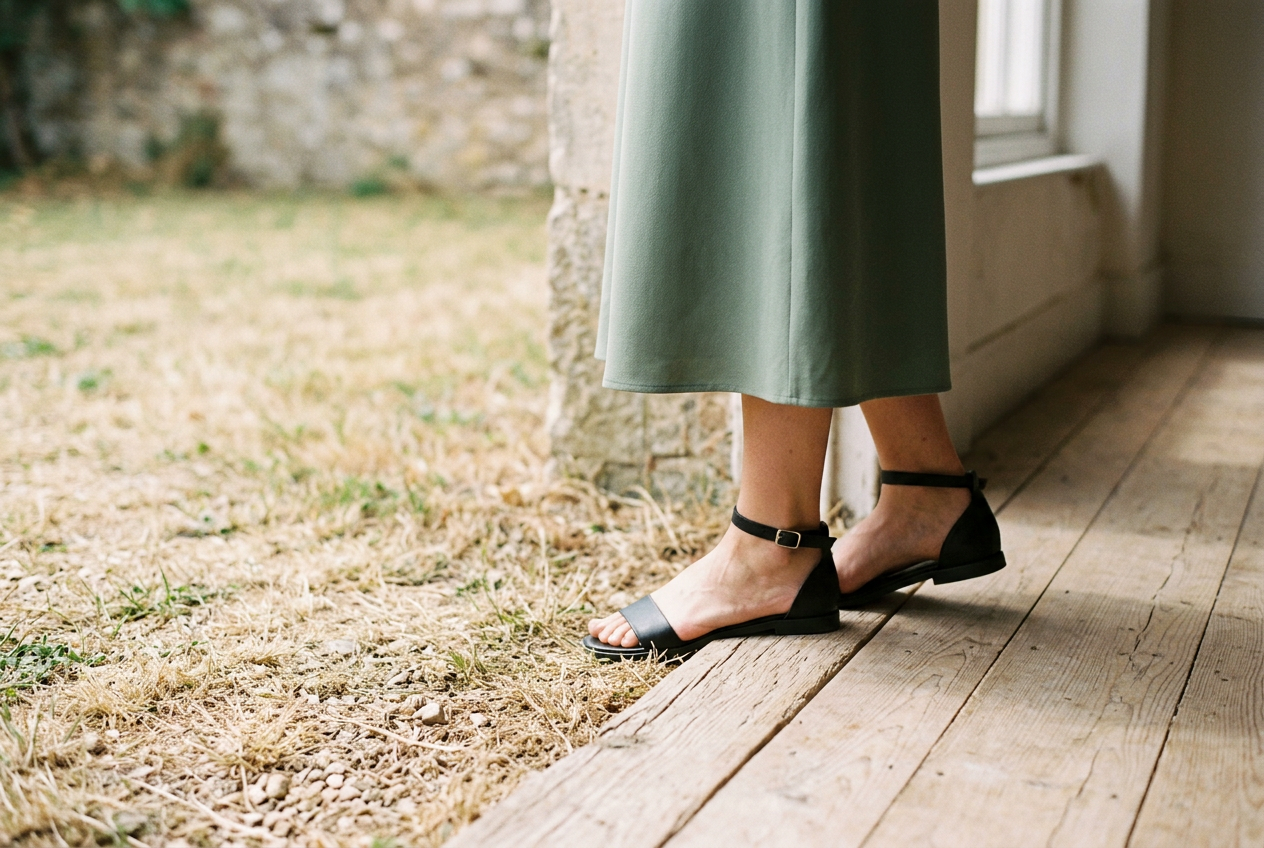
For this women’s Style Notes test, I started with a black leather sandal already in my wardrobe: open toe, slim ankle strap, broad rectangular heel, and a leather outsole with a thin rubber forepart added by a cobbler. The heel crossed a dry lawn without sinking, while the rubber gave it enough grip to move onto polished wood without the careful, shortened stride that a smooth leather sole can require.
That pair became the control for every outfit here. It is dressy without looking delicate, stable without reading orthopedic, and plain enough to expose the real styling problem: grass-ready shoes often carry more visual weight than narrow heels, so the hem and fabric above them must look intentional.
First, inspect the part that touches the ground
A broad heel needs a genuinely broad base. Some flared heels look substantial from the side but narrow sharply underneath, leaving almost the same contact point as a stiletto. Turn the shoe over. A rectangular or square heel base spreads weight better than a tapered tip, especially when the lawn is soft from watering or recent rain.
The outsole matters once the ceremony moves inside. Bare leather looks refined and can wear well, but a new smooth sole may slide on tile or sealed wood until it has been scuffed through use. A rubber forepart, whether built into the shoe or added later, gives grip under the ball of the foot without changing the upper. A cobbler may call this a topy, meaning a thin protective rubber layer bonded to the outsole.
Avoid deep outdoor tread unless the event is casual. It can hold damp soil, then leave marks indoors. Fine-textured rubber is the better compromise.
The black test sandal passed because its heel base stayed flat on the lawn and its sole did not collect visible grass. Its weak point was the ankle strap, which felt secure on uneven ground but needed enough room for a finger underneath once heat and standing caused mild swelling. That fit check is worth doing at home late in the day, not during a quick morning try-on.
Formula one: broad heel plus a bias-cut midi dress
A broad heel is the closest substitute for a conventional dress heel, so it supports the widest range of wedding dress codes. Pair it with a midi dress cut on the bias, meaning the fabric is cut diagonally so it follows the body with some give rather than hanging rigidly.
Keep the hem between lower calf and just above the ankle. That gap lets the shoe register as part of the outfit and keeps a fluid skirt from catching against the back of the heel while walking downhill or stepping off a temporary event floor. A longer hem can work, but only if it clears the ground in the shoes you will wear. Barefoot fitting is misleading.
The test sandal worked best with a matte crepe midi rather than a very light chiffon skirt. Crepe had enough weight to fall cleanly beside the block heel, while the airier fabric wrapped around the ankle strap in a breeze. Silk, viscose, and polyester can all produce a fluid dress; fiber content alone does not predict behavior, so lift the skirt in the fitting room and let it drop. Fabric that clings to the calf there will not become easier outdoors.
For cocktail attire, add a small structured bag and one polished jewelry choice. The shoe already has visible hardware and straps, so extra ankle detail is unnecessary. A broad-heel sandal in metallic leather can raise the formality, although metallic finishes show scuffs more readily than smooth black or tan leather.
Formula two: a wedge with a clean column or tea-length hem
A wedge places a continuous structure beneath the heel rather than balancing the foot over a separate heel tip. That makes it reliable on grass, but the solid side profile can look heavy under a short, fluttering dress.
Use a clean column dress that ends above the ankle, or choose a tea-length skirt with enough volume to balance the wedge. The column should skim rather than grip the calves; a narrow stretch dress can bunch over the upper edge of the shoe and make the whole outfit look compressed. With a fuller skirt, keep the waist defined and the hem decisively below the knee.
Material sets the formality. A wedge wrapped in smooth leather or tonal fabric can suit a polished garden wedding. Cork and braided jute read more relaxed, even when the upper is satin. Espadrille-style wedges also absorb moisture along the wrapped midsole, so they are a poor choice for wet grass unless darkening and staining will not bother you.
Wedges can feel stable while standing yet resist the natural bend of the foot. Walk down stairs before committing. If the whole shoe lifts away from the heel with every step, a tighter ankle strap may control it, but sizing down can push the toes over the front edge. The alternative is a lower wedge with a more flexible forefoot.
This is the formula for someone who wants height and expects a long lawn portion. It is less convincing for black tie, where the visible bulk of a casual wedge can pull against the dress code.
Formula three: a dressy flat with an ankle-skimming dress
A flat is not automatically comfortable. Thin soles transmit stones and hard flooring, pointed toes compress the forefoot, and backless shapes make the toes grip while walking over uneven ground. For a wedding, look for a flat with a secure slingback or closed heel, light cushioning under the ball of the foot, and an outsole that bends near the toes rather than folding through the middle.
An ankle-skimming dress gives a flat enough exposure to look deliberate. Floor-length fabric paired with a very thin shoe can drag outdoors, then disappear under the hem indoors; the wearer loses both clearance and the visual lift that a heel would have supplied. A straight or softly A-line silhouette works better when the ankle bone remains visible.
Pointed flats create length under a midi hem, though the point should extend beyond the toes rather than squeezing them into the tip. Almond toes offer more room and still read polished. Mesh flats are breathable, but open mesh admits dust and damp grass, while rhinestone-covered pairs can catch fine fabrics. Smooth leather, satin with a reinforced edge, or tightly woven textile is easier beside a delicate hem.
For greater formality, use surface finish instead of ornament overload. A dark satin slingback or a flat in softly reflective leather can hold its place with an evening dress. Ballet flats with exposed elastic and a very soft, collapsed shape usually read more daytime unless the wedding itself is relaxed.
Formula four: a stable low sandal with tailoring
A low sandal with a back strap, a broad sole, and straps that hold the forefoot is the easiest option for heat. It also risks looking like vacation footwear. Tailoring corrects that quickly.
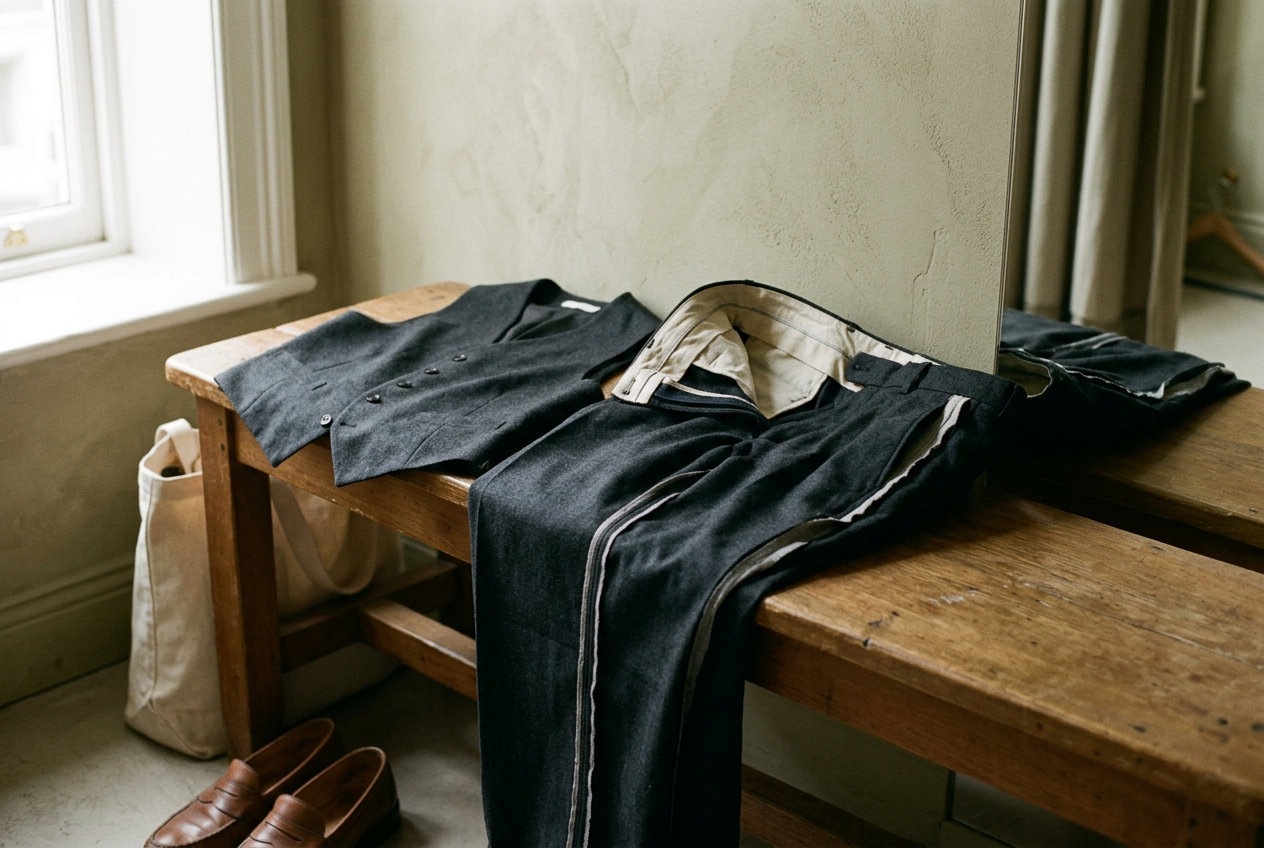
Pair a minimal leather sandal with a fluid trouser suit or a long vest over matching trousers, then use a silk or crepe shell rather than a casual tank. The trouser hem should clear the ground by a small, visible margin while standing in the actual shoe. Wide legs cut for heels will sweep grass when worn with low sandals, and temporary hemming tape rarely holds well once humidity and movement work on it.
A dress formula can work too: choose a sharply cut midi with a defined shoulder or waist rather than a loose tiered sundress. The black test sandal sits in this category as well as the broad-heel group because its low pitch, the angle between heel and forefoot, keeps the foot relatively level. That made standing easier, while the leather upper and restrained hardware kept it suitable for an indoor reception.
Skip slide sandals for a lawn-to-floor event. Without a heel strap, the foot must work harder to keep the shoe attached on slopes, and the slapping movement that seems harmless outdoors becomes conspicuous in a quiet ceremony space. A stable sandal should stay with the heel when the foot lifts.
Run the transition test at home
Put on the complete outfit, including the bag, then walk across carpet and a hard floor. Carpet exposes shoes that catch long hems. Tile reveals slippery soles and noisy heel taps. If possible, cross a patch of grass without testing a pristine returnable pair outdoors; an older shoe with the same heel shape can confirm whether the footprint is workable.
Stand for several minutes and check where the straps press. Feet often need more room later in the day, so a sandal that feels loose first thing may be correctly fitted by the ceremony. An ankle strap should stabilize the shoe without cutting into the tendon, while forefoot straps should not leave the smallest toe perched on the sole edge.
Bring heel protectors only as a backup. These small caps widen a narrow heel tip, but they can look conspicuous, alter the shoe’s balance, and come loose during the move indoors. Starting with the right heel shape is cleaner than correcting the wrong one at the venue.
The black leather sandal needed no on-site fix. Its rubber forepart handled both surfaces, the broad heel stayed level, and the midi hem cleared the ankle strap. That is the standard: one shoe, no changeover bag, and no outfit adjustment at the edge of the lawn.
Questions people ask
What heel shape works best for a wedding on grass?
Choose a square or rectangular heel with a base you can see clearly when you turn the shoe over. A flared heel that narrows underneath may still sink. Low block heels are the easiest compromise for a ceremony on lawn followed by dinner on a hard indoor floor.
Can I wear stilettos with heel protectors?
Heel protectors can help for a short crossing, but they change the contact point and may feel awkward on firm flooring. They are more useful as an emergency accessory than an outfit foundation. If much of the wedding takes place outdoors, a broad heel or dressy flat is the steadier buy.
How long should a dress be with flats at an outdoor wedding?
Aim for a hem that exposes the ankle or clears the ground throughout a full stride. Try the dress with the exact flats, because even a small change in sole thickness affects clearance. A tailor can set the hem accurately once the shoe choice is final.
Are wedges formal enough for a wedding?
Smooth leather and tonal fabric wedges can suit cocktail or garden attire, especially beneath a clean column or tea-length dress. Cork and braided jute look more casual. For black tie, a refined broad heel or dressy flat usually fits the formality better without sacrificing stability.
One update a day
Today's fashion update, in your inbox
One fashion update each morning — no hype, no filler, just pieces worth wearing.