Rigid Platform Sandals Lose Their Nerve on Sloped Sidewalks
A broad outsole feels reassuring until the sidewalk tilts sideways. Testing two platform sandals showed that sole flex and strap hold matter more than footprint alone.
November 2, 2026 · 7 min read
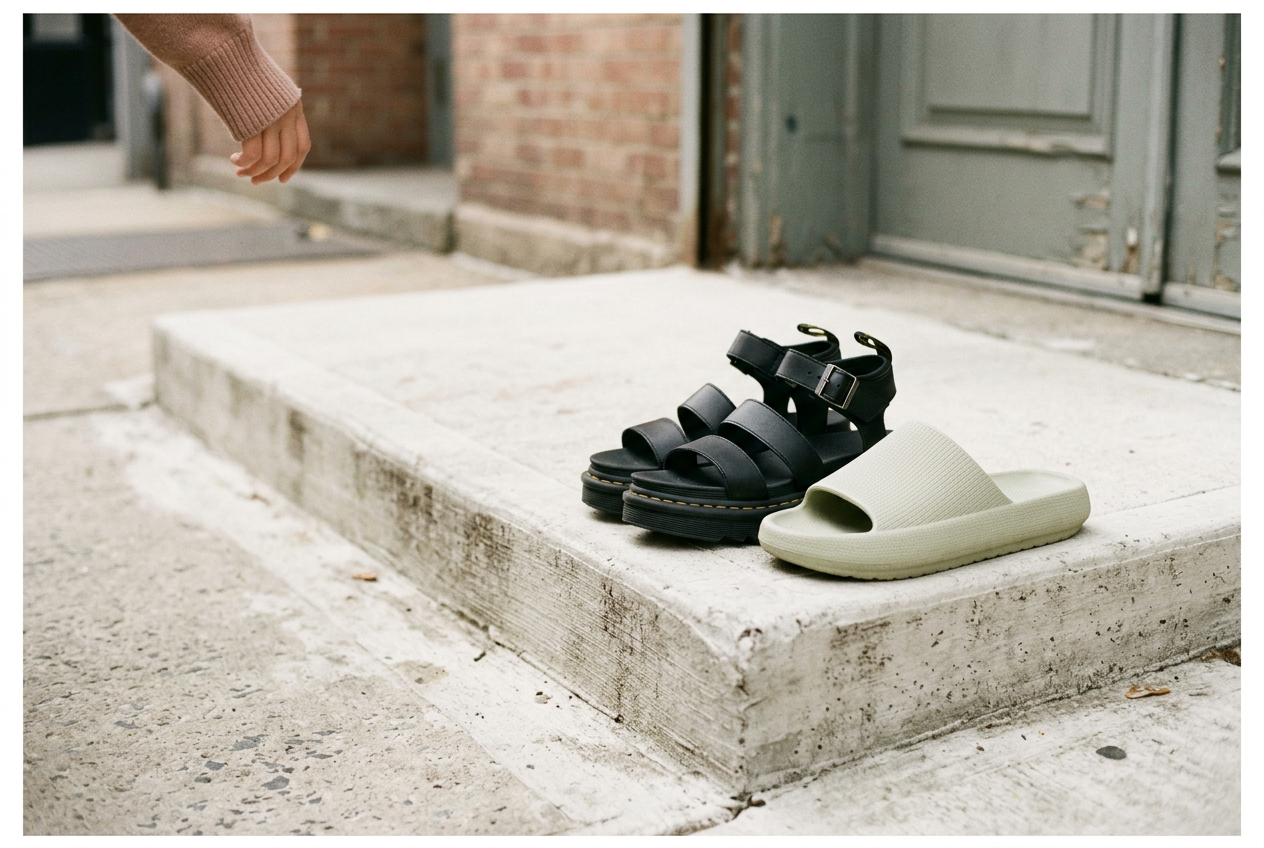
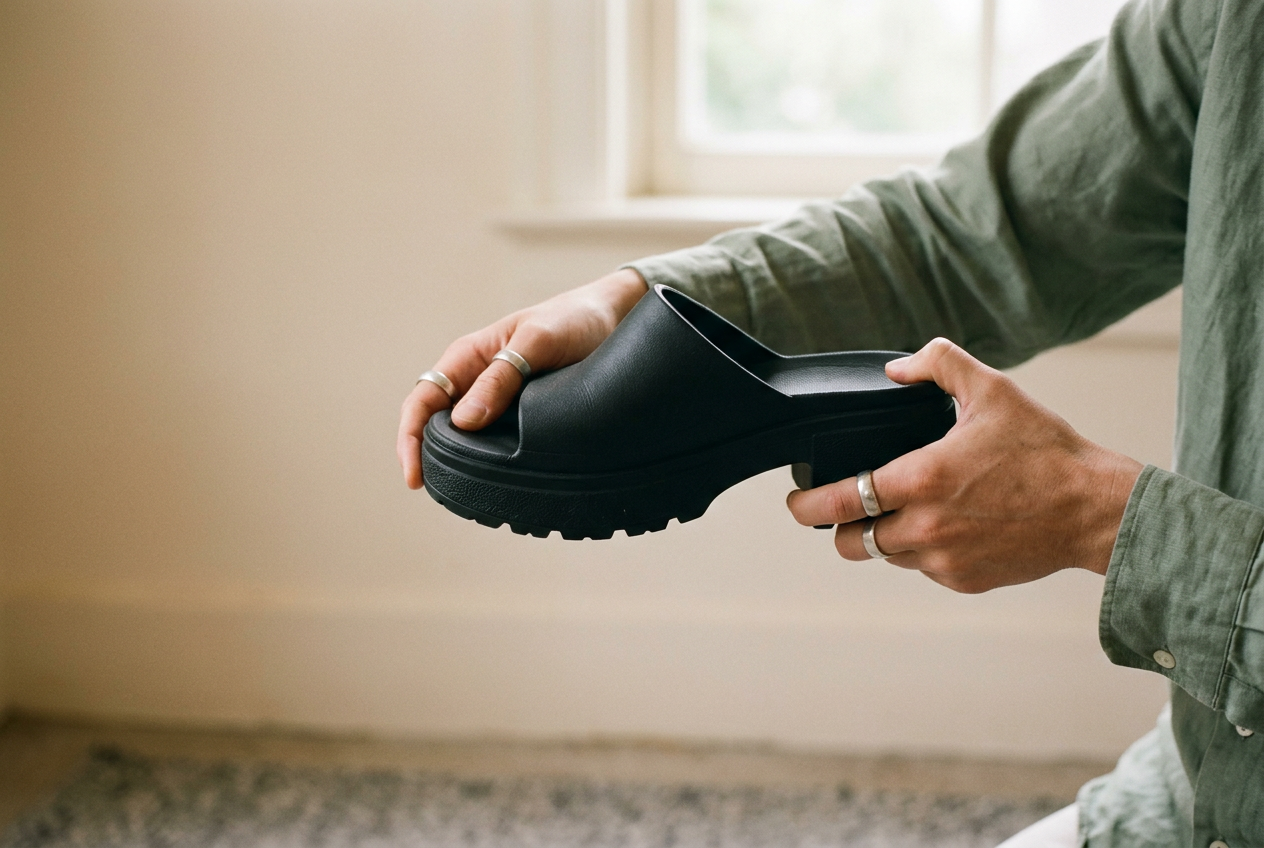
The shoe that prompted this test was a black leather platform sandal with a broad, nearly rectangular outsole and a dense molded sole measuring around two and a half inches at the heel. It looked dependable. On level ground, it was.
The trouble arrived at the first sloped driveway crossing, where the sidewalk leaned toward the street and the platform remained impressively committed to being a platform. Rather than adapting to the angle under my foot, the entire shoe tilted sideways, taking my ankle with it. Nothing dramatic happened, but there was a quick correction and the immediate realization that visual solidity is not the same thing as lateral stability.
I compared that sandal with a lower, flexible platform built from lighter foam, with textile straps and a rubber contact layer under the sole. I wore both over the same neighborhood route during one week, alternating the order so tired feet did not always meet the same pair. The route included curb cuts, a long cross-sloped block and pavement patched with enough enthusiasm to create several new problems.
This is unisex footwear advice: body weight, foot width, strap placement and sole construction affect the result more than the department where the sandal is sold.
A broad sole only helps when it lands flat
On ordinary pavement, the black leather sandal’s wide outsole spread pressure well and reduced the small side-to-side movements common in narrow heels or sculpted wedges. The footbed felt firm rather than cushioned, while the heel strap kept the back of the foot from lifting. It was easy to walk briskly without the sole slapping.
At a curb cut, that broad base remained useful if I approached straight on. The long front edge met the incline early, and the rigid sole acted as a ramp beneath the foot, allowing a smooth roll up the slope. This is leverage working in the wearer’s favor: the outsole reaches the change in level before the toes do, so the foot does not need to bend sharply.
Approach the same curb cut diagonally and the advantage shrinks. One outside corner of the platform touches first, leaving the rest of the outsole briefly unsupported, and the higher the foot sits above that contact point, the more noticeable the sideways movement becomes. Stack height means the amount of material between the foot and the ground; extra stack increases the distance through which a small tilt can move the ankle.
The sandal did not become unstable merely because it was high. Its height and stiffness worked together. The wide base resisted rolling while fully planted, but once the ground prevented a flat landing, the stiff sole transferred the pavement’s angle directly to the foot.
The flexible platform handled slopes better, with a catch
The lighter sandal bent across the forefoot and twisted slightly from heel to toe. That twisting resistance is called torsional stiffness, meaning how strongly a shoe resists being wrung along its length. Moderate torsional stiffness let one edge of the outsole follow a cross-slope without forcing the whole foot to copy it.
That made the flexible pair calmer on the driveway crossing. Part of the outsole stayed in contact while the rest adjusted, and the lower stack gave a small misstep less leverage. On broken pavement, the foam compressed around shallow irregularities instead of perching on their highest point.
Too much flexibility would create another problem. A soft platform that folds under the arch or twists freely can let the foot move independently of the outsole, particularly when the upper consists of loose straps. This pair stopped short of that, though its textile heel strap stretched enough during the week to require tighter fastening. The adjustment restored the hold, but only because the strap had another usable position.
That fit detail mattered more than the cushioning. When a platform begins to tip, a secure upper gives the foot a chance to bring the shoe back underneath it; if the heel lifts or the forefoot slides sideways, the wearer first has to retrieve the sandal, which is a ridiculous additional task during a minor wobble.
For shoppers, the useful target is controlled flex rather than softness. Hold the sandal at the heel and press the front upward. It should bend near the ball of the foot, where the foot naturally flexes, without folding through the middle. Then twist the heel and forefoot gently in opposite directions.
Some movement is useful for uneven ground. A sole that wrings out like a damp cloth has declined the job.
Cross-slopes exposed the rigid pair’s real weakness
The longest sloped block produced the clearest difference. In the black leather sandal, the downhill edge of the platform contacted first and stayed loaded, while the uphill side felt light. My ankle had to hold the foot level above a sole that was following the street’s angle. The broad outsole prevented a sharp roll, but the stack made every small correction larger.
After repeated passes, the discomfort appeared at the outer ankle rather than under the foot. The leather straps did not rub, the firm footbed did not create a hot spot, and the sole showed no sign of becoming more accommodating. Break-in softened the upper where it crossed the toes. It did not change the platform, because dense molded soles do not learn manners from repeated exposure.
The flexible sandal kept more of its outsole in contact and demanded fewer corrections. Its thinner straps, however, concentrated pressure when the foot moved downhill inside the shoe. Tightening the ankle strap reduced that slide but also increased pressure across the instep. This was the better walking shoe for the route, not an invisible shoe.
Readers with wide feet should pay particular attention here. A broad outsole can conceal a narrow usable footbed, especially when raised sidewalls cup the foot. If the little-toe joint sits on a ridge rather than inside it, the platform’s apparent width is decorative. The black sandal had enough room through the forefoot, but its secure fit could not cancel the rigid sole’s behavior on a slope.
Uneven pavement favors less height, not maximum squish
On patched concrete, the rigid sandal bridged small gaps well. Its outsole did not sink into cracks, and the firm platform protected the sole of the foot from sharp texture. Larger raised patches were less pleasant because the shoe balanced briefly on them before landing flat again.
The flexible platform absorbed more of those interruptions, although the softer edge caught once against a raised seam when I was walking quickly. It bent rather than throwing the foot, but that moment showed why very thick foam is not automatically safer. A compressible outsole can deform around an obstacle, yet it can also drag or collapse at an edge if the wearer catches it badly.
Neither pair matched a low walking sandal with a secure back strap and a thinner rubber sole. That alternative transmitted more pavement texture but kept the foot close to the ground, shortening the lever created by a sideways landing. Anyone buying primarily for a walking commute should treat the platform as a style choice with consequences, not as free height attached to a sensible sandal.
The store test worth doing
Walk beyond the mirror. On a clean floor, place one foot partly on the edge of a low fitting platform or another safe change in level, keeping support nearby, and notice whether the sandal adapts or tips as a block. Do not stage an ankle audition on store furniture.
Check heel hold next. The back of the foot should stay aligned over the sole instead of drifting toward either edge, and the ankle strap should fasten securely with room for later adjustment. Buckles and hook-and-loop straps offer more tuning than fixed elastic, though elastic can work when it is firm and well positioned.
Finally, look at the outsole from behind while standing naturally. A flared base, where the sole widens toward the ground, can add useful contact area without making the footbed oversized. It cannot erase stack height. If the platform is tall, rigid and paired with a loose upper, the design has combined three sources of work for the ankle and charged the wearer for the materials.
Rigid leather platforms often sit around the price of a decent pair of sneakers, while molded foam versions may cost less, but price does not predict slope performance. Construction does. The black sandal remained the sharper-looking choice with wide trousers and long skirts, and I would still wear it for level routes with limited walking. For the tested block, it stayed home.
Questions people ask
Are wide platform sandals more stable than narrow sandals?
They can be more stable on level ground because a broad outsole creates a larger contact area. That advantage weakens when the surface slopes sideways or only one corner lands first. Height, sole stiffness and strap hold determine whether the broad base supports the foot or tips beneath it.
Should a platform sandal bend when I walk?
A walking platform should usually flex near the ball of the foot and allow a small amount of twisting along its length. It should not fold through the arch or feel loose under the heel. Controlled flex helps the outsole maintain contact on uneven pavement without leaving the foot to stabilize a floppy sole.
Is a rigid platform suitable for a walking commute?
It may work on mostly level, predictable pavement, particularly with a secure heel strap and moderate height. Routes with cross-slopes, diagonal curb cuts or broken concrete expose its limitations. A lower walking sandal will usually demand less ankle correction, even if its thinner sole feels firmer underfoot.
Can straps compensate for a high platform?
Secure straps keep the foot centered and make small corrections easier, but they cannot change the leverage created by stack height. Look for an adjustable ankle strap and a forefoot strap that holds without pinching. If the sole tips as one rigid block, tightening the upper only secures you more efficiently to the problem.
One update a day
Today's fashion update, in your inbox
One fashion update each morning — no hype, no filler, just pieces worth wearing.