Memory-Foam Sandals Felt Worse After a Week of Walking
A soft footbed made a persuasive first impression, then compressed under the heel, trapped heat and became less steady. Here is where memory foam works, and where firm contouring wins.
Women's · October 31, 2026 · 7 min read
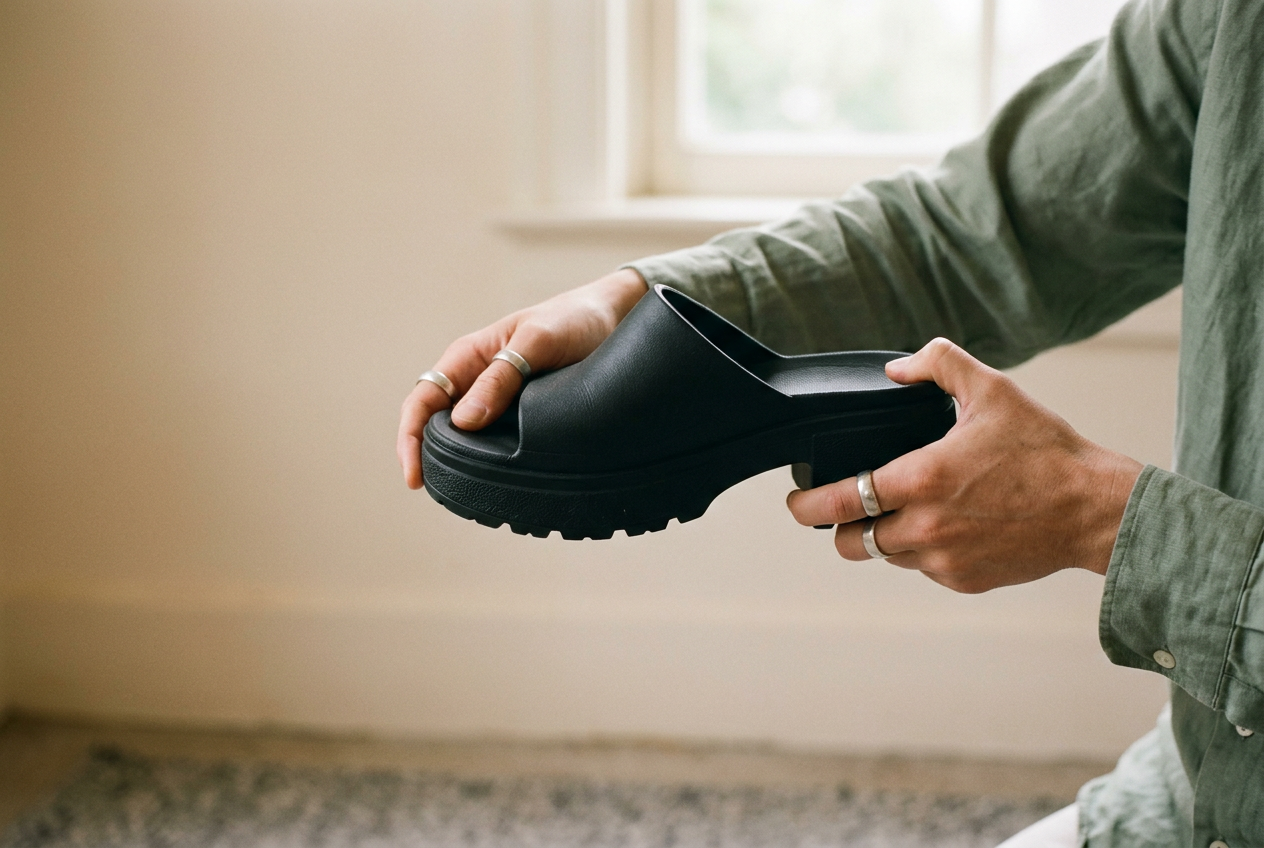
The test pair was a women’s black two-strap sandal with synthetic uppers, a memory-foam top layer and a lightweight molded sole. Memory foam is a slow-rebounding polyurethane foam that yields under pressure, which explains both its welcoming first step and its tendency to remember the parts of your foot doing the most work.
I wore this pair for one week of ordinary summer use: errands, commuting, indoor stretches and longer sidewalk walks. The sandals stayed dry except for a controlled splash test, and I wore them barefoot rather than adding socks to rescue the footbed from its chosen profession.
This was not a mileage contest. The point was to track the changes a shopper can miss during a carpeted fitting: whether the foam recovered overnight, how warm it became, where moisture lingered and whether softness still felt supportive once the initial novelty had gone.
The first fitting favored softness
On day one, the test sandal felt forgiving under the full length of the foot. The foam filled the shallow spaces beneath the arch and cushioned the heel without the abrupt edge found on some deeply molded sandals. There was no break-in period in the usual sense. The upper straps softened slightly with movement, but the footbed arrived ready to flatter.
The fit had a catch. Because the foam compressed as soon as weight landed, the foot sat lower than it appeared to during an unweighted try-on. That pulled the synthetic straps closer across the forefoot, which was acceptable on my medium-width foot but would leave less room for a high instep or end-of-day swelling. Shoppers between sizes should not treat extra foam as extra space.
It disappears when stood upon.
The footbed also lacked strong contouring. Its arch shape was broad and low, while the heel cup, meaning the raised section intended to center the heel, was too shallow to do much once the foam gave way. On a shop floor, that construction reads as gentle. Outside, it asks the straps to handle more of the steering.
Compression changed the fit
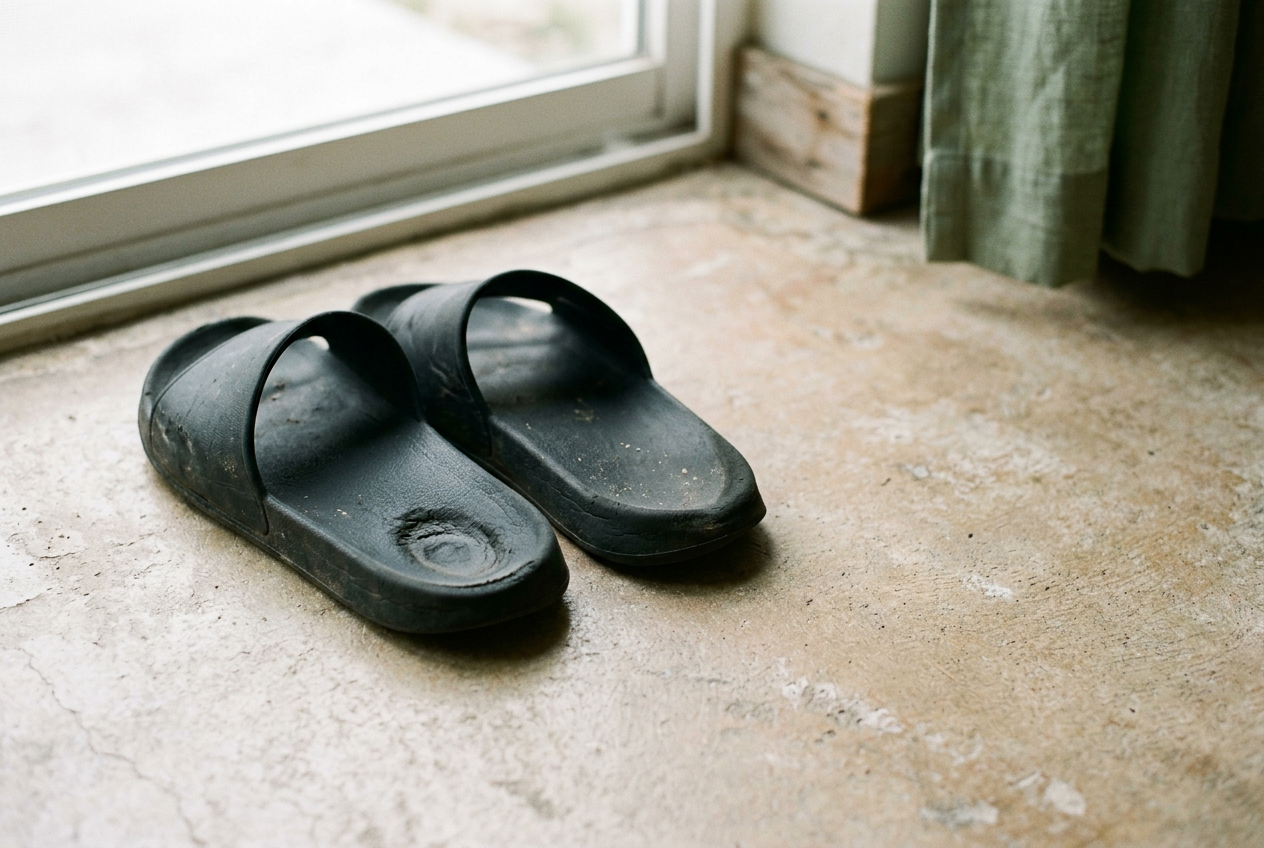
By the middle of the week, two flattened zones were visible beneath the heel and the ball of the foot. These were not holes or dramatic dents, and the foam still rebounded after wear, but it returned more slowly and never looked quite as level as it had out of the box.
That change is called compression set, meaning foam retains some deformation after repeated loading. It matters because cushioning does not need to collapse completely before the sandal feels different. Once the heel area packed down, the foot tilted slightly into the softer center of the impression, and the loose-looking rear portion of the sandal began to feel less controlled on uneven pavement.
The forefoot changed too. Under the ball of the foot, the foam became firmer where it had compressed most, while the less-used perimeter stayed pillowy. This created a soft border around a denser pressure zone rather than one consistent platform. It was still pleasant while standing in a checkout line.
During a longer walk, the transition made the sandal feel busier underfoot, as if the foot had to keep finding the same landing position.
By day seven, the test pair had not become unwearable. It had become less convincing. Initial softness had turned into a personalized indentation without the structural benefit of a truly molded footbed, which supports the heel and arch through its shape rather than waiting for body weight to press a shape into it.
Heat was the least charming feature
Memory foam’s close contact with the sole of the foot reduced airflow, and the synthetic top cover did little to move moisture away. On warm walks, the test pair felt noticeably hotter beneath the heel and forefoot than a firm sandal with a textured or suede-lined footbed.
The sensation was not immediate. During short indoor wear, the foam registered as cozy, an odd achievement for an open shoe. After sustained pavement walking, warmth accumulated in the compressed zones, where the foot sat closest to the dense material and sweat had fewer places to go. Open straps cannot ventilate a surface covered by a foot.
Heat also affected stability. As the top cover became damp, the foot shifted forward slightly on descents and sideways during quick turns. The straps prevented a full slide, but they also took the resulting friction. By the end of the longest outing, the sandal had rubbed more at the inner forefoot strap than it had on day one, despite the upper becoming softer.
For a wearer whose feet run cool and dry, this may remain a minor annoyance. Anyone who regularly leaves a visible footprint on a sandal should regard a smooth memory-foam surface with suspicion. It is upholstery with a commute.
The splash test exposed slow drying
A small amount of water darkened the top cover and sank into the foam rather than beading on the surface. Blotting removed the obvious moisture, yet the pressed areas continued to feel cool and damp through the evening. The sandal felt dry by the next morning after being left in moving indoor air, but it was not ready for immediate repeat wear.
That rules the test pair out as a dependable pool, beach or rain sandal. The issue is not only waiting. Repeatedly putting a damp bare foot onto foam encourages odor, while leaving the pair in direct heat can damage adhesives or distort synthetic components. A waterproof molded EVA sandal, made from a closed-cell foam that resists absorbing water, is the easier choice when soaking is part of the plan.
Cleaning also requires restraint. A damp cloth handled surface marks; saturating the footbed would have created a drying job out of proportion to the crime. This is a wipe-clean sandal that looks washable, which is not quite the same thing.
Softness did not become support
The test pair remained comfortable for low-demand use. It worked well for short errands, desk-heavy days and occasions when a hard footbed would feel needlessly stern. The foam reduced the first impact of each step, and the flexible sole demanded no break-in time.
Longer walks revealed the tradeoff. The sole flexed through the middle, the shallow heel cup offered little lateral control, and the compressed foam let the foot move within its own indentation. On sloped sidewalks, the sandal felt less secure than a firmer contoured alternative with a defined heel cup and a stable arch platform.
Firm does not automatically mean supportive, of course. A flat plank is still a flat plank. The useful alternative is a shaped footbed made from molded EVA, polyurethane, or cork-latex, with enough resistance that the heel does not sink through the contour. That construction can feel less delightful during a 30-second fitting, yet it usually gives the foot a more consistent platform once walking becomes the activity rather than the trip from the shoe department mirror to the register.
This distinction matters in the budget-to-midrange price band, where memory foam is often used to create an immediate comfort signal without adding complex shaping underneath. Press the center of the footbed before buying. If the foam collapses easily and the sole twists through the arch, most of the support is coming from softness and straps.
The useful buying line
Choose memory-foam sandals when the expected wear is brief, mostly level and dry. They suit someone who dislikes a hard first contact underfoot, wants no break-in period and can let the pair air between wears. A secure upper still matters; adjustable straps are more useful than a thick foam label when feet swell.
Skip this construction for travel days built around walking, humid commutes, wet settings or routes with broken pavement. In those cases, look for a firm contoured footbed, a deeper heel cup and an outsole that resists twisting through the middle. The first fitting may feel merely adequate. That is often preferable to a sandal becoming emotionally supportive while mechanically absent.
For women’s sizing, try the pair late enough in the day to account for swelling, then stand for several minutes before judging strap room. Walk down an incline if the store permits it. If the toes grip to stop the foot sliding, or the heel drifts beyond its indentation, the foam is already asking the foot to stabilize the shoe.
The week-old test pair will stay in rotation for short errands. It will not be packed for a city trip, worn near water or chosen for an afternoon that includes phrases such as “we can walk from here.”
Questions people ask
Do memory-foam sandals flatten permanently?
They can develop compression set, especially under the heel and ball of the foot, before they look fully flattened. In this test, the foam still rebounded after a week but retained visible pressure zones, and those zones made the support feel less even during longer walks.
Are memory-foam sandals good for all-day walking?
The test pair was comfortable for short, level outings but became warm and less stable as the foam compressed. For all-day walking, a firmer contoured footbed with a defined heel cup and limited twisting through the arch is the safer practical tradeoff, even if it feels less plush in the store.
Can memory-foam sandals get wet?
A light splash is manageable, but the test footbed absorbed water and stayed damp through the evening after blotting. For pools, beaches or regular rain, choose a one-piece molded EVA sandal or another water-resistant construction that can be rinsed and dried without saturating a fabric-covered foam layer.
How should memory-foam sandals fit?
Stand in them long enough for the foam to compress before assessing the straps. The foot should remain centered without gripping at the toes, the heel should stay inside the footbed, and adjustable straps should have room for swelling without letting the foot slide sideways.
One update a day
Today's fashion update, in your inbox
One fashion update each morning — no hype, no filler, just pieces worth wearing.