EVA Slides Feel Better After They Sink. Then Support Goes Too.
A compressed EVA footbed can feel pleasantly broken in while losing the shape that kept your heel centered. Here is how to tell which stage your slides have reached.
October 27, 2026 · 7 min read
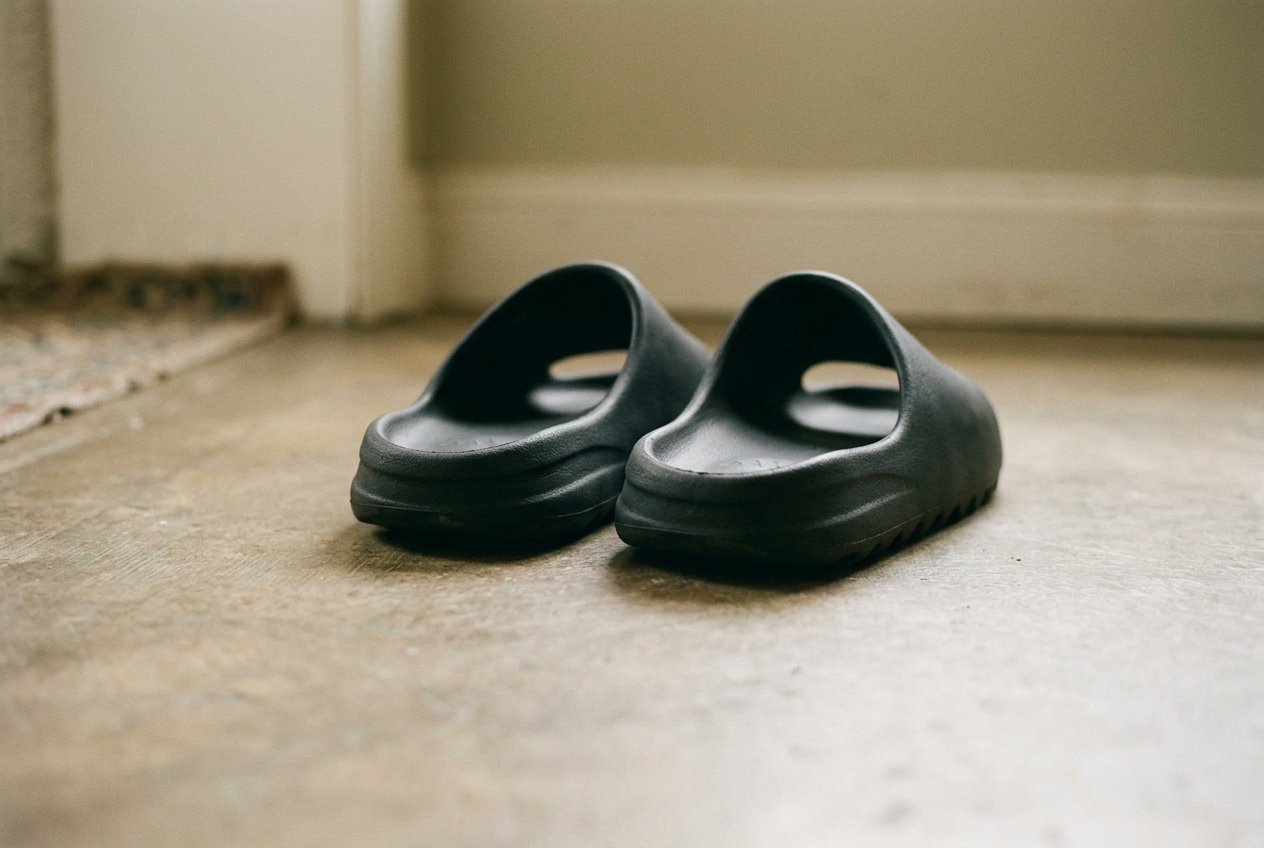
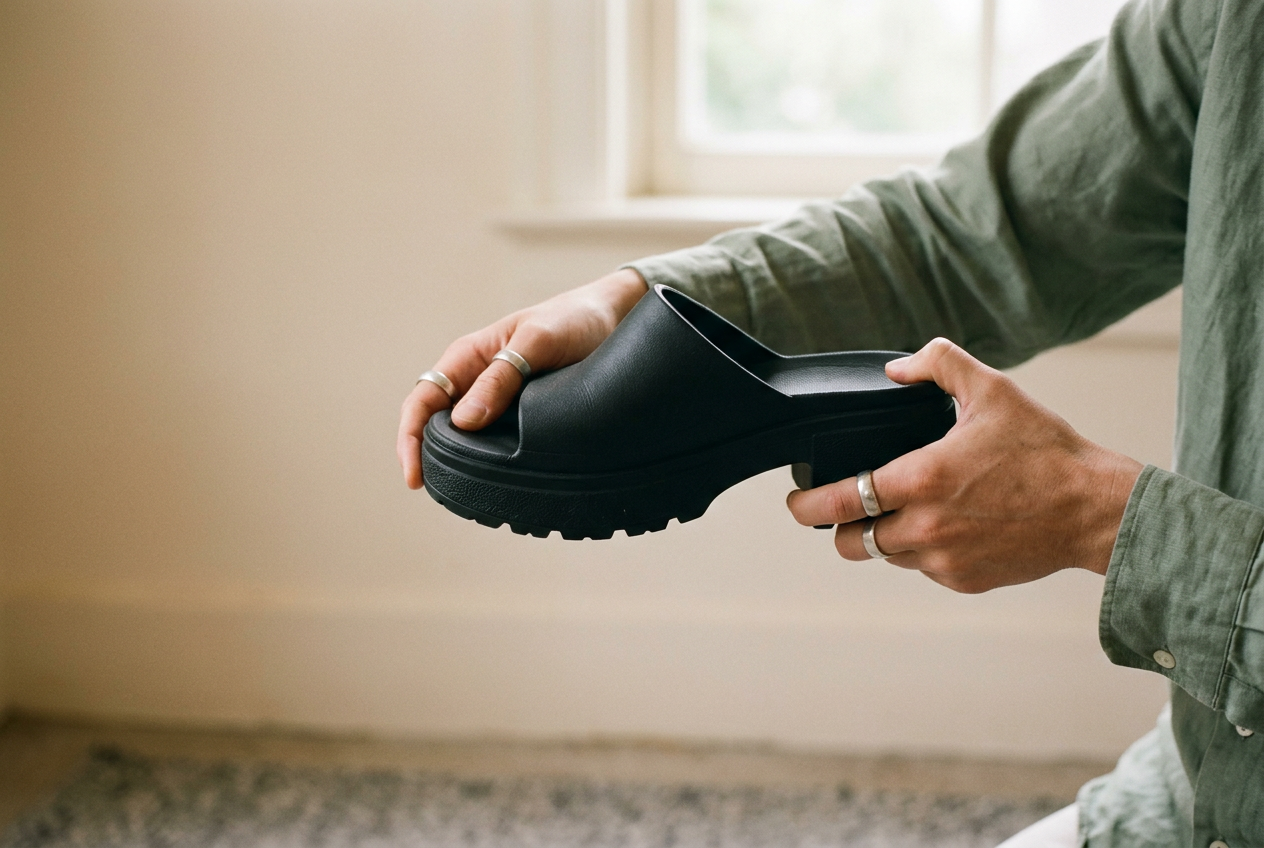
The test pair was a black, one-piece slide with a wide strap, a shallow heel cup and a modest rise under the arch. It was made from molded ethylene-vinyl acetate, or EVA, an expanded foam that traps air within its structure to produce a light, cushioned sole.
I wore the slides barefoot for a week of indoor use, short errands and repeated pavement walks, then left them at rest overnight between checks. This was a practical wear evaluation rather than a laboratory durability test: no machine flexing, pressure map or claim about a universal replacement schedule. The pair matters because its simple construction leaves nowhere for wear to hide. The upper and footbed are part of the same foam shell, with no separate insole or rubber outsole to disguise what has softened.
This is unisex footwear coverage. The material behavior applies across wardrobes, although fit will change with foot width, instep height and where the wearer's heel lands in the molded cup.
What changed underfoot
Fresh EVA can feel firm in a way that shoppers often interpret as cheap or insufficiently cushioned. Repeated walking changes that first impression. The heel presses into the same zone on every step, while the forefoot bends and loads beneath the ball of the foot, so those areas begin to yield before the quieter foam around the arch and perimeter.
By the middle of the wear check, the black test pair had developed a clearer heel impression and a softer flex point across the forefoot. The strap had not stretched, because it was molded as part of the body, but the foot sat fractionally lower as the footbed packed down. That small drop made the wide upper feel less tight over the instep. The slides became more comfortable without becoming plush.
This is the useful phase. High-pressure areas have stopped pushing back quite so sharply, the surface has adapted to the wearer's contact pattern, and the shoe still returns close to its original shape after resting. A slide at this stage may feel better than it did in the store. Comfort and support are separate results, however, and softness alone cannot tell you whether both improved.
Compression changes shape as well as feel
EVA does not break in like leather. Leather can flex, stretch and form around the foot while retaining much of its basic thickness; foam changes because its air-filled structure compresses under load. Some of that change rebounds. Some remains as compression set, meaning the foam stays partly flattened after pressure is removed.
At the heel, a small amount of compression can increase contact and remove the hard, perched sensation common to new molded slides. Too much lowers the heel inside its cup, reducing the height of the rim that helps keep the rearfoot centered. If the depression forms unevenly, the heel may also tilt toward one side rather than settling level.
At the forefoot, softening makes toe-off easier because the sole bends where the foot bends. Continued wear can turn that flex zone into a hinge. The slide then folds through one narrow line instead of supporting the forefoot across a broader area, and the toes may start gripping to keep the shoe attached during faster walking. Your foot is now doing unpaid retention work.
The black test pair showed visible changes in both loading zones after the week, but its heel cup remained level and the forefoot crease relaxed after an overnight rest. That put it in the broken-in category. A permanent hollow, a sharply collapsed flex line or a sidewall leaning inward would have changed the verdict.
Four checks separate softness from instability
Start after the slides have rested overnight at room temperature. Heat makes EVA feel softer, and judging a pair immediately after hot pavement or a warm car can make ordinary temperature change look like permanent wear.
First, place both shoes on a flat surface and look across the heels from behind. The top edges should sit at comparable heights, and each heel cup should look centered rather than pulled toward an inside or outside wall. Uneven wear matters more than a neat, shallow footprint. A symmetrical depression can remain usable; a sloping platform changes how the foot meets the shoe.
Press the center of each heel with both thumbs, using similar force, then compare the response with the less-loaded foam near the edge. The center will usually feel softer. It should still push back and recover rather than holding a deep thumb mark. Compare left with right as well.
One markedly softer heel can make an otherwise matching pair feel oddly mismatched in motion.
Next, bend the forefoot at the line where your foot naturally flexes. The sole should curve through that area without collapsing into a narrow fold. On the black pair, the week-old flex line was easier to bend than it had been fresh, yet the surrounding foam still participated. If you can fold one forefoot with little resistance while the other retains structure, the foam has moved beyond ordinary adaptation.
Finish by walking on a hard, level floor at your normal pace. Notice whether the heel stays in the cup, whether the slide rolls toward either edge and whether your toes remain relaxed. A few minutes tell you more than kneading the footbed in your hands, because stability depends on the whole shape under body weight. Do the same check wearing the slides slightly damp only if that matches their normal use, since water can reveal extra movement between skin and foam.
The fit can fail before the foam looks ruined
A compressed slide rarely announces retirement by splitting neatly in half. More often, the fit becomes vague. The foot shifts farther forward, the heel rides an edge, or the arch rise no longer meets the same part of the foot because the surrounding zones have sunk.
The wide strap on the test pair remained fixed while the footbed settled, which improved instep room at first. Continued compression would eventually create excess vertical space beneath that strap, allowing the foot to lift and slap against the shoe. A molded upper cannot be tightened by a buckle or replaced by a cobbler. Once the geometry is wrong, the whole slide is wrong.
Pay particular attention if your heel already sits close to the back rim when the pair is new. Compression lowers the center but does not lengthen the platform, so a marginal fit has little room for later movement. The same applies to a foot that nearly overlaps the sidewalls. Size up or choose a wider shape rather than expecting foam to solve a footprint mismatch.
Surface texture can outlast structural support. A footbed may still show crisp ridges while the foam beneath has lost resistance, just as cosmetic scuffing can look severe on a pair that remains stable. Judge the platform first. Appearance is a separate argument with your closet.
What to buy when support matters
Plain one-piece EVA slides usually occupy the budget to midprice part of the sandal market, although branding and fashion finishes can push the price higher without changing the basic compression tradeoff. Paying more does not guarantee slower softening. Foam density, footbed thickness and shape matter more than a prominent logo.
For casual indoor wear, pool use or short trips, a softened one-piece slide may remain perfectly serviceable while it stays level. For regular pavement walking, look for a deeper heel cup and enough foam beneath it that your heel does not begin near the ground. A removable footbed gives you a replaceable wear component, though it adds weight and is uncommon in minimal molded slides.
A dual-density sole, meaning firmer foam supports a softer top layer, can preserve shape better than a uniformly soft body. Another alternative is a contoured cork-latex footbed with a separate rubber outsole, which is heavier and dislikes prolonged soaking but can offer a more defined platform. Neither option feels identical to EVA. That is the tradeoff: the lightest slide is pleasant to carry, while the more structured sandal often asks more of your bag and budget.
I would keep wearing the black test pair for short daily use because its rested shape remains even, the heel stays centered and the forefoot bends without folding. I would stop assigning it longer walks if either side began to list or the heel impression stopped recovering overnight. A slide does not need to look destroyed before it has finished being useful.
Questions people ask
Do
EVA slides get more comfortable over time?
They often do. Repeated pressure softens the heel and forefoot, reducing the firm feel of a new molded footbed and sometimes creating more room beneath the strap. The gain is useful while the foam still rebounds and the platform stays level; further softening can make the slide loose and unstable.
How can
I tell whether an EVA footbed is worn out?
Let the slides rest overnight, then compare heel depth, sidewall alignment and forefoot resistance. Replace or downgrade the pair to lighter use if one heel remains much lower, the platform tilts, the sole folds through a narrow crease or your foot no longer stays centered during ordinary walking.
Can heat make EVA slides seem more worn than they are?
Yes. Warm EVA can feel softer and more flexible, particularly after hot pavement or time inside a car. Let the shoes return to room temperature before judging permanent compression. A shape that recovers when cool is behaving differently from a heel hollow or forefoot hinge that remains after rest.
Should EVA slides fit tightly when new?
They should hold the foot without requiring toe gripping, but a painfully tight strap is a poor buying strategy. The foot may sit slightly lower as the bed compresses, creating some extra instep room, yet molded straps offer no adjustment and severe pressure is not a useful break-in stage.
One update a day
Today's fashion update, in your inbox
One fashion update each morning — no hype, no filler, just pieces worth wearing.