Backless Sneakers Need More Heel Hold Than You Think
A mule sneaker can manage stairs without turning every step into toe calisthenics, but only if the collar, footbed and sole keep the foot centered.
October 30, 2026 · 8 min read
Backless sneakers have moved beyond garden shoes and emergency trips downstairs. The current versions borrow the upper, cushioning and substantial sole of a regular sneaker, then remove the section most responsible for keeping that sneaker attached to the body. Convenience improves. Physics files a complaint.
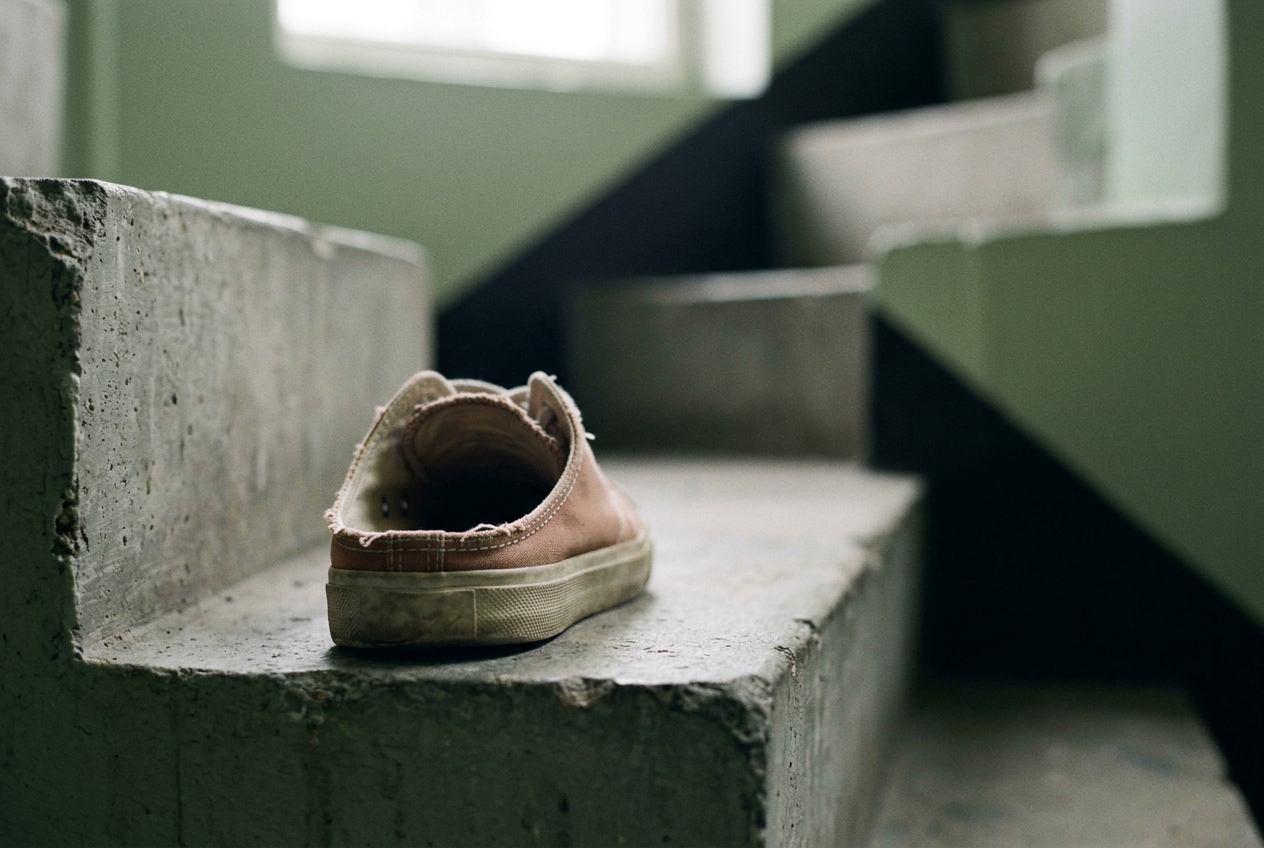
For a week of ordinary wear, I used one low-profile canvas mule sneaker as the test case: closed toe, lightly padded side collar, removable foam insole and a flat rubber cupsole, meaning the sole rises slightly around the edge of the upper. It looked like a familiar slip-on sneaker viewed from the front. From behind, the collar stopped below the heel and left roughly the back third of the foot exposed.
The test covered indoor stairs, concrete steps, brisk level walks and the usual abrupt changes of direction caused by remembering the tote bag left beside the door. This is unisex advice because the mechanics apply across wardrobes, though anyone shopping across men's and women's size scales should compare measurements rather than trusting the number printed on the box.
The canvas pair passed the convenience test immediately. It did not pass every stair.
Heel hold happens below the heel
A backless shoe cannot hold the heel in the usual sense. What it can do is hold the sides of the foot just below the ankle, where a well-placed collar creates enough friction to slow upward movement without digging into bone.
On the test pair, the padded collar ended too far forward. It touched the midfoot rather than cupping the rear half of it, which allowed the heel to rise before the shoe followed. Walking slowly on level ground disguised this. Going upstairs exposed it: the shoe lagged as I lifted each foot, then tapped back against the heel on the next step.
Some lift is inherent to the style. The useful threshold is not zero movement, which would require either a strap or a heel counter, the firm structure that wraps the back of a standard shoe. The practical threshold is whether the shoe rises with the foot quickly enough that its toe clears the stair edge without help from the toes.
Try that before buying. Put on both shoes, walk at a normal pace and climb at least several steps without curling your toes. If the back of the sole drops low enough to slap, or if the shoe pauses on the tread while the heel continues upward, the collar is not doing enough. A loose mule rarely becomes more secure after wear; the upper softens, the footbed compresses and the private stair negotiation becomes a public one.
Collar height matters less than collar position. A shallow collar that curves inward behind the widest part of the foot can hold better than a taller, straight-sided opening, particularly when the lining has a little texture. Smooth synthetic lining felt tidy against socks in the test pair, but it also reduced friction. Bare feet held slightly better until heat and moisture entered the arrangement, at which point the result became both less stable and less charming.
The insole should make a shallow seat
The removable foam insole looked similar to one from a regular sneaker, but its flat heel area gave the foot no reason to remain centered. On quick turns, my heel drifted toward the outer edge before the upper corrected it.
A better mule footbed has a heel cup, a shallow depression that cradles the heel, even though no upper covers it. The cup does not need to feel orthopedic or conspicuous. Its edge should register when the foot slides sideways, not press into the heel while standing. A slightly raised rim along the inner and outer sides also helps, provided it begins behind the ball of the foot rather than narrowing the toe box.
Surface material counts. Brushed textile and lightly textured mesh usually create more hold than slick synthetic fabric, while deep memory foam can make matters worse by compressing unevenly as the heel lifts. Softness is not security. The test pair felt pleasantly cushioned for the first few minutes, then the foam packed under the ball of the foot and left the heel sitting higher, which increased the angle of escape.
That change became most obvious during brisk walking. At an easy pace, the shoe stayed close enough. Once the stride lengthened, each heel rose farther and the toes began pressing down to keep the sole aligned. Toe gripping, where the toes flex repeatedly to stop a loose shoe sliding, is a clear failure rather than a harmless fit quirk.
It tires the forefoot and can make a generously sized shoe feel cramped.
A removable insole offers one useful adjustment. Replacing a slick, flat insert with a thin contoured one may improve hold, but the added volume must not push the foot above the collar. If the heel sits visibly higher after the swap, the cure has evicted the patient. Return to the original insole or choose another shoe.
A flexible forefoot beats a heavy platform
The sole on the canvas test pair was flat, moderately thick and stiffer than the upper suggested. That stiffness kept the shoe looking neat, but it also made stairs harder because the forefoot did not bend readily at the point where my toes flexed.
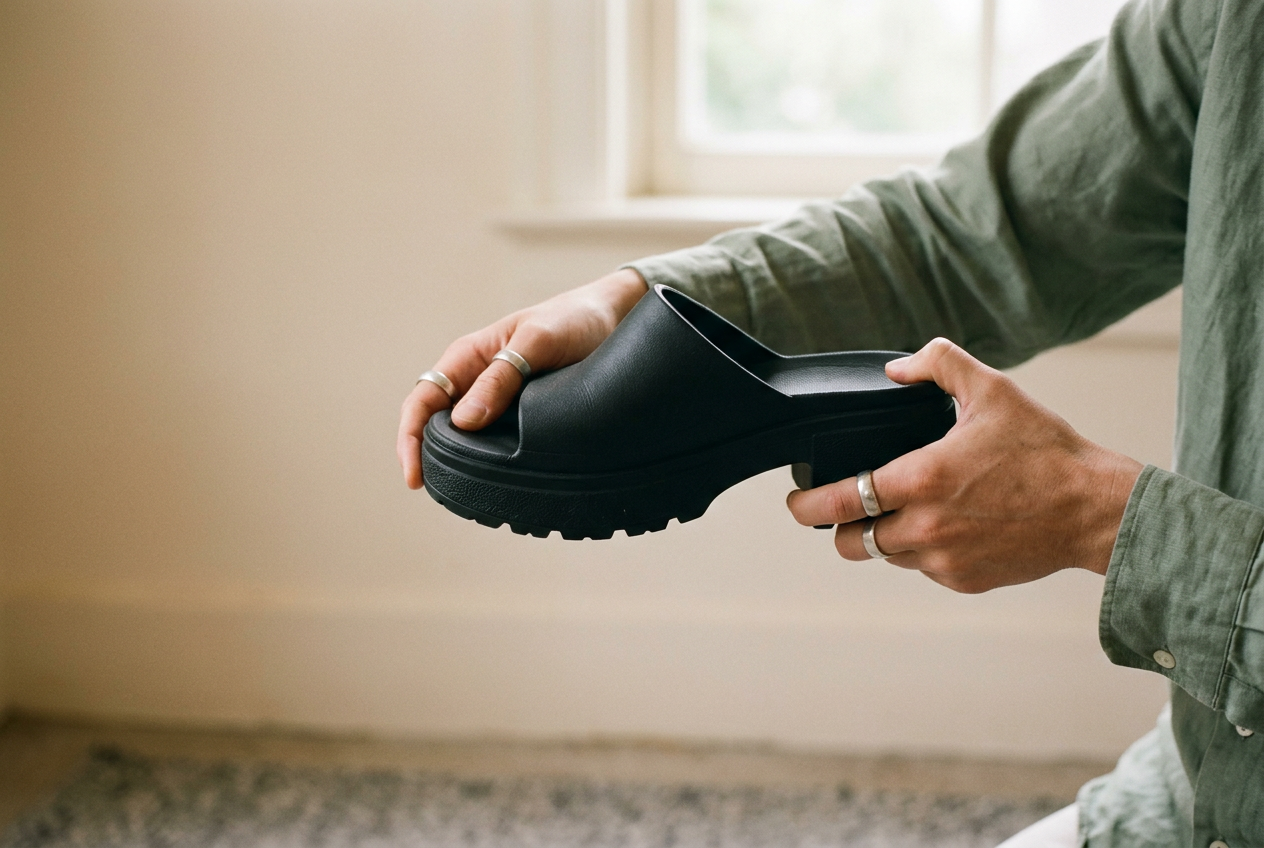
When a backless sneaker bends with the foot, the sole follows during push-off. When it resists, the heel lifts first and the shoe catches up later, increasing both slap and the chance of clipping a stair edge. The problem grows with thick platform soles, especially when their weight sits behind the ball of the foot. A platform mule may look grounded while standing and feel oddly freelance once moving.
Use the bend test in store. Hold the heel in one hand, press the toe upward with the other and look for flex beneath the ball of the foot, not through the middle. A shoe that folds at the arch lacks useful support. One that barely moves at the forefoot will demand extra work from the toes and collar.
The outsole also needs a broad, predictable contact patch. Strongly flared heels can catch a stair riser on the way up, while narrow sculpted waists reduce side-to-side stability when only part of the sole lands on a tread. Moderate rocker soles, which curve upward at the toe to roll the foot forward, can help on level walks, but an aggressive curve reduces the amount of rubber touching a shallow step.
The canvas pair's flat rubber outsole behaved well on dry concrete and poorly during quick descents, not from lack of tread but because the loose heel let the shoe land slightly off-center. Grip cannot repair fit. Deep rubber lugs on a wandering mule merely give the wandering more conviction.
Socks can change the result
No-show socks improved hygiene and made the test pair easier to remove, which is rather the point, but their smooth knit reduced contact along the collar. A slightly thicker athletic sock filled the upper and cut down lift, though it also made the low opening look less intentional.
Do not size down solely to make thin socks work. In a closed-toe mule, the foot shifts forward more than it does in a full sneaker, so shortening the shoe can push the toes into the front on descents. Aim for enough toe room to spread and stop naturally, then judge security through the side collar and footbed.
Width creates a similar trap. A wide foot may fill the opening while still sitting too far forward, especially if the toe box tapers. A narrow foot can have the correct length and still slide sideways because the collar never makes contact. Half sizes help only when the brand offers them; otherwise, compare the standard-width full-heel version before treating an insole or sock as structural engineering.
The brisk-walk cutoff
The test pair worked for slow errands, indoor wear and short level walks where stopping to adjust a foot was annoying rather than risky. It became a poor choice once the pace required a forceful push-off. After that point, the collar slipped, the heel drifted and the toes worked overtime.
That is the buying cutoff. Walk briskly for several minutes, make a tight turn in both directions and climb stairs without changing your gait. The shoe is viable if it stays aligned beneath the heel, bends under the forefoot and clears each step without toe gripping. Slapping alone is irritating, but slapping combined with sideways movement means the foot is not controlling where the sole lands.
People who use handrails, carry children or regularly manage wet outdoor steps have less room for compromise. So do walkers with reduced balance, limited ankle control or a history of catching shoe edges. A regular sneaker with a firm heel counter is the safer purchase, and a convertible mule with a heel strap offers a middle position if the strap sits securely rather than dangling as decoration.
Backless sneakers often cost roughly what a decent pair of regular sneakers costs, so convenience should not excuse a construction problem. The canvas test pair remained useful by the door, where its short range and easy entry made sense. It did not earn commuter status. The full-heel alternative took a few seconds longer to put on and required far less concentration on the stairs, an exchange that becomes attractive around the second near-miss.
Questions people ask
How much heel lift is acceptable in a backless sneaker?
A small amount is unavoidable, but the sole should begin rising almost as soon as the heel does. If it hangs behind, slaps hard or forces the toes to curl during stairs, the collar and footbed are not providing enough hold.
Should backless sneakers fit tighter than regular sneakers?
They should feel close around the sides of the rear foot, not shorter at the toe. Sizing down can jam the toes during descents while leaving the underlying collar problem untouched, so choose normal walking length and reject any pair that still shifts sideways.
Are platform mule sneakers stable on stairs?
They can be, but thick or heavy soles magnify heel lift when the forefoot resists bending. Look for a platform that flexes beneath the ball of the foot, has a broad outsole and does not flare far enough at the heel to catch a stair riser.
When is a full-heel sneaker the better buy?
Choose one when brisk walking produces toe gripping, the shoe lands off-center on steps or your routine includes wet stairs and frequent loads in your hands. A firm heel counter controls rear-foot movement without requiring you to shorten your stride or supervise every step.
One update a day
Today's fashion update, in your inbox
One fashion update each morning — no hype, no filler, just pieces worth wearing.