Jelly Slides With Socks Fix Rubbing, Not a Loose Fit
A week in one pair of molded PVC slides found that cotton softened the strap but held sweat, while synthetic socks dried faster and let the foot travel farther.
October 26, 2026 · 7 min read
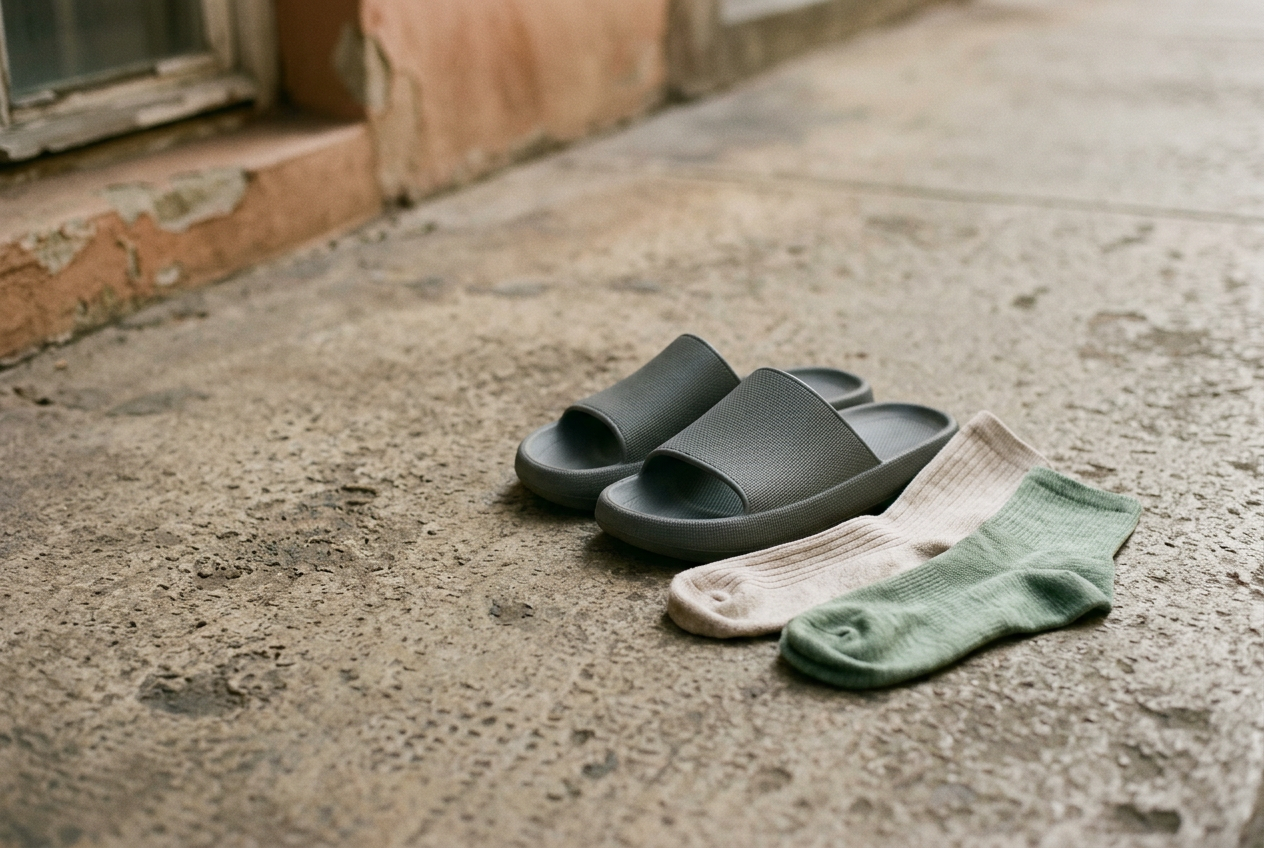
The test pair was a translucent smoke-gray slide molded in one piece from PVC, or polyvinyl chloride, the flexible plastic used for many jelly shoes. It had a broad upper strap, a shallow heel cup and a lightly textured footbed with no lining, padding or adjustable hardware. The length looked right. The strap, however, left enough vertical space for the forefoot to lift during every step.
That gap became the important part. Over one week, I wore the same pair on the same paved neighborhood loop with bare feet, thin cotton-rich crew socks and thin synthetic running socks. The weather stayed warm enough for feet to sweat, and each version was tested long enough for strap pressure, moisture and movement to become obvious rather than theoretical.
This is unisex fit advice. The mechanics do not change across wardrobes, although people buying from a gendered size chart may need to convert sizes and check the actual footbed length rather than trusting the number printed on the sole.
Bare feet gave the strap something to grip
At the start of the bare-foot walk, the PVC felt firm but not immediately hostile. Dry skin held against the textured footbed, which limited forward movement, and the broad strap spread pressure across the top of the foot rather than concentrating it at one narrow edge.
Heat altered that arrangement. Once moisture collected under the forefoot, the foot began to move forward and back inside the smoke-gray slide, while the strap stayed in roughly the same place. That created shear, meaning the skin and shoe moved in different directions, at the outer edge of the strap and beneath the ball of the foot.
The first warning was warmth at the strap edge, not pain. A few blocks later, the spot felt polished and tender, the familiar stage when continuing the experiment starts to look less like journalism and more like paperwork for a blister. The molded texture also became noticeable under the forefoot because damp skin pressed and dragged across it.
Bare feet gave the best control while dry and the worst surface rubbing once wet. The result would likely differ in a closer-fitting slide, where the strap holds the foot without scraping it on every step, but this particular pair had enough volume to turn sweat into extra travel.
Cotton reduced rubbing and stored the evidence
The thin cotton-rich socks made the strap feel kinder straight away. Their knit placed a soft layer between skin and PVC, and the outer surface of the sock took the abrasion that had landed directly on the foot during the first test. The tender area at the outer strap edge stayed quiet.
Strap pressure increased, though. Adding even a thin sock filled some of the space beneath the upper, which helped stabilize the forefoot but also made the broad PVC band press more firmly across its highest point. On this loose pair, that extra volume was useful. In a slide that already leaves a deep strap mark on bare feet, cotton socks would add compression rather than comfort.
Moisture was the compromise. Cotton absorbs sweat into its fibers and releases it slowly, so the sock became damp beneath the ball of the foot and stayed damp. The footbed no longer rubbed bare skin, but the wet knit began to shift and crease near the toes as the walk continued. A small fold in a sock can produce a remarkably ambitious amount of annoyance.
The cotton sock moved with the foot more consistently than bare skin did, which meant less direct shear at the strap edge. It did not stop the whole foot from lifting inside the slide. Each stride still required a slight toe grip to keep the shoe attached, and that muscular work became more tiring than the original surface rubbing.
After the walk, the smoke-gray PVC footbed was wet and the socks needed changing. Cotton won the blister comparison at the strap, but it was the least pleasant option for trapped moisture and would be a poor choice for a long, hot day without a spare pair.
Synthetic socks dried faster but slipped farther
The synthetic running socks were thinner and smoother than the cotton pair, with a low-bulk knit designed to move moisture away from skin. That moisture movement is often called wicking, meaning liquid spreads through the fabric so it can evaporate across a larger area.
Against the PVC strap, the synthetic layer prevented direct skin rubbing just as the cotton had. It also felt less soggy underfoot. Sweat spread through the fabric rather than settling into one damp patch beneath the forefoot, and the socks dried sooner after the shoes came off.
Inside the slide, however, the smooth knit had less grip. The foot traveled forward on slight downhill sections and pulled back when the heel lifted, while the broad strap repeatedly caught the top of the sock. The sock protected skin from that contact, but the added movement pushed the toes closer to the front edge of the footbed.
The heel cup did little to correct this because it was too shallow to hold the rear of the foot. By the end of the loop, the synthetic socks had avoided a hot spot at the strap yet made the slide feel less secure overall. They solved friction on the skin by relocating friction to the sock, which is acceptable only until the shoe starts requiring active toe clenching to remain involved in the outfit.
Texture matters here more than fiber marketing. A synthetic sock with a brushed or ribbed outer surface may grip a jelly footbed better than the smooth running pair used in this test, while a slick cotton blend may slide more than expected. The useful comparison is not cotton versus synthetic in the abstract. It is absorbent and slightly grippy versus fast-drying and smooth.
The strap gap decided the result
The smoke-gray slides failed the same fit check in all three conditions: with the heel placed naturally in the rear cup, I could lift the forefoot enough for the top of the foot to lose contact with the strap. Socks changed the amount of pressure and protected the skin, but neither fabric made the upper follow the foot.
A well-fitting slide should allow the foot to roll through a step without shooting forward or forcing the toes to curl for security. Some heel lift is normal because there is no back strap, but repeated slapping, toe gripping or visible sideways drift points to excess volume rather than a sock problem.
Before buying jelly slides, try them with the type of sock intended for wear and walk on more than a carpeted fitting area if the retailer permits it. Watch the forefoot as the heel rises. If the strap stays close without pinching and the toes remain relaxed, a thin sock may be a useful anti-rub layer. If the foot drops away from the strap, moves diagonally or lands against the front rim, a smaller size or lower-volume upper is the better fix.
Sizing down is not automatic. A shorter slide can leave the heel or toes hanging over the molded edge while the strap remains too roomy, particularly for a low-volume foot. In that case, changing size trades one bad fit for a more visible one. Look instead for a narrower strap opening, a deeper heel cup or an adjustable sandal made from softer material.
The useful sock depends on the failure
Choose thin cotton when the slide fits securely but the strap edge irritates dry skin, and when the walk is short enough that damp fabric will not sit underfoot for hours. The sock should lie flat through the toes and heel. Extra fabric defeats the point.
Choose a textured synthetic sock when heat and sweat are the larger problem, provided the outer knit grips the footbed. A very smooth performance sock belongs with a shoe that closes around the foot, not a loose plastic platform relying on optimism and five toes.
Skip the socks as a rescue plan when the slide slaps, twists or requires toe gripping. The week with the smoke-gray pair ended with cotton as the least abrasive option, synthetic as the driest and neither as a convincing correction for the oversized strap opening. The alternative is a better-fitting slide, ideally with a lower upper or an adjustable strap, rather than a thicker sock that raises pressure while leaving the heel free to wander.
Questions people ask
Do socks prevent blisters in jelly slides?
They can prevent blisters caused by the PVC strap rubbing directly against skin. In this test, both cotton and synthetic socks protected the tender outer edge of the foot, but neither stopped movement caused by a loose upper. Socks help with surface friction; they do not repair the fit.
Are cotton or synthetic socks better with jelly slides?
Thin cotton felt more stable and cushioned the strap, but it held sweat and began to crease near the toes. The synthetic pair dried faster and kept moisture from pooling, although its smooth knit slid farther across the PVC footbed. Pick cotton for short walks and textured synthetics for heat.
How can I tell if my jelly slides are too loose?
Walk normally and notice whether your toes curl, the sole slaps or your foot moves sideways beneath the strap. If the forefoot repeatedly loses contact with the upper, adding socks may soften rubbing but will not create control. A lower-volume strap or adjustable sandal is the practical replacement.
One update a day
Today's fashion update, in your inbox
One fashion update each morning — no hype, no filler, just pieces worth wearing.