Cotton Socks Lose the Humidity Test in Mesh Sneakers
A cotton-rich sock, a wool blend and a synthetic pair went into the same open-mesh sneakers. The best choice depends on how far you are walking and how much room the shoe has.
October 11, 2026 · 7 min read
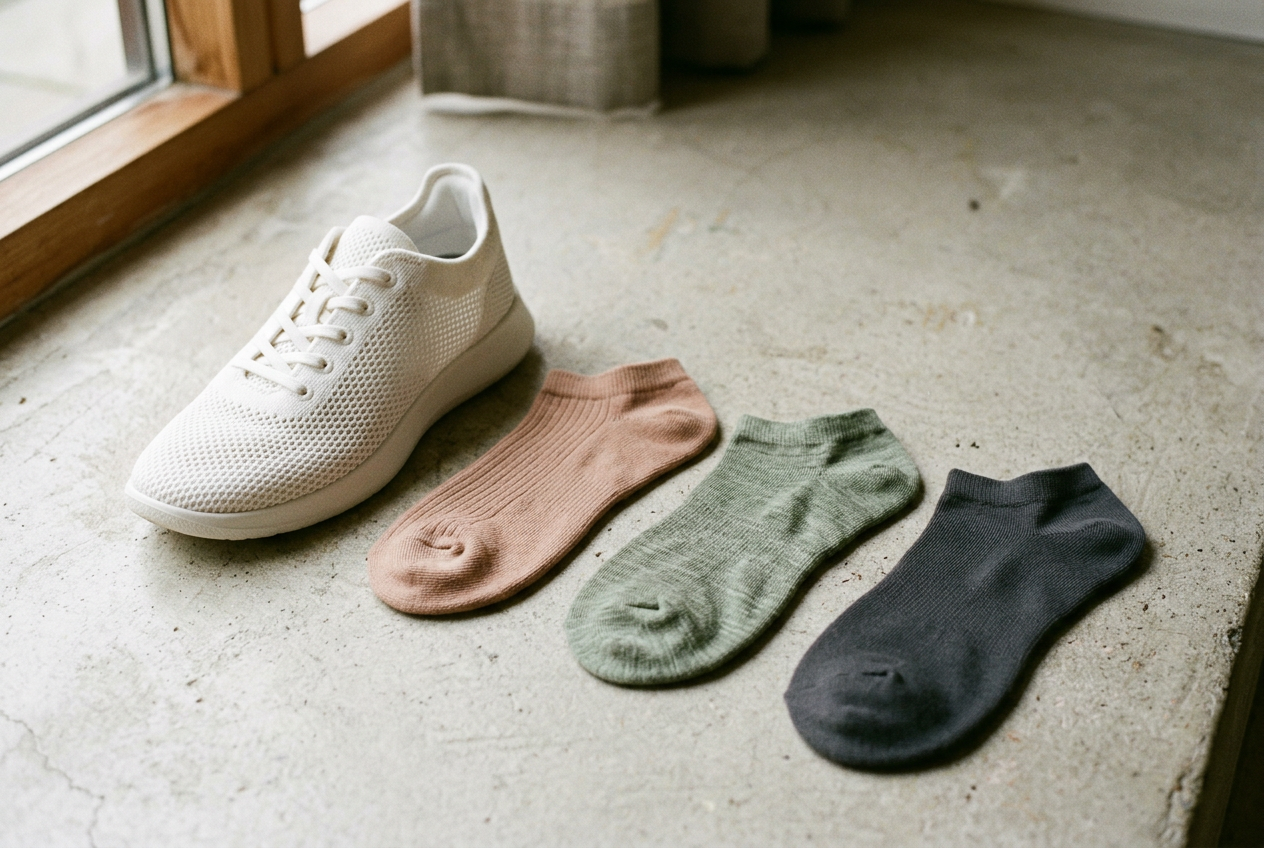
The test shoe was a white open-mesh sneaker with a shallow toe box and enough transparency across the forefoot to reveal both sock color and dampness. It is an unforgiving setup, which made it useful: extra fabric crowded the toes, wet cotton stayed wet, and a dark logo beneath the mesh looked less like styling than an administrative error.
This is unisex advice. Fiber behavior does not change by department, though sock sizing and shoe volume do, so the useful comparison is between the sock’s thickness and the space inside a particular sneaker rather than the gender printed on either package.
I wore three common low-cut constructions in the same shoes during humid-weather walking: a cotton-rich everyday sock, a merino-wool blend and a synthetic performance sock made primarily from polyester or nylon. Each pair was washed according to its care label first. I then compared how damp it felt after wear, where friction appeared, how quickly it stopped feeling wet once the shoe came off, and what could be seen through the white mesh in daylight.
This was a qualitative wear test, not a laboratory measurement. The useful result is the pattern, which was consistent enough to guide a purchase: cotton held the most noticeable moisture, wool managed dampness without feeling as slick, and the synthetic pair handled the longest walk with the least fabric bulk.
Cotton is comfortable until it stays wet
The cotton-rich sock felt most familiar at the start. Its surface was soft, the cuff behaved, and there was none of the slightly technical hand that can make a performance sock feel like part of a gym uniform. For a brief errand, it was fine.
Humidity changed the arrangement. Cotton is absorbent, meaning its fibers take in moisture rather than moving all of it promptly toward the shoe for evaporation, and the test pair remained damp around the toes and under the ball of the foot after the walk ended. Open mesh lets air through more readily than a solid leather upper, but it cannot dry fabric quickly while a warm foot keeps supplying moisture. The shoe has ventilation, not weather control.
That retained dampness mattered most during the longer wear. The sock softened and shifted slightly under the forefoot, while the heel felt wetter and less stable against the lining. There was no dramatic blister event, but friction announced itself as a warm patch, which is the point at which sensible people stop romanticizing natural fibers.
Cotton also showed through the test sneaker more than expected. A white pair created the cleanest visual result, although the ribbed texture remained visible beneath the open weave. Heather gray looked mottled. A dark cotton sock turned the entire forefoot darker, and any contrast at the toe seam was easy to see.
Choose cotton when the walk is short, the shoe has comfortable spare volume and you can change socks afterward. Cotton multipacks also tend to occupy the lowest price band of these options. That economy becomes less persuasive if the pair spends an afternoon damp inside a sneaker you hoped to wear through dinner.
A wool blend gives the best everyday compromise
The merino blend was the most balanced pair in the test shoe. Merino is a fine wool fiber that can manage moisture vapor while retaining less of the cold, clammy sensation associated with wet cotton, though the final result depends heavily on what the wool is blended with and how thick the sock is knitted.
The pair felt warmer on first contact than the synthetic sock, but it did not become oppressively hot during a moderate walk. More important, damp areas were less obvious underfoot, and the fabric kept its position without the softened, rumpled feeling of the cotton-rich pair. Wool is not magic and the sock still needed to dry, but it was less interested in making moisture the main event.
Thickness was the complication. Many merino socks are built for hiking or cool weather, with cushioning under the sole that consumes space inside a low-volume fashion sneaker. The test shoe’s shallow forefoot made that extra material noticeable across the toes, so a lightweight or ultralight wool blend was the only sensible version here. A cushioned wool sock may work beautifully in a roomy running shoe, then make a slim mesh sneaker feel one half-size smaller without changing its actual length.
Color and knit density also affected show-through. A smooth, light neutral looked quieter beneath the white mesh than a marled blend, while a dark reinforced toe created a visible cap across the front. This is not inherently wrong. A deliberate black sock under white mesh can work with black trousers or shorts, but a beige sock with a charcoal toe patch tends to look accidental.
Wool blends usually sit above basic cotton multipacks and many standard synthetic socks in price, especially when sold as individual pairs. Pay that premium for moderate walking, odor management and repeated wear between washes, not for the mere presence of the word merino. Check the fiber label and cushioning description because a small amount of wool in a thick winter construction does not solve a cramped summer shoe.
Synthetic wins the long walk, with conditions
The synthetic performance sock worked best for sustained humid walking. Polyester and nylon absorb little moisture into the fiber itself, while a wicking knit, meaning a structure designed to spread sweat across more surface area, helps moisture move away from concentrated wet spots so it can evaporate.
In the test sneaker, that produced the driest-feeling forefoot and the least bunching. The sock was also the thinnest of the three, which returned a little room to the shallow toe box and reduced pressure over the toes. On a longer route, this pairing caused the fewest distractions. A shoe being forgettable is high praise once pavement and humidity have begun negotiations.
The tradeoff was surface feel. Some synthetic knits become slick when damp, and a sock that is too large can slide against the foot even when it stays relatively dry. Fit matters as much as fiber here: the heel pocket should sit on the heel, the toe seam should not fold under a toe, and the fabric should remain lightly tensioned rather than stretched transparent.
Odor can also build faster in some polyester socks than in wool blends. Washing after each humid wear is the practical answer, provided the care label allows it, and air-drying avoids leaving a used pair in a gym bag to develop its own administrative district.
The smooth synthetic pair was least visible beneath the open mesh when its color matched the shoe. Dense logos, contrasting heel tabs and reinforced toe panels still showed. Performance branding is often placed exactly where an airy upper can display it, so inspect the whole sock rather than trusting the color named on the package.
Synthetic socks cover a broad price band. Basic multipacks can cost little, while anatomically shaped running socks with targeted cushioning cost closer to premium wool pairs. For this use, a thin, well-fitting construction is more valuable than elaborate padding. Mesh sneakers already advertise air; they do not need a mattress inside them.
Pair the sock with distance and shoe volume
For a short errand or a mostly seated day, wear a thin cotton-rich sock if you prefer its feel and can tolerate some retained moisture. It works best in a shoe with spare forefoot room, and a color close to the upper will keep the mesh looking intentional.
For a commute, museum day or several hours on foot, choose a lightweight merino blend when the sneaker has moderate volume. It gives a better balance of moisture management, stable feel and odor control than cotton, but avoid cushioned hiking constructions in shallow shoes.
For long urban walking, travel connections or a humid day with no chance to change, use a thin synthetic performance sock. It preserved the most room in the white test sneaker and created the least persistent wetness, although a close fit was necessary to prevent sliding.
Low-volume mesh shoes need the thinnest version of whichever fiber wins your distance category. Roomier running sneakers can accept light cushioning under the heel and forefoot, but padding should fill useful space rather than compress the toes. If the shoe already fits closely while barefoot, socks will not negotiate an extension.
Show-through is easiest to control with a smooth sock that matches either the sneaker or another deliberate color in the outfit. White under white is the quiet option. Black under white is graphic. Skin-tone socks can disappear from a distance, but seams and reinforced panels may remain visible, particularly when the mesh openings are large.
The practical result
The white open-mesh sneaker exposed the weakness of the default cotton multipack: it was pleasant at the door and damp by the end of meaningful walking. The lightweight wool blend was the best everyday option, provided the shoe had enough volume, while the thin synthetic pair was the clear choice for the longest humid outing.
Buy by construction before brand. Look for a smooth toe seam, a heel that matches your foot length, minimal cushioning in shallow sneakers and no dark reinforcement unless you want it visible. Then buy one pair before committing to a multipack. Sock discomfort is inexpensive by footwear standards, yet remarkably capable of occupying an entire afternoon.
Questions people ask
Are cotton socks bad for mesh sneakers in summer?
No, but they are best for short wear. Cotton feels soft and familiar, then retains moisture longer than the tested wool blend or synthetic pair; during extended walking, that damp fabric can shift and increase friction beneath the forefoot and around the heel.
Are wool socks too hot for humid weather?
A lightweight merino blend can work well because it manages dampness without the clammy feel of wet cotton. Thick hiking socks are a different proposition: their cushioning takes up shoe volume, so they can make a shallow mesh sneaker feel tight even if the fiber itself remains comfortable.
What sock color looks best under white mesh sneakers?
White creates the quietest match, while black gives a deliberate high-contrast result. Light neutrals can work, but check the toe and heel for darker reinforcement because open mesh reveals construction details that look invisible when the sock is sitting alone in a drawer.
Which socks help prevent blisters on a long humid walk?
A thin synthetic performance sock was the strongest pairing in this test because it held less noticeable moisture and did not crowd the toe box. It still needs to fit closely: excess length, a folded toe seam or a loose heel can create friction regardless of the fiber named on the label.
One update a day
Today's fashion update, in your inbox
One fashion update each morning — no hype, no filler, just pieces worth wearing.