Cream Sneakers Are Replacing Bright White, but Gray Will Last
The bright-white sneaker is no longer the automatic choice. Cream and gray have wardrobe range; gum soles wear quietly, while muted metallics make a more conditional buy.
October 10, 2026 · 8 min read
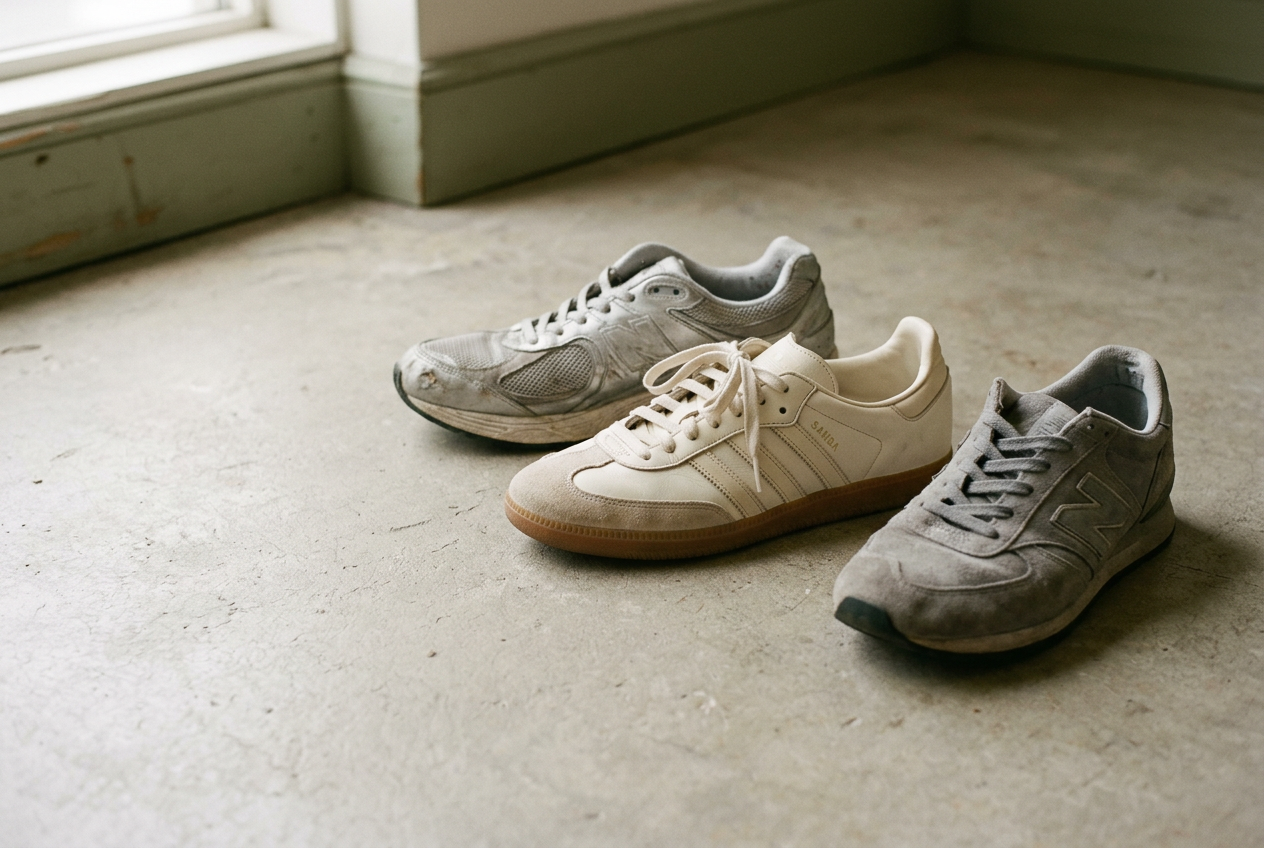
Bright white has not disappeared from sneaker walls, but it no longer holds the center by itself. Across public-facing brand assortments, multi-brand retailers and secondhand platforms, the alternatives now look less like niche colorways and more like a revised baseline: chalky leather, layered gray suede, brownish gum rubber and silver that has been dulled until it behaves almost like gray.
The useful test is an Adidas Samba OG in Wonder White, Core Black and Gum. Its off-white leather upper, contrasting stripes, suede T-toe panel and gum rubber outsole collect several parts of the shift in one familiar shoe, without changing the low-profile shape that made the bright version easy to understand. Put it under washed black trousers and a navy coat, and the cream reads as deliberate but not demanding. Replace it with polished white leather and the outfit becomes sharper; replace it with silver mesh and the sneaker becomes the point.
This is unisex coverage. Color integration works much the same across wardrobes, although fit does not: the Samba has a relatively narrow, tapered forefoot, and choosing extra length to compensate for width can leave the heel loose.
Cream is the easiest replacement for white
Cream succeeds because it performs the same visual job as white without producing the same hard break against dark clothing. Ecru denim, brown wool, faded black cotton and navy tailoring all accept it. Pure white can make those slightly weathered fabrics look more worn than intended, whereas an ivory or chalk sneaker sits inside their softened range.
Material matters more than the color name. Smooth cream leather can be wiped with a damp cloth, but it still develops gray flex lines where the forefoot bends. Cream suede has a nap, meaning a surface of raised fibers, that absorbs dirty water and darkens unevenly if it is scrubbed. Mesh is cooler and lighter, though dust settles into the openings and cannot be polished away.
The Wonder White Samba is a useful warning here. Its leather quarter and suede toe do not want the same cleaning method, even though the shoe appears nearly monochrome at a distance. Wipe the leather first, let the suede dry, then lift the nap with a suede brush. Treating the whole upper with a wet sponge can leave the toe darker than the rest of the shoe.
Cream also tolerates ordinary wear better than optic white. That does not mean it stays clean; it means small marks join an already low-contrast surface rather than announcing themselves. For someone replacing a white leather court sneaker, cream is the least disruptive move and belongs in the mainstream sneaker price band rather than requiring a designer purchase.
There is one limit. Yellow-heavy cream can look oddly aged next to blue-white shirts or cool gray suiting, especially when the sole and upper are matched in the same custard shade. A light stone or bone color, with only a small difference between the upper and midsole, has more reach.
Gray has the longest wardrobe life
Gray sneakers are less new than cream, particularly in running-derived models from New Balance and ASICS. What has changed is their position. The layered gray sneaker is moving from practical dad-shoe territory into the slot once occupied by a clean white default, helped by slimmer retro runners as well as established models such as the New Balance 990 family.
Gray works because sneaker construction already produces several textures. Mesh, suede and synthetic overlays catch light differently, so a tonal shoe, meaning one built from neighboring shades of one color, can have depth without a strong accent. Medium gray is especially forgiving with denim, charcoal trousers and olive cotton. It also makes a bulky sole look a little smaller than white does.
For longevity, choose a gray created by the materials rather than one printed over them. Gray suede can fade and still look coherent; a thin metallic coating over synthetic material may reveal a different base color at the flex point. On secondhand listings, close photographs of the toe and eyestay are more useful than a pristine side view, because those areas show abrasion first.
The tradeoff is price and weight. A premium gray sneaker with substantial suede panels, a structured heel and a thick running sole can cost well above a basic leather lifestyle shoe. It may also feel excessive if the wardrobe depends on narrow trousers and very light summer fabrics. A slimmer gray nylon runner gives much of the same color flexibility for less visual bulk.
Gray is the strongest buy here if the aim is two or three years of regular use. It does not rely on a specific trouser shape, and its history in performance footwear protects it from looking tied to one season.
Gum works best as an outsole, not a whole mood
Gum rubber brings warmth to a sneaker without asking the upper to become beige. On the Wonder White Samba, that brown outsole connects cream leather to brown belts, tan outerwear and indigo denim, while the black stripes keep the shoe from turning soft all over.
It also disguises the superficial grime that makes a white sole look tired after a week of city walking. Gum does not prevent wear, improve every shoe's grip or make old rubber safe. Secondhand buyers should still examine the heel edge for uneven loss and the forefoot tread for smooth patches; a brown sole can conceal dirt, but it cannot conceal missing material in a clear photograph.
The less durable version of this direction is the fully brown sneaker styled with matching taupe clothes, which depends on a narrow, low-contrast palette. It can look convincing now and monotonous later. A gum outsole under cream, navy or green has a longer runway because it behaves as a supporting color rather than the outfit's premise.
Muted metallic is a styling decision
Silver sneakers have substantial roots in technical running shoes, where mesh and reflective synthetic overlays belong to the construction. That history gives models such as the ASICS GEL-Kayano 14 more credibility than a plain court sneaker covered in silver paint. The mesh remains visible, the panels break up the shine, and gray laces can lower the contrast further.
Muted metallic works easily with faded denim, black trousers and gray sportswear. It becomes more conditional around romantic dresses, glossy leather or heavily embellished clothing, where the reflective surface adds another competing signal. A brushed pewter usually integrates better than mirror silver, while champagne metallics can behave like warm beige if the finish is quiet.
Wear is the deciding issue. Metallic synthetic overlays can crease, scuff or separate at their edges, and a damaged coating is harder to disguise than a mark on gray suede. Before buying secondhand, enlarge photographs around the toe bend and lace holes. Avoid listings that show only bright frontal lighting, which can flatten scratches and make silver look cleaner than it is.
I would not pay an investment-level premium for metallic color alone. Pay more when the underlying shoe already fits well, breathes properly and has the cushioning needed for the intended walking. Otherwise, silver is the palette most likely to depend on a short-lived styling mood, even if technical runners themselves remain relevant.
Secondhand listings are useful condition reports
Resale platforms do not provide a clean popularity measure. Listings show what owners want to sell, not what buyers consistently choose, and asking prices do not prove market value. They are still useful for seeing how a color ages across many pairs.
Search by model and color family rather than relying only on official colorway names. Sellers may call the same softened upper cream, ivory, off-white or beige. For gray, inspect whether the apparent variation comes from different materials or staining. With gum soles, ask for a level rear view.
With metallics, side lighting reveals surface damage better than flash.
The Wonder White Samba remains a sensible secondhand target only if the narrow fit is already known. A discounted pair that compresses the forefoot is not economical, and sizing up may create heel movement without adding useful width. Buyers who need more room should look for a rounder-toed court shoe or a runner offered in width options, then carry the cream-and-gum palette over rather than forcing the specific model.
The buying decision
Choose cream if a white sneaker already works in the wardrobe but feels too stark or too maintenance-heavy. Choose medium gray if the shoe needs to cross seasons and work with both blue denim and darker trousers. Treat gum as an outsole choice that warms either palette.
Muted metallic deserves a try-on, not an assumption. Wear the prospective pair with the trousers used most often, walk far enough to reach the first forefoot bend, and look at the shoe in ordinary daylight. If the silver still reads as a neutral and the overlay does not pinch at that crease, it may earn its place. If it requires a newly imagined wardrobe, leave it in the mood board.
Questions people ask
Are cream sneakers harder to clean than white sneakers?
Not necessarily. Smooth cream leather hides light dust and minor flex marks better than bright white leather, though cream suede needs a dry brush and protection from dirty water. Mixed-material shoes such as the Wonder White Samba require separate treatment for leather and suede, which adds time even when the color itself is forgiving.
Do gum soles stay looking new for longer?
Gum rubber usually makes surface dirt and small scuffs less conspicuous than white rubber, but the tread still wears down. On a secondhand pair, check the outer heel and forefoot rather than judging cleanliness alone. Uneven abrasion matters more than whether the brown sole photographs well.
Are silver sneakers already too trend-driven to buy?
No, particularly when silver belongs to a technical runner's mesh-and-overlay construction. A muted finish can function much like gray. The risk rises with mirror coatings, decorative metallic court shoes and pairs that only work with one current trouser silhouette, so prioritize fit and construction over the reflective finish.
Which neutral sneaker color works with the most clothes?
Medium gray has the broadest range across denim, dark trousers and practical outerwear, while light cream is the easiest substitute for an existing white sneaker. If the wardrobe contains mostly warm browns and ecru, cream with a gum outsole will integrate more quietly than a cool silver or blue-based gray.
One update a day
Today's fashion update, in your inbox
One fashion update each morning — no hype, no filler, just pieces worth wearing.