Brown Sneakers Now Work Beyond Suede and Summer
Brown athletic shoes have spread from terrace-style suede into mesh runners and dark leather. The useful distinction now is which materials survive a change of season.
October 9, 2026 · 7 min read
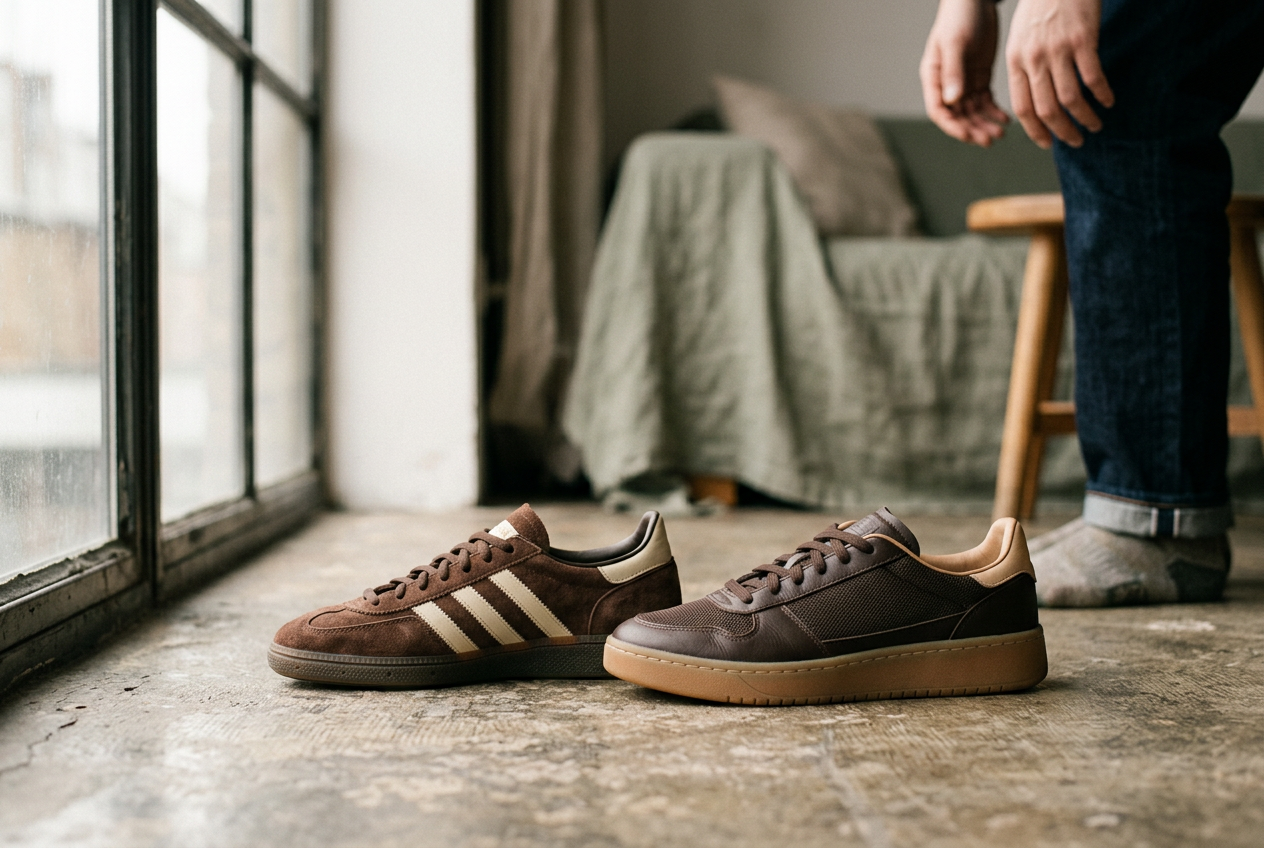
The reference point is the brown Adidas Handball Spezial: a low-profile suede shoe with pale leather stripes and a gum rubber outsole, meaning a tan, slightly translucent sole made from rubber. It explains why brown sneakers rose so easily. The shape is familiar, the suede gives flat brown some depth, and the sole keeps the shoe softer than a black-bottomed trainer would look.
It also shows the limit of the original formula. That combination sits naturally beside linen pants, faded denim and bare ankles, but the warm suede and honey-colored sole can feel closely tied to late summer and early fall. Suede also holds dust, darkens unevenly when wet and needs brushing if the nap, the raised surface of the leather, becomes flattened.
Brown sneakers now appearing across sportswear and multi-brand retail assortments offer several ways around that seasonal lock. Tonal mesh runners make brown lighter and more technical. Dark leather pushes it toward a year-round neutral. Contrast trim can either widen the styling range or turn the shoe back into a very specific retro reference.
This is unisex coverage. The color and material advice applies across wardrobes, although buyers moving between women’s and men’s sizing should use the brand’s foot-length measurement rather than assuming the numerical conversion will preserve the same width.
Gum soles still look good, with one qualification
The gum sole remains the easiest entry point because it connects brown with familiar indoor-sport and terrace shoes. On the Handball Spezial, it also reduces the visual break between upper and outsole: medium brown suede meets warm tan rubber, so the shoe reads as one compact shape rather than a brown upper placed on a bright platform.
That continuity is useful with cropped trousers or wider jeans, where a high-contrast sole can make a low-profile shoe look shorter. The tradeoff is temperature. Honey gum beside rust, camel or olive reinforces a warm palette, which is appealing until the rest of the wardrobe shifts toward charcoal wool, black denim and blue-gray outerwear.
A gum sole crosses seasons more convincingly when the upper contains a cooler brown, such as espresso or brown-black, and the trim is off-white rather than yellowed cream. A darker gum edge also helps. Very orange rubber, particularly under fuzzy suede, is the version most likely to look attached to one autumnal outfit formula.
Construction matters too. A thin outsole gives the Handball Spezial its neat line, but it offers less separation from cold or wet pavement than a deeper runner sole. No color treatment changes that. Anyone buying a brown sneaker for long winter walks should inspect tread depth and underfoot cushioning before treating visual versatility as practical versatility.
The gum-soled suede option still earns its place if the desired shoe is slim and casual. It just should not be mistaken for the broadest answer. Brushing dry dirt after wear takes a few minutes; recovering pale suede after road salt or a downpour is a less dependable project.
Tonal mesh escapes the retro reference
Tonal dressing, where adjacent parts use close shades of one color, changes brown most decisively. On a mesh running shoe, cocoa fabric can sit beside taupe synthetic overlays and a muted midsole without recalling a 1970s indoor trainer. The brown becomes part of the shoe’s technical construction rather than its nostalgic message.
This is the best warm-weather version. Mesh releases heat more readily than leather or dense suede, while a cushioned runner usually gives the foot more room to spread than the tapered toe and shallow upper of the Handball Spezial. Wider feet should still check where the overlays cross the forefoot, since a flexible mesh panel can feel accommodating in the hand while bonded strips restrict it once the laces are tightened.
The seasonal weakness is literal exposure. Open mesh admits cold air and fine rain, and pale taupe midsoles show wet street dirt quickly. Dark socks can also become conspicuous through loosely woven panels. A tonal mesh shoe bridges spring, summer and early fall in many climates; calling it a four-season purchase requires indoor commuting, mild weather or acceptance of damp feet.
Color determines whether the shoe feels like a summer runner or a stable neutral. Sand and mushroom shades remain light, especially with a cream sole. Chocolate mesh with a gray-brown midsole has more range because it works with washed summer cotton without looking stranded beneath a dark coat. Fully monochrome brown can become heavy, though.
A small reflective panel or muted silver detail gives the construction definition without producing the sharp white outline associated with a classic court sneaker.
Care is less precious than with suede but not effortless. Dirt settles inside mesh rather than sitting only on top. A soft brush and diluted mild soap are safer than soaking the whole shoe, particularly when the upper uses glued overlays that repeated saturation can stress.
Dark leather has the longest calendar
A smooth dark-brown leather sneaker is the least trend-dependent treatment in this group. Leather blocks more wind than mesh, wipes clean more predictably than suede and can sit under full-length trousers without disappearing into a soft, fuzzy mass. Espresso is especially useful because it can function near black while retaining enough warmth for ecru denim and tan accessories.
The strongest version avoids looking like a brown office shoe placed on a sneaker sole. Perforation, athletic paneling and a flexible rubber outsole keep the category clear, while excessive shine or a very thin dress-shoe lace can pull in the opposite direction. Dark leather also benefits from a sole that is neither optic white nor aggressively chunky. Soft gray, brown-black or muted cream tends to let the upper do the work.
There is a comfort cost. Leather usually needs more initial flexing than mesh, and a stiff toe overlay can press across the foot before it softens. It also retains heat. Someone buying one brown pair for commuting through changing weather may accept that compromise; someone shopping mainly for hot days will probably wear the mesh option more often.
Surface finish deserves attention at retail. Corrected-grain leather, which has been sanded and coated for an even appearance, can resist minor marks but may crease with a sharper, more plastic-looking line. Softer leather develops broader folds and often looks better after wear, though it may cost more and mark sooner. Neither is automatically superior.
Bend the display shoe at the forefoot and watch how the finish responds rather than judging it only under store lighting.
Contrast trim decides how dated the brown will look
Contrast is where brown sneakers either gain range or become a costume piece. The pale stripes on the brown Handball Spezial sharpen its profile and make the shoe easy to connect with a white T-shirt or light sock. They also underline the retro source. Add a vivid gum sole and yellowed-looking trim, and the whole shoe points toward a narrow vintage palette.
The more durable treatments use contrast in one place. A dark-brown upper with an ecru logo can carry a matching dark sole; a tonal mesh runner can take a small silver or black accent while keeping its midsole quiet. Once the logo, laces and sole all pull away from the upper, the sneaker becomes visually busy and harder to repeat across outfits.
Bright white trim gives brown a cleaner spring and summer edge, but it creates maintenance work and can look abrupt with soft fall colors. Black trim is more stable in cold months, especially with dark denim, though it can flatten a medium chestnut upper. Burgundy or navy can work as neighboring darks, provided the treatment is limited enough that the shoe still reads brown at first glance.
The useful fitting-room test is to cover the logo with a hand. If the material and shape still appeal, the pair has a better chance of lasting beyond the current brown-sneaker cycle. If the attraction disappears, the purchase is probably tied to branding or contrast placement rather than to the shoe itself.
Pick by climate before picking by shade
For a dry, warm wardrobe, tonal mesh offers the most practical departure from retro suede. Choose a middle or dark brown rather than beige if the aim is to keep wearing it once shorts give way to trousers. Check the sock color through the mesh and walk far enough to feel whether an overlay restricts the widest part of the foot.
For mixed weather, smooth espresso leather is the clearer one-pair decision. It handles visual shifts between warm and cool clothing, asks for less delicate cleaning, and does not depend on exposed ankles to make sense. Look for enough outsole depth for the intended walking, since a dark upper does not make a slim indoor-style sole more protective.
The Handball Spezial formula remains appealing for readers who already own weather-ready sneakers and want a low-profile brown option. Its tapered shape can feel close at the forefoot, so sizing down for an extra-sleek look is a poor trade if the toes already meet the sides. In wet climates, treat it as the dry-day pair rather than repeatedly cleaning suede after preventable exposure.
Price alone does not settle the choice. Mainline suede and mesh sneakers often occupy familiar athletic-shoe territory, while premium leather may ask more for the upper without guaranteeing better cushioning or tread. Pay extra when the leather finish, lining and sole construction are visibly better. A higher price is not persuasive if the outsole remains thin and the interior seams feel rough.
Questions people ask
Are brown sneakers only an autumn trend?
No. Warm suede paired with orange-toned gum rubber leans autumnal, but espresso leather and deeper tonal mesh work with both light summer clothing and darker cold-weather layers. The sole and trim matter as much as the upper: restrained cream, gray-brown or dark rubber extends the calendar better than strongly yellowed contrast.
Which brown sneaker material is easiest to maintain?
Smooth leather is usually the least demanding because surface dirt can be wiped away and conditioner can address dryness. Mesh traps dust inside its weave, while suede needs brushing and reacts poorly to soaking. Leather still requires drying away from direct heat, and coated finishes should be tested before any cleaner is applied widely.
Do gum soles work in winter?
Visually, darker gum can work with winter clothing, especially beneath an espresso upper. Practically, tread depth and sole thickness matter more than color. The slim gum outsole found on indoor-sport-inspired shoes may offer limited insulation and wet-surface grip, so inspect the bottom rather than assuming all gum rubber performs alike.
What color socks work with brown sneakers?
Off-white socks connect easily with pale trim, while charcoal or dark brown reduces contrast around an espresso shoe. With open mesh, check whether the sock shows through the upper before leaving home. A bright white sock can sharpen a summer outfit, but it also makes warm gum and cream trim look more yellow by comparison.
One update a day
Today's fashion update, in your inbox
One fashion update each morning — no hype, no filler, just pieces worth wearing.