Chocolate Brown Sneakers Work Past Fall, With One Catch
Deep brown has moved into core sneaker shapes, but color alone does not make a lasting neutral. The useful pair must handle black, navy, faded denim, and warm white.
September 20, 2026 · 8 min read
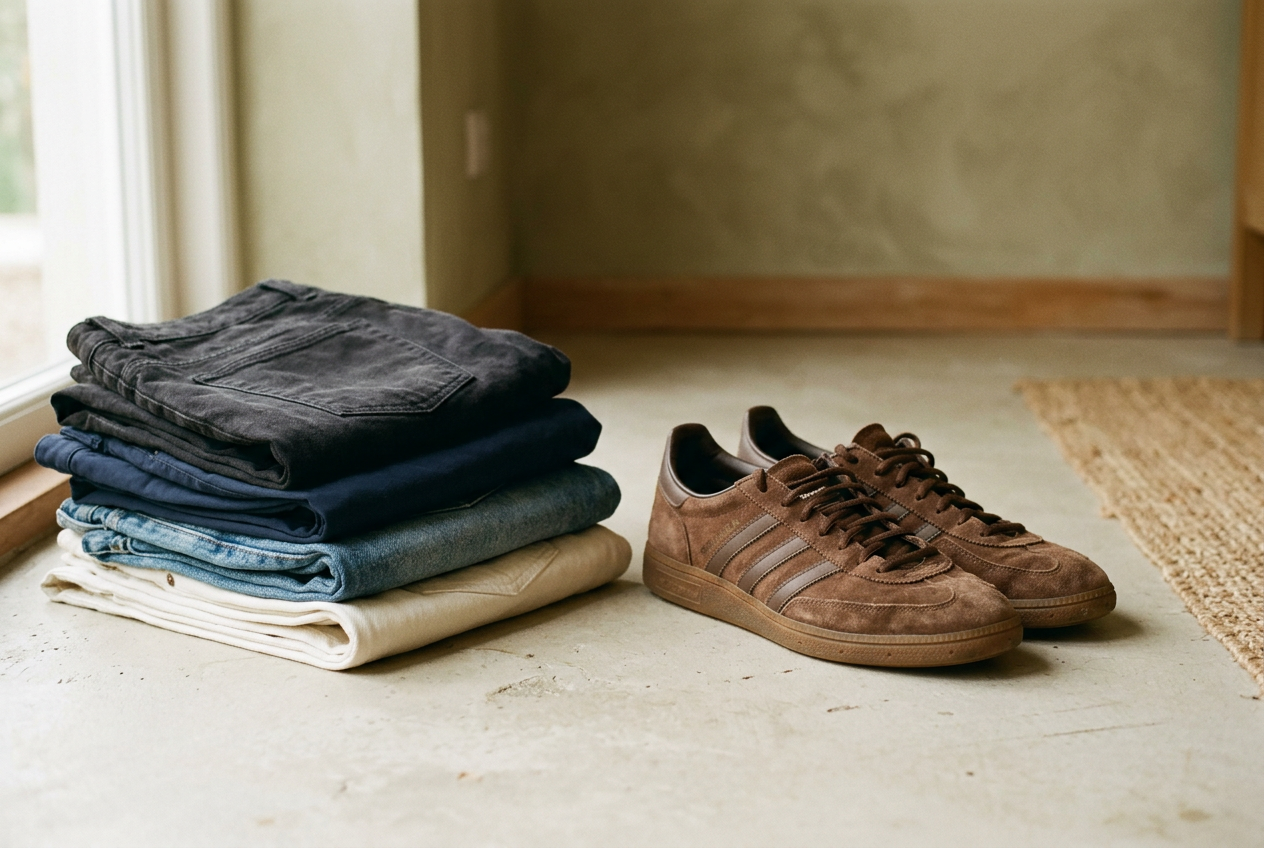
The shoe I keep returning to is the brown suede Adidas Handball Spezial: slim through the sole, low at the ankle, finished with a pale side stripe and gum rubber underneath. It is useful here because nothing about the model was invented for the color. The Spezial began as an indoor sports shoe, and its current fashion life comes from that low-profile shape, meaning a sneaker with little bulk between the foot and ground.
Put chocolate brown on a familiar model like this and the decision becomes clearer. The color can be separated from the trend machinery around it. A brown Spezial either earns regular wear beside black sneakers and white leather pairs, or it becomes an autumn purchase waiting for corduroy trousers.
This is unisex coverage. The color logic applies across wardrobes, although the narrow visual line of terrace shoes, the soccer- and handball-derived sneakers now common in casual dressing, can look longer on larger feet than a rounder running shoe does.
The retail signal is broader than one color drop
Brown has spread through several established sneaker categories. Adidas uses earthy suede and leather across models in the Spezial and Gazelle orbit. Puma has applied brown to the slim Speedcat shape, while New Balance regularly works tan, brown, and muted earth tones into lifestyle runners. Trail and technical footwear brands, including Salomon, also use deep brown on mesh and synthetic-panel uppers.
That breadth matters more than a single sold-out collaboration would. Retailers are not asking shoppers to accept an unfamiliar sneaker simply because it is chocolate colored; they are putting brown on shapes with existing audiences, from flat gum-soled shoes to cushioned running silhouettes. A color that survives across several constructions has a better chance of becoming a working neutral.
There is still a seasonal tell. Product names and merchandising often place these shoes beside espresso knits, dark denim, and other earth tones, which can make brown look more dependent on a fall palette than it is. The useful distinction sits inside the shoe itself: deep brown on a recognizable model is easier to keep than a heavily coordinated release with brown laces, brown branding, and a brown sole.
The Handball Spezial avoids that trap when its contrast stripe and gum outsole remain visible. Those lighter interruptions give the shoe edges. A fully tonal pair, meaning the upper, trim, laces, and sole stay close to one color, can become a dark block at the bottom of an outfit, particularly with wide trousers.
Runway styling has moved brown away from autumn
Recent runway and lookbook styling has treated slim sneakers as companions to tailoring, sheer layers, short skirts, and relaxed sportswear rather than as cold-weather footwear. Miu Miu’s work with New Balance helped normalize distressed brown suede in outfits that were not built around leaves-and-knitwear seasonality. Wales Bonner’s Adidas collaborations have made rich leather and suede feel at home with track pieces as well as sharper trousers.
The transferable idea is not the designer look in full. It is the use of brown where black might once have finished the outfit. Brown softens a severe trouser line and sits more quietly under washed denim, yet it retains enough depth to avoid the gym-shoe effect that bright white can create.
Runway evidence has limits. Styling can repeat a shoe for visual continuity even when that shoe has little practical range, and distressed suede looks convincing under controlled lighting while requiring more maintenance on a wet sidewalk. The brown Spezial remains a better test than a runway-only shape because its materials and proportions are already familiar at ordinary sneaker prices.
Four pairings decide whether brown is useful
Black is the hard test. Chocolate sneakers work with black trousers when one lighter element breaks up the transition: the Spezial’s pale stripe, a warm white sock, or a washed black hem that does not read as an exact color match. The combination fails when the shoe is so dark and tonal that it resembles faded black under indoor light. In that case, a true black sneaker looks more deliberate.
Navy needs contrast rather than a bridge. A medium-to-deep brown suede shoe sits distinctly against navy chinos or loose wool trousers, especially when the sole is gum or off-white. Very dark navy over near-black brown is less reliable because the colors merge from a few feet away. Choose a brown that is plainly brown in ordinary room light, not only in the product photography.
Faded denim is the easy pairing. Blue jeans already contain pale and dark threads, so the mottled surface of suede feels connected without matching. A straight or gently wide leg can rest over the top edge of the Handball Spezial without swallowing the whole shoe; a very long puddled hem hides the stripe and leaves a brown toe protruding, which makes the sneaker look heavier than it is.
Warm whites make the strongest case for wearing chocolate sneakers beyond fall. Ecru denim, cream cotton, and natural linen place enough light around the shoe to show its shape, while brown avoids the starkness of black. This is also where over-coordination becomes obvious. A matching chocolate belt and bag can turn a useful neutral into a themed outfit, so repeat the brown once at most, or do not repeat it.
The four-pairing test is more revealing than trying the shoes with an all-brown outfit in a fitting room. If a prospective pair works with the black trousers, navy bottoms, jeans, and warm whites already in the closet, it has year-round work to do. If only the denim combination feels right, the purchase is narrower than the color’s current visibility suggests.
Suede gives depth and creates the maintenance bill
Brown suede is persuasive because its nap, the raised fibers on the leather surface, catches light and prevents a dark shoe from looking flat. That same surface records wear. Repeated flexing can smooth the toe and vamp into shinier patches, while rain can leave uneven marks if the shoe dries without brushing.
A suede brush and a protector approved for the material add time but not much difficulty. Brush dry dirt away before applying any product, test sprays on an inconspicuous area, and let wet shoes dry away from direct heat. Stuffing them lightly with plain paper helps hold the shape. Salt, heavy rain, and oily pavement remain poor conditions for pale or medium suede, even when the color disguises ordinary dust.
Smooth brown leather is the more durable alternative for frequent wet-weather wear. It loses some of suede’s visual depth but wipes clean more easily and can take conditioner when the manufacturer permits it. Brown mesh runners handle heat better, though layered synthetic panels often make the color feel more tied to technical-shoe trends.
The Spezial also carries a fit tradeoff independent of color. Its slim profile offers less visual and physical volume than a cushioned lifestyle runner, so shoppers with wider forefeet should not assume that buying a larger size will solve pressure across the front; extra length can introduce heel movement while the upper still feels narrow. Trying the model matters more than securing the fashionable shade.
Secondhand supply points to continuity, not collectibility
Brown Gazelles, Spezials, New Balance runners, and similar models appear regularly across broad resale marketplaces and fashion-focused platforms. Availability fluctuates by size and exact color code, but the category is established enough that shoppers do not need to treat every brown release as a one-time opportunity.
Resale abundance does not prove lasting demand. It can mean shoppers are clearing seasonal purchases, and asking prices do not show what a pair eventually sells for. The useful signal is simpler: brown sneakers exist across several generations of familiar models, so the color has a secondhand base beyond the newest product cycle.
Search by model name, material, and the style code printed on the shoe label rather than relying on “chocolate,” which sellers may use for anything from taupe to near-black. On used suede, inspect the toe for polished bald areas, the heel lining for wear, and the outsole edge for separation. A dark upper can conceal stains in photographs, but flattened nap often appears as a shiny patch.
A lightly worn mainstream pair can be the sensible trial if the discount justifies giving up easy returns. Designer collaborations carry a different calculation: the higher price may buy distinctive materials or branding, but it does not make brown more versatile. For a first pair, the ordinary Spezial-style shoe remains the cleaner test.
The decision rests on the model, not the season
Chocolate brown has enough retail breadth, styling range, and secondhand presence to outlast a single fall. It is not replacing black or white. Its durable role is smaller: a softer dark neutral for people whose wardrobes already contain navy, faded denim, and warm white.
The Handball Spezial shows the condition attached to that conclusion. Keep the pale stripe, visible gum sole, and recognizable slim shape, and brown moves easily across seasons. Remove every point of contrast, or buy suede for weather it cannot handle, and the supposed neutral becomes a short-cycle color swap.
Questions people ask
Can chocolate brown sneakers be worn with black pants?
Yes, especially when the shoe has a pale logo, gum sole, or another visible detail that separates brown from black. Washed black denim is forgiving. A nearly black tonal sneaker under crisp black trousers can look like a failed match, so compare the colors in ordinary indoor light before keeping the pair.
Are brown suede sneakers practical in summer?
They can be, although suede is warmer and less tolerant of sudden rain than open mesh. Pairing brown suede with warm white cotton, faded jeans, or lighter navy makes it read beyond fall. For hot, humid walking days, a brown mesh runner will usually manage heat better than a lined terrace shoe.
Should I buy brown sneakers secondhand?
Secondhand is useful when you already know the model’s fit and the saving compensates for limited returns. Check the suede for shiny flattened areas, inspect the heel lining, and ask for outsole photographs. Search the label’s style code because seller descriptions of chocolate, espresso, and taupe are inconsistent.
Are chocolate brown sneakers a short-lived trend?
The strongest evidence says the color is more durable than a single seasonal story, since it appears across established lifestyle, terrace, and technical models. A specific all-brown treatment may date faster. Choose a familiar silhouette with visible contrast and make sure it works with black and navy before treating it as a neutral.
One update a day
Today's fashion update, in your inbox
One fashion update each morning — no hype, no filler, just pieces worth wearing.