The Softest Sneaker Sole May Be the First to Wear Through
Gum rubber, blown rubber and exposed foam respond differently to hot sidewalks. The right choice depends on whether you value grip, low weight or a sole that survives daily mileage.
September 12, 2026 · 8 min read
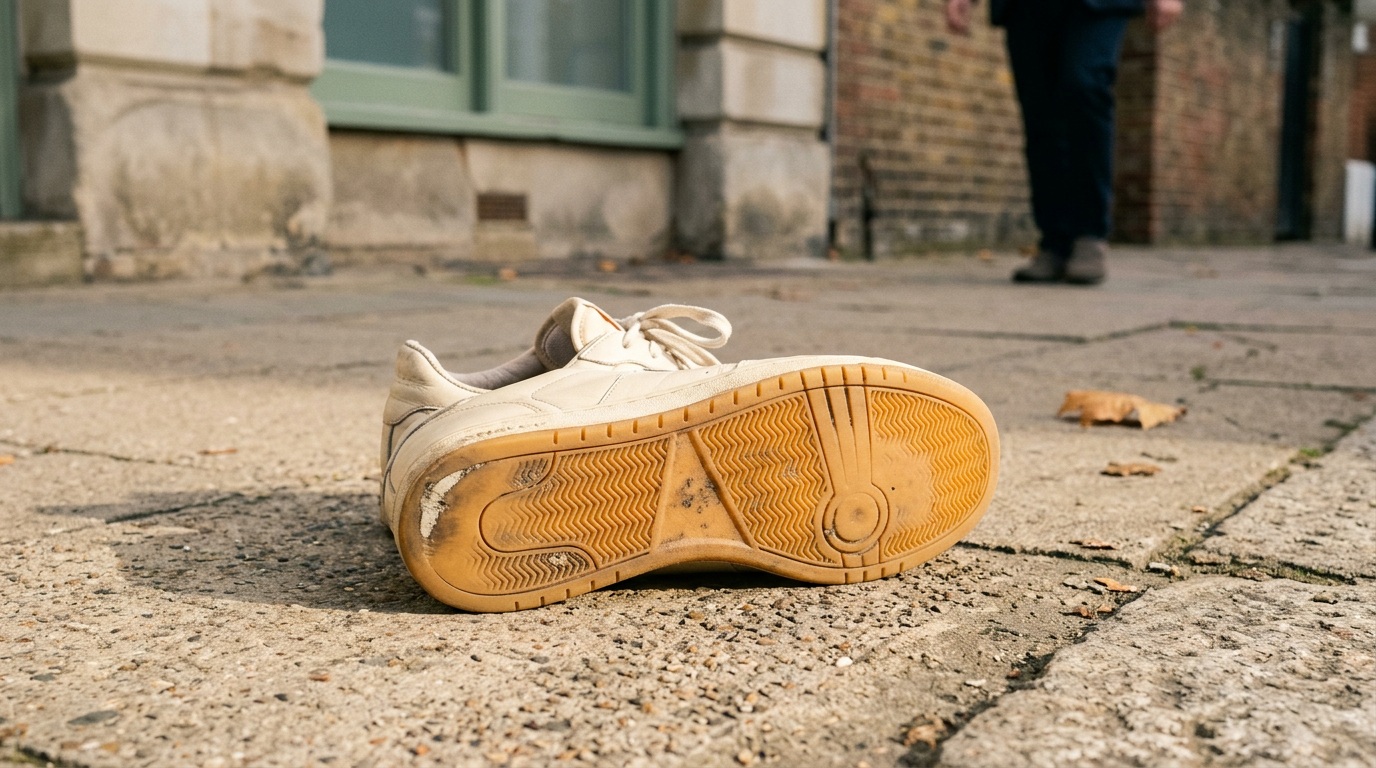
Keep one shoe in mind: a cream leather court sneaker with a honey-colored sole, the sort that looks prepared for an iced coffee and then gets assigned an unplanned three-mile walk. That brown outsole may be gum rubber, but color alone proves nothing; manufacturers can tint several rubber compounds to produce the familiar caramel finish.
The comparison matters across women’s and men’s wardrobes, so this is unisex advice. Outsole behavior does not care which side of a store sold the shoe, although body weight, gait, shoe size and walking surface all affect how quickly the material wears.
Warm weather exposes differences that a carpeted fitting area conceals. A soft sole can feel pleasant during six indoor steps because it flexes easily and compresses under the heel, yet lose tread rapidly once gritty pavement starts scraping it. A firmer rubber outsole may feel less charming at first and still be the better walking purchase.
Start with the layer touching the sidewalk
The outsole is the shoe’s ground-contact layer. Above it sits the midsole, which supplies most of the cushioning in a typical sneaker, while the removable or fixed footbed makes the first impression directly underfoot.
Those layers are often visually blended. A thick white sidewall can make a court sneaker look as if it has a substantial rubber base, even when the rubber under the foot is thin, strategically placed or absent through the center. Turn the shoe over. The bottom view tells more than the profile.
Gum rubber traditionally means a natural-rubber-rich compound with a tan or honey color, though modern sneaker outsoles may combine natural and synthetic rubber. It is generally dense, flexible and grippy, particularly on dry, smooth surfaces. A shoe described as having a “gum look” may only be describing the color.
Blown rubber is rubber expanded with tiny gas pockets during manufacturing, which lowers its density. It usually feels softer and weighs less than solid rubber, giving a little cushioning at ground level, but the airier structure tends to surrender material faster under abrasion.
Foam outsoles are commonly exposed sections of EVA, meaning ethylene-vinyl acetate, a lightweight cushioning foam used in many midsoles. Some sneakers let that foam contact the ground across most of the sole; others add tougher rubber patches at the heel and forefoot, where impact and push-off create concentrated wear.
Gum rubber takes the practical lead
On the cream court sneaker, a genuine gum-rubber outsole would be the sensible option for repeated city walking. Dense rubber usually resists abrasion better than exposed foam and blown rubber, particularly where the heel strikes slightly to one side, as many heels do after ordinary use. Its flexibility also lets a shallow tread maintain contact on dry pavement rather than behaving like a rigid plate.
Traction still depends on tread geometry and contamination. A flat gum sole covered in dust can slide, while channels and edges give loose grit somewhere to move. Gum rubber often grips indoor floors so enthusiastically that it squeaks, an acoustic feature nobody requested, but that does not guarantee equal performance on wet painted crossings, oily tile or polished stone.
Heat reaches the foot through the complete shoe, not through the outsole alone. Dense rubber transfers more heat than a thick foam layer, yet a substantial midsole can buffer that warmth, while a thin court construction may let the sidewalk feel closer. Dark outsoles can also absorb more solar energy than light ones, although shade, walking time and pavement temperature make a clean color comparison difficult.
Gum rubber is not automatically comfortable. It is heavier than the alternatives and supplies less plush compression, so the cream court shoe still needs enough midsole under the heel and forefoot. A dense outsole beneath a thin, flat interior remains a thin, flat shoe. Good grip does not become arch support through optimism.
Blown rubber trades lifespan for a softer step
Blown rubber occupies the useful middle. It feels less dense than solid gum rubber, flexes readily and can soften the sensation of landing without requiring as much weight underfoot. On a walking or running sneaker with a substantial foam midsole, it can keep the total package light enough for long summer days.
The compromise appears at high-friction zones. Rough concrete gradually removes the raised tread, and the wear can look more dramatic because the material is softer and often molded into pronounced lugs. Once those lugs flatten, dry traction may decline even though plenty of sole remains elsewhere.
Warm pavement does not instantly melt a normal sneaker outsole, but heat can make already-soft materials feel a little more yielding, while repeated compression and abrasive steps continue doing their usual work. A blown-rubber shoe therefore may feel agreeable during a warm walk and show wear sooner than the firmer pair beside it. That is a trade, not a defect, provided the buyer knows which one was purchased.
For occasional commuting, travel or a route dominated by smooth sidewalks, that balance can be reasonable. For someone who drags a heel, walks on rough aggregate or expects one pair to handle daily mileage, denser rubber coverage is the safer call.
Exposed foam is light, quiet and vulnerable
An exposed-foam outsole can make a sneaker feel impressively soft before the wearer reaches the store exit. Foam compresses easily, reduces weight and insulates better than dense rubber, which can limit the immediate sensation of heat from below. That combination works well for casual use and for shoes designed around low mass.
Pavement is less impressed. Rough sidewalks can scuff exposed EVA into fuzzy patches, round off edges and carve into the heel. Small stones may leave dents or cuts. The damage is often cosmetic at first, but concentrated wear can alter how the shoe lands, particularly if one outer heel corner disappears faster than the rest.
Traction varies widely. Molded foam can grip when its texture is fresh and the surface is dry, but it lacks the durable biting edges of a well-designed rubber tread, and smooth worn foam can become uncertain on wet hard surfaces. Rubber pods improve matters, though their size and placement count: two decorative patches do not turn a mostly foam outsole into a durable walking sole.
This is why the cream court sneaker should be flipped over before purchase. If its honey-colored base is merely exposed foam dressed to resemble gum, the shoe may still suit dinners, office days and short errands. It is a poorer candidate for a vacation built around walking, regardless of how soft it felt next to the mirror.
The fitting-room softness trap
Initial softness often comes from the footbed or midsole rather than the outsole. Memory foam can compress quickly under the heel, producing an immediate padded sensation, while a very flexible outsole removes resistance during the first few steps. Neither feature predicts abrasion resistance.
A better warm-weather fit leaves enough room for modest foot swelling without allowing the heel to lift. Try sneakers with the sock thickness intended for summer use, then walk long enough to notice whether the toes meet the front on a decline or the foot slides forward during a firm stop. Extra cushioning cannot negotiate with a short toe box.
The sole should bend near the ball of the foot rather than fold through the middle, unless the shoe was designed as a highly flexible minimalist style. Twist it gently. Some torsional movement, meaning rotation between the heel and forefoot, is normal, but a shoe that collapses with no resistance may fatigue the foot during longer walks if the wearer relies on structure.
A five-minute outsole check
Read the material description first. Look for specific wording such as rubber outsole, blown-rubber forefoot or rubber pods over an EVA midsole. “Gum-colored,” “gum-style” and “rubberized” are appearance or marketing descriptions, not clear construction details. Outsole materials appear at budget, midrange and luxury prices, so price does not settle the question.
Next, inspect coverage. Dense rubber usually looks smoother and more compact at a cut edge, while exposed foam often shows fine cells, molding wrinkles or a softer matte surface. Pressing gently with a thumb can help compare two shoes, though it cannot identify a proprietary compound with certainty. Do not dig in with a fingernail unless owning a newly scarred display shoe sounds appealing.
Study the heel and forefoot. Continuous rubber in those areas matters more for daily walking than a rubber logo placed under the arch, where little abrasion occurs. Deep tread is not always better; closely spaced grooves can trap grit, while broad channels and multiple edges tend to remain useful as the surface wears.
Finally, take a photo of the new sole. Check it after the first several outdoor wears, using the same angle, and look for one heel corner flattening, foam tearing or tread vanishing under the ball of the foot. Early wear shows whether the shoe should remain an everyday walker or be reassigned to shorter appearances.
The cream court sneaker with real gum coverage wins if the route includes rough sidewalks and long dry miles. Blown rubber is the lighter compromise. Mostly exposed foam belongs with the buyer who accepts quicker wear in exchange for lower weight and immediate softness, a bargain that becomes less attractive when the shoe is expensive or difficult to replace.
Questions people ask
Is gum rubber too hot for summer sneakers?
Not by itself. Gum rubber is denser than foam and may pass through more pavement warmth, but midsole thickness, upper ventilation, socks and time in direct sun have greater influence on how hot the shoe feels. A gum outsole under a cushioned midsole can be perfectly reasonable for summer walking.
Does a softer outsole give better traction?
Sometimes on a clean, dry surface, because softer material can conform to small irregularities. Tread design and wear matter just as much. Soft blown rubber or foam may lose its useful edges faster, while dense rubber can preserve grip through more miles. Wet paint, oil and dust can defeat any compound.
How can
I tell whether a gum-colored sole is real gum rubber?
Check the product description or ask the manufacturer for the outsole material. Color is not proof, and a squeeze test cannot reliably separate every blend. Wording such as “rubber outsole” is more useful than “gum finish”; if the listing only discusses color, assume the construction remains unconfirmed.
Are exposed-foam soles a bad purchase?
No, if low weight and soft underfoot feel matter more than maximum lifespan. They make less sense for rough sidewalks, heel drag or one-shoe travel. Choose versions with substantial rubber at the heel and forefoot, then monitor those uncovered foam areas after the first several outdoor wears.
One update a day
Today's fashion update, in your inbox
One fashion update each morning — no hype, no filler, just pieces worth wearing.