Soft Running Shoes Can Still Fail You on a Standing Shift
Tall, plush foam wins the first impression, but prolonged standing exposes a narrow sole and loose heel. This store-floor test finds support before your shift does.
August 28, 2026 · 7 min read
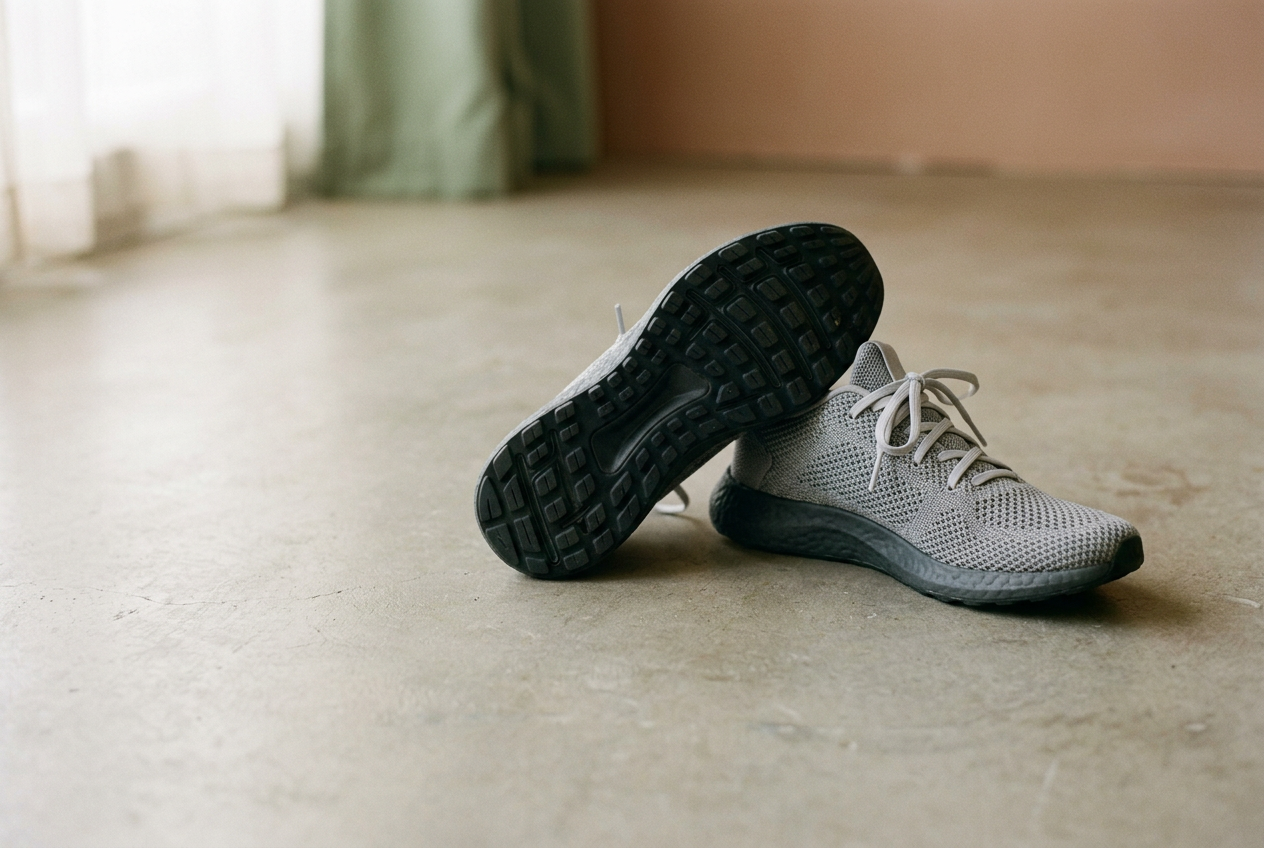
The gray engineered-mesh sneaker looked like the obvious winner. Its tall midsole, meaning the foam layer between the upper and outsole, compressed generously under my heel, while the padded collar and thick tongue supplied the familiar upholstery of a premium running shoe. Standing in it for the first minute felt excellent.
Then I stopped admiring the foam and stood still.
During a prolonged hard-floor evaluation, that gray pair asked my feet to make constant small corrections. Its sole narrowed through the waist, my heel shifted when I leaned toward a shelf, and the front resisted bending unless I rolled forward with the exaggerated stride its curved sole preferred. None of this made it a bad running shoe. It made it a questionable standing shoe.
That distinction matters across women’s and men’s wardrobes, so this is unisex advice, though the same model can sit on a different last, the foot-shaped form used to build a shoe, depending on the labeled gender and width. Judge the pair on your foot rather than treating a women’s, men’s or unisex label as a structural guarantee.
Softness wins the first minute
Running-style sneakers have moved deeper into everyday dressing, from wide trousers and relaxed tailoring to uniforms that tolerate little more personality than a clean mesh upper. Max-cushion models are particularly easy to sell from a fitting bench because soft foam produces an immediate sensation. Press down, sink slightly, feel looked after.
Prolonged standing applies a less flattering test. A very soft midsole can continue compressing as body weight shifts, which may leave the foot balancing on a surface that never quite settles; the effect is more noticeable when the sole is tall and narrow, since there is more material underfoot but not necessarily more ground contact.
Stack height, meaning the amount of sole material beneath the foot, changes the sensation without telling you whether the shoe is stable. More stack can protect against a hard floor and may suit someone who dislikes feeling every tile edge. It also raises the foot farther from the ground. If the platform is narrow or the foam collapses unevenly, softness becomes work.
The gray mesh pair demonstrated the tradeoff neatly. Its heel felt softer than that of the firmer alternative beside it, yet the firmer shoe became easier to forget because its sole stayed level while I reached, turned and rested more weight on one leg. Forgettable is high praise when the footwear must survive a shift.
Read the footprint before the foam
Platform width is the usable footprint of the sole where it meets the floor. You can inspect it without knowing the foam formula or decoding a wall of running terminology: place the shoes side by side, look from above and then turn them over.
A stable standing shoe usually gives the heel and forefoot visible ground contact rather than balancing a broad upper over a pinched outsole. Some soles flare outward at the rear, which can add useful width, although a dramatic rear flare may catch a chair leg or feel cumbersome in tight stockrooms. The waist can narrow for weight savings and running mechanics, but a deep hourglass shape may make side-to-side weight shifts less settled.
Do not assume a wide upper means a wide platform. Extra mesh over the toes accommodates foot volume; it does not move the outsole farther outward. Likewise, ordering a wide size can improve fit without changing the sole geometry if the brand uses the same bottom unit for several widths.
Stand with your feet hip-width apart and slowly transfer weight from the inside edge to the outside edge of each shoe. The upper should not spill noticeably over the midsole, and the sole should meet the floor before your ankle has to rescue the movement. In the gray pair, the soft foam compressed at the outer heel while the narrow waist made the shift feel larger. More cushioning had produced more correction.
Make the heel behave
The heel counter, meaning the firmer structure cupping the back of the foot, should keep the heel centered without biting into the Achilles area. A thick collar can feel secure while hiding a poor hold, especially if the padding compresses and the heel begins lifting once you walk.
Lace both shoes as you would wear them at work. Stand on one foot near a bench or wall, then turn your torso slightly in each direction. The heel can move with the foot, but it should not slide sideways inside the upper or climb against the collar. A small amount of vertical movement may disappear with lacing; side-to-side swimming usually points to the wrong heel shape or too much internal volume.
The gray mesh pair had enough padding to pass a casual walk down the aisle. During the standing turn, my heel drifted toward the outside edge before the counter caught it. Tightening the laces reduced lift but pressed the top of the foot, transferring the problem rather than fixing it. A different lacing pattern can refine a close fit.
It cannot rebuild the back of the shoe.
Let the forefoot bend where you do
Running shoes often use a rocker, a curved sole shape that rolls the foot forward through a stride. That can feel smooth while walking, but standing includes shorter steps, pivots and repeated rises onto the forefoot. A stiff rocker may resist those movements until enough weight tips the shoe forward.
Hold the heel in one hand and press up beneath the toe with the other. The shoe does not need to fold in half, which would tell you little about how it behaves while worn, but it should yield around the ball of the foot rather than bending through the middle. Then put it on and rise slowly onto both forefeet.
Watch what happens inside. If the heel pops out, the upper creases painfully across the toes or the entire shoe tips forward as one block, the geometry is directing the movement more than your foot is. The gray pair rolled well during a full walking stride but felt stubborn during a shallow rise, exactly the sort of movement used to reach a counter or relieve heel pressure without leaving a workstation.
Use the store floor for seven minutes
A quick lap rewards bounce. Give the fitting more structure and the differences become clearer, even if the store does not have your workplace’s concrete floor or your least forgiving afternoon.
First minute: stand normally. Keep both feet planted and notice whether you settle or continue making tiny ankle adjustments. Ignore the dramatic softness at heel strike because there is no heel strike here. You are checking whether the foam supports steady weight.
Next two minutes: change tasks. Reach toward a shelf, turn in place, take two short side steps and rest most of your weight on one leg. These are ordinary standing-shift movements, and they expose a narrow platform faster than another straight walk past the mirror. Stop if the shoe feels unsafe; retail testing need not become an incident report.
Next two minutes: check the heel and forefoot. Rise onto the balls of both feet, lower slowly and repeat with a modest range. Then take several short steps rather than long running-style strides. A suitable pair should flex without throwing the heel upward, while the rear remains centered during turns.
Final two minutes: compare, do not remember. Put the other candidate on immediately, ideally one shoe on each foot first and then both shoes as a pair. Memory is unreliable when one model is plush and theatrical. Direct comparison shows whether the softer shoe is supporting you or merely announcing itself.
Wear the socks you use for work, and shop later in the day if your feet tend to occupy more space after hours upright. Bring any permitted insole, since adding one can raise the heel, tighten the toe box and change where the shoe bends. Remove the stock sockliner only if it is designed to come out; stacking insoles often creates a padded, unstable sandwich.
At mainstream running-shoe prices through premium max-cushion territory, paying more may buy specialized foam, elaborate rocker geometry or a more engineered upper. Those features can justify their cost for the intended use. They are not substitutes for a broad footprint and compatible heel shape, so the gray pair would remain the wrong standing choice even with a more impressive price tag.
Know what the test cannot promise
Seven minutes in a store cannot reproduce a full shift, heat buildup or the way foam changes after repeated wear. It can reject obvious mismatches before they become expensive possessions. Keep the pair indoors during the retailer’s return window, if its policy allows that, and repeat the standing test on a clean hard floor with your work socks.
Pay attention to changes rather than waiting for pain. A collar that begins rubbing, toes that brace to keep the shoe on, or foam that feels increasingly tilted gives useful information. Running-style sneakers rarely need an old-fashioned break-in to become structurally stable. Mesh may relax and padding may compress, but a narrow platform will not broaden through optimism.
Questions people ask
Are soft running shoes good for standing all day?
They can be, provided the foam sits on a broad platform and does not collapse enough to make the foot keep correcting its position. Softness is a sensation, not proof of support. Compare the plush pair directly with a slightly firmer shoe while standing, turning and shifting weight.
Should standing shoes feel firm at first?
They may feel firmer than max-cushion running shoes without feeling hard. Look for even pressure beneath the heel and forefoot, room for the toes, and a sole that stays settled during small movements. Pinching, sharp arch pressure or heel rubbing are fit problems, not signs that support needs breaking in.
Is a wide size more stable for standing?
A wide size can give the foot more room, but it does not always widen the outsole. Turn the shoe over and inspect its actual footprint, then check whether your foot stays over the platform during side-to-side shifts. Choose width for fit and platform shape for stability.
How much should a standing shoe bend?
It should flex near the ball of the foot when you rise onto your forefeet or take a short step. The shoe need not fold easily by hand, and it should not twist through the arch. In the store, check that bending does not eject the heel or crush the toes.
One update a day
Today's fashion update, in your inbox
One fashion update each morning — no hype, no filler, just pieces worth wearing.