Deep Black Lugs Can Still Slip on Wet Tile
A fierce-looking outsole can lose its nerve on a wet café floor. Rubber recipe, usable contact area, and water channels matter more than tread depth alone.
August 25, 2026 · 7 min read
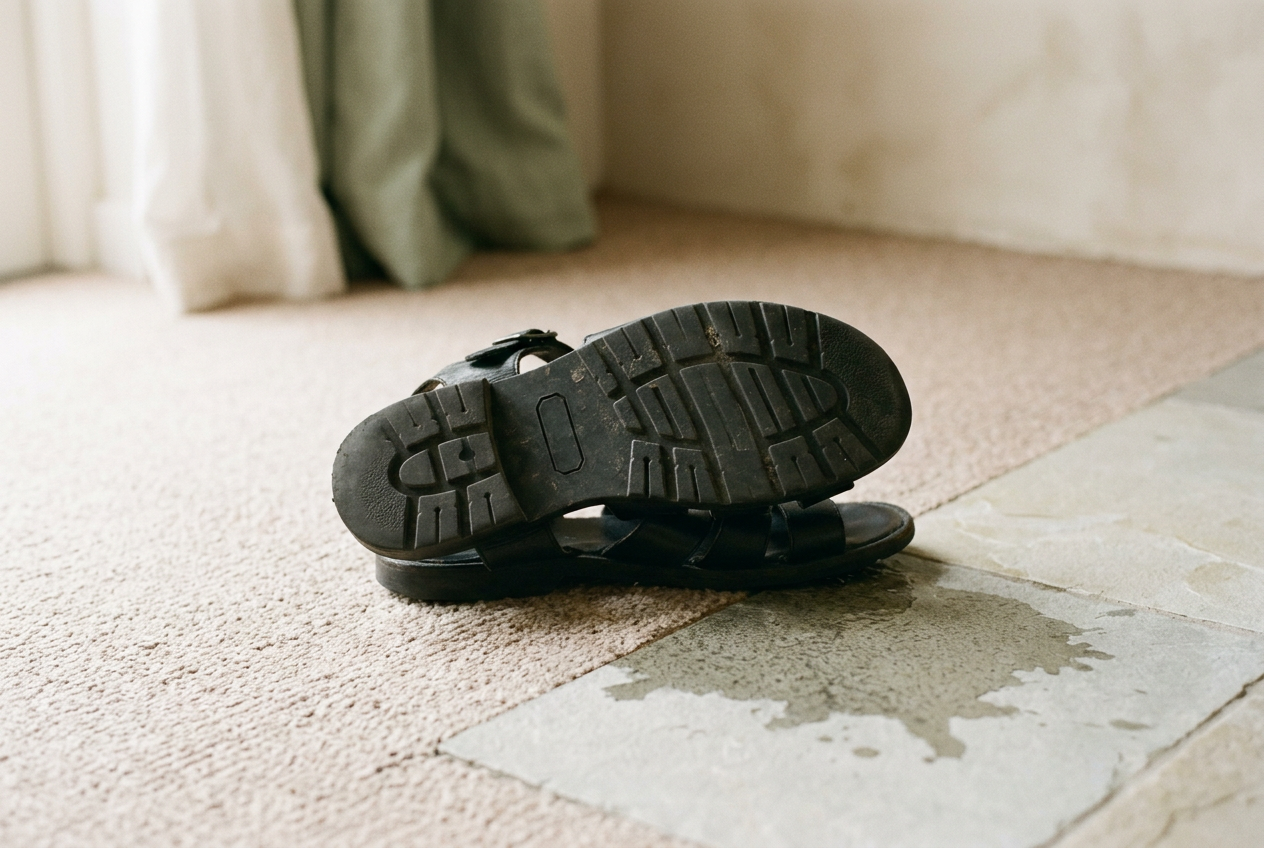
The reference shoe for this explainer is a black fisherman sandal with a molded rubber outsole, deep blocky lugs, and enough visual authority to suggest it could cross a minor mountain. Its less convincing assignment is the entrance of a tiled café after rain, where the surface is smooth, the water layer is thin, and the first heel strike can feel indecisive.
This is unisex footwear advice. Outsole mechanics do not change with the department label, although a loose sandal fit can make a marginal sole feel worse because the foot moves before the shoe has settled beneath it.
The useful distinction is between tread that looks deep and tread that works on the surface underfoot. Deep voids help on mud, loose dirt, and some uneven ground because their edges can bite into material that moves. Glazed tile does not offer anything to bite. On that surface, the outsole must make enough rubber-to-tile contact while shifting water away from the load-bearing areas.
That is where the fisherman sandal’s dramatic blocks can become mostly wardrobe theater. They may still work well outdoors, and nothing about this construction automatically makes the shoe poor, but the visible depth answers only one question: how far the tread projects from the sole.
Black rubber is a color, not a grip rating
Rubber compound means the recipe of polymers, fillers, oils, and curing ingredients used to make the outsole. Two soles can both be black, both feel rubbery in a store, and behave differently once water sits between them and a polished floor.
A relatively pliable compound can deform around microscopic irregularities in tile, creating more intimate contact than a hard compound that skims across the high points. Softness alone is not a shopping guarantee. Very soft rubber may wear quickly, pick up grit, or feel vague at the edge of a sandal, while a harder sole can be durable and supportive but less accommodating on slick surfaces.
Black pigment also tells the buyer very little. Carbon black, a reinforcing filler commonly used in rubber, can improve properties such as durability, but the finished grip still depends on the complete formulation and tread design. A black outsole is not inherently safer than a tan, translucent, or brightly colored one. It merely coordinates with more trousers.
Pressing a thumbnail into an outsole offers a rough comparison between shoes, not a verdict. The reference fisherman sandal should be compared with another sandal kept at the same room temperature: press the broad heel pad and forefoot, watch how quickly each indentation rebounds, and check whether the rubber feels pliable or more like rigid plastic. Temperature and age affect that impression, so do not treat one squeeze under store lighting as laboratory work.
Deep lugs can reduce usable contact
Contact area is the portion of the outsole touching the floor under load. A sole carved into narrow, widely spaced blocks may show plenty of total rubber when viewed from below, yet place only the flat tops of those blocks against smooth tile.
On soft ground, the spaces between lugs let them penetrate and shed debris. On tile, those spaces remove potential contact area. If the lug tops are rounded, sharply tapered, or uneven in height, the first moment of heel contact may occur on a small patch before body weight compresses the sole.
Return to the black fisherman sandal. Its heel looks substantial because the perimeter is thick and the lugs are deep, but the relevant inspection happens at the lug faces, not around their sides. Broad, level heel blocks offer more initial contact than little pyramids, isolated knobs, or decorative teeth that barely meet the floor.
Flex matters too. A stiff outsole may bridge over parts of the tile instead of allowing neighboring lugs to settle together, particularly at the heel and ball of the foot. This can make a chunky sandal feel stable while standing still but abrupt during the rolling movement of a step, which is an irritating way to discover that visual solidity and walking behavior have not met socially.
Wear changes the calculation. Fresh molding texture may disappear from the highest points first, and uneven heel wear can leave one edge taking the initial load. A week of ordinary use will not reveal every durability issue, but it can show whether the heel blocks are polishing smooth, whether one side is abrading faster, and whether grit remains trapped in shallow channels.
Water needs an exit
Channels are grooves that carry water away from the loaded contact patches. Their route matters as much as their depth. A deep pocket enclosed on all sides can hold water, while a shallower groove that runs toward the outer edge gives it somewhere to go as the sole compresses.
Fine cuts called sipes can break up a broad tread face and create short paths for water to move. They are familiar on wet-weather tires and some work footwear, although their presence on a fashion sandal does not certify performance. On a useful outsole, larger channels handle drainage while smaller cuts interrupt wide, smooth rubber pads.
The reference sandal’s block pattern deserves inspection for continuity. Trace each groove with a fingertip. If the channels dead-end between lugs, water may remain beneath the heel until pressure pushes it elsewhere; if several routes open at the side or back, the pattern has a more plausible drainage path.
Smooth wet tile creates a thin lubricating layer, especially when soap residue, body products, or cleaning solution joins the water. The issue at walking speeds is not the dramatic hydroplaning associated with a car. It is that the water film can prevent full rubber contact during the fraction of a second when the foot lands and weight transfers.
No tread pattern can turn a contaminated floor into a dependable one. Grease and detergent change the surface, worn tile varies by finish, and a sole that behaves acceptably on one entrance may slide on another. Caution remains cheaper than dental work.
A controlled comparison that stays informal
A useful evaluation should compare construction variables without pretending to issue a safety certification. Do not conduct a slip test while wearing the shoes. A controlled tabletop check can compare two clean, dry shoes on the same removable tile, using the same weight inside each shoe and a luggage scale to pull them slowly from the same position.
Repeat the pull after applying the same light film of clean water, then note whether each shoe starts moving abruptly, turns sideways, or requires a steadier pull. The reading is only comparative because the tile finish, pulling angle, weight placement, outsole size, and speed all affect it; without calibrated equipment and a recognized test method, the numbers are not a safety rating.
The strongest comparison changes one feature at a time where possible. Set the deep-lug fisherman sandal against a flatter outsole with broad pads and open channels, provided both use similarly pliable rubber. Then compare two patterns made from noticeably different compounds. If every feature changes at once, the exercise can identify a preferred shoe for that tile but cannot explain why it won.
Clean the outsoles first with water and mild soap, rinse them, and let them dry before the dry run. Dust and manufacturing residue can distort the result, as can floor cleaner left on the tile. Use fresh water for the wet comparison and keep hands clear of the shoe’s path.
This evaluation says something narrow: how those particular soles behave on that particular tile under a repeatable straight pull. It does not reproduce a person’s heel strike, turning step, uneven weight transfer, worn outsole, or loose sandal upper. It also does not replace slip-resistance testing from a manufacturer or an accredited laboratory.
What to inspect before buying
Turn the shoe over. The first useful sign is not maximum depth but a heel zone with broad, level rubber surfaces interrupted by channels that reach an edge. At the forefoot, look for enough flexibility to let several tread sections meet the floor as the foot bends, rather than one rigid plate rocking from heel to toe.
Rub the tread with a dry thumb and compare it with another shoe nearby. A compound that feels hard, glossy, and reluctant to flex deserves more skepticism for wet polished floors than one that feels pliable without seeming gummy. Online photos rarely settle this point, so check whether the seller gives an outsole material and a meaningful wet-grip claim backed by a stated test method. “Rubber sole” is a material label, not a performance report.
Price does not solve the problem. Expensive sandals can devote their budget to leather uppers, hardware, and sculpted silhouettes while using an outsole selected for appearance or wear resistance. A modestly priced walking sandal may give wet grip more attention, though no price band guarantees it.
Fit still belongs in the decision. On the reference fisherman sandal, the instep strap should hold the foot back into the heel cup without forcing the toes to grip, while the rear of the sole should not trail far behind the heel. If the foot slides inside the sandal, the wearer may interpret that movement as outsole slip, and tightening one poorly placed strap can merely relocate the discomfort to the top of the foot.
For regular wet-tile use, the practical alternative is a sandal or shoe with a pliable rubber outsole, wide contact pads, and drainage routes that open toward the perimeter. Fine siping is worth considering. Deep lugs remain useful when the same pair must handle dirt or broken pavement, but buying them solely for polished indoor floors is paying for depth the floor cannot use.
Questions people ask
Do deeper lugs provide more grip on wet tile?
Not by themselves. Deep lugs can help on loose or soft ground, but smooth tile rewards usable rubber contact and fast water drainage. Widely spaced or pointed lugs may leave less rubber touching the floor at heel strike, even though the outsole looks rugged.
Is soft rubber always better on a wet floor?
A pliable compound can conform more closely to microscopic surface texture, which may help grip, but softness does not guarantee performance. Tread layout, contamination, temperature, wear, and drainage still matter, while an excessively soft sole may wear faster or feel unstable around the edge.
Can I test wet grip in a store?
Do not wet a retailer’s floor or deliberately try to slide while wearing the shoes. Compare outsole flexibility, contact patches, and open channels, then ask for any stated test method behind wet-grip claims. At home, an unworn returnable pair should not be water-tested unless the return policy clearly permits it.
Why does my sandal feel slippery when the outsole looks secure?
The outsole may be sliding, but the foot can also move inside a loose or wet sandal. Check whether the instep strap holds the heel in place and whether the footbed becomes slick; if both layers move at once, deeper external tread will not fix the internal fit problem.
One update a day
Today's fashion update, in your inbox
One fashion update each morning — no hype, no filler, just pieces worth wearing.