Jelly Slides Grip the Floor Better Than They Grip Your Feet
A rainy-week test found that outsole grooves matter, but the larger problem is often inside the slide: trapped water lets the foot move while the sole stays put.
August 10, 2026 · 8 min read
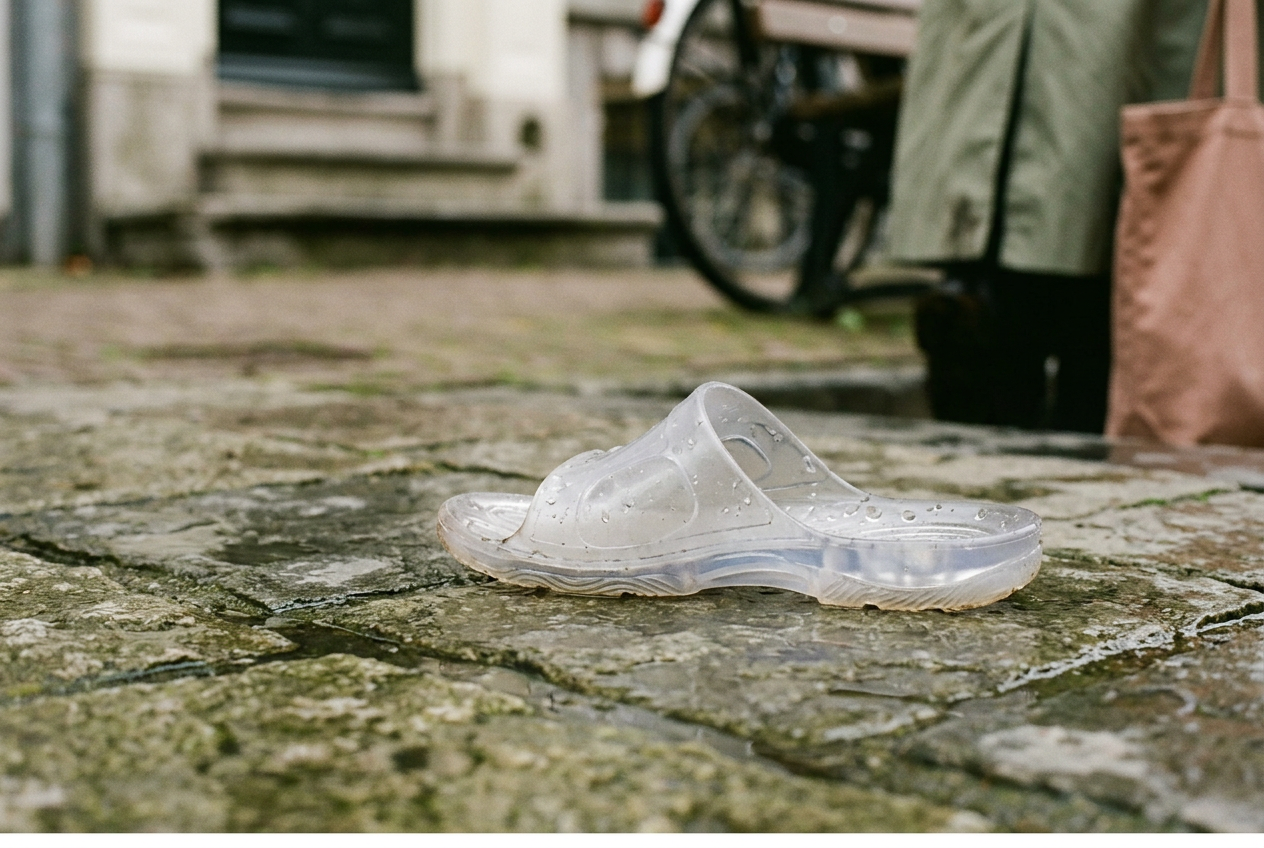
The pair that set the terms for this test was a clear, one-piece molded PVC slide with a broad strap, a shallow herringbone outsole and a footbed raised around the heel. PVC, or polyvinyl chloride, is the firm plastic behind the classic jelly-shoe look. I wore that pair through a rainy week and compared it with translucent slides labeled as softer TPU and foamier EVA constructions.
This is unisex footwear coverage because the mechanics apply across wardrobes. The sizing issue is less universal: feet with lower insteps tend to move under a roomy molded strap, while higher-volume feet may be held firmly enough to avoid sliding but acquire two warm red lines across the top. There is no heroic outcome, only a preferable inconvenience.
The reference PVC pair looked suited to rain. Water could not soak through it, the upper had no glued seams to loosen, and the transparent surface wiped clean. Those qualities are real. They do not mean the shoe is secure on a wet surface, because a slide has two traction problems rather than one: contact between outsole and ground, then contact between foot and footbed.
How the wet-surface test worked
I walked each pair across a rain-wet sidewalk, a smooth indoor floor entered with damp soles and a short paved incline. The pace stayed ordinary. Running in backless plastic footwear would test judgment more than footwear.
The comparison focused on whether the outsole slipped, whether the foot moved independently inside the shoe, where water collected and how much attention the pair needed afterward. This was a practical wear evaluation, not a laboratory coefficient-of-friction test, and material labels came from the shoes rather than visual guesses. Clear plastic alone does not identify its chemistry.
Each pair started dry, then encountered wet ground and the amount of water a person would carry indoors after rain. I also wet the footbed directly, which matters when rain reaches the open heel or runs down a bare leg. That second condition changed the ranking more than the sidewalk did.
Outsole texture helped, up to a point
On wet concrete, the clear PVC reference pair was adequate at a level walking pace. Its shallow herringbone pattern, a series of angled grooves intended to move water away from the contact area, gave the sole enough interruption to avoid an immediate skate. On the incline, the same pattern felt less convincing because the grooves were shallow and the plastic did not flex readily around the pavement texture.
The smoother translucent outsole was the weakest on the polished indoor floor. A broad, uninterrupted patch of plastic can hold a thin film of water beneath it, especially after the wearer steps in from outside, and the first change of direction exposes the problem. Forward motion was less troublesome than turning.
A softer, more flexible outsole with deeper channels behaved better because more edges contacted the surface and water had somewhere to move. That does not make every TPU or EVA slide safer than every PVC one. Outsole geometry mattered more than translucency, while flexibility helped the grooves remain useful instead of functioning as decoration pressed into a rigid slab.
Look at the sole before buying. Grooves should cross the forefoot and heel rather than circling a smooth central island, and they should be deep enough to remain visible after ordinary wear. Tiny molded dots may add texture, but widely spaced nubs can feel unstable on hard flooring and wear flat at the pressure points.
Price was a poor guide. Jelly slides range from inexpensive seasonal purchases to luxury-priced versions, yet a costly translucent upper can still sit over a nearly smooth outsole. Turn the shoe over. Prestige does not create drainage channels by private arrangement.
The footbed caused the larger problem
Once water reached the inside, the reference PVC pair’s outsole sometimes stayed planted while my foot moved forward. That mismatch is more disconcerting than a small outsole slip because the wearer cannot read it from the ground; the toes begin gripping, the heel shifts sideways, and the strap edge takes the load.
The raised heel rim made matters worse. It kept the foot visually centered when dry, but in rain it formed a shallow basin. Water collected beneath the heel, then spread forward under pressure. The molded footbed had a faint texture, yet it was too fine to break up the water film once fully wet.
Fit changed the result. A loose strap gave the foot room to accelerate before hitting the upper, while a closer strap limited movement but pressed harder once skin became damp. Buying short to reduce slippage is not a sensible fix; toes at the front edge have little protection, and a heel hanging over the rear lip defeats the platform’s support.
For this reason, jelly slides should be tried with the foot pushed naturally beneath the strap rather than placed neatly for a mirror. Walk, turn and descend a slight slope if the store permits it. The heel should remain inside the footbed without the toes curling, and the strap should hold the midfoot before its edge digs in.
After the rainy week, the clear PVC pair had not softened into a more accommodating fit. Molded plastic may warm and flex during wear, but it does not break in like leather. The damp friction also left the strap edge more irritating than it had felt indoors, particularly where the upper met the outside of the foot.
Pooling depends on the shape, not the waterproof label
A waterproof material can still make a poor wet-weather shoe. PVC does not absorb rain, but a cupped footbed holds it, and the broad strap slows evaporation across the forefoot. The reference pair shed visible surface water quickly after wiping, while moisture remained tucked beneath the strap and around the heel rim.
A flatter footbed drained sooner during walking, although it offered less contour underfoot. Small side openings or a low heel edge also gave water an exit. Perforations can help if they pass through the shoe; blind dimples, which end inside the material, collect droplets and skin debris with impressive efficiency.
The foamier translucent slide felt less slick internally at first, but its surface texture took longer to dry in recessed areas. Soft EVA, or ethylene-vinyl acetate foam, is lighter and more cushioned than solid PVC, though the finish and density vary. A textured foam footbed may manage a little water better underfoot, but deep molded patterns demand more cleaning.
None of the tested shapes became comfortable merely because rain cooled the plastic. Wet skin is easier to rub, and a slide already tight across the instep becomes less forgiving when the wearer starts bracing against movement.
Drying and odor cleanup
The clear PVC reference pair was the easiest to wipe down. A cloth removed surface water, but I still had to flex the strap away from the footbed and dry the junction where the two were molded together. Left unattended, that sheltered area stayed damp after the exposed heel looked dry.
Airflow did more useful work than heat. I rinsed away street residue, washed the footbed with mild soap, then left the pair open in a ventilated spot. Direct high heat is a bad bargain for molded plastics because it can distort the shape, and strong fragranced cleaners may leave their own film beneath a bare foot.
Odor came from residue held in wet texture rather than the plastic needing perfume. A soft brush reached the herringbone outsole and the small footbed recesses; after rinsing, the pair needed to dry before storage. Putting clear slides into a closed bag while damp preserves the least charming part of the outing.
Cloudiness deserves separate treatment. Mineral marks from dried water often wipe away with a damp cloth, but abrasion and material aging do not. Aggressive scrubbing can turn a transparent finish hazier, so cleaning harder is not always cleaning better.
The buying verdict
For occasional showers, choose the pair with real outsole channels, modest footbed contour and a strap that holds without pinching. A slightly tackier internal texture is useful, although no molded plastic footbed should be trusted once coated with water. Clear jelly slides remain better at surviving rain than managing it.
The reference PVC pair is wearable for a short, level walk followed by prompt drying. I would skip it for polished transit floors, sloped routes or a day when repeated soaking is likely. A sandal with an adjustable back strap offers more control, while a water-friendly shoe with a textured insole is the less photogenic but more competent alternative.
Do not pay extra on the assumption that thicker plastic means better traction. Thickness can add weight and stiffness without improving the outsole pattern, and a heavily cupped heel may trap more water. The useful shopping move takes seconds: inspect the sole, press the forefoot for flex, then check whether the heel area has a drainage path.
Questions people ask
Are jelly slides slippery in rain?
They can be, particularly on polished floors and inclines. Deep outsole grooves improve contact with wet ground, but water inside the shoe may still let the foot slide across the footbed, so external traction alone does not settle the matter.
Which jelly-slide material works best when wet?
Material labels do not predict the whole result. Firm PVC wipes clean but may feel slick and rigid, while softer TPU or EVA constructions can flex and add texture; outsole channels, internal grip and drainage matter more than whether the plastic is clear.
How should jelly slides fit to reduce foot slippage?
The strap should hold the midfoot before the toes curl or the heel lifts, with the whole heel resting inside the footbed. Do not size down until the foot overhangs, since that trades internal movement for exposed toes and more pressure across the instep.
How do you remove odor from wet jelly slides?
Rinse away street residue, wash the footbed and outsole with mild soap, then use a soft brush in molded grooves. Dry the slides in moving air with the strap area exposed, and keep them out of closed storage until every recessed section is dry.
One update a day
Today's fashion update, in your inbox
One fashion update each morning — no hype, no filler, just pieces worth wearing.