A Walking Sandal’s Heel Cup Can Put You in the Wrong Size
A cupped footbed can steady the heel, but the wrong depth or placement pushes the whole foot forward. Check alignment while walking, not by tracing the heel.
November 7, 2026 · 8 min read
The useful part of a heel cup, meaning the curved depression that cradles the back and underside of the heel, is easy to understand. It can reduce side-to-side drift and give the foot a repeatable place to land. The less charming part is that it also tells your foot where to sit, whether your foot agrees or not.
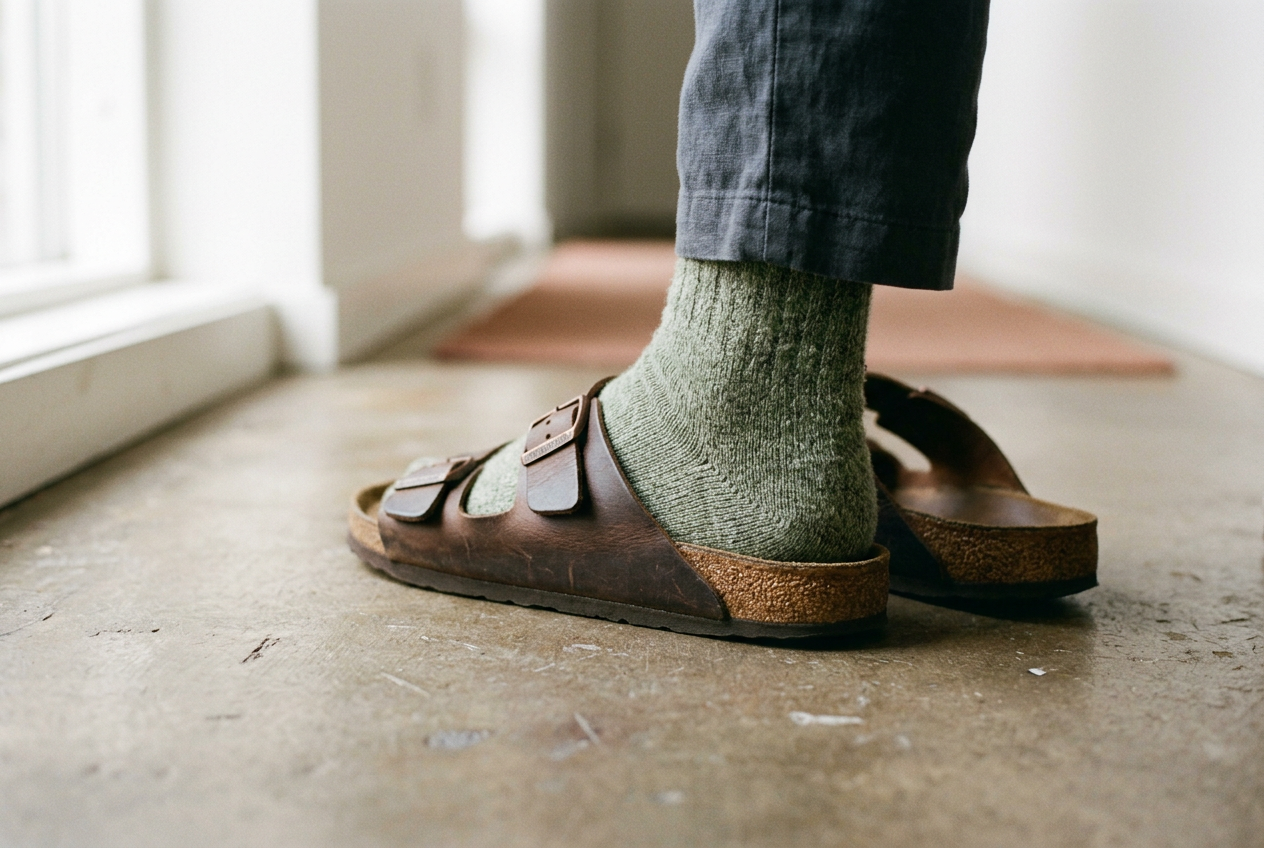
The concrete case here is a regular-width Birkenstock Arizona in oiled leather with the original contoured cork-latex footbed, suede lining and EVA outsole. Two adjacent sizes were compared indoors, then the shorter pair was worn for a week of ordinary errands and short walks. Its heel looked tidily contained from above. In motion, the foot crept forward, the heel pressed the inner slope of the cup, and the toes worked harder to keep the sandal aboard.
That was not a break-in problem. It was geometry.
The smaller size passed the wrong test
The shorter Arizona looked persuasive in a mirror because there was no dramatic empty space behind the heel. Fashion has trained plenty of us to distrust visible footbed, as though every spare millimeter were evidence of clown shoes. A walking sandal needs working room, however, and its internal landmarks matter more than the outside outline.
On the test pair, the heel sat close to the back edge while standing without full weight on the foot. Once body weight spread the foot, the heel moved onto the cup’s sloped rim. The arch contour, which is the raised section intended to meet the underside of the arch, then sat slightly too far back, while the toe bar, a raised ridge under the toe joints, encouraged the toes to grip ahead of their natural bend.
Nothing looked catastrophic. That is why this fit error survives the sales floor.
After several walks, the leather straps softened enough to feel less restrictive, but the footbed did not become longer. Cork-latex can compress and the suede surface can polish with wear; neither change relocates the heel cup or toe bar. The smaller pair became more familiar, which is not the same thing as fitting better. Discomfort is capable of networking.
The adjacent size showed more footbed behind the heel when viewed from above, yet the heel settled into the lowest part of the cup and stayed there during push-off. Its extra visible length was doing a job. The sandal looked larger and walked smaller, in the sense that the foot no longer had to manage it.
Depth and placement are separate fit problems
A deep heel cup can feel secure on a foot with a narrower heel or one that tends to slide laterally. That depth also raises the stakes. If the cup is too short from front to back, the heel meets a firmer, steeper rim; if it is positioned too far behind the sandal’s arch contour, the foot may move forward until the arch finds a tolerable place, leaving the heel perched on the front edge of its supposed support.
A shallower cup gives the heel more freedom and often tolerates small differences in anatomy, though it supplies less guidance on uneven ground. Soft molded EVA footbeds usually make the rim less punishing than firm cork-latex or dense polyurethane, but softness cannot correct placement. A cushioned wrong spot remains the wrong spot, merely upholstered.
Cup width matters too. Heel spill is not limited to the back edge. If the heel bulges over either side while fully weighted, the cup is too narrow or too aggressively curved, even when the sandal’s forefoot feels roomy. Going up in length may widen the platform in some size runs, but it can also shift every contour forward.
A wider fitting, where offered, is the cleaner comparison.
This advice is unisex. Retailers may divide colors and size labels into women’s and men’s departments, but the standing and walking checks do not change with the sign over the shelf.
Do the standing check with the straps set properly
Start with both sandals on a hard, level floor and put full weight through both feet. Feet spread under load, especially in warm weather, so a seated check flatters a marginal fit. Set the straps firmly enough to limit large movement without pinning the foot down; an overtight forefoot strap can hold the toes back temporarily and disguise a short footbed.
Look at where the heel’s weight-bearing base sits, not where the soft outer curve appears to end. The base should rest in the low central area of the cup, with no firm rim pressing into the underside or sides. Some visible footbed behind the heel is acceptable. There is no universal gap to chase because cup walls vary in thickness and angle.
Next, bend the toes naturally. The toe joints should flex near the toe bar rather than behind it, and the toes should not be forced to curl over the ridge. Check the arch contour last. A pronounced lump directly under the heel-side edge of the arch often means the foot is sitting too far forward or the contour is too far back for that foot.
Repeat the check on each side instead of assuming one result covers the pair. Many people have a longer or fuller foot, and a rigidly contoured sandal exposes that difference more than a flat slide does.
Then make the sandal reveal itself by walking
Walk at a normal pace, turn in both directions and use a slight incline if the store or home allows it. The foot should return to roughly the same position after each step. A small amount of movement is normal in an open sandal; steady forward migration is not.
Watch what happens during push-off, when the heel lifts and weight moves through the front of the foot. If the heel climbs the front wall of the cup, the toes claw, or the straps have to be tightened until they leave deep marks, the sandal is relying on restraint to correct a footbed mismatch. The Arizona test pair did all three mildly, which made each symptom easy to excuse until they appeared together over a longer walk.
Listen as well. A loud slap can come from loose straps, but it can also indicate that the foot and sandal are separating because the contours do not line up. Tightening the straps may quiet it at the cost of pressure across the instep. That bargain rarely improves after an hour.
Do this test indoors while returns remain possible, using clean socks if the retailer permits them or bare feet on a clean surface according to its rules. Five deliberate minutes tell more than a quick heel outline, although they cannot reproduce heat, swelling or a full day on pavement.
When your feet want different sizes
Fit the larger or longer foot first. If its heel is centered, its toes clear the front rim and its joints meet the footbed’s flex points, check whether the smaller foot can be secured without crushing the instep. Independently adjustable straps help here. A backstrap can also limit forward drift, though it cannot move a misplaced arch contour.
If the smaller foot floats while the larger foot only just fits, do not automatically size down. A thin volume reducer under a removable insole can help in closed shoes, but most contoured sandals have fixed footbeds and nowhere discreet to put one. Adhesive forefoot pads may alter where the foot lands, yet they also change the designed contours and can create a new pressure point.
The better alternative may be another footbed shape: a less pronounced heel cup, a model offered in separate widths, or a sandal with a flatter platform and an adjustable rear strap. That choice gives up some of the guided feeling people buy contoured sandals for. It can still be the more supportive option in practice because the foot is not fighting the architecture at every step.
The larger Arizona was the stronger fit in the comparison, despite the less compact outline. The shorter pair looked exact while stationary and became inaccurate as soon as walking started. For a sandal in established premium comfort-footwear territory, keeping the prettier size and hoping the cork learns anatomy is an expensive plan.
Support has to stay under the foot
A heel cup is useful when it spreads contact around the heel without placing an edge under it, and when the rest of the footbed’s contours meet the same foot at the same time. Depth alone is not support. A deep cup in the wrong place can concentrate pressure more efficiently than a flat sandal ever managed.
Choose the size and shape that keep the heel in the cup during a real stride, even if that leaves more visible footbed than expected. If neither adjacent size aligns the heel, arch and toe joints, the model is wrong. The answer is another sandal, not a more determined foot.
Questions people ask
Should my heel touch the back of a sandal’s heel cup?
The soft outer edge of the heel may sit near the back wall, but the weight-bearing underside should not rest on a raised rim. Check while standing with full weight on both feet. A narrow strip of visible footbed can be useful if it keeps the heel centered during walking.
Will a cork heel cup stretch after break-in?
A cork-latex footbed can compress slightly and its suede lining can become smoother, while leather straps usually soften with wear. The footbed does not gain meaningful length or move its contours. If the cup edge sits under the heel in a new sandal, break-in is unlikely to fix the placement.
Should
I size up if my heel spills over the sides?
Compare the next size, but also try a wider fitting or a differently shaped cup. Sizing up may add platform width, though it can shift the arch and toe bar away from their correct positions. Keep the option that centers the weighted heel without creating a new alignment problem farther forward.
Are deep heel cups always better for walking?
No. A deep cup can limit lateral drift when its width and position match the foot, but it becomes intrusive when the heel lands on the slope. A shallower cup with secure straps may work better for feet that sit forward, differ in length or dislike rigid contours.
One update a day
Today's fashion update, in your inbox
One fashion update each morning — no hype, no filler, just pieces worth wearing.