A Higher Running-Shoe Heel Drop Does Not Mean More Comfort
Heel-to-toe drop changes how a running shoe positions your foot. Calf load, rocker shape and your usual stride matter more than treating the biggest number as the softest option.
November 6, 2026 · 7 min read
The 12-millimeter line that shoppers misread
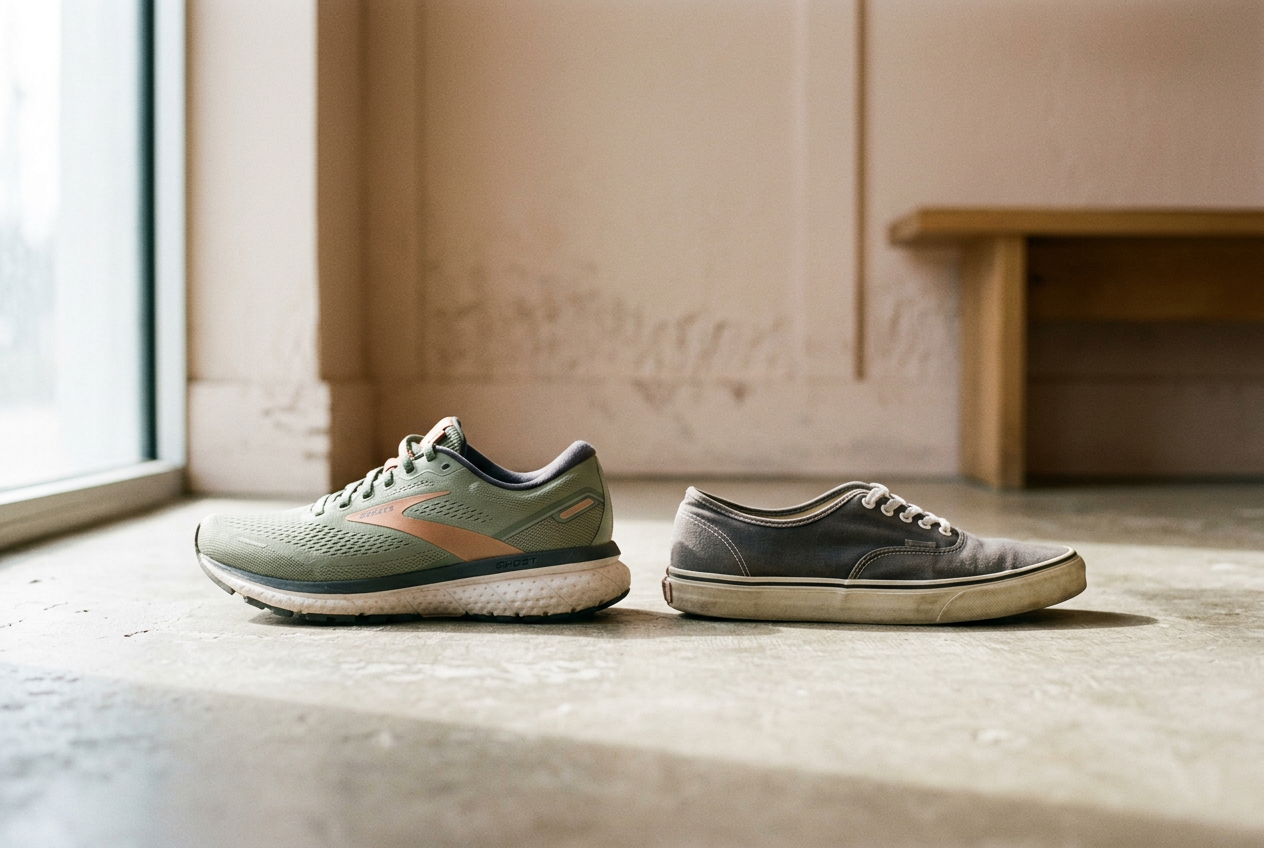
Brooks lists the Ghost 16 with a 12-millimeter midsole drop. That figure is prominent enough to look like a comfort specification, sitting near details about cushioning and support, but it says nothing about softness, width or whether the heel collar will begin an argument with your ankle.
Heel-to-toe drop, meaning the difference between the shoe’s height under the heel and under the forefoot, describes geometry. In a theoretical shoe measuring 36 millimeters beneath the heel and 24 beneath the forefoot, the drop is 12 millimeters. It does not mean the shoe contains 12 millimeters of cushioning, nor does it tell you the total stack height, meaning the full amount of material between foot and ground.
The Ghost 16 makes a useful case because its construction separates those ideas. Brooks describes nitrogen-infused DNA LOFT v3 foam beneath an engineered air-mesh upper, with RoadTack rubber placed on the outsole. The foam formulation concerns cushioning; the mesh concerns fit and ventilation; the rubber affects contact and durability. The 12-millimeter figure concerns the slope between two points.
This distinction applies across women’s and men’s size ranges, so this is unisex coverage. Individual versions can use different lasts, meaning the foot-shaped forms around which shoes are built, and size labels may differ, but a higher listed drop does not become a comfort score in either department.
What the measurement changes while walking
A higher-drop shoe holds the heel farther above the forefoot when the foam is unloaded. That can reduce how far the ankle needs to bend as the body moves over the planted foot, although the sensation depends on the shoe’s stiffness, the wearer’s stride and how much the foam compresses.
A lower-drop shoe places heel and forefoot closer to the same level. During walking, that may ask more movement from the ankle and more work from the calf-Achilles unit, the muscles and tendon running down the back of the lower leg. “May” matters. Walking speed, step length, hills and the shoe’s shape can all change the result, while a person accustomed to low-profile sneakers may notice very little.
Switching abruptly is where the number becomes less theoretical. Someone who has spent years walking in a shoe shaped like the Ghost 16 could feel calf tightness after moving straight into a zero-drop model, particularly during a long commute or a weekend of standing. The reverse move can feel odd too: a pronounced heel lift may make the foot seem pitched forward, even when the foam is plush.
Neither reaction proves that one geometry is defective. It shows that tissues and movement habits adapt to repeated loading, often with less enthusiasm than the person who bought the shoes.
The listed drop also describes an unloaded shoe, not a foot in motion. Heel foam can compress differently from forefoot foam, and that compression changes with body weight, pace and wear. Manufacturing methods and measurement conventions can produce small differences between a published figure and an independently measured shoe. Treat the number as a category marker, not a promise calibrated to your ankle.
A rocker can outweigh the slope you expected
Rocker shape, meaning the upward curve that helps the sole roll from landing to toe-off, can make two shoes with similar drop figures walk very differently. A strong forefoot rocker starts lifting the toes away from the floor before the foot reaches the end of its natural bend, while a flatter sole asks the foot to do more of that rolling work.
This is why shopping by drop alone fails. A lower-drop shoe with a curved, stiff sole may move forward with less forefoot bending than a higher-drop shoe built on a flexible platform. The first can feel smooth but controlled; the second can feel familiar yet busier underfoot. Neither sensation appears in the heel-drop line.
Return to the Ghost 16. Its 12-millimeter specification tells you the rearfoot sits higher than the forefoot, but it cannot tell you whether its transition feels natural beside your current shoe. Put the two pairs on a level floor and watch the motion rather than admiring the side profile. If the test shoe encourages a shorter, easy roll, that is useful information.
If you feel yourself braking at the heel or hurrying over the toe, the nominally comfortable geometry is giving you work.
Deep cushioning complicates the picture further. A tall foam platform can look protective and still feel unstable at a slow walking pace, particularly during tight turns or on a sloped sidewalk. A thinner shoe may transmit more pavement yet allow cleaner placement. The correct tradeoff depends on the route, not which midsole looks most upholstered in a product photograph.
Habit is part of fit
Habitual gait is the walking pattern you repeat without deliberately arranging each step. It includes where the foot lands, how quickly weight moves forward and how much the ankle bends. Shoes can influence that pattern, but they do not erase it on contact.
A strong heel striker may notice a high-drop shoe immediately because the raised rear section meets the ground sooner. Someone who lands farther forward may care more about forefoot stiffness and toe room. A fast walker can engage a rocker that feels awkward during slow museum-speed shuffling, which is worth remembering if the shoe must cover both commuting and several hours of pretending to read wall labels.
Your existing shoes provide the most practical baseline. Check the manufacturer’s current documentation if the model is identifiable, then note the drop category rather than obsessing over a one-millimeter difference. Also inspect the old outsole. Heavy wear at the outer heel, a forefoot worn smooth or a midsole leaning to one side says more about repeated use than a pristine fitting-room mirror does.
Do not assume that familiar means ideal. It means familiar. Still, changing drop, cushioning firmness and sole stiffness in one purchase makes it difficult to identify which change your legs dislike, so a cautious comparison keeps at least some of those variables close.
A useful fitting-room comparison
Start with the socks you normally wear and your current walking shoes. Walk for several minutes at your usual pace before changing pairs, because a cold first step exaggerates novelty. Lace the candidate securely enough to hold the heel without crushing the top of the foot; heel movement caused by loose lacing is not evidence about drop.
In the candidate, walk slowly and then at commute pace. Use level flooring first, followed by an incline if the store has one, then make a tight turn and stop without shuffling. Pay attention to where effort appears. Calf tension points toward a larger loading change than the product copy admits, while pressure beneath the forefoot can indicate that the slope, rocker or fit is moving weight forward in a way you dislike.
Next, put one current shoe on one foot and the candidate on the other for a brief standing comparison. This is not a gait test, since mismatched shoes distort walking, but it can expose an obvious pitch difference. Change both feet back into the new pair before moving again.
For the Ghost 16 example, the decision is not whether 12 millimeters is good. The useful comparison is whether that 12-millimeter platform lets you walk without gripping your toes, lifting your heel inside the shoe or feeling the calf tighten as the minutes pass. Also check the air-mesh upper across the widest part of the foot, because a suitable slope cannot rescue a cramped last.
At home, use the return-policy window on clean indoor floors. Include stairs and the amount of standing your real day requires. A shoe that feels pleasantly soft for two laps around the couch may become tiring after the foam keeps your smaller stabilizing muscles busy; discomfort has excellent timing and often waits until the packaging is gone.
Do not add a new insole during the first comparison. An insole with extra heel thickness can alter the effective slope, reduce internal volume and lift the heel toward the collar. Test the stock shoe first, then change one variable if the fit allows it.
The number cannot settle pain
Heel drop can help narrow a search when you know what geometry you already tolerate. It cannot diagnose ankle, Achilles, knee or foot pain, and choosing the opposite number is not a treatment plan. Persistent or worsening pain belongs outside the sneaker aisle and with a qualified clinician.
For ordinary shopping, record the listed drop of shoes that work, note whether their soles are curved or flexible, and compare the next pair against that combination. The label supplies a starting point. Your walk supplies the missing information.
Questions people ask
Can changing heel drop make my calves sore?
Yes. Moving from a higher drop to a much lower one can increase the movement and work asked of the ankle and calf-Achilles unit, especially if the switch coincides with longer walks. Build comparison time gradually, and do not interpret escalating or persistent pain as a normal break-in ritual.
Is zero drop better for walking?
Not universally. Zero-drop shoes suit some habitual gait patterns and can feel stable because heel and forefoot sit level, but they may demand more ankle motion than a wearer expects. Rocker shape, cushioning firmness, width and previous footwear habits still influence whether the shoe works over a full day.
Should a walking shoe have a high heel drop?
A higher drop can suit walkers accustomed to a raised heel or those who prefer less ankle bend, but the number cannot guarantee comfort. Compare the shoe with your current pair at normal pace, on turns and on stairs, paying attention to calf effort and forward pressure.
Can an insole change heel-to-toe drop?
It can change the effective geometry inside the shoe, particularly when the replacement insole adds more material beneath the heel than the forefoot. It may also reduce space and cause heel rubbing, so assess the stock shoe before adding an insole and repeat the walking comparison afterward.
One update a day
Today's fashion update, in your inbox
One fashion update each morning — no hype, no filler, just pieces worth wearing.