Soft EVA Sandals Can Lose Their Fit in a Week
A molded EVA footbed may feel softer after several days, but dents that remain overnight can shift the fit. Here is how to tell useful cushioning from foam that has given up.
November 5, 2026 · 8 min read
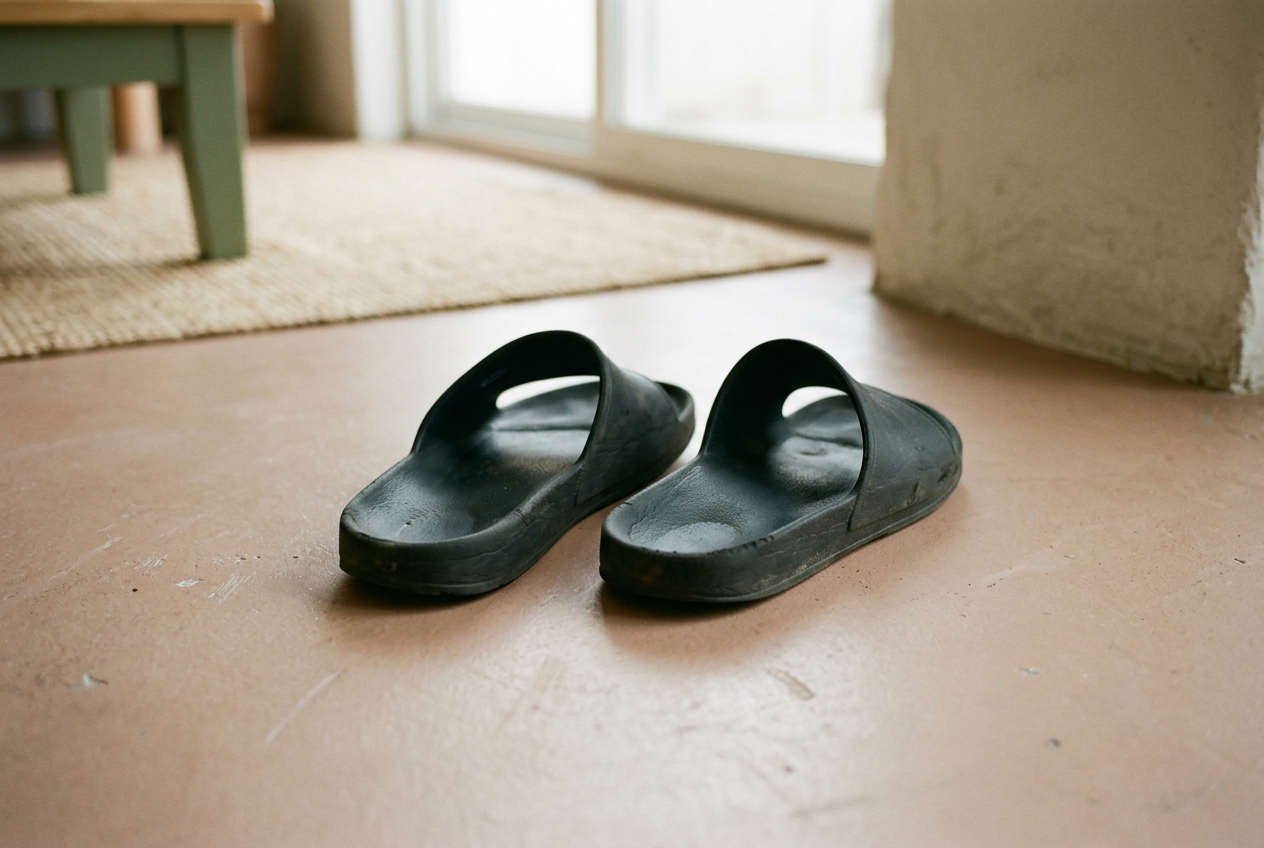
The test pair was a black, one-piece molded EVA sandal with two adjustable straps and a shallow heel cup, worn for seven consecutive days that included long periods standing on hard floors. This is unisex advice: the mechanics apply across wardrobes, though anyone buying from a unisex size chart should pay close attention to width and footbed length rather than trusting the number alone.
EVA, or ethylene-vinyl acetate, is a lightweight closed-cell foam used in molded sandals because it absorbs impact, resists water and costs less to produce than a built footbed made from cork, rubber and leather. It also changes under load. That change can feel agreeable for the first few days, particularly under the heel, while quietly making the sandal less stable.
By the end of the test week, the black pair looked broken in rather than ruined. The heel depression was deeper, the area under the ball of the foot had flattened, and the toe ridge felt more pronounced because the foam around it had compressed. Left overnight, the footbed lifted partway back. It did not return to its unworn shape.
That distinction matters more than the initial squish.
Rebound is the useful part
Rebound, meaning the foam’s return toward its original shape after pressure is removed, is what allows an EVA footbed to feel cushioned without becoming a personalized pothole. A sandal can compress while it is being worn and still perform well if the footbed recovers during the hours it sits unused.
On the first days in the black test pair, the heel mark looked obvious immediately after wear but became shallow by morning. The sandal also held the foot in the same position each time it went back on: heel centered, toe ridge in front of the toes, straps resting at their original tension. That was pleasant softness. The foam yielded, then returned enough to do the job again.
Later in the week, recovery slowed. The morning heel dent remained visible from the side, and a broad forefoot hollow could be felt by running a flat hand from the arch toward the toe ridge. More tellingly, the straps seemed looser even though their settings had not changed. The foot had sunk lower into the sandal, which created extra room above it.
A buyer could reasonably mistake that looseness for the straps stretching. On a one-piece EVA sandal, the footbed may be the part changing first.
The heel dent is not automatically a failure
A shallow heel impression is expected in soft molded foam. The heel carries a concentrated load, and a contoured footbed is supposed to cradle it rather than keep it perched on a flat slab. Trouble starts when the depression becomes uneven, stays after a night without wear or moves the heel below the rim of the heel cup.
The black pair developed more compression toward the inner side of each heel. That reflected the way I stood, but the foam amplified it: once the inner area sat lower, the foot settled into the same tilt more readily, and the outer edge of the heel cup became easier to feel. No dramatic collapse occurred. There was just a mild sense that the sandal had begun making a decision about my alignment without consulting me.
Look at fit, not merely appearance. A visible dent that still centers the heel and rebounds overnight may be harmless. A smaller dent that tips the heel, lets it rub the rim or causes the rear of the sandal to slap harder is already affecting wear.
People with a narrow heel may notice the problem sooner because sinking creates usable volume above the foot. Tightening an adjustable strap can control some movement, but it cannot restore the lost height under the heel, and over-tightening often trades sliding for pressure across the instep.
Forefoot compression changes more than cushioning
The forefoot is where permanent compression became a clearer fit issue in the test pair. After several standing days, the foam beneath the ball of the foot stayed flatter each morning, while the raised toe ridge retained more of its original height. My foot therefore sat lower behind the ridge, and the ridge began pressing closer to the base of the toes.
That is a common weakness of highly sculpted EVA sandals. Different parts of the molding compress at different rates, so a contour that felt neatly placed in the store may become intrusive after the surrounding footbed packs down. If the toe ridge was already touching rather than sitting just ahead of the toes, there was never much margin available.
Forefoot dents can also allow the foot to creep forward. In the black pair, the front strap felt less secure late in the week, particularly with thin socks, because the ball of the foot had settled into a broad depression while the toe area remained smoother. Bare feet gripped the material better, though warmth and perspiration made the difference less charming than it sounds.
The useful fitting rule is to leave a little space around molded landmarks. Your heel should sit inside the cup rather than on its wall, and a toe ridge should guide the toes without meeting their joints. Soft foam changes. A fit that begins with every contour precisely touching the foot may become bossy once the low points compress.
Check the sandal after it has rested
Testing rebound does not require equipment. At the end of a long wearing day, place the sandals on a level surface and look across the footbeds from the heel end, where uneven depressions are easier to see than from above. Leave them unworn overnight, then view them from the same position before putting them back on.
The black pair showed why the second check matters. Immediately after wear, both footbeds looked severely dented; by morning, much of that compression had eased, but the inner heel and forefoot remained lower. Judging them only at night would have exaggerated the failure. Judging them only while wearing them would have hidden the shape entirely.
Next, put the sandals on without changing the straps. Notice whether the heel sits lower, whether the strap now needs another hole and whether a molded ridge has moved from “near the foot” to “under a joint.” These fit changes are more useful than pressing the foam with a thumb, since thumb pressure does not reproduce body weight or show how the contours interact.
If the retailer permits indoor wear for returns, conduct this check before taking the sandals outside. A few extended sessions at home will not reproduce a full week of standing, but a footbed that develops persistent localized dents that quickly is unlikely to become firmer through optimism.
Softness and support are separate purchases
Soft EVA reduces the sharp sensation of standing on a hard floor. It does not necessarily control how the foot moves, and thick foam can feel generous while providing little resistance once loaded. Support here means the footbed maintains a useful shape under body weight, not that an arch bump exists in the molding.
The black sandal’s arch contour remained visible all week, yet it became less effective as the heel and forefoot sank around it. The contour had not vanished. Its relationship to the foot had changed, which is why examining an empty sandal can suggest more structure than the wearer receives.
A firmer EVA compound will often feel less impressive during a quick try-on but may retain its geometry longer. A cork-latex footbed, meaning ground cork bound with latex, is another alternative when shape retention matters more than water resistance; it tends to feel harder initially and needs protection from prolonged soaking. Neither option guarantees comfort. Both ask the buyer to tolerate more resistance at first.
Price is not a dependable shortcut. Molded EVA sandals sit across the budget-to-midrange market, and a higher price may reflect design, brand position or finishing rather than slower compression. Before paying more, look for enough footbed depth to hold the heel, adjustable straps that can compensate for modest settling and a return policy that allows a meaningful indoor trial.
For occasional pool, garden or errand wear, rapid softening may never become important. For standing shifts, travel days or regular city walking, the recovery check is worth doing within the return window. The black test pair remained wearable after its week, but it moved into short-wear territory: fine for a quick outing, no longer the pair I would choose when sitting down was uncertain.
Questions people ask
Do dents in EVA sandals mean they are worn out?
Not by themselves. Temporary heel and forefoot impressions are normal if the foam recovers overnight and the foot returns to the same position. Replace or downgrade the sandal’s role when dents remain, tip the heel, loosen the straps or push a molded ridge into a joint.
How long should EVA sandals rest between wears?
An overnight rest is a useful minimum for checking rebound, especially after hours of standing. Alternating between two pairs gives soft foam more recovery time, but rotation will not reverse a compression set, meaning a lasting deformation that remains after the load is removed.
Can permanent compression in an EVA footbed be fixed?
Usually not in a reliable way. Heat can distort molded EVA, damage the shape or shrink parts of the sandal, so home reheating is a poor repair method. If adjusting the straps does not restore secure placement, reserve the pair for shorter wear or replace it.
Is firmer EVA always better for standing?
No. Firmer foam may preserve its shape longer, but it can create pressure beneath the heel or arch if the molding does not match your foot. For standing, choose the firmest footbed that feels evenly supportive, keeps the heel centered and does not require a painful break-in bargain.
One update a day
Today's fashion update, in your inbox
One fashion update each morning — no hype, no filler, just pieces worth wearing.