A Lower-Drop Sneaker Can Make an Easy Walk Feel Like Work
Heel-to-toe drop changes where a walking shoe asks for effort. Before switching, compare calf workload, heel hold and the mileage you expect the new pair to cover.
October 23, 2026 · 7 min read
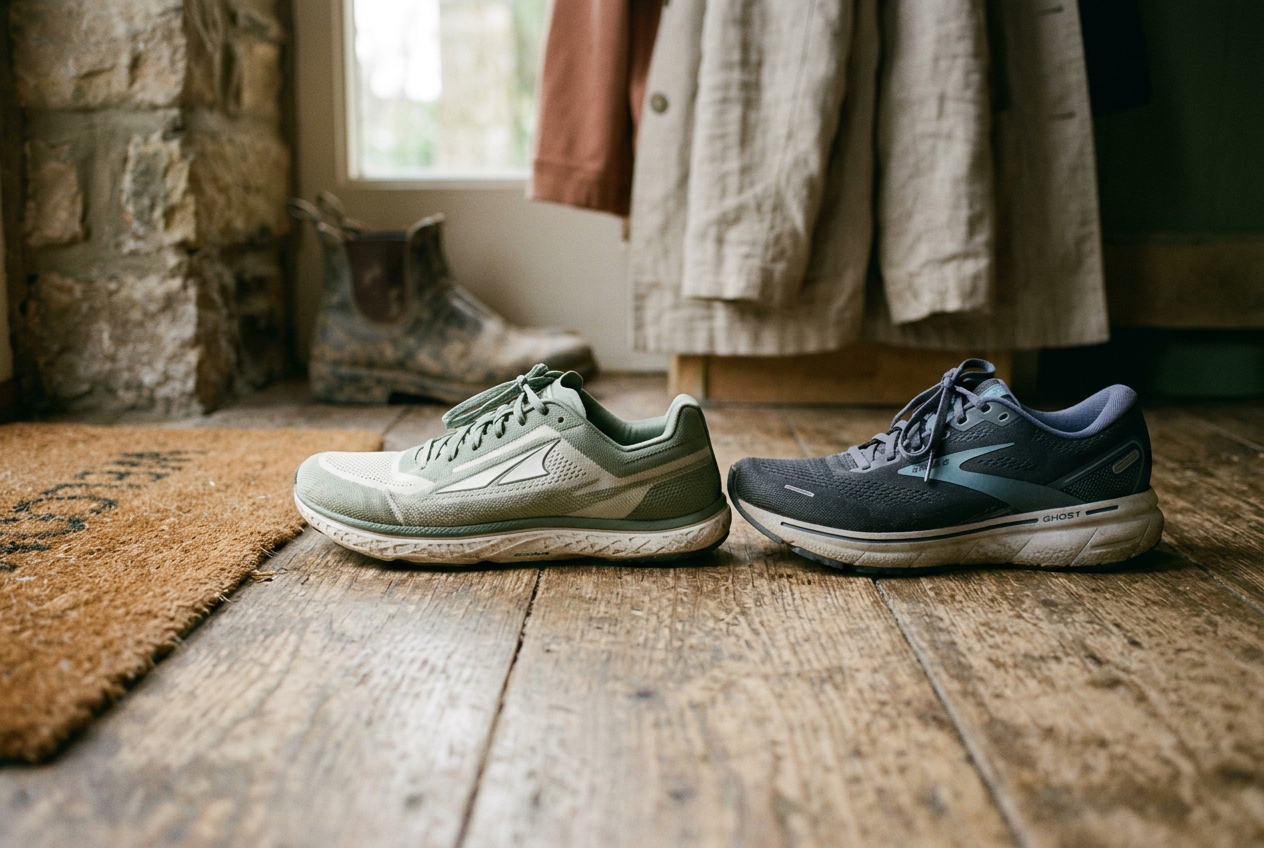
Take one concrete swap: replacing a Brooks Ghost 16 with an Altra Escalante 4 for a regular two-mile neighborhood walk. Brooks lists the Ghost 16 with a 12 mm drop; Altra lists the Escalante 4 as zero drop, so the heel and forefoot sit at the same stated height inside the shoe.
Those sneakers also differ in foam, upper construction and shape, which prevents a perfect laboratory comparison. Real shopping is inconsiderate like that. Still, the swap makes the central issue visible: a sneaker can fit in length, feel pleasantly cushioned underfoot and then make an ordinary walk feel unfamiliar because its platform holds the foot at a different angle.
This is unisex advice. Drop works the same way across wardrobes, although the same model may come in different lasts, widths and size scales, so compare actual fit rather than assuming the men's and women's versions are interchangeable.
What heel-to-toe drop measures
Heel-to-toe drop means the height difference between the heel and forefoot of a shoe. A 12 mm model places the heel 12 mm higher than the forefoot according to the brand's measurement; a zero-drop model places them level.
Drop is separate from stack height, meaning the total amount of shoe material beneath the foot. A zero-drop sneaker can have substantial cushioning, while a higher-drop shoe can be relatively firm and close to the ground. The Escalante 4 has an Altra EGO foam midsole, the cushioning layer between the upper and outsole, plus an engineered knit upper and rubber coverage underfoot. Zero drop does not make it a sock with ambitions.
Brands do not use one universal set of labels, but shoppers can treat zero to about 4 mm as low drop, roughly 5 to 8 mm as moderate and around 9 mm or more as higher drop. Those bands are useful comparison shorthand, not a verdict on which shoe is more advanced or more comfortable.
The listed figure also cannot describe the whole walking experience. Soft foam compresses, foot shape affects how deeply the heel sits, and a curved sole can change the sensation of moving forward even when two spec sheets show a similar drop. Use the number to narrow a comparison, then use the walk to make the decision.
How the three ranges tend to feel
A low-drop shoe keeps the heel and forefoot closer to level. During walking, some people notice more effort through the calf and around the ankle, particularly when they arrive from a higher-drop sneaker and take their usual distance immediately. The sensation may be mild, or it may appear the next morning when the stairs submit their review.
The Escalante 4 is a clear example because its zero-drop platform removes the raised-heel feeling entirely. Its relatively accommodating toe shape can also make the front of the shoe feel less restrictive than a tapered sneaker, but that extra room does not guarantee secure fit elsewhere. An engineered knit upper can feel forgiving over the foot while the heel still needs to stay planted.
Moderate drop often feels less conspicuous to a shopper moving between mainstream walking and running-inspired sneakers. Hoka lists the Clifton 9 at 5 mm, placing it in this middle territory, though its cushioned platform and curved geometry give it a distinct ride that cannot be reduced to that figure. As a bridge between the Ghost 16 and Escalante 4 examples, it changes the angle without going fully level.
A higher-drop sneaker raises the heel more clearly. Walkers accustomed to that setup may feel the shoe helps them move from heel contact toward the forefoot with less noticeable calf effort, although pace, stride and sole shape all influence that impression. In the Ghost 16, the 12 mm specification sits alongside a structured running-shoe build and cushioned midsole, so its familiar feeling may come from the complete package rather than drop alone.
None of these categories promises comfort. Low drop can feel natural to one walker and needlessly laborious to another; higher drop can feel smooth or make the heel seem overbuilt. Moderate drop occupies the middle of a measurement chart, not a magical zone where every foot stops complaining.
Calf effort is the first transition signal
For the Ghost-to-Escalante swap, the sensible first outing is shorter than the regular two-mile walk. The point is not to complete a prescribed adaptation schedule. It is to learn whether the new geometry adds noticeable calf effort before that effort is stranded a mile from home.
Wear the Escalante 4 on an ordinary route, at an ordinary pace, without also adding hills, a heavy bag or an unusually long day. If the calves feel more involved but settle once the shoes come off, keep the next outing conservative and alternate with the familiar pair. If discomfort grows during the walk, changes your stride or remains pronounced afterward, stop treating the shoe as a character-building exercise.
A transition can cost time even when the sneaker ultimately works. Anyone buying one pair for an imminent city break, a standing-heavy workweek or a commute that cannot be shortened should count that time as part of the purchase. The safer alternative may be a geometry closer to the current shoe, even if the lower-drop model looks cleaner with wide trousers.
Heel hold can overrule the specification
Drop describes the platform. It does not secure the foot.
Check heel fit by lacing the shoe as you would wear it, then walking briskly and taking a few turns. The heel counter, meaning the structure wrapping the back of the foot, should hold without sharp pressure, while the heel itself should not lift repeatedly from the footbed. A small amount of movement may be tolerable in a casual shoe; obvious sliding tends to become rubbing once distance and heat join in.
This matters with the Escalante 4 because its soft knit feel and roomy front can create a persuasive first impression. If the heel rises while the forefoot stays planted, buying a smaller size may crush the toes without fixing the rear fit. Try a runner's-loop lacing pattern, which uses the extra top eyelets to draw the collar closer, but reject the shoe if lacing pressure merely replaces slippage with discomfort across the top of the foot.
Compare that with the Ghost 16 you are replacing. If its heel feels secure and the Escalante heel does not, the difference may come from upper shape, collar volume or the last, meaning the foot-shaped form around which the shoe is built. Blaming zero drop would miss the useful conclusion: this particular heel does not match yours.
Let intended mileage decide how cautious to be
A sneaker for short errands gets more leeway than a pair expected to handle full commuting days. Before buying, name the longest routine walk the shoe must cover, then test as close to that use as the return policy allows while keeping the soles clean and following the retailer's rules.
For the two-mile example, the Escalante 4 should earn that distance in stages rather than receiving it as a launch-day assignment. Start with a short local walk, assess calf effort and heel movement afterward, then extend only if the shoe remains unremarkable. Unremarkable is praise here. A walking sneaker has succeeded when you notice the destination more than its geometry.
Do not debut a major drop change on vacation, at an all-day event or during a week when the old pair is unavailable. Keep the Ghost 16 in rotation until the Escalante has covered the required route without escalating discomfort. If that never happens, the moderate-drop Clifton 9 illustrates the practical alternative: change the platform less dramatically, while still checking fit and cushioning on their own terms.
How to shop the number without becoming ruled by it
Read the product specifications before ordering, since drop is rarely obvious from profile photos and thick sculpted foam can make visual guesses especially unreliable. Compare the new figure with a sneaker you already walk in comfortably. The size label alone tells you nothing about this part of fit.
In store, give priority to heel security, toe clearance and a smooth walking stride. A low-drop model that makes you shorten each step is a poor purchase regardless of how fashionable its broad toe or low profile looks; a higher-drop model that pinches the forefoot is no better. Construction still wins arguments that specifications start.
Online shoppers should confirm that the listed drop belongs to the exact model version. Brands revise midsoles and geometry between editions while keeping a familiar family name, so advice about an older Ghost, Clifton or Escalante may not match the shoe currently in the cart.
Questions people ask
Is zero drop the same as barefoot footwear?
No. Zero drop only means the listed heel and forefoot heights are equal. The Escalante 4 still uses a foam midsole, a knit upper and a rubber-backed outsole, so it remains a cushioned sneaker rather than a barefoot-style shoe defined by minimal material and high ground feel.
Will a lower-drop sneaker make my calves work harder?
It can make calf effort more noticeable, especially when you switch directly from a higher-drop shoe and keep the same walking distance. The response varies with pace, stride, terrain and the rest of the shoe. Begin with a shorter familiar route and stop if discomfort builds or alters how you walk.
Can heel slippage be caused by heel-to-toe drop?
Drop may change how the foot feels seated, but repeated heel lift more often points to the shoe's rear shape, collar volume, size or lacing. Test a secure lacing pattern without crushing the instep. If the heel still slides, choose another last rather than assuming an adjustment period will repair the fit.
What drop is best for long walks?
There is no universally best number. The useful choice is a drop that feels stable over your intended mileage, holds the heel and does not create escalating effort as the walk continues. Test the shoe below your maximum distance first, and keep the familiar pair available until the replacement has covered the real route comfortably.
One update a day
Today's fashion update, in your inbox
One fashion update each morning — no hype, no filler, just pieces worth wearing.