A Stiff Heel Counter May Soften. A Bad Shape Will Not.
A heel counter can feel firm because it is new, or rub because its curve never suited your foot. This indoor test separates break-in from a returnable fit problem.
October 6, 2026 · 8 min read
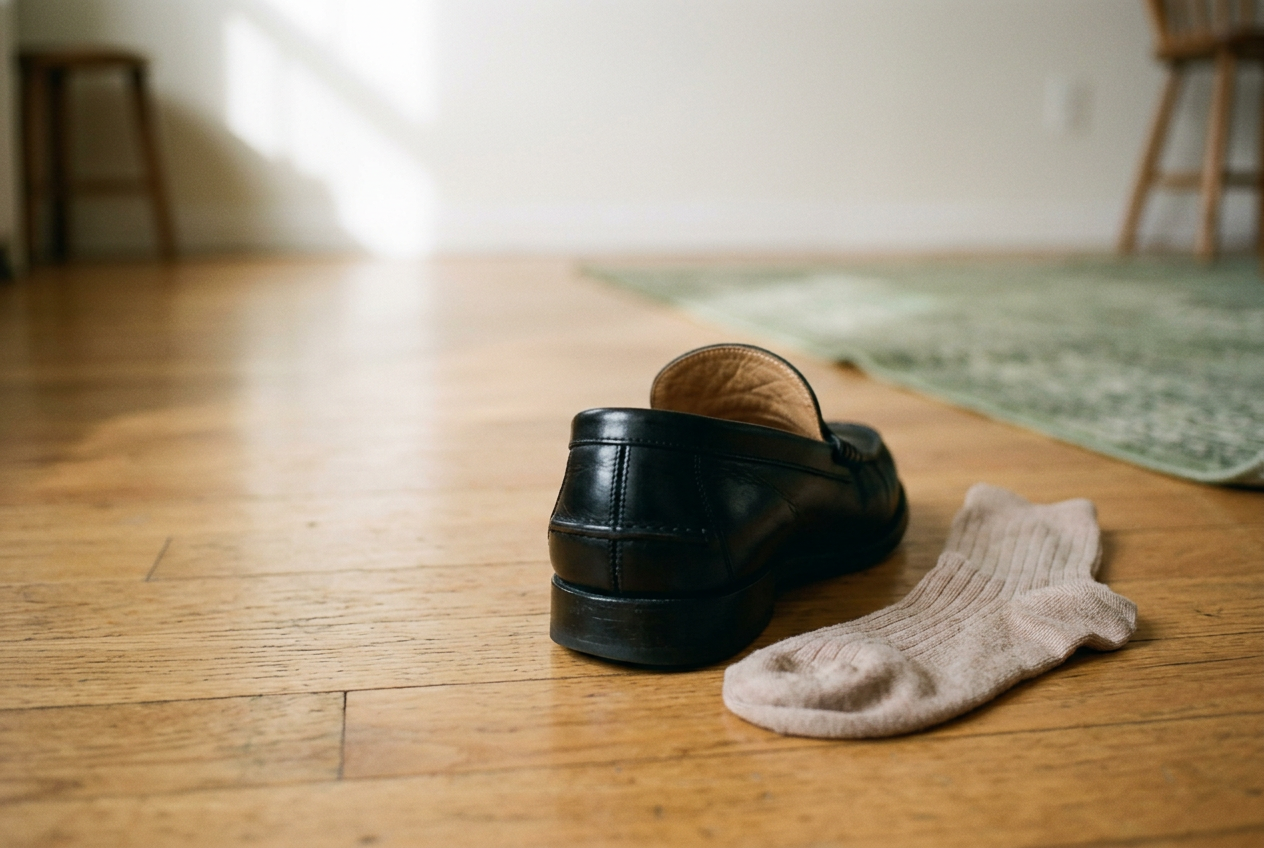
The working example here is a black leather loafer with a leather lining, a firm back, and a raised center seam. On the foot, it looked correctly sized. Walking around the room produced a hot spot above the outside edge of the heel within minutes, always in the same place.
That distinction matters. New shoes can be stiff without being badly shaped, while a supple shoe can still blister if its back curves into the wrong part of your foot. The useful question is not whether the heel feels soft in your hand. It is whether the structure follows your heel while you move.
This is unisex fit advice. Size systems and styling departments may split shoes by gender, but heel counters continue their administrative work without consulting either.
The heel counter is more than the visible back
The heel counter, meaning the structural piece that cups the back of the foot, usually sits between the upper and lining. Depending on the shoe, it may be made from leather, compressed fiberboard, or molded thermoplastic. You often cannot see it, although you can feel its boundary by pressing the rear of the shoe between your fingers.
Its job is to stabilize the heel so it does not slide sideways or collapse the upper with every step. Loafers rely heavily on it because there are no laces to secure the rear foot; pumps, boots, and many sneakers use counters for the same reason, though padding can disguise how firm the underlying piece is.
A counter should hold. It should not dig.
The topline, meaning the upper edge around the shoe opening, creates a separate source of trouble. A counter can fit well while a hard topline bites into the Achilles area, or the counter can be wrong even when a padded collar feels pleasant during the first lap of the bedroom. Thick foam is excellent at delaying bad news.
On the black loafer, thumb pressure revealed that the firm internal layer ended directly beneath the raised seam. The initial sensation felt like ordinary new-shoe resistance, but the concentrated rubbing on one outer point suggested a shape problem rather than a whole panel waiting to relax.
Break-in stiffness feels broad, not surgical
A promisingly stiff counter tends to press across a wider area. The heel may feel held more firmly than you prefer, yet there is no sharp ridge, pinching lip, or single point that becomes hotter with every pass down the hallway. When the upper is leather and the counter material has some give, warmth and repeated flexing may let the shoe settle around the foot.
“May” is doing necessary work there. Leather can soften, and padding can compress, but molded plastic is not known for reconsidering its geometry after a stern week together. Even a leather shoe may use a synthetic counter, so the material named on the upper does not tell the entire construction story.
Look at the pressure left on the skin after a short indoor wear. A faint, broad pink area that fades quickly is different from a bright line matching the topline or a red spot the size of a seam ridge. The first may indicate general firmness. The second has supplied its address.
Break-in also should show some improvement during the session. As the shoe warms, the back may flex more naturally and the sensation may recede from your attention. If discomfort escalates at the same point, stopping is more informative than enduring it. Blisters do not award extra fit data once the skin has opened.
Curvature does not break in like stiffness
Heel counters curve both around the sides and inward near the top. If that curve is too narrow for your heel bone, pressure lands on the outer edges. If the upper section hooks inward too aggressively, it can catch the Achilles tendon area as the heel rises. A counter that is too straight can create the opposite issue: the heel lifts, then drops against the lining, generating friction through movement rather than direct pressure.
This is why sizing up rarely offers a clean fix. Extra length may increase heel lift while leaving the offending curve exactly where it was, and the forefoot can begin sliding forward, which gives the shoe a second opportunity to be annoying. A different width sometimes changes the heel construction, but some brands widen mainly through the forefoot.
The black loafer had enough toe room and did not pinch across the ball of the foot. Going larger would have treated a localized rear mismatch by loosening the entire shoe. The better alternative was another loafer with a lower, smoother back and no raised seam at the pressure point, even though its counter felt equally firm when squeezed off the foot.
Shape wins this argument.
Seams can turn movement into friction
A center-back seam is common and not automatically a flaw. Trouble starts when the seam allowance, meaning the extra material inside a stitched join, forms a ridge beneath the lining or lands where your heel moves most. Decorative piping and folded toplines can create similar pressure.
Run a fingertip slowly around the inside back. Do not merely check for softness; feel for abrupt changes in thickness, exposed stitching, or a hard ledge under the lining. Then compare that location with the mark on your skin. A perfect match is stronger evidence than a vague sense that the shoe needs wearing in.
Also inspect both shoes. Feet differ, but construction can differ too, particularly if one lining has wrinkled or one seam sits bulkier than the other. If the same foot behaves well in one shoe and badly in the other when you swap attention between them, the pair may have a manufacturing inconsistency rather than a general sizing problem.
A heel grip will not reliably rescue this. Adhesive grips reduce internal volume and can stop minor slipping, but they also push the foot forward and may add pressure over an already aggressive counter. Moleskin can protect skin for an occasion. Neither changes the underlying curve.
The indoor return test
Keep the soles pristine and check the retailer’s return conditions before testing. Wear the socks or hosiery intended for the shoe, because a thick athletic sock can make a loafer seem secure while concealing the friction that appears with a thin dress sock.
Start by standing on a clean surface. Let your weight settle without walking and note whether the rear pressure is broad or concentrated. Next, take slow, normal-length steps rather than the careful shuffle people adopt around new floors and stricter return policies. The heel needs to rise naturally for the test to mean anything.
After several minutes, stop and check the skin. Continue only if there is no sharp pain, broken skin, or numbness. Walk again until the shoes have warmed, adding a few turns and an indoor stair if available, because straight-line walking does not show how the counter behaves when the rear foot shifts sideways.
Remove the shoes and inspect the exact location and shape of any redness. Then press the corresponding part of the lining with one finger. A broad mark that fades, paired with a counter that feels less resistant after warming, gives break-in a reasonable case. A narrow line, an isolated red spot, or a mark aligned with a ridge argues for return.
Repeat the test later rather than extending one grim session. The black loafer produced the same outer-heel spot each time, before the rest of the shoe felt restrictive. Consistency settled it. More indoor mileage would have refined the blister, not the fit.
What is worth altering
A cobbler may be able to stretch a leather upper locally or soften a stiff edge, particularly when the problem is mild and the counter is not molded plastic. That route makes more sense for a shoe you already own, a hard-to-replace vintage pair, or a style whose fit is otherwise exceptional.
For a new, returnable shoe, paying to alter the heel should be a last choice. Stretching cannot move a seam, lower a badly placed topline, or guarantee that a plastic counter will hold a new curve. The cost is not only the cobbler’s fee. Alteration may end the option to return the pair.
Choose a lower back if the current shoe catches high on the Achilles area. Look for a smoother internal lining when seams are the issue. If heel lift causes the rubbing, a lace-up or a style with an adjustable strap can secure the foot without forcing the counter to do all the work.
Questions people ask
Will a stiff heel counter soften with wear?
Leather uppers, padding, and some fiberboard counters can become more accommodating as they warm and flex. Molded thermoplastic changes less. Broad pressure that eases during an indoor session is more promising than a sharp spot that intensifies, although no material label guarantees a painless break-in.
How much heel slip is acceptable in new shoes?
A small amount can occur in new loafers or stiff-soled shoes because the sole has not begun flexing with the foot. The movement should decrease as the shoe warms, without scraping the skin. If the heel rises enough to hit the topline repeatedly, the last or closure is probably wrong for you.
Can heel grips stop heel-counter blisters?
Heel grips can reduce minor excess volume, but they may worsen pressure by making the back tighter or shifting the foot forward. They are best for gentle slipping in an otherwise comfortable shoe, not for correcting a narrow counter, an inward hook, or a seam that already leaves a distinct mark.
Should
I return shoes that leave red marks indoors?
Return them when the mark is narrow, painful, persistent, or aligned with a seam or hard edge. Mild, broad redness that fades quickly can come from initial firmness, but repeat the indoor test before committing. If the same precise spot reappears, the shoe has already given a fairly complete review.
One update a day
Today's fashion update, in your inbox
One fashion update each morning — no hype, no filler, just pieces worth wearing.