A Firm Sneaker Heel Counter Can Still Be a Blister Factory
A heel counter should hold the rearfoot without digging into it. Use this indoor try-on to separate useful structure from an expensive source of Band-Aid consumption.
September 22, 2026 · 8 min read
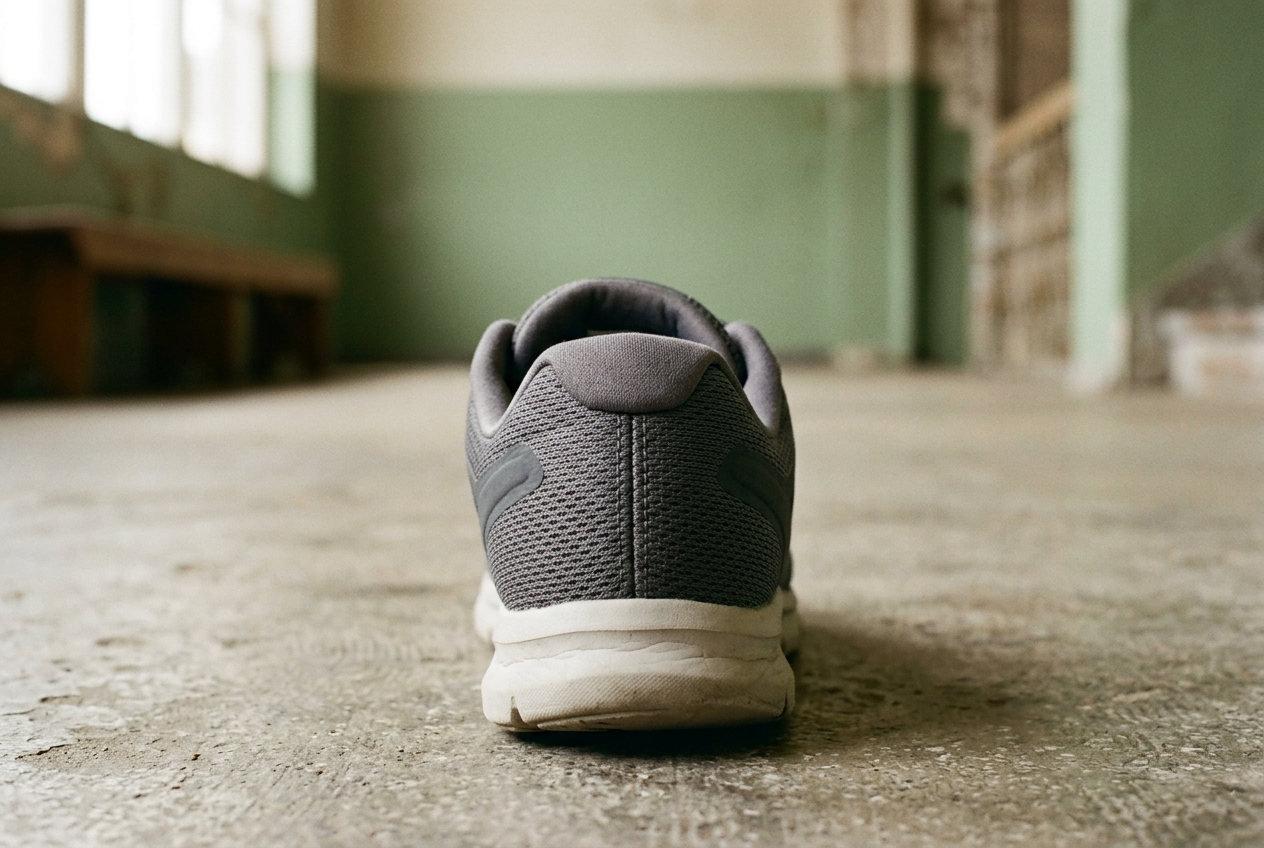
Take the right shoe from the pair you are considering and make it the test shoe. Leave the left shoe conventionally laced, then spend the fitting session changing only the right; this gives you a useful comparison instead of two feet receiving several adjustments at once, which is how a straightforward try-on turns into unpaid laboratory work.
This is unisex fit advice. Sneaker sizing labels may differ across women’s, men’s and unisex ranges, but the heel test does not: the shoe has to match the height, width and curve of the person wearing it. A smaller size is not a universal cure for heel movement, especially if it makes the forefoot cramped.
The anchor for the whole check is that right shoe. Wear the socks you expect to use, lace it with normal tension, and keep the shoe clean enough to return. Five focused indoor minutes reveal more than repeatedly pressing the heel padding with a thumb and deciding it feels plush.
What the heel counter is doing
The heel counter, meaning the stiff structure wrapped around the back and sides of the heel, helps the shoe resist collapsing as the foot lands and rolls forward. It may be a molded plastic component hidden between the lining and upper, a firm textile reinforcement, or a partly external molded piece. You often cannot identify the exact material without cutting the shoe apart, an approach most return policies view without warmth.
Firmness alone does not establish support. Pinch the back of the right shoe below its padded edge, using moderate pressure rather than trying to fold it for sport. A counter that keeps its shape can guide the rear of the foot, while a very soft one allows more movement; either can work, depending on the shoe’s sole geometry and your fit, but the firm version becomes troublesome when its upper edge lands on a sensitive spot.
The relevant contact area is the rearfoot, the heel and surrounding back section of the foot. It should feel contained rather than clamped. Pressure that is broad and steady may be acceptable. A narrow horizontal line, a hard corner or one concentrated point is a warning, even before the skin turns pink.
Check where the counter ends
Slide a finger inside the empty right shoe and trace the stiff section upward. The padded heel collar, meaning the soft rim around the shoe opening, may extend above the counter and disguise its edge. Press from inside and outside until you can feel where firmness changes to padding.
Put the shoe back on. The counter’s edge should not meet the most prominent part of your heel or press into the Achilles tendon, the cordlike tissue running above the heel bone. Walk on a hard indoor surface, then stand still for half a minute. Walking reveals friction; standing reveals pressure.
They are related annoyances, but they are not interchangeable.
A high counter can feel secure on one foot and intrusive on another because heel bones and tendon positions vary. Low-cut counters avoid some upper-edge contact, although they can allow more lift if the collar is wide. There is no ideal height printed on a product page. The useful measurement is where that edge meets your foot.
Now compare the right shoe with the untouched left. If only the test shoe produces a hard line after you adjusted its laces, loosen it and repeat. If the line remains, the problem sits behind the laces. More break-in may soften foam or lining fabric, but it will not reliably relocate a rigid counter.
Padding can hide a badly placed seam
A thick collar looks reassuring in photographs. Underfoot foam gets discussed endlessly, while the small stitched join behind the ankle waits quietly to ruin lunch.
Run a fingertip around the inside of the right collar. Pay attention to changes in texture, folded lining edges and stitching where two panels meet. A seam that feels harmless to a finger may still rub once the foot moves hundreds of times, particularly when its raised edge crosses the heel rather than following the side of it.
Compression matters too. Collar foam feels generous when new, but your heel presses it down during wear; if that soft layer is the only thing keeping a seam or counter edge away from the skin, the fit has little margin. Do not buy a shoe on the assumption that padding will become more protective after a week. Foam generally packs down.
It does not grow a conscience.
Check the top curve from behind while the shoe is on. The collar should follow the heel without one side gaping or folding inward. A central dip, sometimes called an Achilles notch, can reduce contact at the tendon, but a notch that is too shallow may still press there, while a deep, stiff-edged notch can move friction to either side.
Watch the heel rather than judging by sensation alone
Keep the right shoe normally laced for the first pass. Walk away from a mirror, turn, then walk toward it while watching the heel area. Better still, record a short rear view at floor level if the store permits it. You are looking for the heel lifting inside the shoe, the collar spreading with each step, or the foot leaning against one side.
A tiny amount of vertical movement does not automatically make the fit wrong. Walking shoes bend at the forefoot, and a rigid new sole can tug at the upper before it loosens through normal flexing. The important distinction is whether the heel rises as a unit without scraping, or slides against the lining and catches the collar on its way back down.
Next, walk up and down any permitted incline or store ramp. Uphill movement often exposes lift; downhill movement can push the foot forward and reveal whether the counter loses contact. If the toes hit the front when descending, tightening the top of the shoe may hold the foot back, but it cannot create missing length.
Use the left shoe as the control. When both heels move in much the same way and neither rubs, the motion may belong to the sole’s stiffness. When the right heel moves less after a small lace adjustment, lacing has useful work to do. When one side of the right collar bites while the other gaps, the shoe’s rear shape probably disagrees with yours.
Give heel-lock lacing one fair attempt
Heel-lock lacing, also called a runner’s loop, uses the top eyelets to pull the collar closer around the ankle. It can reduce mild heel lift without tightening the entire shoe. This is worth testing when the forefoot fit and shoe length already feel right, the counter edge is not digging in, and the heel moves mostly upward rather than sideways.
On the right shoe, thread each lace end through the extra top eyelet on the same side, leaving a small loop. Cross the ends, pass each one through the opposite loop, pull down and back, then tie the shoe. Keep the lower laces comfortable. The aim is to secure the opening, not place the whole foot under parcel tension.
Walk for several minutes. A successful heel lock reduces rubbing while leaving the top of the foot and front of the ankle free from pressure. Loosen it immediately if you feel pinching under the top eyelets, numbness, a lace bite across the ankle crease or stronger pressure from the counter. Those results mean the adjustment has traded one complaint for another.
Do not keep tightening until the shoe appears to fit. If the collar is too wide, a heel lock may pull its upper edges inward while the counter below remains too broad. If the counter is too narrow, the lacing can force the heel deeper into an already hostile cup. The shoe will feel more secure because it has become more restrictive, which is not the same achievement.
Know when the geometry is incompatible
Return to the right shoe after loosening it to ordinary tension. The shoe’s geometry is incompatible when its fixed rear shape cannot hold your heel without concentrated pressure, visible gaping or repeated sliding. Common signs include a counter edge landing directly on a heel prominence, a collar that angles into the tendon, and side-to-side motion that survives reasonable lacing.
Do not size down automatically. A shorter shoe may place the heel more firmly against the back, yet it also reduces toe room and can move the widest part of the shoe behind the widest part of the foot. Try the same size in another model whose heel cup is narrower, lower or more curved. If length is the problem, change size; if shape is the problem, change shoe.
Heel grips and adhesive pads can fill a small volume mismatch in dress shoes, but they are a poor first repair for walking sneakers with a hard counter edge. Added material pushes the foot forward and may increase pressure. Socks can reduce surface friction, though thicker fabric also takes up space and cannot correct a collar that strikes the wrong height.
The buying decision should happen before the hoped-for break-in. Keep the pair only if the right shoe remains free of focused pressure, the heel movement is mild and controlled, and heel-lock lacing improves the fit without creating a new sore point. Otherwise, put the laces back as found and return the shoe clean. Discomfort has enough administrative support already.
Questions people ask
Should a walking sneaker’s heel counter feel hard?
It can feel firm when pinched from outside, but it should not create a hard line or isolated pressure point against the foot. Judge the counter while standing and walking, because thick collar foam can make a rigid edge difficult to detect when the shoe is empty.
Is a little heel slip normal in new sneakers?
Slight movement may occur when a new sole is stiff, particularly if the heel rises without scraping the lining. Repeated rubbing, visible gaping or the collar catching the heel is less promising. Compare ordinary lacing with one heel-lock attempt before deciding.
Can heel-lock lacing fix sneakers that are too big?
It can reduce mild vertical lift when the length, width and rear shape already suit the foot. It cannot correct substantial extra length, a heel cup that is too broad, or a counter that presses in the wrong place; tightening harder usually moves the discomfort.
Will heel-counter rubbing disappear after break-in?
Soft lining and collar foam may settle, but a rigid counter does not reliably change height or basic shape. If the edge already hits a prominent part of the heel during an indoor try-on, relying on break-in means accepting a blister as an informal alteration fee.
One update a day
Today's fashion update, in your inbox
One fashion update each morning — no hype, no filler, just pieces worth wearing.