Your Sneakers Slip at the Heel. Test These Fixes Before Sizing Down
Heel lift does not always mean your sneakers are too big. Run this five-minute fit test before exchanging them or accepting a blister as part of the outfit.
September 5, 2026 · 8 min read
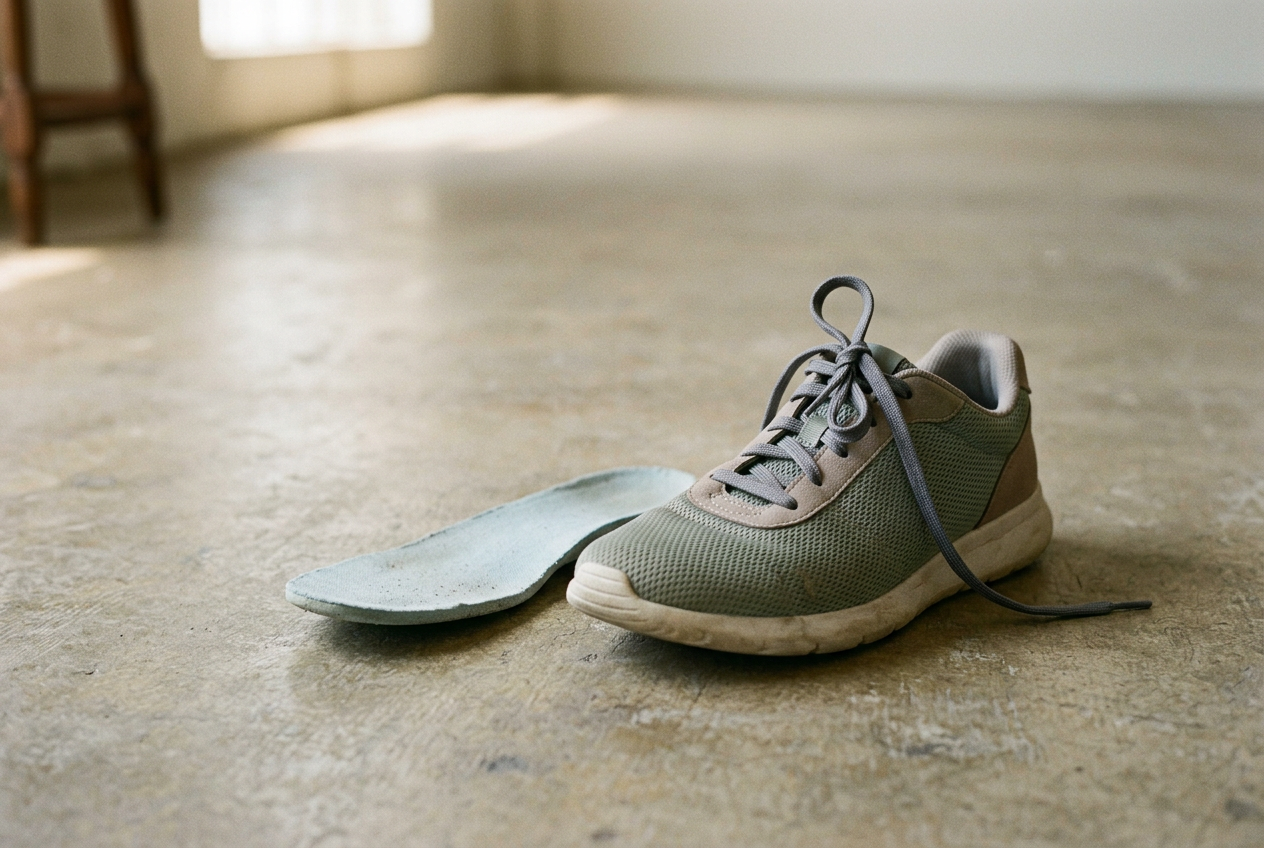
The pair on my fitting bench is an ordinary mesh low-top sneaker with a removable foam insole, a padded collar and one unused eyelet at the top of each lace row. After a week of errands, the forefoot felt secure and the toes had sensible space, yet the heel rose at every step. The collar had begun rubbing the sock rather than holding the foot. A promising relationship, apart from the attempted skin removal.
That specific combination matters. Heel slippage can come from loose lacing, a poorly seated insole or too little sock volume, all of which are cheap to test. It can also reveal that the shoe’s heel is too broad or too straight for the wearer. Sizing down may hide the movement while creating a shorter, tighter shoe everywhere else.
This is unisex fit advice. Men’s and women’s sizing labels differ, and brands may shape their models differently, but the diagnostic sequence applies across sneaker wardrobes.
Establish where the movement starts
Put on the sneakers with the socks you expected to wear when you bought them. Lace them with even tension from the lowest crossing upward, stand, then walk on a hard floor rather than sinking into carpet. The shoe should bend with the foot while the rear stays reasonably connected; a trace of movement can occur in a new stiff sneaker, but the heel should not climb high enough to scrape the collar or threaten a blister.
Check the shoe’s length before changing anything. With your heel settled at the back, your longest toe needs room without pressing the front during a downhill step. Also notice whether the widest part of your foot aligns with the widest part of the shoe. If both are correct, a smaller size is already a suspicious proposal.
On the mesh test pair, length was not the issue. The ball of the foot sat at the shoe’s flex point, meaning the area where the sole naturally bends, and the toes stayed clear of the front. The movement was concentrated behind the ankle. That made the upper half of the shoe the place to investigate.
Reset the insole before adjusting the laces
Remove the insole, the removable layer directly beneath the foot, and check whether its heel is curled, folded or sitting on debris. Then press it back into the shoe from the heel forward, making sure its rear edge lies flat against the interior. This takes less than a minute and costs nothing, a welcome price for footwear troubleshooting.
A shifted insole can create a small ramp under the heel. The foot then sits higher than intended, where the collar has less surface to hold it, and even a well-shaped sneaker may feel loose. Replacement insoles can cause the same problem when they are thicker than the factory version or do not extend cleanly to the back.
The foam insole in the test pair had crept slightly forward, leaving its rear edge raised. Reseating it lowered the heel and reduced some movement, but not all of it. That partial improvement was useful evidence: the shoe had a setup problem, though perhaps not only a setup problem.
If you use an orthotic or supportive replacement insole, compare its heel thickness with the original. Do not stack it over the factory insole unless the shoe and insert are designed for that arrangement. Stacking steals internal depth, raises the foot against the collar and can turn a minor fit problem into a rather efficient rubbing device.
Test sock volume without disguising a bad fit
Sock thickness changes how much space the foot occupies. Try the sneaker with a standard athletic sock, then compare it with the thinnest sock you would genuinely wear. The aim is not to pack the shoe with an expedition-weight sock for a walk to lunch. It is to learn whether a modest increase in volume stabilizes the foot.
On the test pair, a cushioned athletic sock reduced side-to-side looseness and softened contact at the collar. A thin fashion sock brought the lift back. That suggested the sneaker had slightly more internal volume than the foot required, but the improvement did not justify keeping it on its own. Socks compress during wear, while padded collars also settle, so a fit that works only when everything is at maximum fluff has little reserve.
A thicker sock is a valid answer when it belongs with the shoe’s intended use and does not crowd the toes. It is not a valid answer if the forefoot becomes hot, cramped or numb while the heel continues escaping. The foot has filed its objection.
Tie a runner’s loop correctly
A runner’s loop, also called a heel-lock lacing pattern, uses the top eyelets to increase hold around the ankle without tightening the entire shoe. It works best when the sneaker fits through the forefoot but feels loose near the collar.
Thread each lace end up through the top unused eyelet on the same side, leaving a small loop rather than pulling the lace through completely. Cross the ends, feed each one through the opposite loop, then pull outward and slightly downward before tying the bow. Walk, loosen the tension if the top of the foot feels pinched, and retie.
Do not wrench the laces until the eyelet panels meet. Excess pressure can irritate the top of the foot and pull a soft upper out of shape, particularly on light mesh sneakers whose structure comes from thin bonded overlays rather than thick leather. The goal is closer heel contact, not ankle detention.
The runner’s loop made the largest difference in the test pair. Heel lift dropped to a small, non-rubbing movement during level walking, while toe space stayed unchanged. That is what a correctable lacing problem looks like: one local adjustment controls the rear of the shoe without making the rest of the fit worse.
Test the result on stairs and a gentle incline if available. A sneaker may behave politely on a flat fitting-room floor, then reveal its true administrative policy as soon as the heel has to work harder.
Separate a size problem from a heel-shape problem
Consider a smaller size only when the sneaker is loose in more than one area. Excess length, a forefoot that slides during stops and laces that must be pulled unusually close together all support the case for trying another size. The comparison should use the same socks and lacing pattern, otherwise you are testing several variables at once.
Sizing down is a poor fix when toe length and forefoot width already feel right. A smaller sneaker usually changes the whole interior, not just the troublesome rear, so the heel may improve while the toes meet the front and the sides press inward. Five minutes of apparent neatness can become an afternoon of bargaining with your smallest toe.
Persistent lift after the insole, sock and runner’s-loop tests points toward the last, the three-dimensional form around which a shoe is built. Some lasts have a rounded, generous heel pocket. Others taper more closely around the back and sides of the heel. A person with a narrower or more curved heel may slide inside a shoe whose front fits perfectly, because the mismatch is local rather than numerical.
Look for a gap beside the heel even after the laces are secure, or a collar that contacts the upper ankle while leaving empty space lower down. If the shoe still lifts with firm but comfortable lacing, and a thicker sock merely overheats the forefoot, another model is the cleaner answer. Seek a sneaker with a more tapered heel cup, which is the shaped rear section that cradles the heel, while preserving the width you need at the toes.
That was the unresolved issue with the mesh test pair. The runner’s loop made it wearable for short errands, but the heel pocket remained broader than ideal once the sock compressed. Keeping it would mean using one lacing pattern and one sock weight every time. For a new everyday sneaker, that is too much contract negotiation.
Use pads only as a limited test
Adhesive heel grips can occupy extra space and reduce friction, but they also push the foot forward, collect lint and sometimes loosen inside the shoe. They make more sense for a pair you already own than for a returnable pair whose fundamental shape is wrong.
A removable tongue pad, which sits beneath the tongue to hold the foot downward, may help when the entire upper feels high-volume. Neither accessory changes the last. Before sticking anything into a new sneaker, check the return conditions, because adhesive residue can turn a fit experiment into permanent ownership.
Questions people ask
How much heel slippage is normal in new sneakers?
A slight, non-rubbing movement can occur when the sole and collar are still stiff, especially during the first few wears. The heel should not rise enough to scrape skin, pull the sock down or make the foot claw for stability. If movement increases on stairs, run the insole and lacing tests before assuming break-in will fix it.
Should I size down if my heel slips?
Only if the sneaker also has excess length or feels loose through the forefoot. When toe room and width are already correct, sizing down trades heel movement for pressure elsewhere. Compare sizes using the same sock and runner’s loop, then reject the smaller pair if your toes approach the front during a downhill step.
Will heel grips fix sneakers that are too wide at the back?
Heel grips can improve a small volume mismatch, particularly in shoes you cannot return, but they do not reshape a broad heel pocket. They may also move the whole foot forward. Test them only after reseating the insole and adjusting the laces, and avoid adhesive products until you know the store’s return rules.
Can heel slippage get worse after break-in?
Yes. Foam collars compress, socks flatten and soft uppers relax with wear, so a marginal fit can become looser rather than tighter. The mesh test pair worked best when freshly laced with a cushioned sock, then lost some hold later. If a new sneaker already needs every available fix, choose a better-matched last while returns remain possible.
One update a day
Today's fashion update, in your inbox
One fashion update each morning — no hype, no filler, just pieces worth wearing.