Runner’s-Loop Lacing Can’t Fix a Sneaker That’s Too Long
Heel-lock lacing works when a sneaker has spare room around the ankle. It does very little for excess length, except make the wrong shoe harder to remove.
August 20, 2026 · 7 min read
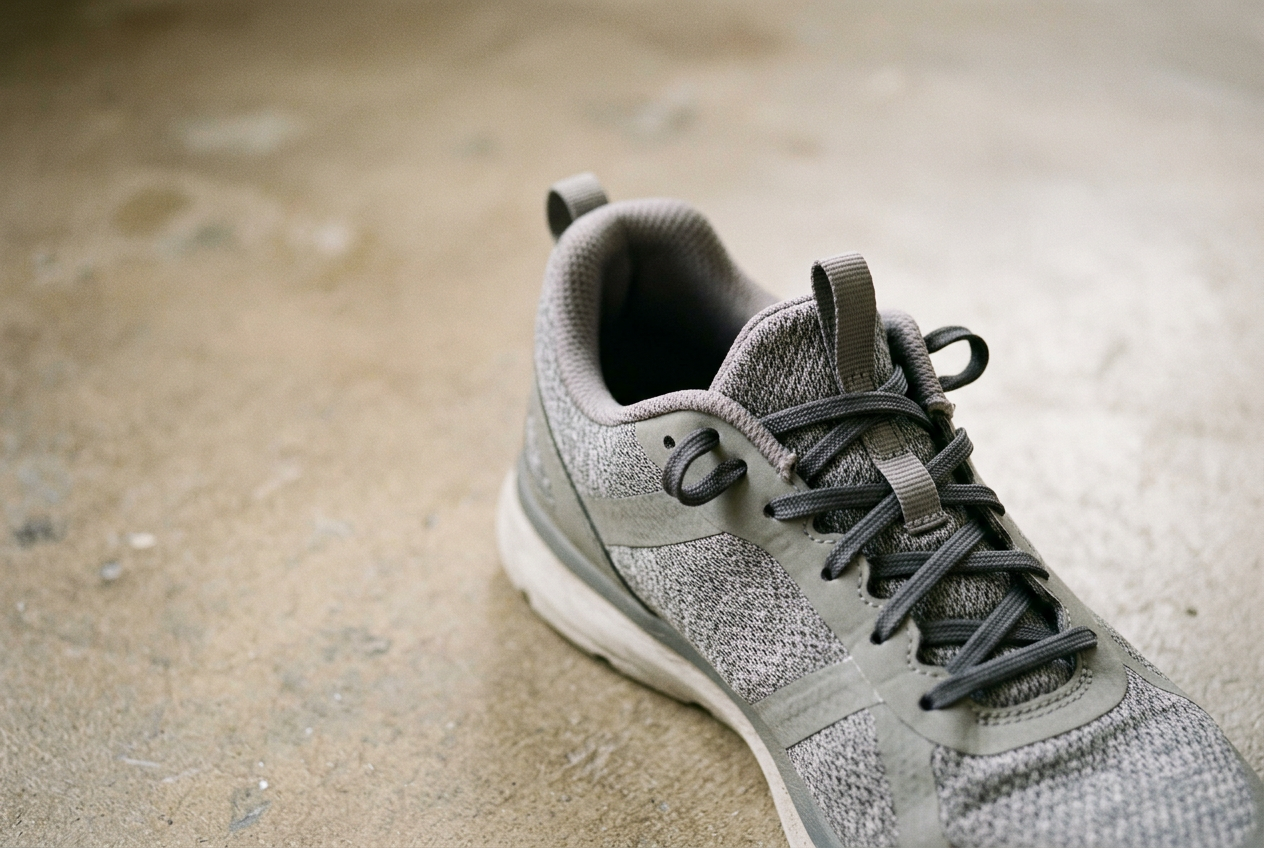
My test case was a gray mesh road-running sneaker in my usual size, built with a padded fabric collar, a firm molded heel counter, a removable foam sockliner and an extra eyelet beside the top lace hole. The forefoot felt right. The heel lifted on stairs, inclines and brisk pavement, making a soft rubbing sound that promised louder complaints later.
This is unisex fit advice. Shoe lasts, meaning the forms that determine a shoe’s internal shape, vary more by model than the gender printed on the box, so the useful distinction here is between correct length with excess rear volume and a sneaker that is too long throughout.
Over a week, I tried the gray shoe with standard lacing, a runner’s loop, a thin tongue pad and two sock weights. The loop reduced the visible lift immediately, but the rest of the test mattered: heel movement can disappear because the shoe now holds the foot correctly, or because the laces are crushing the top of it into submission. Those are different achievements.
First, work out where the extra room is
Put on the socks you expect to wear and lace the sneaker with ordinary crossing laces, firm enough to remove slack but not pulled tight at the top. Stand before judging. A seated foot is less useful because weight changes its spread and position inside the shoe.
Check the front first. Your longest toe needs usable space, but the familiar thumb-width rule is only a rough screen because thumbs and shoe shapes are not standardized. More important is whether your heel remains at the back while walking, rather than sliding forward until the toes use that empty space as a waiting room.
Next, locate the shoe’s flex point, the area where the sole bends as the heel leaves the ground. It should broadly follow the ball of your foot. In the gray sneaker, the mesh creased over my forefoot and the sole bent beneath it, while my toes stayed clear of the end. That indicated workable length.
A shoe that bends well ahead of the ball of the foot, wrinkles through empty upper material or lets the entire foot move forward is probably too long or built on the wrong shape. Tightening the collar may pin the heel temporarily, but it cannot move the sole’s flex point backward. The stride will still feel slightly delayed, and descents may drive the toes toward the front.
Now isolate the heel. Hold the back of the shoe and lift your heel as if taking a step. A little internal movement is normal, especially in a new sneaker with a smooth lining, but the heel should not climb high enough to rub the collar edge or make the sock drag repeatedly. In my pair, the lift was concentrated above the heel counter while the midfoot and forefoot stayed planted.
That was excess heel volume, not spare length.
One more clue is the lace gap. If the two sides of the upper nearly meet before the heel feels secure, the shoe has more volume than your foot can fill. If the gap remains reasonable and only the collar needs a closer hold, lacing has a fair chance.
Use the runner’s loop without strangling the instep
A runner’s loop, meaning a lacing method that creates two small loops at the top eyelets, pulls the collar backward and inward around the heel. It works best on sneakers with an unused final eyelet placed behind or beside the main top eyelet.
Lace normally until the second-highest eyelets. Feed each lace end through the top eyelet on the same side, leaving a small loop instead of crossing immediately. Pass the right lace through the left loop and the left lace through the right loop, then pull outward and slightly downward before tying the bow.
The direction matters. Yanking straight upward concentrates pressure across the top of the foot, particularly where a thin tongue sits beneath narrow flat laces. Pulling outward closes the loops and draws the collar around the heel with less lace bite.
In the gray sneaker, the runner’s loop reduced heel rise on level walking and stairs. It also exposed the tradeoff after a longer walk: the thin tongue compressed, the laces left a clear pressure line and the top of my foot began to feel crowded. Loosening the lower rows while keeping the loops snug helped, though the hold became less consistent as the laces relaxed.
That result counts as partial success. The loop corrected the location of the problem, yet the shoe’s tongue was not padded enough to distribute the added tension comfortably. A lacing fix should survive more than a lap around the room. Walk briskly, use stairs if they are part of your day and keep the shoes on long enough for heat and mild swelling to appear.
Numbness, pinching or a pulsing lace mark means the setup is too tight.
Add tongue padding only when the length is right
A tongue pad is a small adhesive-backed piece of felt or foam placed under the tongue to take up vertical space over the instep. It changes volume rather than length, which made it the better second adjustment for my gray pair.
I positioned a thin pad high on the underside of the tongue, where the laces had created pressure, and returned to standard lacing. The pad filled the shallow gap above my foot and spread lace tension across a wider area. Heel movement stayed lower than it had with ordinary lacing alone, although the runner’s loop still gave the firmest collar hold.
Placement takes a few minutes of trial before the backing should be committed. Set the pad in place without peeling it, put the shoe on and check that its lower edge does not press into the front of the ankle. Too low, it can create a ridge at the bend. Too thick, it makes a good-length shoe feel undersized and may force the heel backward against the counter.
A tongue pad is worth trying when the forefoot width, toe length and flex point already suit the foot, but the upper feels slightly tall or the tongue collapses under tighter lacing. It is not worth layering multiple pads into a shoe with obvious empty length. At that stage, felt is being asked to renegotiate the architecture.
Socks can confirm the diagnosis, not redesign the shoe
I tested the sneaker with a thin synthetic running sock and a moderately cushioned pair. The cushioned sock reduced small movements and made standard lacing more secure, while the thin sock needed either the runner’s loop or the tongue pad. The thicker option also made the mesh shoe warmer and tightened the forefoot, which would be a poor exchange in hot weather or for feet that already fill the toe box.
Sock thickness is therefore a useful test. If one modest step up in cushioning settles the heel without crowding the toes, the shoe may have only a small volume mismatch. If you need a bulky hiking sock inside a light road sneaker, the fix has wandered away from the shoe’s intended use and into costume work.
Pay attention to fiber and surface as well as thickness. Smooth socks can slide against a slick lining, while a denser knit may grip better, but that friction can also increase heat. Changing socks is cheap if you already own suitable pairs. Buying a drawer of specialized socks to save one uncertain sneaker is not.
Know when to change size or model
Go down a half size only if the smaller shoe keeps enough toe clearance, aligns its flex point with your foot and does not squeeze the forefoot. Length and width often change together, so sizing down may cure heel slip by creating a new problem across the toes.
A different model is the better answer when the current sneaker is long but already narrow, when the collar sits too low to catch the heel, or when aggressive lacing makes the upper buckle. Look for a shape with a snugger rear section, a more substantial tongue or a deeper heel cup, meaning the recessed area of the sole and upper that holds the heel.
For the gray mesh sneaker, changing size was unnecessary. Its length and flex point remained correct, and the thin tongue pad with moderately firm standard lacing gave the best everyday balance. The runner’s loop stayed useful for faster walks, provided I loosened the middle lace rows first. Wearing the loop at maximum tension all day was less comfortable than the original slip, which is an impressive way for shoelaces to lose an argument.
Before keeping a questionable pair, test each change separately indoors while the return option remains intact. Start with normal lacing, add the runner’s loop, restore normal lacing and try a tongue pad without sticking it down, then compare socks. If none of those controls the heel without pressure elsewhere, stop buying accessories for the problem and change the shoe.
Questions people ask
How much heel slip is acceptable in sneakers?
A small amount of movement can be normal, particularly before the collar lining softens and conforms to the foot. The heel should not climb enough to rub the collar edge, pull the sock downward or make the toes brace during each step. Repeated friction matters more than a tiny visible lift.
Can a runner’s loop damage a sneaker?
Used with moderate tension, it should not. Excessive pulling can distort soft eyelet panels, compress a thin tongue and create pressure across the instep, especially on lightweight mesh uppers. Loosen the lower lace rows first and pull the final loops outward rather than hauling the lace ends straight up.
Should I size down if my heel slips?
Only when the current shoe is also too long. Check where the sole bends, whether the foot slides forward and whether the smaller size preserves toe room and forefoot width. If length is already correct, a lower-volume model or better collar hold is safer than squeezing the whole foot.
One update a day
Today's fashion update, in your inbox
One fashion update each morning — no hype, no filler, just pieces worth wearing.