Waterproof Boots Keep Rain Out and Commute Heat In
A humid commute exposed the practical difference between a waterproof membrane, sealed leather seams and a surface treatment. The driest boot was also the least pleasant indoors.
November 22, 2026 · 7 min read
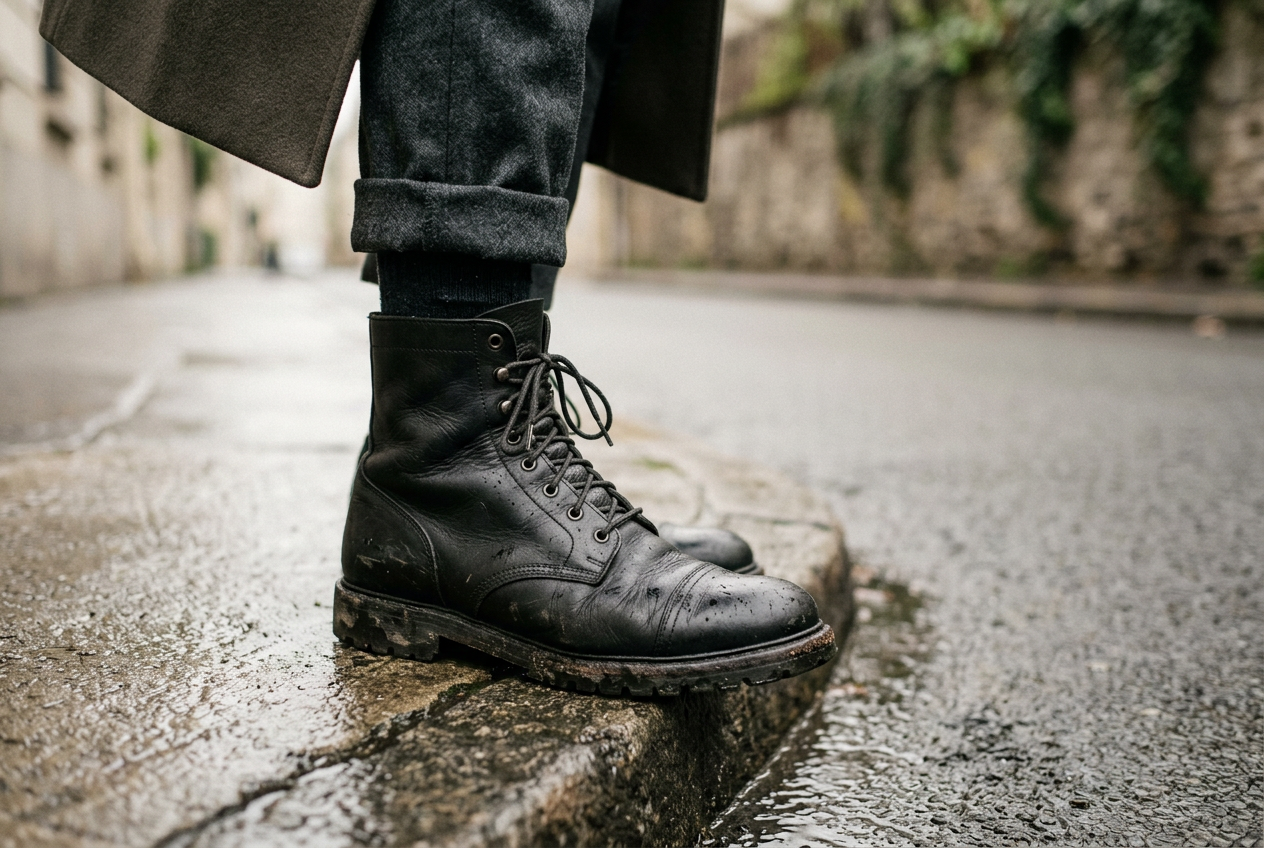
The test pair was a black leather lace-up ankle boot with a waterproof membrane, a gusseted tongue and a rubber cupsole. The membrane, meaning a thin waterproof layer placed behind the upper, was the important part: rain could wet the outer leather without reaching the sock, provided water stayed below the top of the boot.
I wore it on a humid commute that included wet sidewalks, a shallow curbside puddle and an air-conditioned office, then repeated the route in two visually similar alternatives. One used treated leather with sealed seams but no listed membrane. The other relied on a water-resistant surface treatment over conventional leather construction.
All three passed as ordinary black city boots. Under trousers, none announced its drainage strategy. The differences appeared after walking, when the membrane pair kept the driest sock but also produced the hottest forefoot, especially once the boot moved indoors and the accumulated warmth had nowhere useful to go.
This is unisex footwear coverage. Men’s and women’s size labels vary too much between brands to settle the fit, so the relevant measurements are internal width, instep volume and the amount of space lost to the waterproof package.
The membrane pair won the puddle and lost the office
A waterproof membrane works as part of a system. The film sits behind the outer material, while a gusseted tongue, which joins to the boot along both sides rather than hanging loose, blocks water from entering around the laces. Sealed internal seams close the needle holes and joins that would otherwise offer rain a direct route to the sock.
On the wettest section of the commute, that system earned its keep. Water darkened the leather around the toe and lower quarters, yet the sock stayed dry after the shallow puddle and the flexing that followed. Surface water did not become an immediate problem at the vamp, the area across the top of the forefoot where a boot repeatedly creases.
The cost arrived gradually. Waterproof footwear is often described as breathable, but breathability does not mean open ventilation; it means the construction can move some water vapor outward under suitable conditions, which is a lower bar than making a leather ankle boot feel airy during a humid walk. When the outside air already carries plenty of moisture, the difference between conditions inside and outside the boot narrows, and sweat leaves less readily.
By the time the black membrane boot reached the office, the forefoot felt warm and the polyester lining felt damp against the sock, even though rain had not entered. Removing the boot would have solved this with admirable directness, but most offices remain oddly doctrinaire about shoes.
The fit amplified the problem. The membrane, backing and lining occupied enough internal space to make the test pair feel snugger across the instep than the other boots in the same nominal size, while the gusset folded slightly beside the tongue. A thick sock, often suggested for boots, made the pressure and heat worse. A medium-weight moisture-managing sock worked better, though it could not turn the boot into a sandal with responsibilities.
That does not make the membrane useless. It makes the route decisive. A walk with frequent puddles, wind-driven rain or long waits on exposed platforms gives the waterproof layer repeated work to do, whereas a short dash from train to lobby leaves the wearer paying for protection during several indoor hours.
Sealed leather was the workable middle
The second boot used leather treated for wet weather and seams closed against water entry, without a membrane listed in its construction. Seam sealing means applying tape or sealant over stitched joins so water cannot travel easily through the needle holes. It removes one common failure point while avoiding another full layer around the foot.
During ordinary warm rain, this pair produced the best balance. The leather shed brief contact, the sealed joins resisted splashes and the interior felt less close after the walk. Once indoors, warmth dispersed sooner because the lining package was lighter and there was slightly more air around the toes.
It was not an equal substitute in the puddle. Leather absorbs moisture over time, particularly where it bends, and the welt or sole join still deserves inspection even when the upper seams are sealed. The test pair remained suitable for the commute, but it offered less margin for standing water than the membrane boot, which had a continuous waterproof barrier behind the damp outer leather.
Construction language matters here. “Waterproof leather” can refer to treated leather, a membrane-backed upper or a whole boot tested as a waterproof system. Those are different propositions. Brand documentation should identify the membrane when one exists and explain whether the seams are sealed; if a product page relies on “weather ready” without describing either, expect resistance rather than a guarantee.
Sealed leather also asks for maintenance. Dirt should be brushed away after drying, because grit works into flex points, and any conditioner or waterproofing product needs to suit the leather finish. A heavy wax may improve water resistance while darkening the upper or flattening a polished surface, which is not a trivial styling detail when the boot was purchased to work with tailoring.
A surface treatment handled the shortest route
The third boot relied on a water-resistant treatment. Many products use a durable water-repellent finish, often shortened to DWR, which encourages droplets to bead and roll from the surface rather than soaking in immediately. It delays wetting. It does not close an unsealed seam or place a barrier behind the leather.
At the start of the week, rain beaded neatly across the toe. After repeated flexing and damp wear, the first visible weakness appeared along the vamp crease, where the finish stopped shedding water as evenly and the leather darkened sooner. The sock did not become abruptly soaked, but the warning was clear before the failure became dramatic.
For a short commute with covered transit and no deep puddles, that may be enough. This boot felt the least enclosed indoors, flexed more naturally across the forefoot and allowed the easiest fit adjustment with socks. It also looked least technical, useful when a plain leather boot has to sit under wider trousers or beside a more polished coat without acquiring hiking equipment it will never use.
The tradeoff is attention. A surface-treated boot needs cleaning, drying away from direct heat and periodic renewal with a compatible spray, cream or wax. The wearer must also notice when water stops beading. Membranes can fail through damage and age, but a fading surface treatment announces its decline every time the toe turns dark in light rain.
This was the only construction I would choose for a route dominated by indoor wear, provided I could avoid standing water. It asks more maintenance than the membrane boot, yet it does not keep collecting heat under a desk after the rain has ended.
Fit the waterproof layers, not the size label
The black membrane boot returned to the route several times, and its recurring fit issue was pressure over the instep rather than shortness at the toe. Sizing up would have added unwanted heel movement, so the better correction was a roomier last, meaning the foot-shaped form around which the boot is built, or a wide fitting where available.
Try waterproof boots with the socks intended for the commute, then keep them on long enough for heat to build. Walk down an incline if the store permits it. The toes should not strike the front, the heel should remain controlled and the tongue gussets should lie flat rather than bunching against the ankle.
A removable footbed can create a little volume, but replacing it with a thinner one may reduce cushioning or alter arch placement. That compromise rarely improves a boot already uncomfortable across the top of the foot. Waterproof models sometimes fit differently from the non-waterproof version of the same silhouette, so trying the familiar size without checking the construction is efficient only if the next activity is processing a return.
Price does not settle the decision. Membrane-lined and seam-sealed boots often sit from decent-sneaker territory into premium boot pricing, while a treatment is cheaper to renew but costs time and can change the finish. Paying more for waterproofing makes sense when the route uses it. Paying more to perspire through meetings does not.
Match the boot to the wet part of the route
Choose the membrane-lined boot when the commute includes exposed walking, unavoidable puddles or enough rain that wet socks would spoil the day. Leave room at the instep, use a moderate sock and accept that indoor heat is part of the arrangement.
Choose sealed leather when rain is regular but standing water is avoidable. It gives up some protection at the limits, though on this commute it was the strongest everyday compromise: drier than a basic treated boot, less enclosed than the membrane pair and presentable without visible outdoor hardware.
Choose the surface treatment when most of the day happens indoors and the wet portion is brief. Check the vamp after wear, renew the finish before water stops beading across the whole toe and keep another plan for sustained rain.
Questions people ask
Are membrane-lined waterproof boots too hot for summer rain?
They can be, especially during humid walks followed by long indoor wear. The membrane may move some vapor, but the leather upper, lining and waterproof package still restrict airflow; if your route is short and sheltered, sealed leather or a maintained water-resistant treatment may feel less oppressive.
Should waterproof boots fit larger than regular leather boots?
Not automatically. The waterproof package can reduce internal volume, particularly over the instep, but sizing up may create heel slip and excess toe length. Try a wider or higher-volume last first, wearing the same sock you use for commuting, and check that the gusseted tongue lies flat.
Is seam-sealed leather fully waterproof?
It depends on the whole construction. Sealed seams block water at stitch holes, while treated leather slows absorption, but the sole join and repeated flex points can still admit moisture. Check whether the manufacturer describes the complete boot as waterproof or only identifies water-resistant leather and sealed sections.
How often should water-resistant boots be retreated?
Use the surface rather than a calendar as the guide. Clean and renew the compatible treatment when droplets stop beading evenly, especially along the toe and vamp crease; applying more product too often can darken leather, collect dirt or change the finish without correcting an open seam.
One update a day
Today's fashion update, in your inbox
One fashion update each morning — no hype, no filler, just pieces worth wearing.