Black Sandals Get Hot, but the Upper Decides How They Hurt
Direct sun made every black sandal warm, but rubber, coated synthetic, textile and leather transferred that heat to the foot very differently.
November 23, 2026 · 7 min read
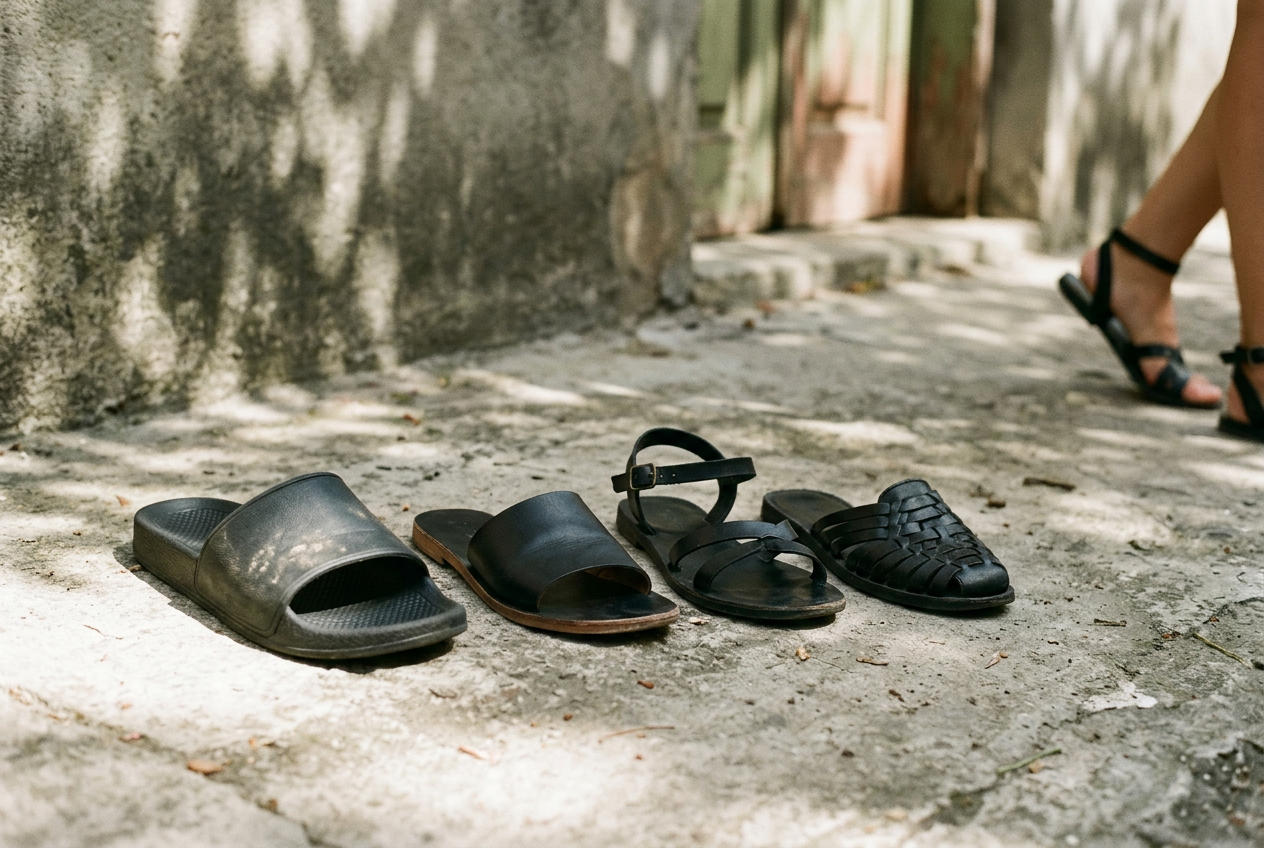
The anchor for this comparison was a black, one-piece rubber pool slide with a broad molded strap. It is the sort of inexpensive sandal that looks uncomplicated beside a pool, under loose trousers or with a plain summer dress, right until it has been sitting in full sun and asks for payment in skin.
I compared it with three similarly dark, flat sandals: one with a foam-backed coated synthetic strap, one with a woven textile upper and one with a leather upper and leather lining. All had broad forefoot coverage rather than narrow thong straps, which kept the contact areas reasonably comparable. Each pair was exposed together, moved between positions so one spot did not receive all the sun, checked immediately and then checked again after resting in shade.
A contact probe, meaning a temperature sensor held directly against the material, established the relative heat order. The test was practical rather than laboratory-grade, so the readings should not be treated as universal temperatures for every black sandal. Thickness, lining, finish and local weather all move the result. The useful finding was consistent: the rubber and coated synthetic uppers occupied the hottest tier, leather sat below them, and woven textile produced the least aggressive contact against a bare foot.
That ranking only tells half the story. A sandal can register hot at the surface yet release heat quickly, or it can hold warmth while also becoming softer, tighter and stickier. Feet notice all of it.
Rubber stores heat where the foot meets it
The black rubber slide felt hottest across the top of the forefoot, especially at the strap edges where the molded upper curved inward. Its one-piece construction left no textile lining or separate backing between the sun-warmed exterior and skin. Once heated, the strap also became more pliable, so it settled closer to the foot and increased the contact area.
That deformation matters. The cool slide had enough clearance to put on without resistance, but the warmed version flexed around the foot and stayed there, producing a close, damp sensation after only a short walk. Rubber does not need to melt or visibly warp to change the fit; a small increase in softness can turn a roomy slide into something that drags across swollen summer feet.
In shade, the anchor pair recovered reasonably well. The strap cooled, became firmer and returned to its familiar curve without obvious permanent distortion. It recovered faster when left empty than when worn continuously, because the foot was no longer supplying shape and warmth from underneath. A rubber slide abandoned under a beach chair is less troublesome than one left facing the sun and then forced onto a foot immediately.
The practical tradeoff remains persuasive. Molded rubber tolerates water, cleans easily and usually sits at the lower end of sandal pricing. I would still buy it for pool use or short errands, but not with a tight upper and not as the pair expected to remain comfortable through an exposed afternoon. Black is not the disqualifier.
Solid, unlined construction is.
Coated synthetic produces a sharper first contact
The coated synthetic sandal used a polyurethane-coated upper, meaning a fabric or foam base covered with a plastic-like surface commonly abbreviated as PU. Its exterior became very warm, while the thin foam underneath compressed against the foot instead of holding the strap away from it.
This pair delivered the sharpest initial sensation in the comparison. The surface felt hot and slightly grabby, then the backing conformed around the forefoot as pressure built. Unlike the molded rubber strap, which softened as one continuous piece, the coated upper bent at its stitched edges and kept those edges relatively firm. That put the discomfort in a narrower band.
Recovery was less tidy. The upper cooled in shade, but the compressed area remained flattened longer than the rubber slide’s strap, and its warm surface retained a faint tackiness. No peeling occurred during the evaluation, although repeated cycles of heat, sweat and flexing are hard on coated layers because the finish and its backing do not always expand at the same rate.
This category needs close inspection before purchase. A soft-looking strap may hide a thin synthetic lining with a stiff folded edge, and padding that feels generous in an air-conditioned store can collapse once it is warm. At the budget and middle price levels, I would choose a textile-lined version over extra decorative padding. The lining affects the foot every step; the puffiness mainly photographs well.
Textile gives heat somewhere to go
The woven textile sandal recorded the lowest exposed surface temperature and felt least alarming when put on. Its upper was not cool, but small gaps in the weave allowed air to circulate, while the material touched the foot through many fibers rather than one uninterrupted sheet.
That difference became clearer during walking. The upper flexed without folding into a hard ridge, did not become tacky and returned to its original shape almost as soon as the foot came out. The strap still held some warmth, particularly where its lining was densest, but it did not clamp down as the foot expanded.
Textile has its own bill to present. Sweat and water enter the fibers, drying takes longer, and a dark woven strap can collect sunscreen residue along its edges. A heavily padded textile upper may also behave more like coated synthetic because the foam, not the visible weave, controls the contact. Look underneath.
An open exterior over a dense synthetic lining will not perform like an airy fabric strap all the way through.
For a black sandal intended for commuting, sightseeing or other periods when shade is uncertain, this was the easiest upper to recommend. It need not look sporty. Matte webbing, tightly woven canvas and refined knit straps can work with tailored shorts or summer dresses, provided the footbed is equally presentable.
Leather warms gradually and changes shape with the foot
The leather sandal landed between textile and the hottest materials. Its black upper became warm in direct sun, but the leather lining avoided the abrupt plastic contact of the coated pair. It also absorbed a little moisture, which reduced surface slipperiness during the first part of the walk.
Leather’s fit changed in a more lasting way. Warmth and moisture made the strap increasingly responsive to the foot, and the crease formed where the toes bent remained visible after cooling. That is normal break-in rather than failure, but it means a close-fitting leather sandal can stretch around pressure points while still rubbing at a firm seam or buckle attachment.
The evaluated pair recovered its structure in shade without becoming rigid. I would not speed that cooling with ice water or place damp leather beside strong artificial heat; sudden soaking can leave marks, while forced drying can make the fibers stiff. A slow return to room temperature costs time, which is part of owning leather even when the sandal costs more than its synthetic alternative.
Leather earns its place when the finish, lining and repairable construction justify the price. A thin leather label attached to an otherwise synthetic upper does not change how the contact surface behaves. Check the material description for both upper and lining, then feel the folded edge with a finger. That edge is where a warm foot will find the truth.
Fit can outweigh the color decision
This advice is unisex because the material behavior applies across wardrobes, though width and volume vary substantially between feet and size systems. Try black sandals late enough in the day that the foot is not at its smallest, and reject a broad strap that already presses firmly when everything is cool.
The right allowance is modest. The foot should remain secure without being squeezed from above, and the strap should not require the toes to grip the footbed to keep the sandal attached. More space is not automatically safer: an oversized slide lets the warmed strap slap and rub while the foot travels forward.
The black rubber anchor pair passed that test when cool, then moved close to the limit after heating. A slightly higher strap would have solved more than switching to a pale version of the same low-volume mold. Color influences absorbed heat, but construction decides where that heat goes and whether the upper follows the foot or fights it.
The footbed needs a separate inspection. A textile upper cannot rescue a black synthetic footbed that has been baking uncovered, and a leather strap does not prevent a dark metal buckle from becoming unpleasant. Before putting on any sun-exposed sandal, move it into shade and check the inside of the strap and footbed with a hand. If sustained contact feels uncomfortable there, bare skin has no special negotiating power.
The buying decision
Choose woven textile for prolonged outdoor walking when easy heat release matters most, accepting that cleaning and drying will take more attention. Choose lined leather when you want a dressier finish and are willing to allow break-in room, gradual cooling and basic care. Coated synthetic makes sense when price and wipe-clean convenience lead, but its lining and edge finish deserve suspicion. Keep the one-piece rubber slide for water, quick trips and situations where it can wait in shade before wear.
That is not a ban on black sandals. It is a reason to turn the strap over before paying.
Questions people ask
Do black sandals always get hotter than light sandals?
Dark surfaces generally absorb more solar energy, but color does not predict the full wearing sensation. A black woven strap can feel less severe than a pale, solid synthetic one because airflow, thickness, lining and contact area determine how heat reaches the foot.
Which black sandal upper is best for walking in summer?
A breathable textile upper was the least aggressive in this comparison and recovered its shape fastest after wear. Check that the lining is also textile or otherwise breathable, since dense foam and plastic backing can cancel much of the advantage visible on the outside.
Can direct sun permanently stretch rubber sandals?
Moderate warming may soften a molded rubber strap without causing permanent change, as happened with the anchor slide. Repeated heat while the upper is bent, compressed or worn tightly can encourage deformation, so let the sandals cool empty in shade rather than forcing a hot pair onto swollen feet.
Is leather safer than synthetic material in hot weather?
Leather felt less abrupt than coated synthetic here, particularly with a leather lining, but it still warmed and molded around the foot. Buy enough strap volume for summer swelling, keep the pair out of prolonged direct sun when possible, and let damp leather dry gradually away from strong heat.
One update a day
Today's fashion update, in your inbox
One fashion update each morning — no hype, no filler, just pieces worth wearing.