Waterproof Sneakers Can Feel Too Hot for Brief Rain
A membrane kept one test pair dry through steady rain, then held onto foot heat and damp socks indoors. In humid weather, water-resistant mesh was the more wearable compromise.
November 8, 2026 · 7 min read
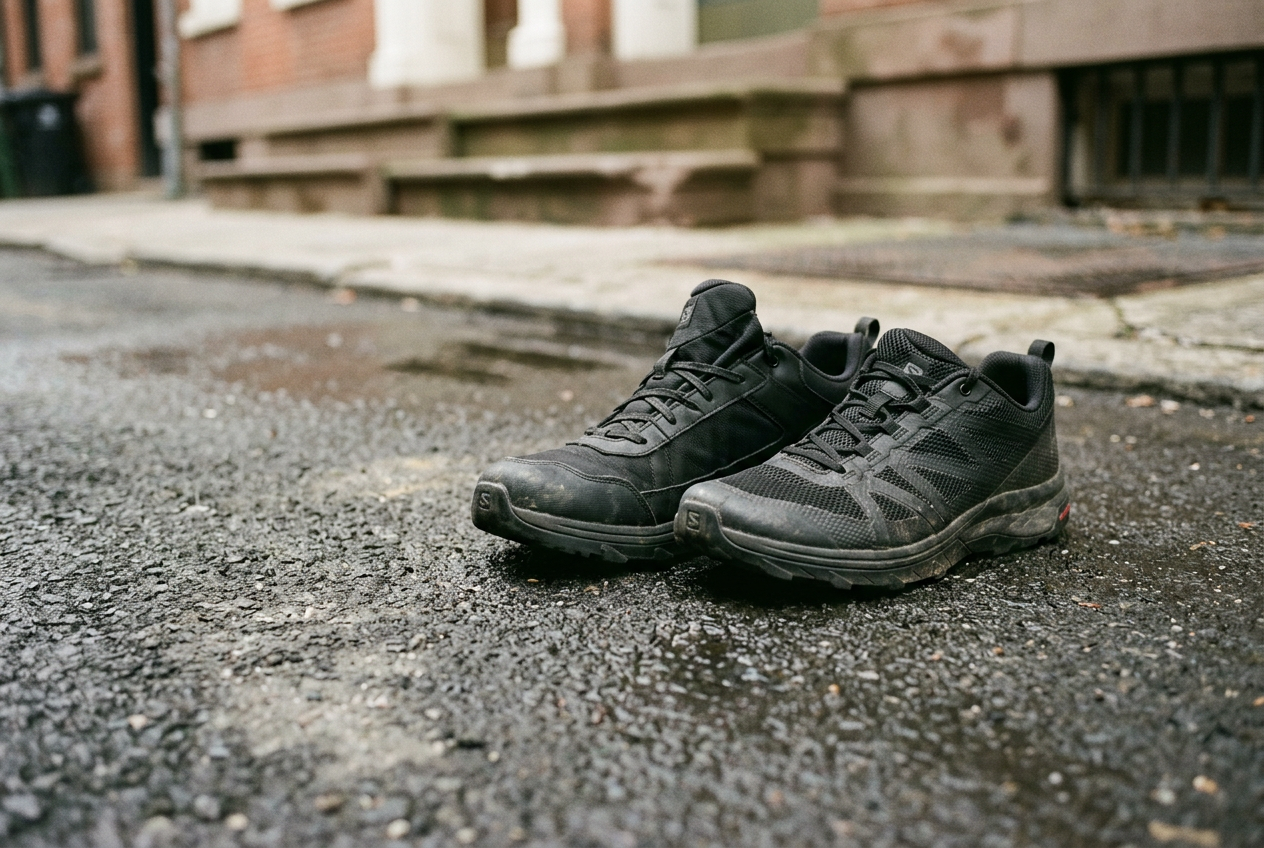
The shoe at the center of this test was a black low-top sneaker with a waterproof membrane, meaning a thin internal layer blocks liquid water while allowing some water vapor to escape. It had a tightly woven synthetic upper, a gusseted tongue attached along both sides to limit water entry, and the same kind of cushioned foam sole found under an ordinary walking sneaker.
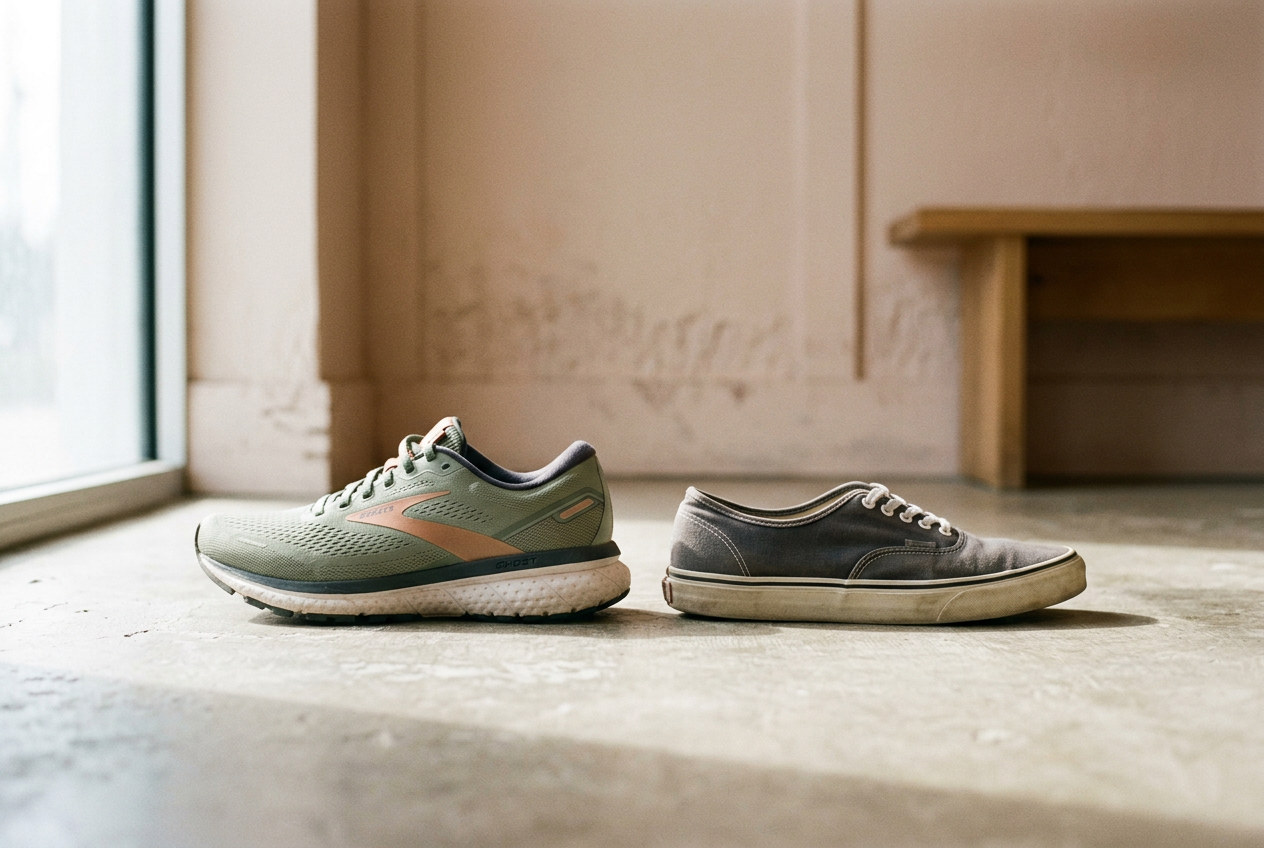
I wore it across a week of humid errands and walking commutes, then compared it with a similarly cushioned low-top made from water-resistant mesh. That mesh used a dense weave and surface treatment to slow rain without sealing the upper. The comparison applies across women's and men's wardrobes because the relevant variables are construction, fit and weather, rather than styling or gendered sizing.
The membrane shoe worked. It also became an increasingly elaborate container for its own weather.
The protection was real, within limits
During steady rain, the membrane-lined pair kept the top and sides of my socks dry while shallow water beaded on the upper. The gusseted tongue mattered as much as the membrane because it closed the usual channels beside the laces, where runoff can enter before a supposedly waterproof upper has had time to prove anything.
The water-resistant mesh pair handled a brief shower well enough. Drops sat on the surface at first, and the toe box did not immediately soak through, but sustained rain eventually pushed moisture into the forefoot where the upper flexed. Water resistance delays wetting. It does not create a sealed shoe.
Neither low-top protected against water entering around the ankle. Step into a puddle deep enough to reach the collar and the waterproof claim becomes irrelevant, rather like owning an excellent umbrella with no roof above it. The membrane pair then faced the harder problem: once water got inside, it had fewer paths back out.
That distinction matters more than the dramatic faucet tests used to demonstrate waterproof footwear. Most city rain arrives as wet pavement, intermittent showers and splashes from the curb. For those conditions, a mesh upper that delays water for the first part of a walk may offer enough protection without imposing membrane-level heat for the rest of the day.
Humidity exposed the membrane's weak point
On a humid walk, sweat vapor has to move from the sock, through the shoe lining and then out through the upper. A waterproof membrane permits some vapor transfer, but it moves far less air than open mesh, especially when the outer fabric is wet and the temperature inside the shoe is already high.
The difference appeared first across the toes. After a moderate walk in muggy weather, the membrane shoe's forefoot felt warm and damp even though no rain had entered. The mesh shoe let enough air move through its flex points that the sock felt less wet at the end, and the temperature settled faster after I stopped walking.
This was not the pleasant warmth of a lined winter shoe. It was retained humidity, followed by the small domestic disappointment of removing a weatherproof sneaker and finding that the weather had been generated internally.
The fit amplified it. Membrane linings occupy space and tend to flex less freely than an unlined mesh upper, so the black test pair felt closer over the toes despite having the correct length. Anyone between sizes, wearing thicker socks or needing more vertical room in the toe box should try the waterproof version rather than assuming it fits like the standard model. Going up half a size can add length without placing the widest part of the shoe correctly, so a roomier last, the shaped form around which a shoe is built, may be the better answer.
Loosening the lower laces relieved pressure but did little for airflow. The membrane remained the membrane.
Drying starts on the inside
Rainwater on the outside of the waterproof pair wiped away quickly. Sweat inside did not.
After humid wear, the lining and removable insole stayed damp longer than those in the mesh sneaker, particularly under the toes. Leaving both shoes untouched by the door made the difference obvious by the next wear: the mesh pair had largely reset, while the membrane pair still felt faintly cool and moist inside. Repeated without proper drying, that is the route to odor and softened linings, even when the upper looks spotless.
The practical care cost is time. Remove the insole, loosen the laces and open the tongue after wear, then let the shoe dry at room temperature with moving air around it. Direct heat can damage adhesives and surface treatments, so a radiator is a poor shortcut. Paper can help absorb an unexpectedly wet interior, though it needs replacing once saturated.
The test pair became easier to live with once I stopped treating waterproof as maintenance-free. It needed more attention after a sweaty dry walk than the mesh pair needed after a light shower. That reversal is the part product descriptions rarely linger over.
A water-resistant mesh upper also needs care because dirt and detergent residue can reduce the effectiveness of its surface treatment. Brush off dry soil, clean with mild soap when needed and allow the shoe to air-dry. If water stops beading, a treatment intended for synthetic footwear may restore some resistance, provided the shoe's care instructions permit it.
The weather window where waterproof earns the heat
The membrane upgrade made sense when the forecast combined cooler air with sustained rain, wet grass or repeated exposure to soaked pavement. In those conditions, reduced airflow was less punishing, and keeping external water away from the sock prevented the colder, heavier discomfort of a fully saturated mesh upper.
My practical cutoff was the mid-60s Fahrenheit. Below that range, especially with steady rain, the waterproof pair's warmth was acceptable and sometimes welcome. From the upper 60s into the low 70s, the decision depended on humidity and how long I expected to stay outside. A high dew point, the temperature at which air becomes saturated with moisture, usually pushed me toward mesh unless rain looked persistent.
Once conditions reached the mid-70s or warmer with noticeable humidity, water-resistant mesh was the better walking shoe for brief rain. The foot might encounter some external dampness, yet that moisture had a chance to disperse. Inside the membrane pair, sweat accumulated during the whole walk and followed me indoors, where the waterproofing continued working against evaporation despite the absence of weather.
These are practical thresholds from wear, not laboratory ratings. Walking pace, sock fabric and individual foot temperature will move them. A slow stroll in thin synthetic socks creates less heat than a fast commute in dense cotton, which absorbs moisture and holds it beside the skin.
The buying decision
Waterproof versions usually sit above their standard counterparts in the mainstream performance-sneaker price band. The extra cost buys a membrane, more sealed construction and a longer useful window in sustained wet weather. It does not buy universal comfort, nor does it turn a low-top into a rain boot.
Choose the membrane version if regular walks continue through cool rain, the route includes wet vegetation, or arriving with dry socks matters more than ventilation. Check for a gusseted tongue and adequate toe-box volume, then plan to remove the insoles after warm wear. A waterproof label without attention to the tongue and collar leaves obvious entry points.
Choose water-resistant mesh if rain is usually brief, temperatures are warm, or the shoe must stay on through an indoor workday after the walk. A darker color and synthetic mesh will generally look less bedraggled after splashes than pale, absorbent fabric, while the more open construction gives interior moisture somewhere to go.
For the black test pair, the verdict was narrow. It earned its place on cool, wet mornings with more rain ahead than time indoors. On humid days with one passing shower, the mesh sneaker returned to the door.
Questions people ask
Are waterproof sneakers breathable?
They allow some sweat vapor to escape, but a membrane-lined upper usually moves less air than open mesh. During humid walks, the outer fabric can also become wet, reducing vapor transfer further. Expect more warmth around the toes and a longer interior drying time, even if rain never reaches the sock.
Will water-resistant mesh keep socks dry in rain?
It can keep socks dry through light, brief rain, especially when water beads on a clean surface treatment. Sustained rain will eventually enter through flex points, lace openings or the collar. Water-resistant mesh suits short exposure better than a long walk through continuous rain or wet grass.
Should waterproof sneakers fit differently?
The same labeled size may feel closer because the membrane and lining take up room and flex less than unlined mesh. Check toe-box height as well as length, wearing the socks intended for wet weather. If sizing up leaves excess space at the heel, look for a model built on a roomier last instead.
How should waterproof sneakers dry after a humid walk?
Remove the insole, loosen the laces and pull the tongue forward so moisture can escape at room temperature. Avoid direct heat, which can damage adhesives or treatments. If the lining is still damp before the next wear, choose another pair rather than putting a dry sock back into yesterday's foot climate.
One update a day
Today's fashion update, in your inbox
One fashion update each morning — no hype, no filler, just pieces worth wearing.