Your Cork Sandals Need a Day Off in Humid Weather
A suede-lined cork footbed manages sweat well during a walk but releases it slowly afterward. Consecutive wears are where comfort turns clammy and odor settles in.
October 21, 2026 · 7 min read
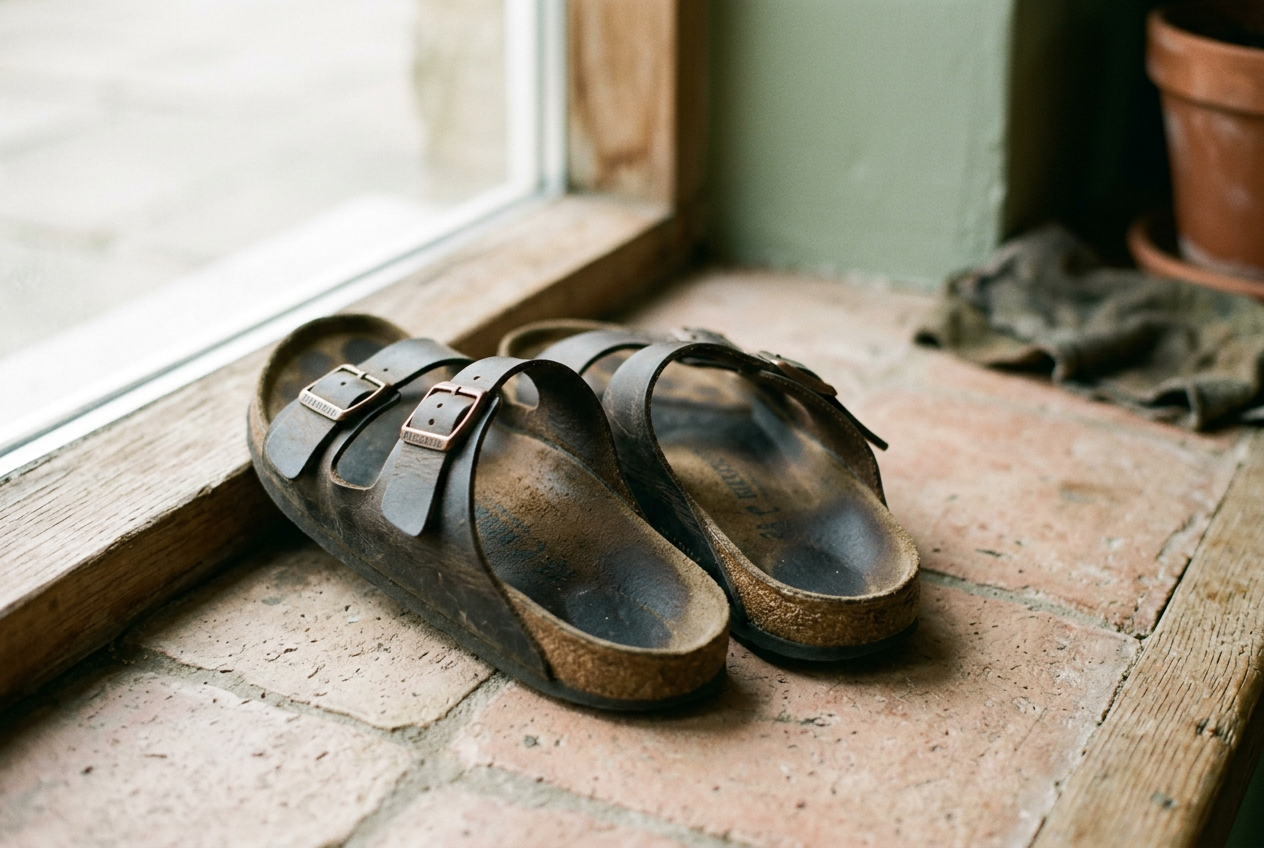
The Arizona after a humid week
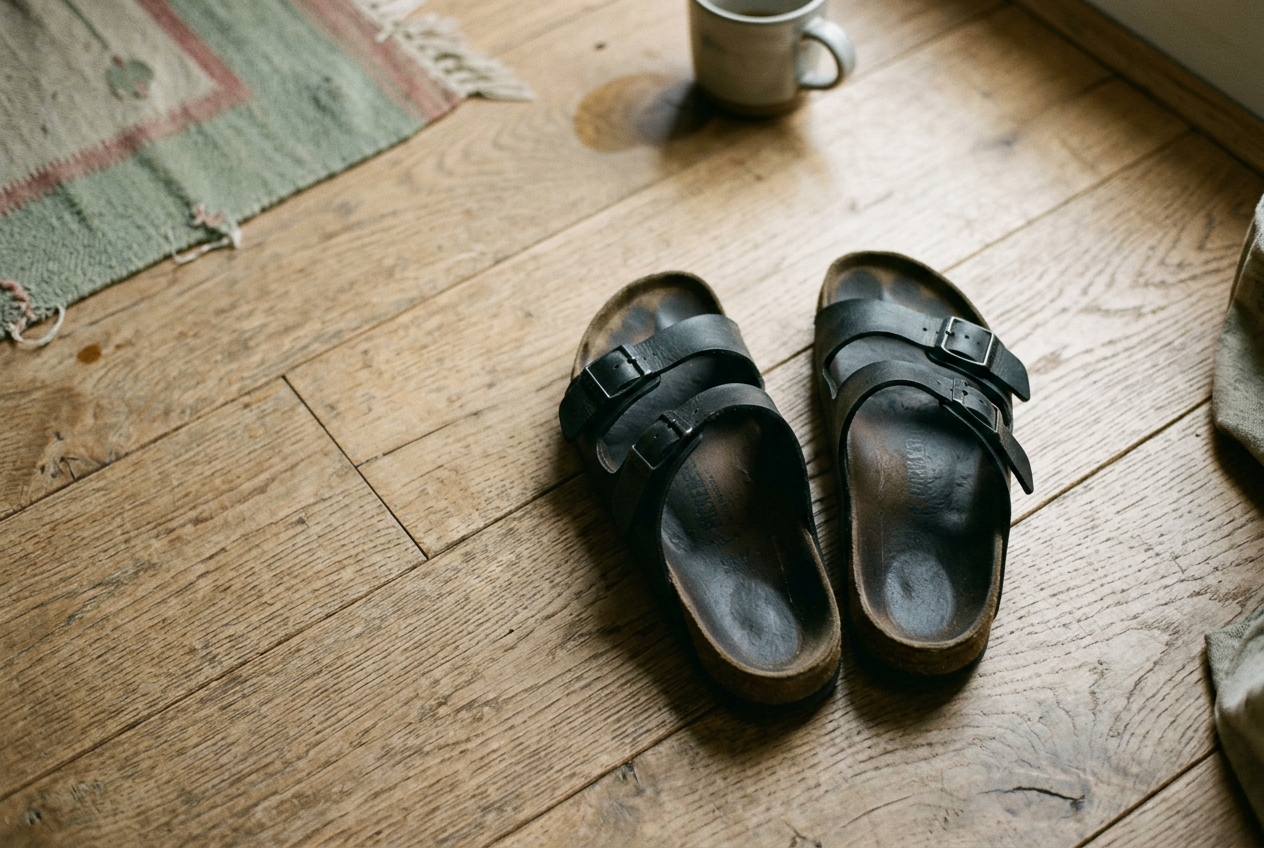
The concrete case was a classic Birkenstock Arizona with leather straps, an exposed cork edge and the standard footbed: suede against the foot, jute layers for structure, cork granules bound with latex, then an EVA outsole. Birkenstock describes that cork-latex core as heat responsive, which helps explain why an established pair takes on the shape of its wearer.
This is unisex advice. Arizona sizing and width labels vary by market and model, but the material problem does not care which side of the store supplied the shoe. A loose fit makes it worse: if the heel lifts and slides over damp suede, friction increases just as the lining softens.
During a humid repeat-wear evaluation, the Arizona remained pleasant through the first outing. The suede absorbed surface moisture instead of leaving a slick film underfoot, and the shaped heel cup, toe bar and arch kept the foot more settled than a flat fashion slide. That is cork’s persuasive moment. The sandal feels controlled rather than squishy, without pretending that standing on pavement has become a spa treatment.
The trouble appeared between wears. By the end of a sweaty day, the suede had darkened most beneath the toes and heel. Left indoors overnight with the straps open, it still felt cooler and slightly denser in those areas the next morning, useful low-tech signs that moisture remained. Wearing it again brought the damp sensation back faster, while the suede’s nap, meaning its short raised fibers, stayed flattened where pressure and sweat were concentrated.
No catastrophic failure followed. The Arizona did not dissolve into artisanal oatmeal. It just became a worse version of itself: less dry against the foot, more prone to rubbing at the toe joints and increasingly capable of holding yesterday’s smell.
Cork is not the surface touching your foot
“Cork footbed” is convenient shorthand, but the foot usually rests on suede or microfiber rather than bare cork. In the classic Arizona, sweat first meets the suede lining. That lining can absorb moisture and spread it beyond the wettest contact points, which feels better during wear than water beading on a nonabsorbent surface.
The same absorption becomes a liability after the sandal comes off. Moisture has to move back through the suede and escape into the air, and humid air gives it little incentive to hurry. The contoured footbed also creates sheltered areas around the heel cup and toe bar where airflow is poorer than it would be across a flat insole.
The cork-latex layer underneath adds resilience and shape but should not be treated like waterproof outdoor equipment. The exposed edge is coated with sealer, a flexible finish that slows moisture entry and keeps the cork from drying out and crumbling. Brand care guidance recommends renewing that coating when the cork loses its sheen, while also keeping the sandals away from soaking and extreme heat.
That last instruction rules out two popular acts of footwear revenge: leaving damp sandals on a blazing windowsill or attacking them with a hair dryer. High heat can stress cork, adhesive and outsole materials, even if it makes the suede feel dry sooner. A shaded place with moving air takes longer and does less harm.
Microfiber improves the lining, not the whole drying problem
For comparison, the relevant alternative within the same family is a microfiber-lined Arizona Vegan configuration. Microfiber is a tightly constructed synthetic material made from very fine fibers; in this application it replaces the suede surface while the sandal retains a contoured cork-latex footbed. Material specifications can vary by color and market, so the product page for the exact pair still matters.
The synthetic lining gave up surface dampness sooner than the classic Arizona’s suede and did not stay as visibly matted. It also felt less forgiving once sweat sat on top. Suede buys time by taking moisture away from the skin, while microfiber reaches its limit sooner and can feel warmer or slicker during a long, humid walk.
Odor did not disappear. Skin oils and sweat residue still collect around the toe impressions and heel, and the cork construction beneath the lining still limits how aggressively the sandal can be washed. The vegan version is a useful compromise for someone avoiding leather or wanting a somewhat faster surface dry, but it does not turn a cork sandal into a rinse-under-the-tap sports shoe.
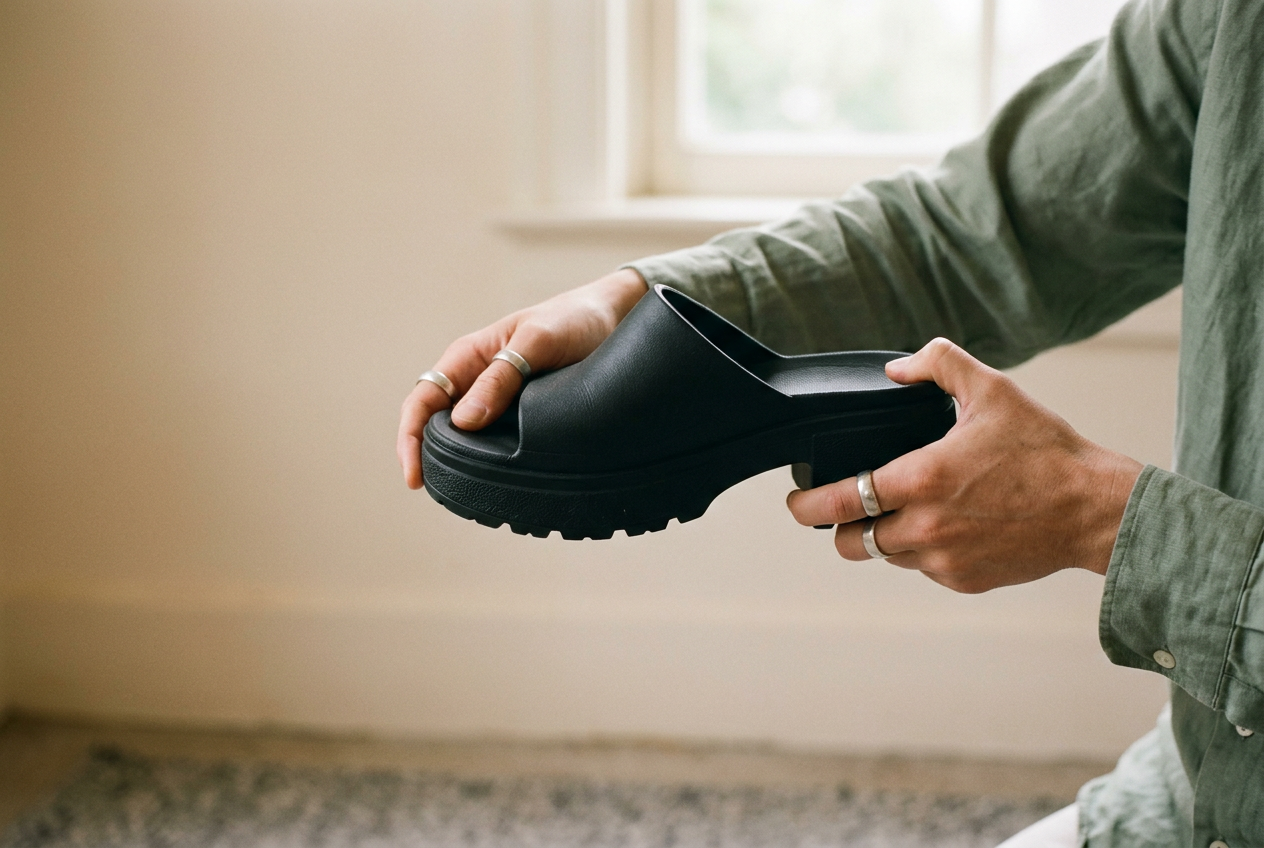
The clean break came from the molded EVA alternative. EVA, or ethylene-vinyl acetate, is the lightweight closed-cell foam used in many water-friendly sandals. A one-piece molded sandal has no suede layer, no cork edge and fewer bonded components to protect. Sweat remains more noticeable during wear, yet the sandal can be rinsed, wiped and returned to service far sooner.
That trade is blunt. Molded EVA does not develop the same individualized foot impression, and its wet surface may squeak or allow more sliding until dried. It wins when the schedule demands another wear tomorrow morning.
Odor starts with the second damp wear
Fresh sweat is not the whole smell. Odor builds when residue stays warm and damp long enough for odor-producing microbes to thrive, then receives another deposit before the footbed has dried. The suede-lined Arizona handled one humid wear better than its slicker alternatives underfoot, but repeated dampness turned its absorbency into storage.
The most effective intervention was rotation. Giving the cork pair a full unworn day, with both straps opened and the sandals placed where air could cross the footbeds, made a larger practical difference than trying to disguise odor after it arrived. Drying time will stretch in a closed closet, an entryway without airflow or a suitcase, all of which are excellent places to preserve moisture and bad decisions.
After wear, a dry soft brush can lift dust and restore some of the suede nap. If the lining needs deeper cleaning, follow the brand’s product-specific instructions and use as little moisture as the method allows. Saturating the footbed to remove a smell can create a larger drying problem, while fragrance sprays merely arrange for the smell to return wearing cologne.
Inspect the cork edge at the same time. A dull, rough or unsealed-looking patch deserves appropriate cork sealer before repeated exposure to damp sidewalks and sweaty wear. Sealer belongs on the cork edge, not across the suede footbed.
The buying verdict
Choose suede-lined cork if the sandal will join a rotation, your feet benefit from a shaped footbed, and you value a dry-feeling surface during the first hours of wear. It also suits people who find flat slides tiring, provided the arch shape matches their foot and the straps hold the sandal without pinching.
Skip it as an only sandal for humid travel, daily commuting or pool-to-street use. A molded EVA sandal or washable sports sandal dries faster, tolerates rinsing and asks less of a hotel room with weak air-conditioning. The price paid is a less tailored underfoot feel and, in some models, more surface slipperiness when sweat appears.
Microfiber-lined cork sits between those options. It releases surface moisture faster than suede but still carries the drying limits and care needs of the cork construction below. Buy it for the synthetic lining or leather-free specification, not because it promises instant turnaround.
For the classic Arizona, the useful rule is one humid wear followed by one day off. If the footbed still feels cool or looks dark at the heel and toes, it has not finished drying, regardless of how urgently it matches the trousers.
Questions people ask
Do cork footbeds smell in humid weather?
They can when sweat reaches a suede or microfiber lining faster than the sandal can dry. One wear is usually less troublesome than repeated damp wears; opening the straps, brushing away dry debris and allowing moving air across the footbed reduces the conditions that let odor settle in.
Can I wear cork sandals every day in summer?
Daily wear is reasonable only when the footbed dries fully between outings. In sustained humidity, alternating two pairs or switching to molded EVA on the second day is more practical than putting a damp suede lining back under warm feet and hoping personal resolve counts as ventilation.
Is microfiber better than suede for sweaty feet?
Microfiber can release surface moisture faster and avoids animal leather, but it may feel slicker once sweat accumulates. Suede tends to feel drier during the walk because it absorbs moisture, then takes longer to recover afterward. The better choice depends on whether wear comfort or turnaround time matters more.
Can I dry cork sandals in direct sun?
Avoid strong direct heat, including a hot windowsill, radiator or hair dryer. Open the straps and dry the sandals in shade with airflow instead. If the exposed cork edge looks dull or rough after repeated wear, use a cork sealer according to the product instructions.
One update a day
Today's fashion update, in your inbox
One fashion update each morning — no hype, no filler, just pieces worth wearing.